Types of AI Automation: Exploring Varieties and Their Applications
Artificial Intelligence (AI) has moved beyond the realm of science fiction and firmly into the domain of modern business optimization and consumer technology. AI automation integrates the cognitive abilities of machine learning, natural language processing, and other forms of AI to enable systems to perform tasks traditionally requiring human intervention. These AI-driven automation systems vary widely in complexity and capability, from simple chatbots answering customer inquiries to sophisticated machine learning models that predict customer behavior and optimize supply chains.
As technology advances, AI automation permeates various sectors, quietly revolutionizing workflows and industry standards. It holds the promise of increased efficiency, reduced human error, and the ability to scale operations rapidly. AI automation’s influence spans from intelligent automation that combines AI with business process management, to cognitive automation that includes adaptive decision-making in complex environments. This continuous evolution poses pivotal advantages but also necessitates understanding the intricacies involved in integrating such systems with existing processes to fully harness their potential.
Key Takeaways
- AI automation is transforming industries by enabling systems to perform tasks that once required human intelligence.
- The range of AI automation systems includes everything from basic programmed responses to complex predictive analytics.
- Effective integration of AI automation into business processes can lead to increased efficiency and scalability.
Fundamentals of AI Automation
The integration of Artificial Intelligence (AI) in automation represents a fusion of cognitive computing with automated processes. These systems can adapt to varying situations, make decisions, and learn from outcomes, driving efficiency and innovation.
Defining AI and Automation
Artificial intelligence (AI) is a broad field of computer science concerned with building smart machines capable of performing tasks that typically require human intelligence. Automation refers to the use of machines and technology to perform tasks without human intervention. The convergence of AI and automation results in systems that are not only automated but also intelligent, allowing for complex decision-making and problem-solving capabilities.
AI Categories: ANI, AGI, ASI
AI can be categorized based on the scope and complexity of tasks it can perform:
- Artificial Narrow Intelligence (ANI): ANI systems are designed to handle single or limited tasks. Examples include chatbots or recommendation algorithms.
- Artificial General Intelligence (AGI): AGI possesses the ability to understand, learn, and apply its intelligence broadly and flexibly, similar to human cognitive abilities.
- Artificial Superintelligence (ASI): ASI refers to a future AI that surpasses human intelligence across all fields, including creative, problem-solving, and social intelligence.
The progression from ANI through AGI to ASI represents an escalation in capabilities, autonomy, and the potential impact on various sectors where automation is applied.
Technological Foundations
In the field of artificial intelligence (AI) automation, the technological foundations are critical to advancing capabilities and applications. Machine learning and intricate algorithms work together with natural language processing (NLP) and computer vision to create a versatile knowledge base for various systems. The application of these technologies utilizes extensive data sets to train models, enhance accuracy, and enable more complex automation.
Machine Learning and Algorithms
Machine learning (ML) is the cornerstone of AI automation, where algorithms play a vital role. Typically, these algorithms are designed to process and learn from data sets, improving their function over time. This area covers a range of approaches:
- Supervised Learning: Models predict outcomes based on past data.
- Unsupervised Learning: Algorithms identify patterns and structures in unlabeled data.
- Reinforcement Learning: Models make decisions and learn through trial and error.
For instance, deep learning, a subset of machine learning that employs neural networks with multiple layers, has been instrumental in achieving significant progress in complex tasks such as speech recognition and predictive analytics.
Natural Language Processing and Computer Vision
Two specialized areas of AI are natural language processing (NLP) and computer vision. They both require sophisticated software and technologies for interpretation and interaction purposes:
- Natural Language Processing: It enables machines to understand and respond to text and speech as humans do, which is fundamental for applications such as chatbots or translation services.
- Computer Vision: This technology gives machines the ability to interpret visual information from the world, applicable in areas like facial recognition and autonomous vehicles.
Both fields employ complex algorithms and deep learning models to comprehend and analyze vast amounts of unstructured data—text in NLP and pixel data in computer vision—rounding out the technological foundations of AI automation.
Types of AI Automation Systems

AI automation systems have significantly evolved, branching out into different types distinguished by their cognitive capabilities and functionalities. From basic task automation to complex self-analysis, these systems cater to a wide array of applications, reflecting the advanced research and development in the field.
Reactive Machines and Limited Memory Models
Reactive Machines are fundamental AI systems that react to the same situation in an identical way every time. They lack the ability to learn or create memory-based experiences, responding solely to current scenarios without using historical data for future decisions. An example of a reactive machine is IBM’s Deep Blue, which defeated a chess world champion by evaluating possible moves within the current state of the game but without any learning capability.
Limited Memory Machines, on the other hand, incorporate past information and thus, can improve over time. Limited Memory AI uses historical data to make better predictions or decisions. This type is exemplified by self-driving cars that adjust actions based on data such as distance from other objects or speed.
Theory of Mind and Self-Aware Systems
Theory of Mind is an advanced level of AI not yet fully realized but is a driving aim for future systems. It refers to AI’s capability to understand and recognize emotions, beliefs, and desires that affect human behavior, which is paramount for more personalized interactions. No real-world AI system has yet mastered this kind of sophisticated modeling.
At the pinnacle of AI development are Self-Aware Systems. These AI entities are theoretical constructs that would possess a form of consciousness, awareness, and understanding of their own existence and the environment around them. Self-Aware AI would not only be sentient but also able to recognize its own emotions and thoughts. As of now, self-aware AI is still within the realm of science fiction and subject to philosophical debate rather than practical implementation.
Applications of AI Automation

AI Automation stands as a transformative force across various sectors. It leverages cutting-edge technologies to streamline complex processes, ensuring precision and efficiency.
Business Process Automation
Business Process Automation (BPA) employs AI to optimize workflows, often integrating Robotic Process Automation (RPA) and Business Process Management (BPM). Financial institutions automate loan processing, while insurance companies harness AI to assess claims, accelerating service delivery and minimizing human error.
Intelligent Automation in Healthcare
Healthcare systems benefit from Intelligent Automation by enhancing diagnostics and patient care coordination. Cognitive automation tools assist in analyzing medical records, and virtual assistants like Alexa and Siri help manage appointments, thus improving patient experience and clinical outcomes.
Manufacturing and Industrial Automation
In manufacturing, AI-driven automation boosts production capabilities. It introduces adaptive manufacturing processes capable of real-time decision-making. This intelligent automation not only increases throughput but also ensures higher quality standards.
Customer Service and Virtual Assistance
AI automation transforms customer service by deploying bots and virtual assistants which provide 24/7 support. They efficiently handle inquiries, improve customer interactions, and streamline support processes, becoming invaluable assets to service-oriented businesses.
Automation Technologies

In the evolving landscape of digital transformation, automation technologies play a crucial role. They enable organizations to streamline processes, save costs, and enhance efficiency. Three key automation technologies have emerged as game changers: Robotic Process Automation, Cognitive Automation with AI capabilities, and Generative AI.
Robotic Process Automation (RPA)
Robotic Process Automation is a software technology that makes it easy to build, deploy, and manage software robots that emulate humans actions interacting with digital systems and software. Software robots can perform a vast array of activities, like logging into applications, entering data, calculating and completing tasks, and logging out.
Cognitive Automation and AI Capabilities
Cognitive Automation utilizes Artificial Intelligence (AI) capabilities to extend the benefits of RPA. By incorporating technologies like Natural Language Processing (NLP) and Machine Learning (ML), cognitive automation can interpret unstructured data, and make decisions based on complex rules. Applications in various sectors such as customer service have transformed processes that involve understanding and responding to human language.
Generative AI in Innovation
Generative AI represents a forward leap in automation technology, focusing on innovation and creation. It uses machine learning to generate new content—be it text, images, or code—after learning from a large dataset. This aspect of AI capabilities aids in tasks such as designing prototype models, drafting software code, and even generating creative art, evidencing the potential to revolutionize product development and creative processes.
The Impact of Automation
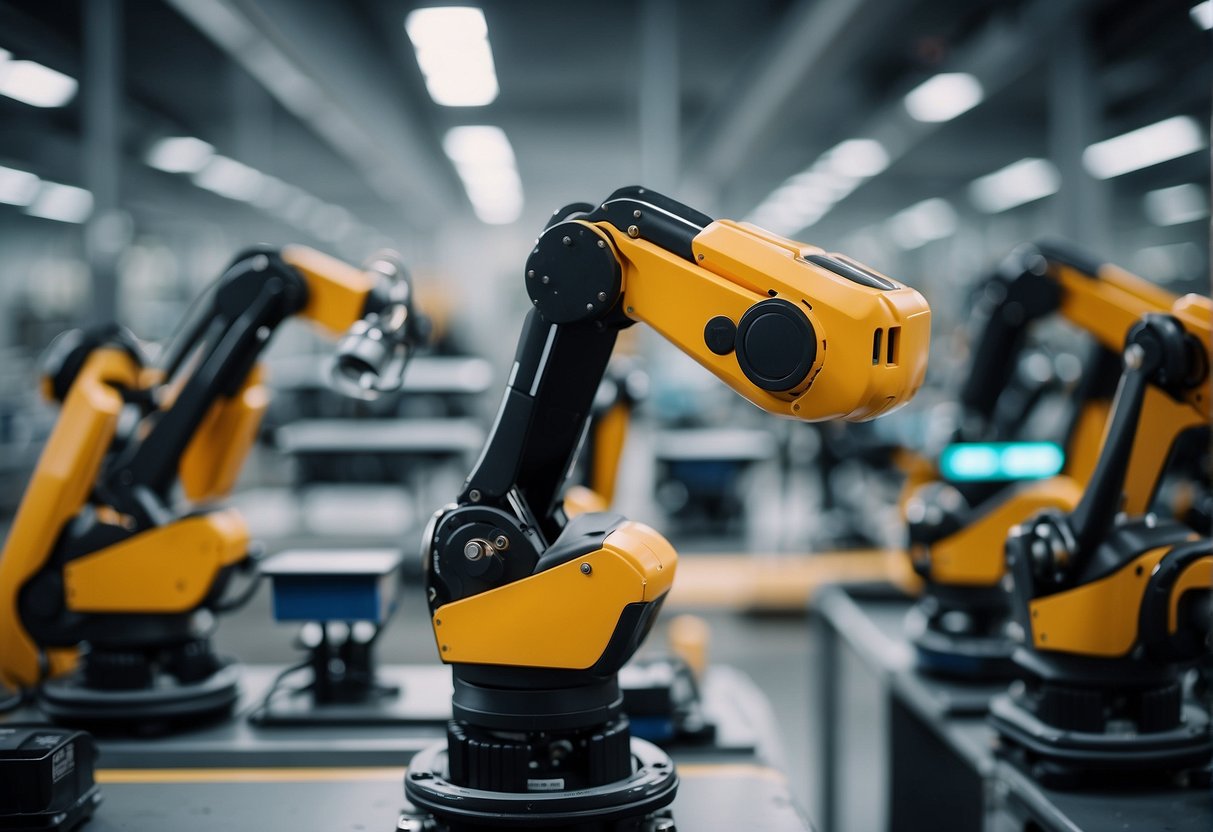
Automation stands poised to revolutionize workflows by significantly enhancing efficiency and sharply reducing incidences of human error. It introduces intelligent systems capable of predictive analysis and alters the employment landscape, raising important ethical considerations.
Enhancing Efficiency and Reducing Human Error
Automation infuses efficiency into various industries by streamlining repetitive tasks. It enables rapid processing with a high degree of accuracy, often surpassing what is achievable by human effort alone. By doing so, it minimizes human error, resulting in cost savings and consistent quality. For instance, in manufacturing, automation has evolved from basic mechanical aids to sophisticated robots capable of learning and reasoning, further closing the gap toward error-free production.
- Efficiency gains: processes are accelerated, and output levels rise
- Human error reduction: consistency in tasks previously prone to human mistake
Predictive Analysis and Maintenance
Predictive maintenance, fueled by AI, utilizes data analysis and learning algorithms to foresee machine failures before they occur. This form of intelligent forecasting reduces operational risk and downtime. In sectors like transportation or energy, the use of AI for predictive analysis leads to safer, more reliable outcomes. This transition from reactive to proactive maintenance is a hallmark of modern automation’s evolving intelligence.
- Predictive accuracy: foreseeing machine maintenance needs reduces sudden breakdowns
- Intelligence application: learning from data to anticipate and mitigate potential issues
Implications on Employment and Ethics
The automation narrative is not solely about science and efficiency—it also has profound implications for employment. As intelligent machines take on more complex roles, the demand for certain types of jobs is transformed. This shift raises ethical questions surrounding job displacement and the need for retraining workforces. Automation’s ethical reasoning is not without controversy, as decisions made by machines might not always align with societal values.
- Employment changes: shifts in job roles and requirements
- Ethical considerations: impact on workforce, societal norms, and decision-making accountability
Integrating AI Automation

Integrating AI automation within an organization harnesses the power of modern technology to enhance efficiency and reliability in various operations. It targets specifically the optimization of workflows, proficient management of both structured and unstructured data, while also considering the inherent challenges that such an integration presents.
Streamlining Workflows with AI
By incorporating AI, organizations can significantly streamline workflows, leading to more coherent and efficient operations. AI excels in automating repetitive tasks which not only saves time but also reduces the probability of human error, ensuring greater consistency in results. For instance, AI algorithms can automate email sorting, customer service requests, and even complex scheduling.
- Benefits of Streamlining with AI:
- Enhanced efficiency and speed
- Error reduction
- Improves focus on strategic tasks
Data Handling: Structured and Unstructured
Two main types of data exist within any modern enterprise: structured data and unstructured data. AI automation tools are equipped to handle both effectively. Structured data, which resides in fixed formats and is easily searchable, benefits from AI’s ability to quickly process and analyze large volumes of it. Unstructured data, on the other hand, poses a challenge due to its variable forms like emails, videos, or social media content. This is where the role of a data scientist becomes pivotal, as they help refine AI algorithms to interpret and utilize unstructured data efficiently.
- AI Data Handling Capabilities:
- Structured Data: Rapid processing and analysis
- Unstructured Data: Advanced techniques for interpretation
AI Integration Challenges
Although AI promises to revolutionize how businesses operate, integrating it into existing systems is not without its set of challenges. Ensuring smooth communication between AI and legacy network systems requires a robust knowledge base and adequate compute resources. Coordination between different parts of the business to adopt AI can be complex. Training staff to work alongside AI, and addressing potential job displacement concerns are social and managerial hurdles that must be navigated carefully.
- Key Challenges:
- Compatibility with legacy systems
- Resource allocation
- Workforce adaptation
Emerging Trends in AI Automation

As artificial intelligence evolves, significant innovations are shaping the future of AI automation. These advancements not only refine existing systems but also herald new paradigms in how AI can learn and function within novel technologies.
Advancements in AI Learning Methods
Deep learning continues to be a cornerstone in the progression of AI learning methods. With layers of artificial neural networks, deep learning allows for intricate pattern recognition and classification, improving image recognition tasks significantly. These enhancements lead to more sophisticated digital workers capable of handling complex data with greater autonomy. Moreover, AI learning methods are now being designed to adapt and evolve, bringing us closer to achieving General AI, which aims to perform any intellectual task that a human being can.
The AI for Everyone course is a prime example of how the landscape of learning is changing. It aims to democratize understanding and access to AI, fostering a broad base of users proficient in AI applications. This spread of knowledge could potentially speed up innovations and the adoption of AI-powered solutions.
The Role of AI in New Technologies
Emerging equipment and devices with integrated sensors showcase the role of AI in new technologies. These sensors feed real-time data to AI systems, resulting in smarter and more responsive technology in applications ranging from healthcare to autonomous driving. Furthermore, AI is paramount in the development of narrow AI systems that specialize in specific tasks such as language processing or facial recognition.
Today’s market also anticipates the advent of Super AI—systems that exceed human intelligence in all aspects. While still a concept under development, its impact on future technologies could be staggering, remaking the landscape of what’s possible within AI automation.
Notable Examples and Case Studies

Within the evolving landscape of AI and automation, certain initiatives have notably transformed how industries tackle complex problems and approach autonomy. These instances not only reflect the technological advancements but also outline the potential applications in various sectors.
IBM’s Watson and Complex Problem-Solving
IBM has been a frontrunner in developing AI to handle complex tasks. Particularly, Watson, its flagship AI system, has found use cases across diverse domains, from healthcare to finance. An illustrious moment in Watson’s history involved it winning the Jeopardy! game show, showcasing its ability to process and analyze data at levels surpassing human ability. Moreover, IBM’s earlier foray into AI with Deep Blue, a chess computer, made headlines in 1997 when it defeated world chess champion Garry Kasparov, heralding a new era in machine intelligence.
Self-Driving Cars and Autonomy
The advent of self-driving cars marked a significant milestone in the application of AI in the automotive industry. These self-driving vehicles leverage an array of sensors and machine learning algorithms to navigate roads, recognize objects, and make decisions with little to no human intervention. Companies like Waymo and Tesla have been at the forefront, conducting extensive road tests to ensure safety and reliability. Google Translate also deserves a mention for harnessing AI’s capability to break language barriers, albeit in a different realm of autonomy, allowing for near-instant translation across numerous languages and enhancing global communication.
Frequently Asked Questions

This section addresses common inquiries about the types of AI automation, providing clear distinctions and practical examples that illustrate the multifaceted nature of artificial intelligence.
What are the different classes of AI based on capabilities?
Artificial Intelligence is typically classified by capabilities into Narrow or Weak AI, which is designed to perform specific tasks, and General or Strong AI, which possesses the ability to understand and learn any intellectual task that a human can.
How can AI automation be categorized with examples?
AI automation can be divided into rule-based systems, machine learning, and cognitive automation. For instance, rule-based systems are exemplified by simple chatbots, while machine learning fuels personalized recommendations in e-commerce.
What are the four types of AI and how are they applied in various industries?
The four types of AI are reactive machines, limited memory, theory of mind, and self-aware AI. Industries apply these types from reactive AI in chess-playing algorithms to limited memory AI in autonomous vehicles that adapt to driving conditions.
What are the main branches of AI and how do they differ?
The main branches of AI include machine learning, neural networks, natural language processing, and robotics, each differing by their function and application, from data analysis to simulating human interaction and performing physical tasks.
How do AI algorithms vary across different categories?
AI algorithms range from simple decision trees and linear models in straightforward applications to complex deep learning and reinforcement learning algorithms that allow for advanced pattern recognition and real-time decision-making.
In what ways is generative AI distinct from other types of artificial intelligence?
Generative AI stands out by its ability to create new content, ranging from art to synthetic data, based on learning from a dataset, rather than solely making decisions or classifying information.