Benefits of AI Flowchart Makers: Enhancing Efficiency in Process Mapping
Artificial intelligence is transforming the way we visualize and communicate complex processes through the innovation of AI flowchart makers. These sophisticated tools use artificial intelligence to streamline the creation of flowcharts, making it less time-consuming and more accurate. By automating the design process, they facilitate quick and efficient workflow mapping, which is essential for project planning and process management. Their intuitive interfaces and advanced features allow for the creation of detailed and functional flowcharts that can enhance understanding and decision-making within teams and organizations.

However, the benefits of AI flowchart makers extend beyond mere efficiency gains. They empower businesses to thrive in a data-driven world by improving clarity in communication. Through visually representing workflows, roles, and responsibilities, these tools ensure that every team member is on the same page and reduce the likelihood of miscommunication. Complex algorithms within these tools can also interpret and suggest improvements in business processes, leading to continuous improvement and innovation.
Key Takeaways
- AI flowchart makers significantly reduce the time needed to create complex flowcharts.
- Enhanced communication is a key benefit, as these tools ensure precise visualization of workflows.
- They play a crucial role in aligning team members by clearly defining roles and responsibilities.
Understanding AI Flowchart Makers
AI flowchart makers represent a significant leap in diagramming technology, blending traditional tools with advanced AI capabilities to enhance productivity and accuracy in process mapping.
AI vs Traditional Flowchart Tools
Traditional Flowchart Tools: Typically, these require users to manually place and connect shapes to create a visual representation of a process. They are dependent on the user’s input at each step, which can be time-consuming and may introduce errors if the user is not meticulous.
- Advantages:
- Predictable output
- Familiar interfaces
AI-Powered Flowchart Tools: These take advantage of artificial intelligence to interpret data inputs and automatically generate flowcharts. The automated generation from raw data or textual descriptions by AI vastly increases speed and often improves the accuracy of the diagrams by eliminating human error.
- Advantages:
- Efficiency in creating complex diagrams
- Reduction of manual errors
- Enhanced capabilities such as predictive modeling, natural language processing, and real-time collaboration
AI tools also excel in integrating with various platforms and streamlining workflows, which is crucial in today’s interconnected work environments. These systems can facilitate collaboration, making them invaluable for teams that require constant communication and updates.
Key Features of AI Flowchart Makers

AI flowchart makers are poised to transform the way individuals and teams create and interact with flowcharts. These tools are defined by their ability to combine cutting-edge technology with user-friendly features, fostering efficiency and clarity in diagram creation.
Intuitive Interfaces
AI flowchart makers offer intuitive interfaces that allow users to construct diagrams with minimal effort. These interfaces often feature drag-and-drop capabilities and a selection of pre-built templates, which streamline the creation process and help users start their projects swiftly. A user-friendly interface is crucial for minimizing the learning curve and enhancing the user’s productivity.
Customization Options
The ability to customize a flowchart is paramount. These AI-driven tools provide vast libraries of shapes and symbols, allowing users to tailor their diagrams to specific project needs. Customization can range from modifying the color schemes to adjusting the size and style of elements, ensuring that each flowchart accurately reflects the data it represents.
Collaboration Features
Collaboration features are integral as they enable teams to work together in real-time. Users can typically comment, edit, and share flowcharts effortlessly with colleagues, regardless of their location. These capabilities foster a collaborative environment where team members can contribute and iterate on flowchart designs, leading to more comprehensive and accurate representations of processes.
Advantages of Using AI Flowchart Makers

Incorporating AI flowchart makers into business processes significantly boosts productivity and clarity. They serve as catalysts for efficient workflow management and guarantee precision in diagram creation and data interpretation.
Enhanced Efficiency and Speed
AI flowchart makers are renowned for their ability to expedite the creation of flowcharts, essentially transforming what could be a cumbersome manual process into a swift, streamlined task. By automatically generating flowcharts from data or textual descriptions, these tools enable teams to focus on analysis and decision-making rather than on the intricacies of diagram design. This increased speed and efficiency in producing visual aids is invaluable for businesses aiming to keep pace with dynamic market conditions.
Improved Accuracy and Precision
The adoption of AI in flowchart creation minimizes the risk of human error, leading to more accurate diagrams. Advanced algorithms analyze data with a level of precision that significantly surpasses manual efforts. As a result, organizations benefit from flowcharts that faithfully represent complex processes, ensuring that stakeholders can rely on these visual tools for accurate information – an advantage eloquently highlighted by boardmix.com’s insights on automated generation and high accuracy in flowchart makers.
Streamlined Communication
AI-driven flowcharts excel in clarifying communication among team members, as they provide a common visual language that helps illustrate and convey processes clearly. These tools assist in visualizing the logical flow of actions, making it easier for diverse stakeholders to understand workflows and their roles within them. As stated by WIO AI, the use of AI flowchart makers for articulating complex processes can effectively bridge communication gaps, ensuring that everyone is aligned with the intended message and project goals.
Impact on Business Processes
The integration of AI flowchart makers streamlines business processes by enhancing project management, strategic planning, and decision-making. These tools bring precision to planning and analysis, resulting in improved business operations.
Project Management
AI flowchart makers contribute to Project Management by providing a visual representation of workflows, which aids managers in identifying bottlenecks and optimizing resource allocation. They enable teams to track project progress and understand task dependencies in real-time, thus improving Productivity and ensuring timely completion of projects.
Strategic Planning
In the realm of Strategic Planning, AI flowchart makers allow for in-depth analysis of operational workflows. Businesses can utilize these tools to simulate different scenarios, helping leaders to forecast potential outcomes and devise plans that align with long-term goals. This strategic foresight is essential for sustaining competitive advantage.
Decision-Making
When it comes to Decision-Making, the clarity provided by AI-generated flowcharts ensures that all stakeholders have a comprehensive understanding of the processes involved. This leads to more informed decisions, as the data-driven insights generated by these flowcharts highlight the most efficient paths for workflow execution and optimization.
Designing Complex Flowcharts with AI
Incorporating artificial intelligence in the design of complex flowcharts significantly enhances efficiency and accuracy. AI flowchart makers can handle intricate data sets and automate repetitive tasks, which are critical advantages in this process.
Handling Complexity
AI flowchart generators adeptly manage the intricacies of creating complex flowcharts. They interpret vast and complicated datasets, converting them into visual diagrams that are easier for users to understand. These tools are capable of recognizing relationships and dependencies between different data points, a task that is laborious and prone to error when done manually.
Automation of Tasks
Automation is a core benefit of AI in flowchart creation. Repetitive and time-consuming tasks, such as placing and connecting flowchart elements, are handled seamlessly by AI. This automation not only speeds up the process but also reduces the likelihood of human errors, ensuring that the flowcharts are both produced swiftly and contain accurate representations of processes or data flows.
AI Flowchart Makers in Education

AI flowchart makers serve as a significant tool in the educational landscape, revolutionizing how students learn and enhance research methodologies. They provide a digital platform for creating complex diagrams with ease, facilitating better understanding of intricate concepts.
Supporting Student Learning
AI flowchart makers are essential for aiding students in visualizing complex processes. By allowing students to create mind maps and flowcharts, these tools support diverse learning modalities, catering to those who learn visually. In education, such technology encourages students to organize their thoughts and information hierarchically, laying out a visual representation of relationships and sequences. Furthermore, the interactive nature of AI-generated flowcharts keeps students engaged, fostering a more active learning process.
Enhancing Research and Analysis
In the realm of research and documentation, AI flowchart makers shine by automating data visualization. Scholars can harness these tools to dissect and present their findings in a structured manner, often simplifying the comprehension of research data. This capacity is invaluable in education, where clear and concise presentation of complex analysis becomes critical. AI flowchart generators bolster such activities by swiftly converting textual data into diagrams, making it easier for both educators and peers to review and offer feedback on research work.
Software and Tools Overview
AI flowchart makers have revolutionized the way diagrams are created by offering smart features that enhance productivity and collaboration. These tools use artificial intelligence to interpret user input and automate the design process.
Popular AI Flowchart Software
- EdrawMax: Tailored for a broad audience from beginners to professionals, EdrawMax offers a plethora of templates and symbols to assist in creating comprehensive flowcharts.
- Taskade: Taskade simplifies the creation of flowcharts with AI assistance, providing a modern interface that supports both individual and team efforts.
- Whimsical: Whimsical focuses on providing a crisp design experience with a suite of diagramming tools that are responsive and intuitive.
- Draw.io: Also known as diagrams.net, Draw.io offers a cost-effective solution with a user-friendly drag-and-drop interface and voice command features for flowchart creation.
- Zen Flowchart: Zen Flowchart advocates for a minimalist approach, providing users with a simple yet effective toolset for crafting flowcharts.
- Boardmix: Boardmix is recognized for its cutting-edge AI tools that facilitate the creation of sophisticated diagrams with ample collaboration features.
- Flowcharts.ai: This platform stands out with its AI-driven capabilities to automatically generate flowcharts from given data.
- Wondershare Mockitt: While not exclusively a flowchart tool, Wondershare Mockitt includes flowchart elements in its prototyping suite, providing a crossover utility for designers.
Feature Comparison
Collaboration: Tools like Taskade and Whimsical shine with real-time editing and commenting, while Draw.io provides a platform for voice-command creation which enhances accessibility.
Integration Capabilities: Modern flowchart makers, including EdrawMax and Wondershare Mockitt, emphasize the importance of seamless integration with other platforms, a key aspect for streamlined workflows.
Automation and Suggestions: AI elements within these tools, notably within Flowcharts.ai and Boardmix, offer pattern recognition and suggestions, ensuring a more efficient diagramming process.
User Interface: The likes of Zen Flowchart and Draw.io are acclaimed for their intuitive and straightforward user interfaces, which diminish the learning curve for new users.
Best Practices and Tips
When harnessing the power of AI flowchart makers, certain best practices and strategies enhance their effectiveness. This section offers specific advice on how to utilize these tools for optimal data visualization and design of visual representations.
Effective Use of AI Flowchart Makers
Data Integration: They should seamlessly integrate with existing datasets to ensure comprehensive analysis and visualization. High-quality AI flowchart makers can interpret data to produce coherent visual representations that clarify complex systems or processes.
Regular Updates: Maintain the software with regular updates to leverage the latest AI advancements. This ensures the tool remains effective in predictive analysis, potentially revealing insights into future obstacles or opportunities within the system mapped.
Tips for Better Flowcharts
Simplicity and Clarity: Prioritize clarity by keeping designs simple. Complex flowcharts can be overwhelming, so one should focus on conveying information in an accessible manner. Utilize color coding and clear labels to make flowcharts easily decipherable.
Feedback Incorporation: Use AI-generated suggestions to refine flowcharts. Modern AI flowchart tools can often analyze patterns and provide recommendations for improvements, harnessing AI’s predictive capabilities to foresee and enhance the logical flow of processes.
Frequently Asked Questions
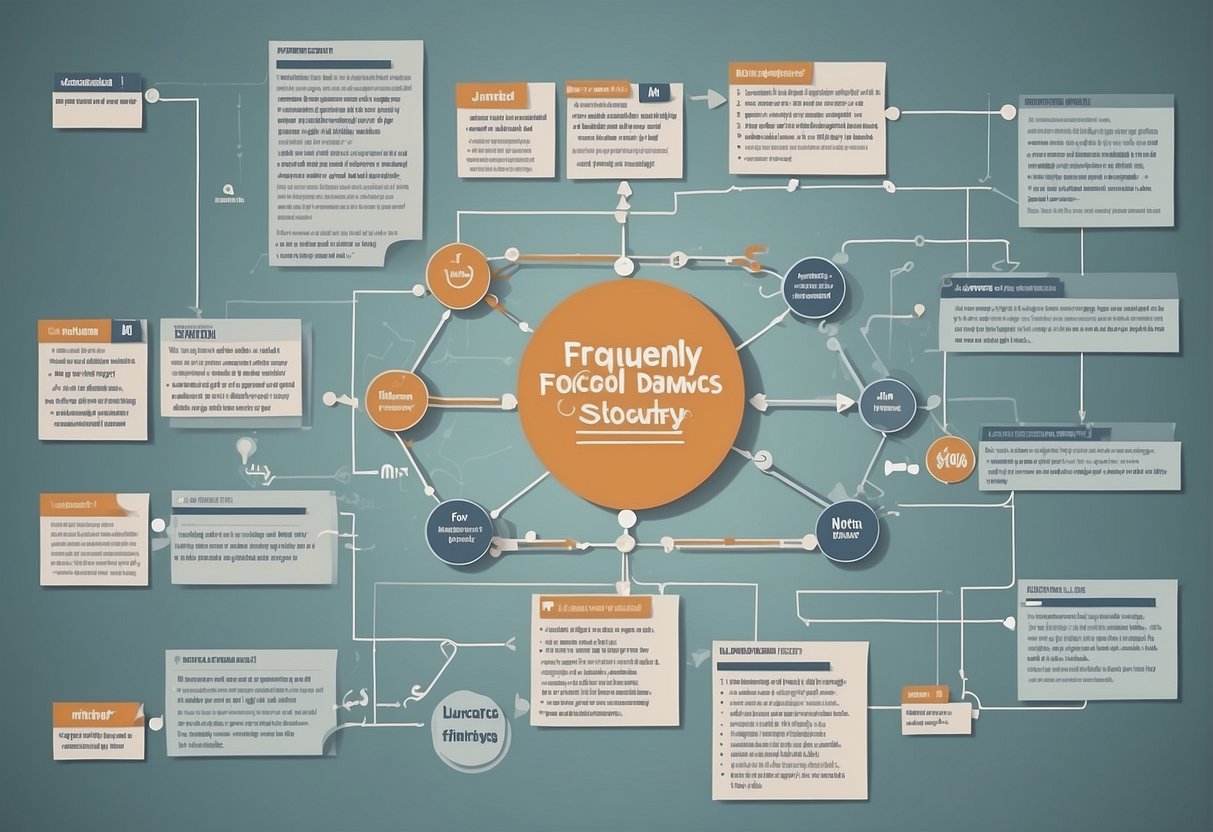
AI-powered flowchart makers are transforming the process of diagramming with their efficiency and advanced features. These tools leverage artificial intelligence to facilitate and streamline creating process diagrams.
What are the advantages of using an AI-powered flowchart generator for creating process diagrams?
AI-powered flowchart generators offer a variety of advantages such as automated generation of diagrams from data, and the ability to quickly revise and improve diagrams using AI suggestions, which can significantly reduce the time required to create detailed process maps.
How do AI flowchart tools compared to traditional flowchart software?
Compared to traditional software, AI flowchart tools usually provide more advanced features such as real-time collaboration, seamless integration with other tools, and the ability to quickly generate and iterate on flowcharts, enhancing the overall diagramming experience.
In what ways can AI-enhanced flowchart software improve workflow efficiency?
AI-enhanced flowchart software can improve workflow efficiency by enabling automated data visualization, offering straightforward editing tools for quick updates, and helping teams to communicate ideas more effectively with clear, up-to-date diagrams.
What features do AI-driven flowchart makers offer that distinguish them from conventional diagramming tools?
Distinct features of AI-driven flowchart makers include smart template selection, guided drawing experiences, and advanced customization options which cater to users’ specific needs in diagramming complex processes within minimal time.
How does an AI flowchart generator assist in simplifying complex process mapping?
An AI flowchart generator simplifies complex process mapping by utilizing intelligent algorithms to recognize patterns and structures in data, thereby converting them into comprehensive visual formats with minimal user input.
Can AI flowchart software integrate seamlessly with other productivity tools, and if so, what are the benefits?
Yes, AI flowchart software can often integrate seamlessly with other productivity tools, which benefits users by providing a unified platform that enhances data exchange and fosters a more cohesive and efficient workflow environment.