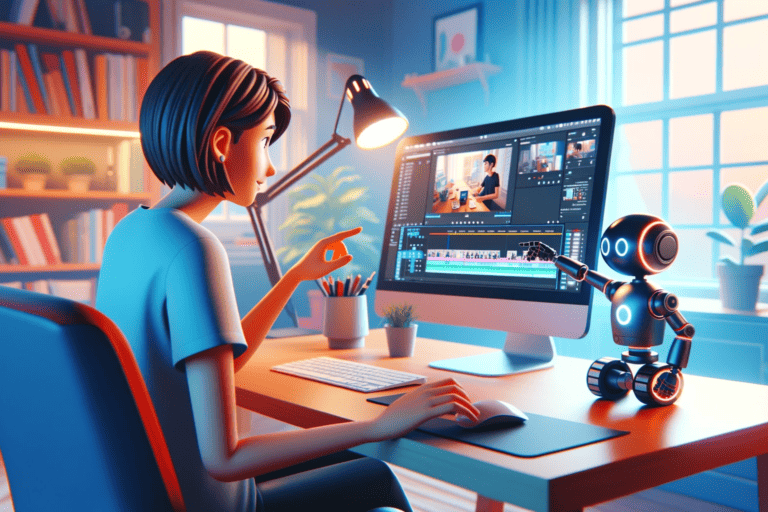
Benefits of AI for Graphic Designers: Enhancing Creativity and Efficiency
The integration of artificial intelligence into graphic design is a transformative development with far-reaching implications in the creative domain. AI revolutionizes the way graphics are created, modifying traditional workflows, and providing new tools and methods that were previously unimaginable. For graphic designers, AI has emerged as an invaluable asset, enabling them to automate routine tasks, enhance their creative processes with advanced algorithms, and produce more impactful designs at an accelerated pace.
As the technology progresses, AI in graphic design is not just changing the operational aspects but also the very nature of design creation and collaboration. Designers are now equipped with tools that can learn from vast datasets, offer intelligent suggestions, and even generate novel design elements, thereby optimizing user experience and accessibility. These advancements are reshaping the industry, pushing the boundaries of creativity, and establishing new standards for quality and efficiency.
Key Takeaways
- AI is significantly altering graphic design workflows, offering tools for automation and enhanced creativity.
- Advancements in AI for graphic design are fostering improved collaboration and setting new quality standards.
- Designers leveraging AI are better prepared to meet the future challenges of the industry, with an emphasis on user experience.
Innovations in Creativity and Design
Graphic design is being transformed by the emergence of AI, providing designers new ways to foster creativity, leverage cutting-edge tools, and navigate ethical terrain in AI-generated content.
Leveraging AI for Enhanced Creativity
AI technologies have opened new avenues for graphic designers to push the boundaries of creativity. With platforms like Midjourney, designers are introduced to a realm of new ideas that can inspire their original projects. Generative AI employs complex algorithms to suggest unique color combinations, fonts, and layouts, augmenting human creativity and facilitating the development of innovative design options.
AI-Powered Tools and Software
Revolutionizing the industry, AI-powered tools such as Adobe Sensei and Canva offer unprecedented efficiency. They enable designers to automate tasks like resizing images and applying consistent styles across different elements. For instance, Adobe Firefly allows graphic artists to work with smart tools that handle tedious aspects of design, thus dedicating more time to the creative process. The integration of deep learning algorithms helps maintain brand identity consistency through Adobe Illustrator, enhancing the overall design workflow.
- Software Benefits:
- Automation: Freeing up designers for complex tasks.
- Inspiration: Generating novel design concepts.
- Efficiency: Streamlining design processes.
Ethical Considerations in AI-Generated Designs
As AI reshapes graphic design, it raises significant ethical questions. Designers must consider potential bias in AI algorithms that can perpetuate stereotypes and reflect cultural norms not universally accepted. Copyright infringement and originality in AI-generated designs come under scrutiny because AI can replicate artistic styles without human input. Consequently, establishing ethical guidelines for AI design becomes crucial to respecting creativity and evolving cultural and color preferences without crossing ethical boundaries.
- Ethical Challenges:
- Bias and Stereotypes: Navigating AI predispositions in design.
- Copyright Issues: Avoiding infringement while fostering innovation.
- Originality: Ensuring AI complements rather than supplants human creativity.
Improving Design Efficiency and Quality
Artificial intelligence (AI) is transforming the graphic design industry by enhancing the efficiency of the design process and elevating the quality of output. Designers are integrating AI to handle repetitive tasks, gain data-driven insights, and foster real-time collaboration, which boosts productivity and fosters more personalized user experiences.
Streamlining Repetitive Tasks
AI is adept at taking over repetitive tasks such as background separation, resizing images, and applying consistent branding styles across various platforms. This automation allows graphic designers to devote more time to the creative and complex aspects of design work. For instance, a social media campaign can benefit from AI by automatically adjusting layouts and photos to suit different platforms, ensuring brand cohesion and visual appeal.
Data-Driven Design Insights
The utilization of AI enables designers to leverage data analysis for informed design choices. AI art tools analyze user engagement and provide invaluable data-driven insights that guide the refinement of designs. This translates to layouts and visuals that are optimized for better user experiences, directly impacting the success and effectiveness of the final product.
Real-Time Collaboration Features
Real-time collaboration is significantly enhanced by AI technologies. Multiple designers can work on a single project simultaneously from various locations, making iterative changes that are tracked and synchronized in real time. This not only increases productivity but also enriches the design process through the immediate exchange of ideas, fostering a dynamic and synergistic environment for creative development.
By integrating AI into their work, graphic designers can significantly elevate both the efficiency and quality of their designs, driving the design industry forward with innovations that directly benefit end-users.
Industry Impact and Collaboration
The integration of AI into graphic design is revolutionizing workflows and fostering unique opportunities for human-machine collaboration. These developments are reshaping how designers approach creative tasks and problem-solving within the industry.
Shifting Design Industry Dynamics
AI tools are increasingly common in the design industry, offering enhancements in speed and consistency. These technologies are enabling designers to automate repetitive tasks, such as resizing images for social media platforms, which boosts productivity. For instance, layout optimization AI tools can drastically improve web and app design, focusing on usability and accessibility. Such automation allows human designers to dedicate more time to human creativity and complex problem-solving that AI cannot yet replicate.
AI’s role in the design industry is not just about streamlining processes but also about analyzing user behavior and demographics to create tailored content. This kind of data-driven design approach can lead to more effective and personalized user experiences.
Collaboration Between AI and Designers
The relationship between AI and designers is symbiotic. While AI provides tools for efficiency and data analysis, the design process remains rooted in the unique perspective of the human illustrator. Designers are leveraging AI’s capabilities to explore new realms of innovation, using AI-generated suggestions as a starting point for further creative exploration.
AI’s ability to process and learn from existing biases in data may raise potential risks, leading to the perpetuation of stereotypes in design if not managed carefully. However, responsible collaboration between AI and human designers can mitigate these risks, ensuring diversity and inclusivity in design outputs.
By incorporating AI technologies, designers can augment their natural abilities, paving the way for what many see as the future of AI in graphic design – an era defined by enhanced creative possibilities and transformative industry dynamics.
Optimizing User Experience and Accessibility
In the realm of graphic design, AI significantly bolsters the capacity to tailor user experiences and streamline accessibility. These advancements empower designers to craft interfaces that resonate more deeply with individual users and cater to diverse needs with greater efficiency.
Adapting to User Preferences
AI-powered tools now enable designers to analyze user behavior and demographics, leading to personalized design options that resonate with the target audience. For instance, software infused with AI can suggest layouts and color schemes based on a user’s past interactions on social media platforms. This automation not only saves time but also helps in maintaining a consistent brand identity across various channels.
- Personalization: AI studies user behavior to offer personalized content, enhancing user engagement.
- Social Media: Tools can adapt posts and ads for each user, potentially increasing conversion rates.
Enhancing Accessibility with AI
The integration of AI into design software ensures that accessibility is not an afterthought. Designers can utilize AI to automatically check and improve the accessibility of their work—be it ebooks, videos, or online graphics. AI can adjust contrast ratios for better visibility or suggest alternatives to make the content more accessible to people with disabilities. As a result, the final products are more inclusive, adhering to accessibility standards with minimal extra effort from designers.
- Automation: AI automates tasks like text-to-speech for video content or alt-text generation for images.
- Brandmark: AI can ensure brand assets are accessible, becoming an essential part of brand identity.
Exploration of New Horizons
The incorporation of artificial intelligence in graphic design grants professionals the ability to break traditional creative boundaries and anticipate evolving industry trends.
Boundary-Pushing with Generative AI
Generative AI tools incentivize innovation by offering graphic designers a canvas to experiment with bold ideas and unprecedented color palettes. These tools can synthesize visual elements in ways that might not occur to the human mind, thus augmenting creativity. The injection of AI into the design process can yield astonishing visuals that push the limits of conventional aesthetics, effectively recalibrating what is considered visually possible.
The Role of AI in Conceptualizing Future Trends
AI stands at the forefront of identifying and setting future design trends. By analyzing vast quantities of design data, AI algorithms can identify emergent patterns and suggest fresh perspectives that may dictate new trends. Moreover, these tools help in countering the potential homogenization of designs by exposing inherent biases and promoting a unique perspective. With AI’s continuous evolution, it’s projected to play an even larger role in shaping the future of AI within the realms of graphic design and beyond, incorporating advancements like augmented reality to craft immersive and interactive experiences.
Preparation for Future Challenges
As artificial intelligence (AI) becomes more prevalent in graphic design, professionals in the field must prepare for a landscape that involves ethical and technical challenges. The incorporation of AI tools can invite risks such as biases and cultural insensitivity. Designers need to adopt a critical perspective towards the fusion of AI in their work to maintain high ethical standards and foster genuine innovation.
Anticipating Ethical and Technical Challenges
AI in graphic design can optimize workflows and open up new avenues for creative expression. However, it also presents ethical considerations that designers must address. One of the primary issues is the potential for AI to perpetuate existing biases. For example:
- Biases: AI algorithms may inadvertently reinforce stereotypes present in training data, leading to biased outputs.
- Ethical Concerns: The risk of infringing upon intellectual property rights or creating designs that do not align with cultural norms is heightened with AI’s capacity for content generation.
Addressing these concerns involves establishing boundaries and guidelines that ensure AI tools are used responsibly. Furthermore, vigilance in problem-solving is crucial to prevent AI from causing harm or perpetuating unfairness.
Embracing AI with a Critical Perspective
Graphic designers should embrace AI from a unique perspective that harnesses their creative capacities while being mindful of ethical concerns. This entails:
- Critical Assessment: Constantly evaluate AI outputs against ethical standards and cultural sensitivities.
- Educational Investment: Engage with ongoing learning to understand AI’s capabilities and limitations, ensuring its application benefits all stakeholders without overstepping moral bounds.
Designers armed with knowledge can push the boundaries of AI’s application in problem-solving while preventing its misuse. They act as gatekeepers, ensuring that the evolution of the design industry through AI stands on a foundation of ethical integrity and cultural awareness.
FAQs
What advancements in AI software are most beneficial for graphic designers?
Graphic designers benefit from AI-powered tools like Adobe Firefly which enhances their creative process, allowing them to experiment with ideas quickly and efficiently.
In which ways has AI technology transformed the field of graphic design?
AI technology has transformed graphic design by automating and streamlining tasks. It facilitates rapid prototyping and brainstorming, enabling designers to produce work at an unprecedented pace.
What tools can designers leverage to incorporate AI into their creative workflow?
Designers have an array of AI tools at their disposal, such as Adobe Firefly, Canva, DALL-E by OpenAI, and MidJourney, which serve to automate and streamline the creative workflow.
How is AI contributing to the evolution of the graphic design industry?
AI contributes to the evolution of the graphic design industry by introducing new technologies that change traditional workflows and open up novel opportunities for creativity.
What is the impact of AI-generated art on the professional landscape of graphic design?
AI-generated art is impacting the graphic design landscape by challenging the traditional notions of creativity and offering innovative ways to generate design elements, altering how professionals approach design.
What are some potential drawbacks of using AI in graphic design processes?
Potential drawbacks include a reliance on technology that may limit the development of foundational skills and the possibility of homogenizing design aesthetics as more designers use similar tools.