AI and Nanotechnology: Revolutionizing Industries with Cutting-Edge Innovations
Artificial intelligence (AI) and nanotechnology are two of the most cutting-edge fields in today’s technological landscape. Although these domains may seem unrelated at first glance, they are increasingly being integrated to unlock new possibilities and solutions for some of the world’s most pressing problems. By working together, AI and nanotechnology have the potential to drive significant advancements in medicine, precision agriculture, and even brain-machine interfaces.
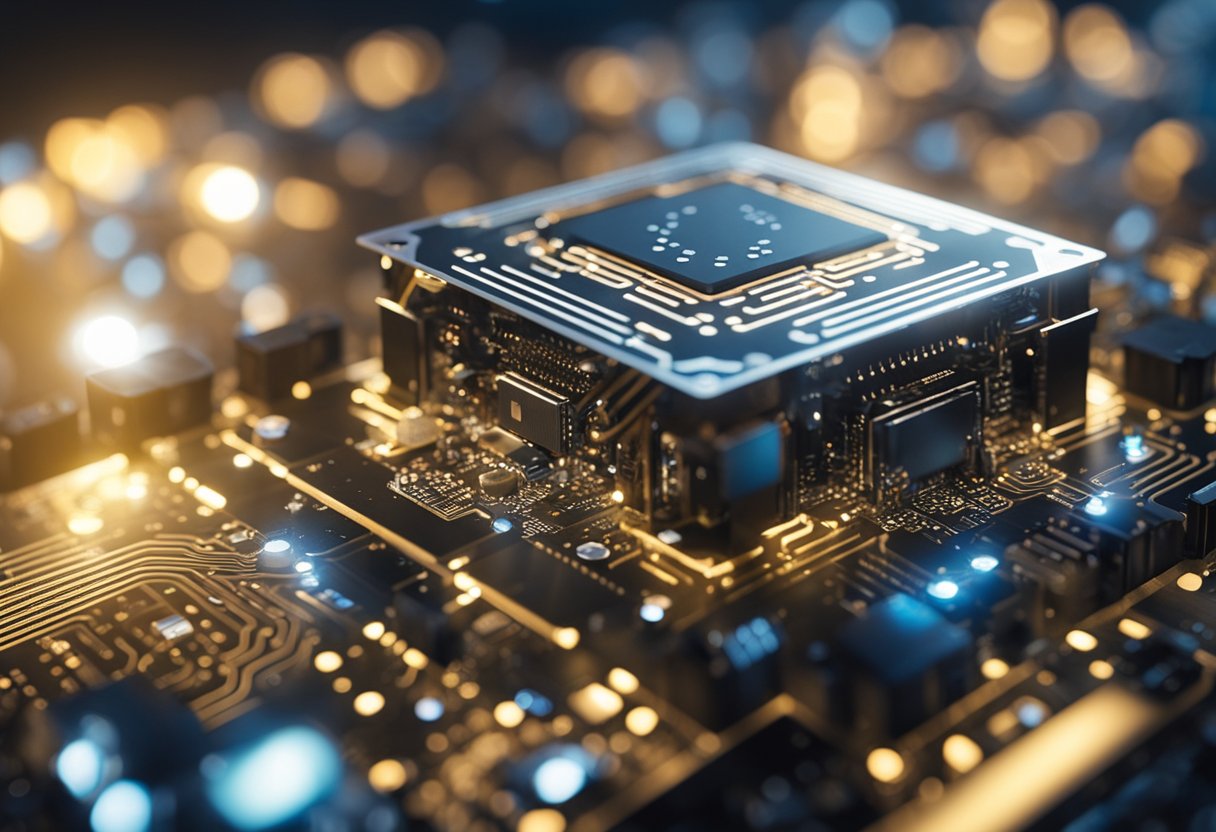
Nanotechnology involves the manipulation of materials at the nanometer scale, allowing for the creation of novel materials with unique properties. Meanwhile, AI refers to the development of algorithms and software that can simulate human intelligence and automate complex processes. The convergence of these two fields is opening up new avenues of research and innovation, making it an exciting time for scientists, engineers, and entrepreneurs.
As the collaboration between AI and nanotechnology unfolds, experts are discovering an array of promising applications. From designing more efficient nanomaterials to enhancing agricultural productivity, the fusion of these emerging technologies is enabling numerous advancements across various industries. This partnership not only holds great potential for the future but also serves as a reminder of the limitless possibilities that innovative technologies can bring when combined creatively.
Key Takeaways
- AI and nanotechnology integration unlocks new opportunities in various industries
- Promising applications include efficient nanomaterial design, precision agriculture, and brain-machine interfaces
- The combination of these emerging technologies holds significant potential for future advancements and discoveries
Unlocking New Possibilities with AI and Nanotechnology
AI and nanotechnology are rapidly advancing fields that hold the potential to revolutionize a wide range of industries. The intersection of AI and nanotechnology enables researchers to explore and develop innovative solutions in areas such as medicine, energy, electronics, and materials science.
AI has been instrumental in unlocking the power of nanotechnology, making it possible to derive valuable insights from the inherent complexity and massive amounts of data generated at the nanoscale. This helps improve energy efficiency while fostering innovation. Nanotechnology, on the other hand, enables the development of highly advanced sensors and components used in AI systems, which further enhances their performance and capabilities.
In the medical field, combining AI with nanotechnology has resulted in groundbreaking advances. For example, nanobots can be designed to target cancer cells for precise drug delivery, while AI assists in diagnosing and mapping the targeted areas. This collaboration not only enhances the effectiveness of treatments but also minimizes the potential side effects.
Furthermore, the merging of AI and nanotechnology also plays a significant role in environmental conservation. Researchers are developing nano-enabled materials that, when integrated with AI, can actively monitor pollutants in the air and water, effectively reducing the impact of pollution on ecosystems.
One of the most promising areas in the collaboration between AI and nanotechnology is in the development of innovative energy solutions. For instance, the invention of new battery technologies with higher energy capacities and charging speeds, which could drastically change the landscape of renewable energy and electric transportation.
In conclusion, the fusion of AI and nanotechnology paves the way for a myriad of possibilities that can address some of the world’s most pressing challenges. As research progresses, we can expect to witness breakthroughs in various domains – from medicine and environmental conservation to energy efficiency and innovation.
AI-Enabled Nanomaterials
Artificial Intelligence (AI) has been playing a crucial role in the development and characterization of nanomaterials. The integration of AI into nanotechnology has led to significant advancements in the field, such as improved data acquisition and development of smart nanomaterials for various applications.
AI in Nanomaterials Discovery
AI techniques, such as machine learning, are being increasingly used to predict the properties of nanomaterials and identify potential novel candidates. The use of AI has enabled the rapid screening of vast databases of materials, leading to more efficient discovery processes and reduced time to market for new nanomaterials.
For instance, AI algorithms have been applied to the study of quantum dots, gold nanoparticles, and carbon nanotubes, in order to enhance their sensing capabilities for biomarker detection. Moreover, AI has been used in theoretical approaches and simulations, which assist in understanding the complex behavior of nanomaterials and their interaction with biological systems.
Incorporating AI within nanotechnology allows researchers to process large amounts of data collected from experiments and simulations, leading to more accurate materials characterization. This, in turn, results in the development of smart nanomaterials that are better suited for targeted applications, such as in precision cancer medicine.
Through the utilization of AI-enabled nanomaterials, researchers and scientists are able to push the boundaries of nanotechnology and discover innovative solutions to a wide range of challenges in various industries, from healthcare to renewable energy. The integration of AI into nanomaterials discovery has not only streamlined the research process but also produced novel materials with tailored properties that meet specific application requirements.
AI and Precision Agriculture
Artificial Intelligence (AI) and nanotechnology are revolutionizing the field of agriculture, particularly in the domain of sustainable and precision agriculture. By incorporating these cutting-edge technologies, farmers are gaining better insights into crop management, soil monitoring, and livestock care.
AI-driven solutions aid in monitoring crop health and making informed decisions in real time. For instance, advanced machine learning algorithms process remote sensing data, satellite imagery, and drone footage to predict crop yield and identify potential pest infestations. This helps farmers optimize the use of resources, such as water and fertilizers, thereby reducing their environmental footprint.
Nanotechnology has also played a key role in enhancing the precision of agricultural practices. It has the potential to provide targeted delivery of agrochemicals and improve plant nutrient uptake. Moreover, nanotechnology can contribute to the development of smart sensors for real-time soil and water quality monitoring.
One noteworthy project involves a collaboration of researchers from three Texas universities who are working on an AI-driven precision agriculture program using Unmanned Aerial Vehicles (UAVs). This project aims to address critical challenges in the Southern Great Plains region by employing sophisticated remote sensing systems for crop management.
Additionally, AI has been instrumental in the design and operation of autonomous agricultural robots. These machines can perform tasks such as seeding, weeding, and harvesting, significantly reducing the need for manual labor and increasing overall farm productivity.
In conclusion, the integration of AI and nanotechnology in precision agriculture has shown promising results in improving crop yield, resource management, and environmental sustainability. As these technologies continue to advance, the agriculture industry can expect to witness a profound transformation in the way farm operations are conducted.
Brain-Machine Interfaces and Nanotechnology
Brain-Machine Interfaces (BMIs) are an emerging technology aimed at creating a direct communication pathway between the brain and external devices. This field has garnered significant attention due to its potential applications in medicine, rehabilitation, and human-computer interaction. Recent advancements in nanotechnology have played a crucial role in advancing this field, providing new tools and platforms for the development of more sophisticated and efficient BMIs.
One major area of convergence between nanotechnology and BMIs is the development of nanosensors. These small-scale sensors can be directly implanted into the nervous system, allowing for real-time monitoring and stimulation of neural activity. This increased precision and control over neural signals opens up new possibilities for more effective treatment options for neurological disorders and the restoration of sensory and motor functions.
Another vital aspect of this convergence is the integration of artificial intelligence (AI) and machine learning. AI algorithms can help improve the accuracy and efficiency with which we decode and interpret neural signals obtained through nanotechnology-based systems. By combining AI and BCIs, researchers are better equipped to develop more advanced BMI applications, such as controlling prosthetic limbs or even communicating with computers using thoughts alone.
Moreover, nanotechnology also enables the development of more biocompatible and durable materials, essential for long-term implantation of BMI devices. Reducing the risk of infection and minimizing the potential damage to the brain or nervous system are critical factors in ensuring the safety of any BMI implementation.
In conclusion, the convergence of nanotechnology with brain-machine interfaces is opening new frontiers in both the fields of medicine and human-computer interaction. By leveraging the potential of nanosensors, artificial intelligence, and advanced materials, researchers are making strides in developing more advanced and reliable BMIs, pushing the boundaries of what we understand about the human brain and the possibilities for its interaction with the world around us.
Nanorobotics and Artificial Intelligence
Role of AI in Nanobots
Nanorobotics is an emerging field that combines nanotechnology with robotics to develop tiny, intelligent machines capable of performing various tasks at the nanoscale. Artificial Intelligence (AI) plays a crucial role in the development and function of these nanobots by enabling them to learn, adapt, and improve their performance in complex environments.
AI for nanorobotics is an essential component when designing and operating nanobots. By integrating AI algorithms, nanobots can make decisions, solve problems, and adjust their behavior to better accomplish tasks. For example, AI-powered nanobots can intelligently navigate through the human body to deliver drugs to targeted cells, perform nanoscale surgery, or detect early signs of diseases 1.
Do nanobots use AI? The answer is yes, in many cases. Integration of AI into nanobots is becoming increasingly common, due to the numerous benefits AI can bring to the nanobot’s performance and versatility. AI allows nanobots to:
- Analyze complex data at a rapid pace and with a high degree of accuracy, enabling them to respond to a wide range of situations in real-time.
- Adapt to their environment and optimize their behavior to better accomplish the tasks they were designed for.
- Collaborate and communicate with other nanobots to complete tasks more efficiently, allowing for swarm-like behavior.
Innovations in AI and nanotechnology have shown great potential for solving real-world problems, especially in the fields of medicine, environmental monitoring, and manufacturing 2. By leveraging the power of AI, nanorobotic systems can become more energy-efficient and perform tasks with unprecedented precision and accuracy. As the fields of AI and nanotechnology continue to advance, we can expect significant breakthroughs in the capabilities of nanobots, which will ultimately improve the quality of life and revolutionize industries.
Footnotes
- AI Designs Little Robots in 30 Seconds and They Keep Sprouting Legs ↩
- AI and nanotechnology are working together to solve real-world problems ↩
Exploring Combination of AI and Nanotechnology
The combination of AI and nanotechnology entails the convergence of biology, artificial intelligence, and nanotechnology, with the goal of promoting a scientific and technical revolution. This multidisciplinary approach is still in progress and seeks to combine knowledge in engineering, chemistry, and physics, to develop applications that benefit various industries and society as a whole1.
One of the key aspects of this partnership is the integration of AI’s strengths, such as neural networks or evolutionary algorithms, with the current nanosciences2. This collaboration aims to boost research and development in both fields and enhance the potential applications of nanotechnology.
AI-enabled nanotechnology is revolutionizing advanced materials science, as it empowers researchers to create and manipulate materials at a minuscule scale3. By incorporating AI’s data analysis and predictive capabilities into the formulation and design of novel nanomaterials, scientists are able to accelerate the discovery of advanced materials with enhanced properties.
Moreover, the integration of AI and nanotechnology has proven to be instrumental in realizing the goal of precision medicine4. By combining AI’s ability to analyze large amounts of patient data with nanotechnology’s potential to create targeted drug delivery systems, researchers are moving closer to offering personalized treatments for each cancer patient.
In conclusion, the combination of AI and nanotechnology opens new doors in various fields, from advanced materials to precision medicine. As both domains continue to evolve and integrate, the potential applications become more extensive and promising, paving the way for groundbreaking innovations in science and technology.
Footnotes
- Artificial Intelligence Integration with Nanotechnology ↩
- Artificial intelligence in nanotechnology – IOPscience ↩
- The Role of Artificial Intelligence in Advanced Materials and Nanotechnology ↩
- Integrating Artificial Intelligence and Nanotechnology for Precision Medicine ↩
FAQs
How is AI applied in precision cancer medicine using nanotechnology?
AI and nanotechnology have shown potential in improving precision cancer medicine. AI algorithms can analyze data from imaging, molecular profiling, and clinical outcomes to identify specific cancer biomarkers. On the other hand, nanotechnology enables the development of targeted drug delivery systems and nanosensors to monitor therapy response. The combination of AI and nanotechnology allows for more precise cancer diagnosis, better drug delivery, and personalized treatment plans.
What role does machine learning play in nanotechnology?
Machine learning, a subset of AI, plays a significant role in advancing nanotechnology research and applications. It can efficiently process, analyze, and interpret massive amounts of data generated by experiments and simulations in nanoscience, helping researchers identify patterns, make predictions, and optimize material properties. Machine learning is also applied in the design and discovery of new nanomaterials, nanostructures, and nanodevices with desired functionalities.
What are the advantages of incorporating AI in nanotechnology?
Incorporating AI in nanotechnology presents several advantages. AI can analyze and process complex data, leading to a deeper understanding of nanoscale phenomena and facilitating efficient optimization of nanomaterials and processes. It can also accelerate the discovery and development of novel applications and technologies, significantly reducing the time and costs associated with research and development. Furthermore, the integration of AI and nanotechnology can enable more accurate diagnosis, monitoring, and treatment of diseases, as well as the development of advanced nanoscale systems for various industries.
How do brain-computer interfaces (BCIs) interact with AI and nanotechnology?
Brain-computer interfaces (BCIs) are systems that enable communication between the brain and external devices. BCIs’ interaction with AI and nanotechnology occurs through the development of advanced materials and systems. Nanotechnology contributes by creating nanoscale sensors and transducers capable of detecting neural signals, while AI aids in processing and interpreting these signals, enabling more efficient bi-directional communication. The convergence of BCIs, AI, and nanotechnology has the potential to revolutionize neuroprosthetics, neurorehabilitation, and the management of various neurological disorders.
What is Nano AI?
Nano AI refers to the integration of artificial intelligence with nanotechnology. It encompasses the application of AI algorithms and techniques to analyze, understand, and optimize nanoscale materials, systems, and processes. Additionally, Nano AI involves designing nanoscale devices and sensors empowered by AI, enabling more accurate and efficient data acquisition and processing. Nano AI can potentially lead to the development of smart materials, enhanced drug delivery systems, and advanced diagnostic tools.
Do nanobots employ artificial intelligence?
Nanobots, or nanorobots, are microscopic machines designed at the nanoscale to perform specific tasks. They can employ AI algorithms and techniques to enhance their functionality. AI-powered nanobots have the potential to perform complex operations and adapt to their environment. In the field of healthcare, nanobots with artificial intelligence can navigate through the human body, detect and diagnose diseases, deliver treatments, and monitor patients’ responses to therapies.