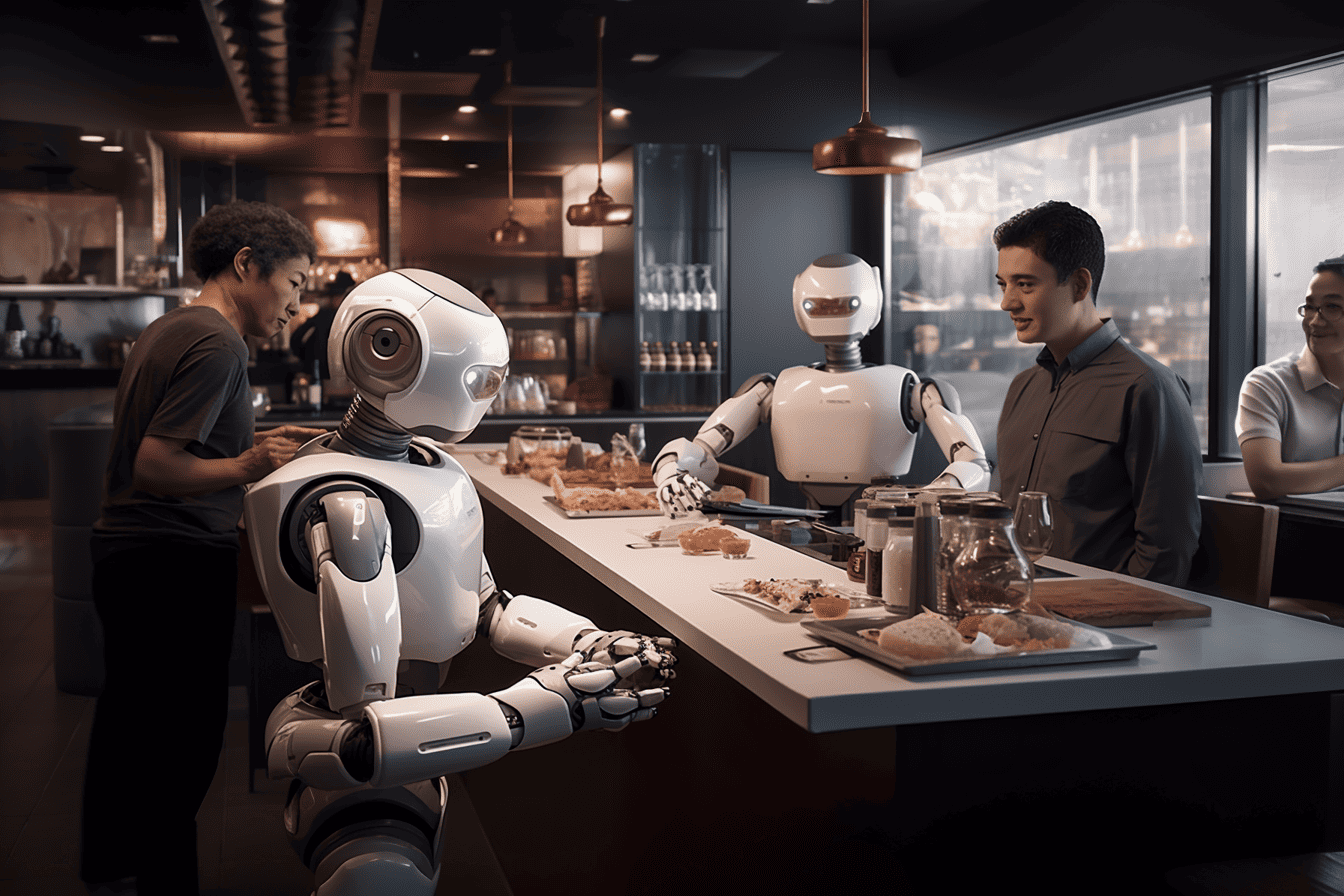
AI in Robotics: Revolutionizing Everyday Life
The integration of artificial intelligence (AI) into robotics has been a game-changer in various industries. This powerful combination has led to improved efficiencies, versatility, and the ability to perform tasks with unprecedented precision. As technological advancements continue to soar, AI-enabled robots are becoming a cornerstone in numerous domains, from manufacturing to healthcare.
Incorporating AI in robotics systems encompasses several key technologies and processes, giving robots the capacity to learn, adapt, and make decisions. This fusion has allowed for a wide range of applications and use cases, as well as sparking new debates over ethical considerations and potential challenges that may arise.
Key Takeaways
- AI and robotics integration unlocks precision, efficiency, and adaptability
- Numerous industries benefit from AI-enhanced robotic applications
- Opportunities and challenges emerge as AI revolutionizes the robotics landscape
Basic Concepts
So, let’s dive into the world of AI and robotics! AI, or artificial intelligence, is all about making computers mimic intelligent human behavior, like thinking and problem-solving 1. Robotics, on the other hand, deals with designing, building, and operating robots 2. Now, when we combine these two fascinating fields, we get AI-powered robots that can learn, adapt, and make decisions!
One of the core components of AI in robotics is machine learning. This is the process where robots can learn to perform tasks from humans3. It’s like teaching your new robot pal how to do stuff without having to program every little detail explicitly. Pretty cool, right?
AI in robotics generally comprises two main parts: hardware and software. The hardware includes all the tangible robot parts, like motors, sensors, and actuators. These devices help the robot interact with and respond to its surroundings.
Meanwhile, the software side deals with the actual AI algorithms and programs that control the robot. The software helps the robot process data, learn from its experiences, and make decisions 3. It’s like the robot’s brain, constantly evolving and improving to make the robot even more intelligent.
AI-driven robots come in all shapes and sizes, depending on their intended use. Some are small and subtle, performing straightforward tasks, while others are large and complex, able to carry out more demanding missions.
So, there you have it! Quick insight into the basic concepts of AI in robotics. It’s an exciting field where human ingenuity and technological advances come together, shaping the future of robots and making our lives even more interesting!
AI in Robotics Domains
AI in robotics has transformed numerous industries, demonstrating itself as a powerful and promising tool to optimize tasks, reduce costs and enables better decision making across various sectors. In this section, we’ll discuss a few domains where AI and robotics are making a significant impact: Healthcare, Business and Industries, Education, and Space Exploration.
Healthcare
The adoption of AI in robotics has revolutionized the healthcare sector. Developments like Intuitive Surgical’s robotic-assisted surgery system, known as the da Vinci Surgical System, is an example of how medical professionals can perform complex surgeries with increased precision and control. Alongside surgery, AI-powered robots are helping healthcare providers offer:
- Improved diagnostics and treatment planning using algorithms that analyze medical images and patient data.
- Enhanced patient care with robot assistants to monitor and attend to patient needs.
- Streamlined hospital administrative tasks to free up healthcare workers for more essential duties.
Business and Industries
AI-driven robotics has become a game changer within the business and manufacturing realms. Companies that embrace AI-controlled robots are experiencing:
- Improved production efficiency, thanks to robots capable of working 24/7 without fatigue.
- Consistent quality with automation managing repetitive tasks and reducing human error.
- Enhanced workplace safety as AI-driven robots can navigate hazardous environments that are unfit for human workers.
- Innovations in Industry 4.0, such as predictive maintenance, to ensure maximum machine uptime and reduce downtime costs.
Education
In the education space, AI and robotics are changing how teachers and students interact, transforming the learning experience. Some key improvements seen in education are:
- Personalized learning with AI-driven educational platforms, adapting to an individual’s learning style and progress.
- Robotics competitions that inspire creativity, teamwork, and problem-solving skills.
- Engaging learning experiences using robot companions to help young students, especially those with special needs, in developing social and emotional skills.
Space Exploration
The world of space exploration has greatly benefited from AI and robotics. Robots like NASA’s Mars rovers or the European Space Agency’s Philae lander have carried out missions that would be too dangerous or resource-intensive for humans:
- Collecting and analyzing soil samples from distant planets.
- Conducting remote exploration and mapping of celestial objects.
- Assisting in the design and assembly of space stations, telescopes, and other astronomical equipment.
The use of AI-driven robots in these domains empower human creativity and innovation, whilst minimizing the risks, costs, and workload associated with these tasks.
Key Technologies and Processes
Robot Operating System (ROS)
Robot Operating System (ROS) is an open-source framework that allows developers to create and reuse code for various robotic applications. ROS provides software libraries and tools to help engineers develop, simulate, and control robots in a standardized environment. Its modular design enables easy integration with various sensors and actuators, making it a go-to choice in the robotics community.
Sensors and Control
Sensors are essential in robotics as they provide the necessary data for navigation, motion, and interaction. Some common sensors include cameras, LiDAR, ultrasonic, and infrared sensors. These sensors allow robots to perceive their surroundings and make decisions based on the data collected. In addition, control systems are used to manage the robot’s actions, such as its actuators, to execute precise movements and responses.
Machine Learning Techniques
Machine learning plays a crucial role in enhancing a robot’s capabilities. Particularly, deep learning and neural networks enable robots to adapt and learn from their experiences. Machine learning models are trained on large datasets, allowing robots to complete more complex tasks and improve their performance over time.
Computer Vision and Perception
Computer vision allows robots to process and interpret visual information from their environment. This technology is commonly used for object recognition, tracking, and obstacle detection. It involves sophisticated algorithms that analyze images and videos, enabling robotic systems to understand their surroundings and make informed decisions.
Natural Language Processing
Natural Language Processing (NLP) deals with the ability of a robot to understand and respond to human languages. NLP techniques allow robots to comprehend spoken or written text, enabling more natural interactions between humans and machines. This technology is crucial for applications like chatbots, virtual assistants, and conversational AI.
Navigation and Mobility
Navigation and mobility involve the robot’s ability to move through its environment while avoiding obstacles and reaching its destination. Technologies like Simultaneous Localization and Mapping (SLAM) play a significant role in helping robots navigate complex surroundings. Additionally, advanced motion control systems with sensors, actuators, and control algorithms ensure smooth, accurate, and safe movements.
Applications of AI in Robotics
AI in robotics has made quite an impression in several fields, greatly enhancing their capabilities to better serve our needs. Let’s take a quick look at some popular applications and use cases of AI-driven robots.
First up, assembly lines. Robots powered by AI are a natural fit for performing repetitive tasks, such as assembling cars. They can work faster and more accurately than humans, making them ideal for improving efficiency on the production floor.
Next, we have the medical field. AI is assisting surgeons during intricate procedures, making surgery more precise and less invasive. With the help of AI, surgical robots can now better respond to sensory information and adapt to unpredictable situations.
Education is another area that benefits from AI in robotics. Imagine robots that can create personalized learning experiences and offer real-time feedback to students. These AI-driven educational robots are becoming the tutors of the future, helping kids learn at their own pace.
In law enforcement, AI-powered robots are stepping up, too! They can support officers by capturing data and images from crime scenes, providing valuable information to solve cases faster and more accurately. Talk about a high-tech sidekick.
Healthcare doesn’t stop at surgery – AI is also making
Challenges and Considerations
Ethical Concerns
When it comes to AI in robotics, we can’t ignore the ethical concerns that arise. One major issue is the risk of AI-powered robots replacing human jobs. While automation can bring about innovation and efficiency, it can also result in job loss and social disruption.
Another aspect to consider is how AI systems make decisions. As AI technology gets closer to mimicking the human mind, it’s important to address the ethical implications of their decision-making processes. For instance, biased algorithms can lead to unfair treatment and discrimination. Consequently, developers and researchers need to ensure that AI systems are programmed to make fair and unbiased decisions.
Technical Obstacles
AI is a rapidly evolving field, but it still faces several technical obstacles. One such challenge is the limited understanding of the world around them. Robots need to be equipped with sensors such as 2D/3D cameras, vibration sensors, proximity sensors, accelerometers, and other environmental sensors to collect data and analyze their surroundings in real-time1. However, making sense of this vast amount of data can be a complex process.
Furthermore, ensuring the safety of AI-powered robots is crucial, especially when working in collaboration with humans or operating autonomously. Developers need to find ways to make robots reliable and safe in any given situation.
So, while AI in robotics is full of potential, it’s necessary to address ethical concerns and technical obstacles in order to embrace this technology responsibly and effectively.