AI in Manufacturing: Revolutionizing Production Efficiency and Quality
Artificial intelligence (AI) is revolutionizing various industries, and manufacturing is no exception. AI in manufacturing refers to the ability of machines to perform tasks similar to human capabilities, but with greater efficiency, accuracy, and speed. This intelligent technology is transforming how businesses operate, from optimizing operations and streamlining the supply chain to enhancing working conditions for employees.
The widespread adoption of AI in the manufacturing sector is contributing to what is known as “Industry 4.0”, which refers to the ongoing digital transformation of industries through the integration of advanced technologies, such as machine learning, robotics, and the Internet of Things. By leveraging AI-driven solutions, manufacturers can enhance productivity, lower costs, and minimize downtime, leading to a more resilient and sustainable future.
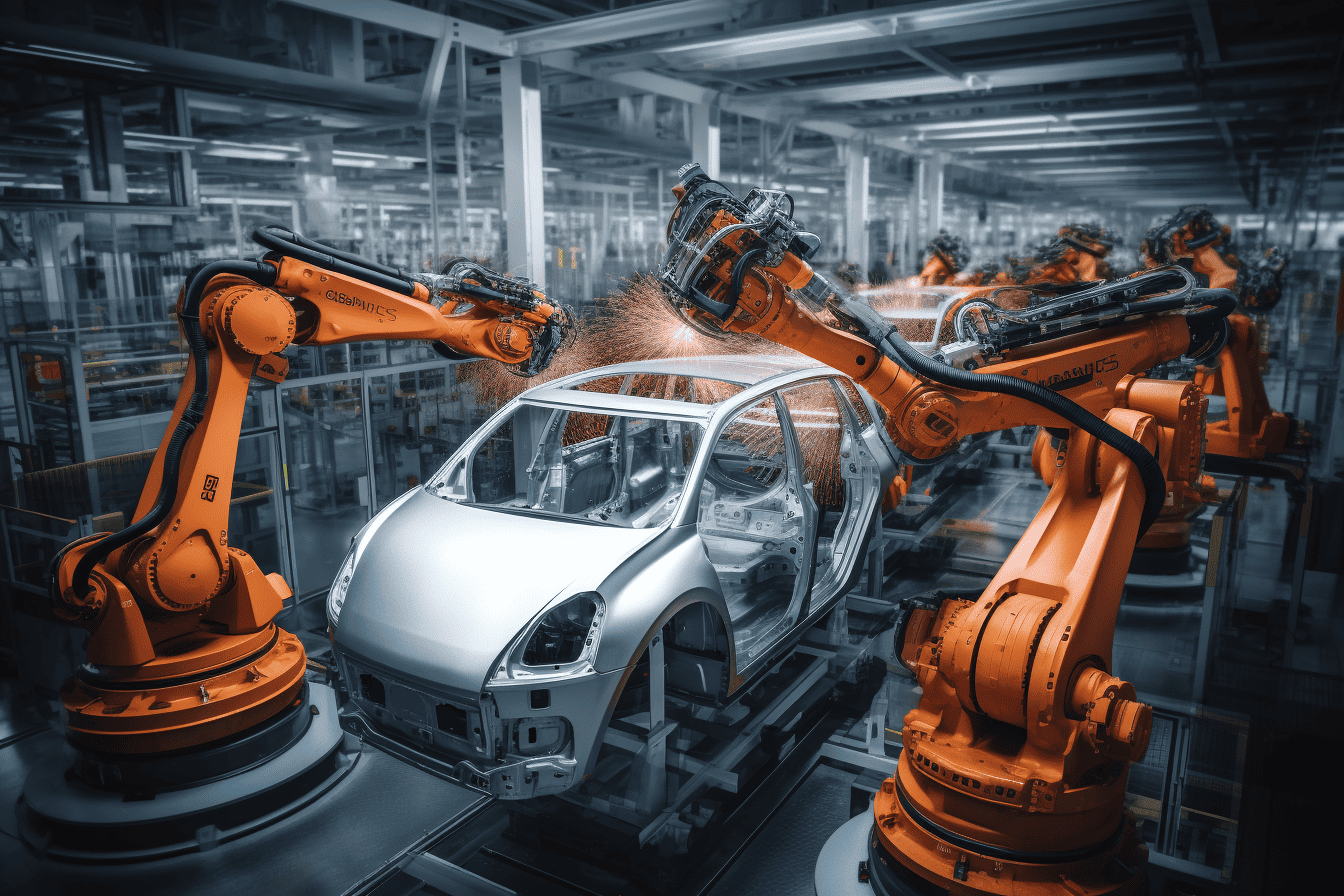
Manufacturers are increasingly incorporating AI-powered robotic automation into their production processes to boost efficiency and reduce critical errors, while also focusing on improving the working conditions and safety of their employees. With numerous real-world success stories emerging in this field, the potential benefits of AI in manufacturing are becoming more and more apparent.
Key Takeaways
- AI in manufacturing boosts efficiency and minimizes errors within the production process.
- Industry 4.0 marks the ongoing digital transformation in manufacturing with the integration of AI-driven technologies.
- Robotic automation powered by AI improves working conditions and safety in manufacturing environments.
The Emergence of AI in Manufacturing
I’ve noticed that artificial intelligence (AI) has become increasingly prevalent in the manufacturing industry in recent years. Companies like GE and other leading manufacturers are leveraging AI technology to transform their businesses, achieve digital transformation, and thrive in today’s highly competitive landscape.
One of the primary ways in which AI is being used in manufacturing is to analyze massive amounts of data generated by the industrial control systems (ICS) and production processes. By applying advanced machine learning algorithms and AI-driven analytics, companies can gain valuable insights into their operations and identify patterns that would otherwise be difficult to spot. This helps manufacturers make better-informed decisions, optimize production processes, and ultimately improve their overall efficiency.
Another significant aspect of AI in manufacturing is its potential to enhance the capabilities of existing machinery and equipment. By incorporating AI technology, I have seen factories become more agile and responsive to changes in demand, enabling them to quickly adapt to customer needs and market conditions. For example, AI-powered robots can adjust their movements and tasks in real-time, allowing for greater precision and reduced downtime.
Furthermore, manufacturers are capitalizing on AI to bolster their product quality and consistency. Advanced AI systems can evaluate products at various stages of production and detect deviations or defects that might escape human inspection. By identifying issues early on and minimizing the potential for errors, factories can maintain high quality standards while reducing waste and costs.
In conclusion, the emergence of AI in manufacturing has undoubtedly had a transformative effect on the sector, helping businesses become more efficient, responsive, and competitive. As AI technology continues to evolve and improve, the future of the industry looks even brighter.
AI and Manufacturing Operations
In the manufacturing industry, artificial intelligence (AI) plays a crucial role in enhancing various aspects of operations. In this section, I will discuss some key applications of AI in manufacturing operations, including predictive maintenance, quality control, inventory management, and operational efficiency.
Predictive Maintenance
One of the most valuable applications of AI in manufacturing is predictive maintenance. By leveraging sensors, digital twin technology, and advanced analytics, it becomes possible to predict when a machine or equipment component may require maintenance or replacement. By proactively addressing these issues, we can reduce downtime, improve efficiency, and even extend the life of the equipment. Deep learning models enable the identification of subtle patterns in collected data to refine the accuracy of the predictions.
Quality Control
AI-driven quality control helps detect defects in products early in the manufacturing process. Using advanced computer vision and machine learning algorithms, automated inspection systems are able to identify potential issues with significantly higher accuracy and speed than manual inspections. By addressing defects early, we can minimize product waste, reduce costs, and maintain a consistent level of quality across the production line.
Inventory Management
Effective inventory management is essential for maintaining smooth and efficient manufacturing operations. AI-driven systems can help optimize inventory levels by analyzing historical data and market trends in real-time. This allows us to predict demand fluctuations and adjust production schedules accordingly. Additionally, AI can be used to track and manage inventory, ensuring that the right amount of stock is available at all times and avoiding excess inventory or stockouts.
Operational Efficiency
Incorporating AI into manufacturing operations can lead to significant improvements in operational efficiency. Industrial automation and factory automation systems use AI to optimize manufacturing processes, reducing the overall production cycle time and increasing yields. Moreover, AI-powered monitoring systems can help identify areas for improvement, such as energy consumption or waste reduction, and provide insights for further optimization.
By leveraging AI in these aspects of manufacturing, I can confidently say that we are better equipped to adjust to changing market demands and create higher-quality products in a cost-effective manner.
Robotic Automation in Manufacturing
Robotics and AI
I believe that the combination of robotics and artificial intelligence (AI) is revolutionizing the manufacturing industry. AI enables robots to learn, adapt, and make decisions autonomously, leading to significant improvements in efficiency and productivity. These AI-enabled robots can quickly acquire and analyze data, allowing them to optimize their performance and minimize errors. This results in a faster production process and higher-quality products.
Industrial Robots
Today, industrial robots have become an essential part of smart manufacturing. I can see that these robots are designed to work alongside human workers, automating repetitive tasks and reducing the risk of accidents. For instance, AI-enabled industrial robots can perform tasks like assembling products, inspecting them for quality, and packaging them for shipment. The integration of these robots in manufacturing processes has led to increased efficiency and reduced labor costs.
According to the information from Intel and sme.org, industrial robots also provide manufacturers with the flexibility to adapt to changing market demands. They can be reconfigured easily to adjust production levels or switch to producing new products, enabling manufacturers to stay competitive in a constantly evolving market.
Smart Factory
I understand that the concept of a smart factory refers to the integration of advanced technologies like AI, IoT, and robotics in manufacturing processes to create a highly connected and efficient system. In a smart factory, AI-driven industrial robots work in tandem with other automated systems to optimize production, minimize waste, and improve overall efficiency.
One noteworthy example of a smart factory is Siemens, which has a facility that employs AI in various aspects of production, such as scheduling, maintenance, and even the design of their products. This integration of AI and robotics in manufacturing leads to a more responsive and agile production line, ultimately making the companies more competitive and better equipped to meet the demands of Industry 4.0.
Impact on Business and Strategy
Cost Efficiency
In the manufacturing industry, AI can significantly improve cost efficiency. By implementing AI-based automation processes, companies can reduce labor costs and streamline production workflows. This allows for faster production cycles, reduced downtime, and acceleration in scaling operations. As a result, businesses enjoy greater efficiencies and lower costs across the board.
Supply Chain Management
AI plays a crucial role in optimizing supply chain management. With machine learning algorithms and advanced analytics, AI systems can analyze historical and real-time data to predict demand, optimize inventory levels, and enhance overall operational agility. This means that manufacturers can improve their supply chain effectiveness and make better decisions related to procurement, distribution, and logistics – ultimately improving their competitive position.
Decision Making and Leadership
The implementation and adoption of AI in manufacturing operations have revolutionized the way leaders and management teams make strategic decisions. AI-driven insights, coupled with strong decision-making frameworks, provide leaders with the tools necessary to make informed choices that can drive business growth, increase ROI, and improve overall operational performance. By leveraging AI, businesses can navigate challenges in the manufacturing sector with greater confidence and clarity.
Use Cases of AI in Manufacturing
GE: AI in Manufacturing
At GE, AI plays a crucial role in enhancing manufacturing processes. One of the main advantages of incorporating AI is the ability to implement predictive maintenance. By analyzing sensor data, AI technology helps me identify potential downtime and accidents before they occur. This ensures resilient manufacturing operations while reducing costs and improving efficiency. GE’s AI-powered solutions assist in monitoring facilities in real-time, providing valuable insights for decision-making.
Furthermore, GE leverages AI for customization to optimize specific aspects of product manufacturing. This allows me to tailor products and services based on individual customer requirements, leading to higher satisfaction and better business performance.
Siemens: AI for Industrial Applications
Siemens utilizes AI in its manufacturing processes by making use of advanced analytics to monitor equipment and predict potential issues. By implementing AI-driven industrial applications, Siemens ensures a smooth and efficient operation, reducing downtime and ensuring optimal performance. This has led to the development of cutting-edge solutions to manage water resources, energy consumption, and overall efficiency.
Siemens’ AI-driven approach accelerates design time and implementation, allowing me to adapt to various requirements quickly. This enables the company to maintain a competitive edge while providing innovative solutions to challenging manufacturing problems. Siemens’ AI technology has proven to be a valuable asset in the ever-evolving manufacturing landscape.
IBM: AI for Manufacturing Solutions
IBM offers a wide range of AI-powered solutions tailored to manufacturing. One of the key products is IBM’s AI for Manufacturing Solutions that uses machine learning and automation to optimize systems and minimize downtime. By implementing these technologies, I can monitor and analyze data streams to provide crucial insights for decision-making.
Moreover, IBM’s AI capabilities provide me with advanced cognitive computing and deep learning methods that enhance automated visual inspections, fault detection, and maintenance. These solutions significantly improve the overall efficiency and productivity of manufacturing operations, paving the way for a smarter and more sustainable future in the industry.
Challenges and Future of AI in Manufacturing
AI Adoption Challenges
Implementing AI in the manufacturing sector comes with its own set of challenges. AI adoption in the manufacturing industry requires efficient data acquisition and management. Ensuring a reliable data flow and dealing with the vast amount of information can be demanding. Furthermore, there’s the concern of infrastructure, as AI-enabled systems might demand significant upgrades or even complete overhauls of existing facilities. This could incur high costs and extensive training for manufacturing engineers, who will need to understand and utilize AI algorithms efficiently for optimal results.
Cybersecurity risks are always a matter of concern when it comes to advanced technologies like AI. The integration of AI in manufacturing plants makes them more vulnerable to breaches and cyberattacks, which could disrupt or even dismantle operations.
Future Projections of AI in Manufacturing
Despite these challenges, the future of AI in manufacturing seems promising. As the world moves towards Industry 4.0, the role of AI will only grow stronger, increasing efficiency and productivity in the manufacturing sector.
A notable example is the expanding field of additive manufacturing, where AI can help in optimizing designs, reducing material usage, and facilitating the production of intricate and customized products. The World Economic Forum highlights AI’s potential to improve operational agility, allowing factories to respond to supply chain disruptions more effectively.
Moreover, AI algorithms can help in advanced demand forecasting, with machine learning models capable of predicting market trends and adjusting production accordingly. As more countries, such as China, prioritize AI development, we’ll see more innovations that cater to the manufacturing industry’s demands.
In conclusion, even though AI adoption comes with its fair share of challenges in the manufacturing sector, its potential to revolutionize the industry is undeniable. As manufacturing engineers adapt to new technologies and solutions, AI’s role in Industry 4.0 is expected to flourish, leading to more efficient, sustainable, and responsive factories.