AI for Animations: Revolutionizing Motion Graphics and Visual Storytelling
The integration of Artificial Intelligence (AI) into the realm of animation is a transformative movement altering the landscape of film, gaming, and digital content creation. AI in animation leverages machine learning and algorithms to automate tasks that were traditionally labor-intensive, breathe life into characters, and generate natural movements that were once only possible through hours of meticulous handcrafting. These advancements enable both seasoned professionals and newcomers to explore creative possibilities without the barriers of traditional animation techniques.
AI animation tools offer an array of features ranging from facial expression generation to complex motion graphics, significantly cutting down production time and allowing for a more dynamic storytelling approach. They extend their capabilities to various sectors, including marketing, education, and entertainment, illustrating the technology’s flexibility and widespread application. As AI continues to evolve, it is set to expand the horizons of the animation industry, providing a suite of tools that promise to enrich content with enhanced creativity and efficiency.
Key Takeaways
- AI in animation automates complex tasks and creates more lifelike movements.
- AI animation tools enhance creativity and reduce production time in various industries.
- Technological advancements in AI continue to push the boundaries of traditional animation methods.
Fundamentals of AI in Animation
In the realm of animation, artificial intelligence (AI) and machine learning (ML) are becoming game changers. They are redefining the scope of what can be achieved with character animation and traditional animation techniques.
Understanding AI and Machine Learning
Artificial Intelligence refers to the broad discipline of creating machines capable of performing tasks that typically require human intelligence. Under this umbrella, Machine Learning is a subset where algorithms learn from data, improve over time, and make decisions with minimal human intervention. For instance, ML algorithms can analyze past animation data to aid AI animators in creating complex animations.
- Character Animation: AI enhances this aspect by analyzing and replicating human emotions and movements, leading to more lifelike characters.
- Traditional Animation Techniques: These refer to hand-drawn frames for each second of animation. AI can replicate these techniques digitally, potentially increasing efficiency and output.
Key Components in AI-Driven Animation
Generative AI plays a pivotal role in AI-driven animation. This aspect of AI focuses on creating content, whether it’s generating new images or simulating entire scenes.
- Neural Network: A system of hardware and/or software patterned after the operation of neurons in the human brain. It’s a key component of AI that supports generative tasks in animation.
- Machine Learning Algorithms: Tools like deep learning and neural networks aid AI in interpreting complex data, which improves the animation process over time.
- AI Algorithm: It refers to the specific methods AI animators use to generate animations. For instance, Pixar has utilized these algorithms to animate intricate scenes, imbuing characters like Ember with realistic movement and texture.
Pixar is an example of a company at the forefront of integrating AI with traditional animation, pushing the boundaries of the animation industry. AI in animation goes beyond mere assistance—it is actively enhancing creative possibilities and redefining the animation workflow.
AI Animation Software and Tools
AI animation tools are transforming the way animators create content, offering efficient video editing capabilities and sophisticated character builders. These technologies enhance the productivity and creativity of both professionals and enthusiasts in fields like gaming and film.
Overview of Popular AI Animation Software
When searching for effective AI animation software, two names often rise to the top: Autodesk Maya and Blender. Autodesk Maya is a powerhouse for 3D animation, boasting intuitive modeling tools and AI technology for ultra-realistic effects. Meanwhile, Blender stands out as an open-source alternative, offering robust features for both 3D modeling and animation without the cost barrier.
Popular AI Animation Software:
- Autodesk Maya: For professional-grade 3D animations.
- Blender: Open-source and versatile for various projects.
Character Builders and Video Editing Tools
The landscape of AI animation software includes tools like Animaker and Vyond, which streamline the creation of animated characters and scenes. Animaker serves as an AI-driven video maker, enabling users even with limited design experience to craft animated videos with ease. For those emphasizing storytelling through animated characters, Vyond provides a vast array of video templates and character builders to quickly bring narratives to life.
Key Tools for Character and Video Editing:
- Animaker: Simplified, AI-powered video making.
- Vyond: Comprehensive character builder and storytelling toolkit.
Specialized AI Tools for Animation
Specialized AI tools in animation offer tailored solutions for various aspects of the production process. Renderforest uniquely integrates AI animation generators with a sleek user interface, while motion capture technology advances the realism and dynamics of character animation. AI video tools and AI image generators are also on the rise, significantly cutting down the time required for complex tasks like creating natural facial expressions or intricate backgrounds.
Specialized AI Tools:
- Renderforest: Integrates AI animation generators for ease of use.
- Motion Capture Technology: Provides realistic character movement.
Application of AI in Animation
The integration of artificial intelligence is revolutionizing animation, offering unprecedented efficiencies in creating elaborate visual content for various industries.
Gaming and Interactive Media
In the gaming industry, AI significantly enhances the production of 3D models and motion graphics. Sophisticated AI algorithms automate character animation, making the movements of game characters more realistic and reducing the workload on animation teams. Game developers are harnessing AI to create dynamic environments, which respond to player actions for an immersive gaming experience.
Marketing and Explainer Videos
For marketing purposes, AI is invaluable in efficiently producing high-quality explainer videos that bolster branding efforts on social media platforms. These tools empower marketers to generate compelling animations tailored to capture the attention of their target audience, elevating audience engagement and conversions through captivating visual storytelling.
Elearning and Audience Engagement
In the realm of elearning, AI-driven animations facilitate the creation of interactive training videos and tutorials. This technology enables the crafting of personalized learning experiences that adapt to the learner’s pace, optimizing audience engagement and knowledge retention. By simplifying complex concepts through clear and engaging animated content, AI supports educators and corporate trainers in delivering effective elearning materials.
Technological Advances in AI for Animation
The integration of AI in animation is resulting in cutting-edge tools and methodologies that reshape the landscape of visual storytelling. With AI-driven technologies such as machine learning algorithms, motion capture systems, and advanced graphics upscaling, animators and creators can achieve heightened levels of realism, efficiency, and creativity.
Innovations in Machine Learning for Animation
Machine learning, particularly through frameworks like Neural Frames, is significantly altering the way animations are generated and refined. By analyzing vast datasets, AI Art tools, including Stable Diffusion and Midjourney, facilitate the creation of intricate and nuanced animations that were previously impossible or highly time-consuming for human animators. The fine-tuning of character movements and expressions is now more personalized, offering a broader range of emotion and action.
Improvements in Real-Time Animation
With advancements in Real-Time Animation, the gap between conception and execution narrows, allowing for immediate feedback and iterative design. Motion Capture technology couples with AI to transfer human movements to digital characters seamlessly. Tools like Cascadeur empower animators to design physics-accurate animations in real-time, optimizing the animation workflow and enabling more dynamism in storytelling. Live Video Editing is another beneficiary of AI, where the content can be manipulated and enhanced instantaneously during live performances or streams.
Visual and Graphics Enhancement
The enhancement of Visuals and Graphics by AI is not just limited to creation, but also to Upscaling and VFX. AI algorithms can intelligently enhance the resolution and quality of existing animations without the need for traditional manual remastering. Upscaling can breathe new life into older content, making it more appealing to modern audiences. The use of AI also extends to refining Visual Effects (VFX), where it can automatically adjust lighting, textures, and other visual elements to make the final product look more realistic or stylized, as per the creator’s vision.
Practical Considerations in AI Animation
When incorporating Artificial Intelligence into the animation workflow, studios and creators must navigate various practical considerations. These range from streamlining collaboration to managing data and conforming to legal and ethical standards.
Workflow and Team Collaboration
AI animation software significantly impacts the workflow of animation production. It allows various teams within the animation industry to work concurrently, with algorithms automating repetitive tasks such as in-betweening and rotoscoping. The support team, including technical directors and AI specialists, must ensure that these tools are integrated seamlessly, enabling better collaboration between artists and technicians.
- Ensuring all teams are trained on the AI tools
- Facilitating a collaborative environment for creative and technical staff
Data Storage and Management
The use of AI in animation generates a considerable amount of data, necessitating robust data management strategies. Storage solutions, particularly cloud services, become pivotal, offering scalable resources and accessibility across teams. However, with this convenience comes the challenge of data privacy; thus, studios must implement strong security protocols to protect intellectual property and personal information.
- Adopting secure cloud services for scalable storage solutions
- Implementing data encryption and access controls for security
Legal and Ethical Aspects
AI-driven animation raises several legal and ethical considerations. For one, ensuring that the use of AI adheres to copyright laws, especially when it involves training AI with copyrighted material, is critical. Additionally, the ethical implications of potentially replacing human animators with AI tools present a concern that industry leaders must address transparently.
- Monitoring AI tools for compliance with copyright laws
- Engaging in open discussions about the ethical impact of AI on jobs within the industry
By accounting for these practical factors, those in the animation industry can better navigate the integration of AI, preserving the collaborative spirit of animation while leveraging the power of technology for creative expression.
Integrations and Extensions
The evolution of AI in animation has led to significant advancements in the integration with social media platforms and browser extensions, as well as improved hardware acceleration that boosts performance. These enhancements are especially relevant for AI animation generators utilized in social media, gaming, and marketing sectors, aiming for optimized rendering of clips and animations.
Social Media Platform Integration
AI animation generators are increasingly being integrated with social media platforms like Instagram to streamline the creation and sharing of animated content. They enable users to directly upload engaging animations to platforms, catering to both individual creative expression and strategic marketing efforts. This integration simplifies the user workflow and leverages the virality potential of social media.
- Example: Direct upload of animations to Instagram stories
- Impact: Enhances marketing strategies with visually compelling content
Browser and Software Extensions
Extensions, such as Google Chrome extensions, have become essential tools for animators, offering a range of functionalities from simplifying animation workflows to asset management. By implementing extensions that work with HTML and formerly with Adobe Flash, animators and developers can now more efficiently produce and test content across multiple browsers.
- Add-Ons: Extensions for timeline control and live previews
- Compatibility: Seamless integration with HTML standards for interactive content
Hardware Acceleration and Performance
The synergy between AI animation software and Graphics Processing Units (GPUs) leads to notable performance optimization, particularly in rendering times. GPUs are instrumental in accelerating the creation of complex 3D models and animations, making processes more efficient for both animators and users.
- GPUs: Critical for rapid rendering of high-quality animations
- Optimization: AI leverages hardware acceleration for real-time performance boosts
AI and the Future of Animation
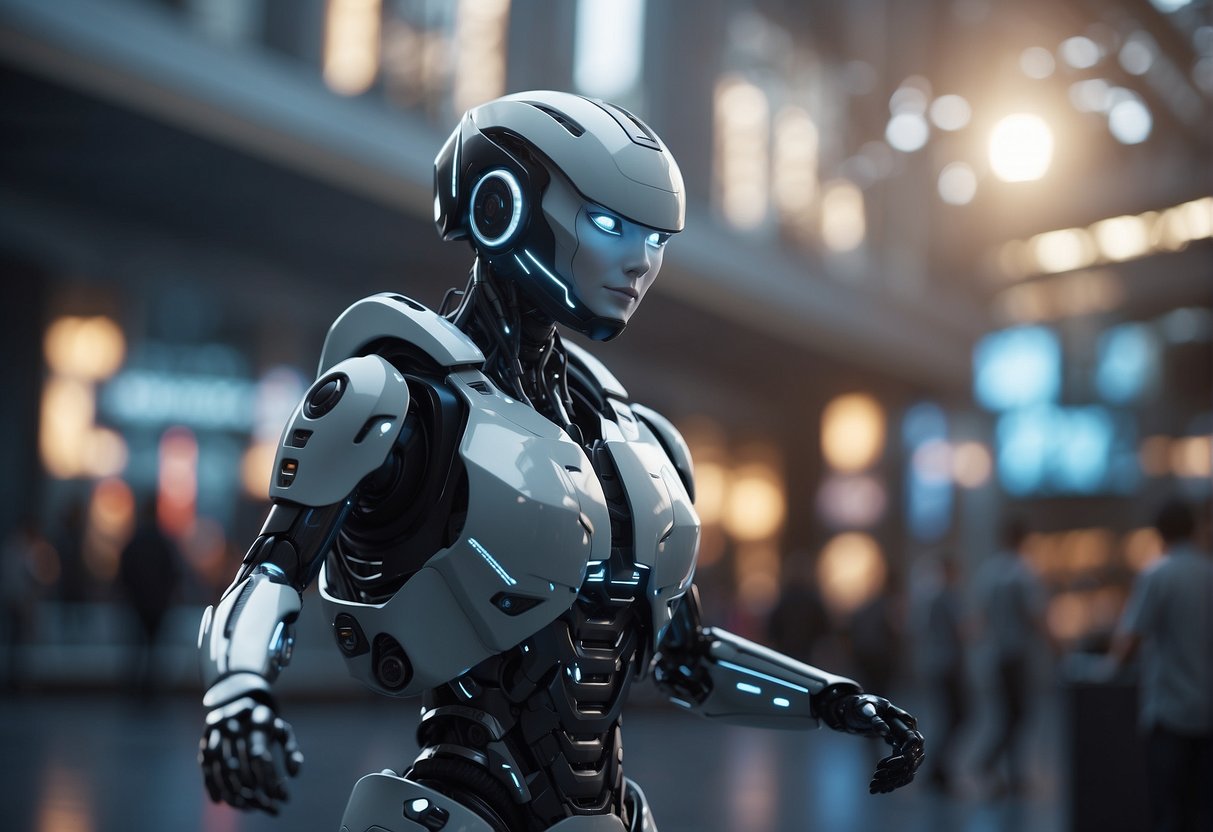
Advancements in artificial intelligence are paving the way for transformative changes in animation, affecting everything from how studios operate to the creative processes animators use.
Predictions for AI in Animation
AI-Assisted Animation is fast becoming a revolutionary tool that animators and studios are looking to leverage. Techniques like machine learning and neural networks are predicted to streamline complex tasks such as in-betweening, coloring, and even voice syncing, which could lead to a drastic reduction in production times and costs. This innovation is not confined to backend processes; it’s also influencing the creative aspects of animation, making it easier for animators to experiment with styles and ideas that were once beyond reach due to constraints of time or technology.
Industry Trends indicate a surge in demand for AI videos, not just in the entertainment sector, but also in areas like education, marketing, and virtual reality, hinting at a broad range of applications for AI in animation going forward.
The Impact of AI on the Animation Studio
In the context of an Animation Studio, AI can be a game-changer by revolutionizing Production Pipelines. Studios are beginning to integrate AI tools to handle repetitive tasks, freeing up artists and technicians to focus on more creative work. The adoption of AI technologies is leading to a diversification of services offered by studios, including real-time animation and personalized content, which opens up novel Market Opportunities.
AI is also redefining roles within the studios, necessitating a workforce that is not just artistically talented but also technically adept to work alongside these advanced systems.
Challenges and Opportunities
Challenges present themselves in the form of keeping the human touch in animations while using AI, ensuring data privacy, and dealing with the ethics of deepfakes. However, filmmakers and studios that are able to navigate these challenges have much to gain as AI can lead to considerable improvements in efficiency and ability to iterate on creative ideas.
Meanwhile, Opportunities arise in the form of new storytelling techniques and the democratization of animation, where smaller teams can produce high-quality work thanks to AI tools. This potential makes AI a lucrative prospect for investment and innovation within the sector, potentially reshaping the animation landscape entirely.
Frequently Asked Questions
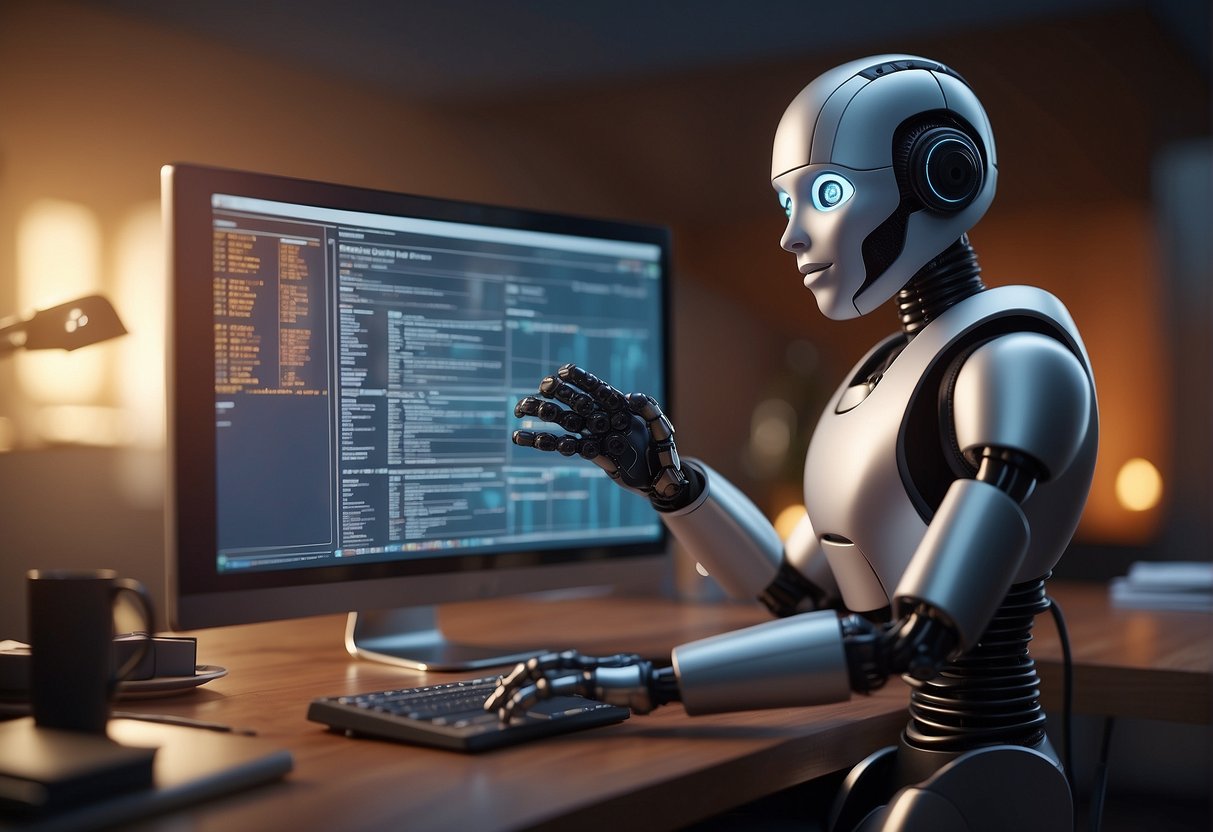
Artificial Intelligence is transforming animation, making it more accessible and efficient for creators. This section addresses some common queries related to the impact of AI on animation.
What are the top AI animation software solutions available today?
Several AI animation software solutions are in the limelight for their powerful features, including Kaiber AI and Animaker, known for their capability to transform visions into animated videos.
Can AI-based tools generate animations from text descriptions?
Yes, some AI-based platforms, like Anify, use advanced AI algorithms to interpret text inputs and rapidly produce animations that visually represent the described concepts.
How does AI contribute to the process of 2D animation?
AI substantially streamlines the 2D animation process, handling time-intensive tasks like rotoscoping and generating backgrounds, allowing animators to focus on creative aspects.
Are there any free AI animation tools that provide professional results?
There are indeed free AI animation tools that offer professional-grade services, but finding those with the best functionality without cost might require some research.
What is the role of AI in automating the animation process for creators?
AI in animation primarily automates the more technical aspects—like inbetweening and lip-syncing—freeing creators to focus on the creative facets of their work, which enhances efficiency and encourages innovation.
Do AI animation platforms support customizing animations from still images?
Many AI animation platforms offer the capability to customize animations from still images, employing AI to create movement and expression that bring static images to life.