AI Motion Capture: Revolutionizing Animation and Gaming Industries
Artificial intelligence (AI) is dramatically changing the landscape of motion capture (mocap), a technology traditionally associated with high-cost equipment and specialized studios. AI motion capture employs machine learning algorithms to analyze video footage and extract detailed movement data, which can animate digital characters or analyze human motions in real-time. This innovative approach simplifies and streamlines the motion capture process, allowing creators to generate complex animations without the need for expensive hardware.
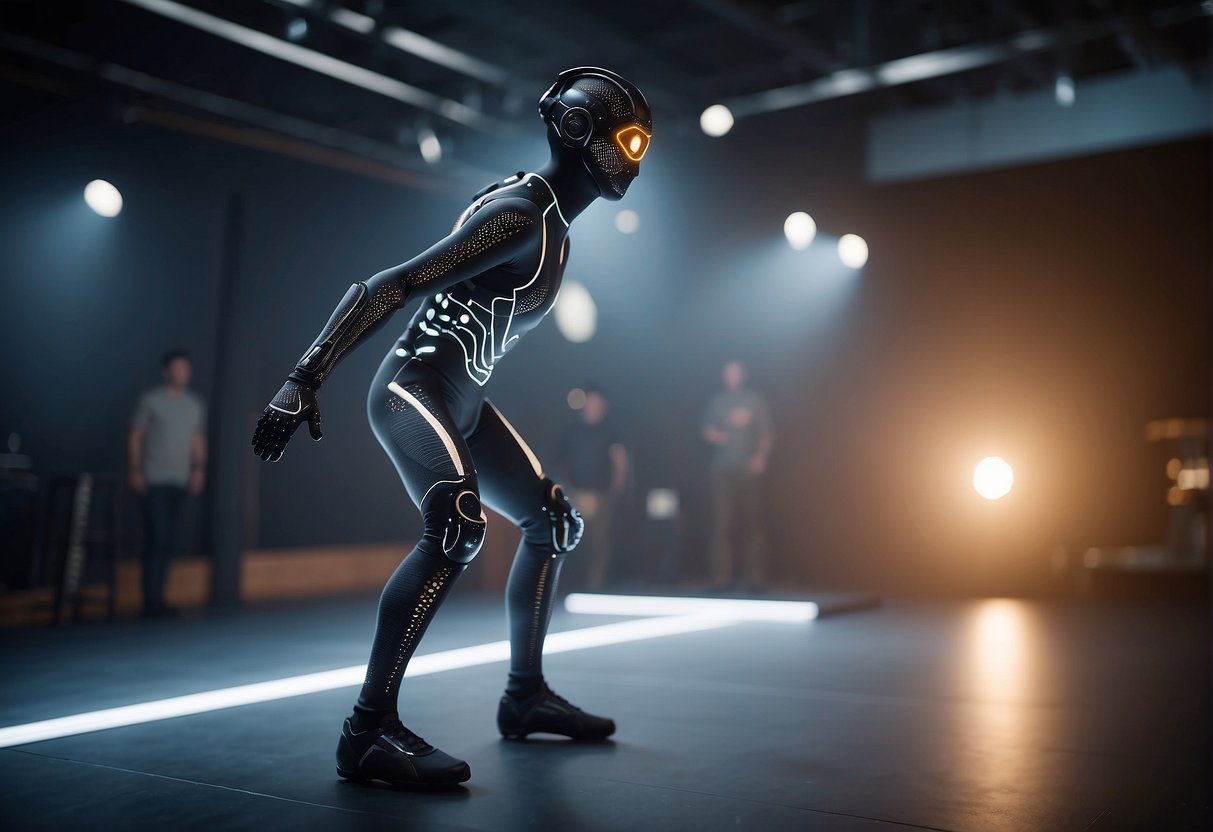
As AI technology progresses, motion capture has become more accessible to a wider range of users, from professional animators to indie game developers. The advanced techniques enabled by AI do not require the use of suits or extensive setups with markers, which were once standard in the field. Users can now capture intricate motion details using just a single camera or even a smartphone. Moreover, this versatility has expanded the applications of motion capture beyond entertainment, finding uses in healthcare, sports analytics, and virtual reality.
Key Takeaways
- AI motion capture transforms movement into digital animations with reduced need for traditional equipment.
- The technology’s accessibility fosters creative opportunities across various industries.
- Advancements in AI mocap techniques continue to influence future technology trends.
Fundamentals of AI Motion Capture
AI motion capture leverages advanced machine learning algorithms to accurately track and replicate human movements, providing significant advantages in animation and video production.
Evolution of Motion Capture Technology
Motion capture technology has transformed from primitive point-tracking systems to sophisticated AI-driven methods. Initially, motion capture required extensive setups with markers and cameras placed in controlled environments to track movement. This traditional method captured motion by recording the positions of the markers, which were then used to animate digital character models in two or three dimensions.
However, with the progression of technology, AI motion capture introduces markerless systems. These systems, enabled by deep learning, can interpret human motion from video without the need for physical markers, substantially reducing the complexity and cost of capturing motion. The process captures subtleties of movement more easily, leading to seamless and lifelike animations.
AI and Machine Learning in Motion Capture
AI has significantly enhanced the capabilities of motion capture by integrating machine learning and deep learning techniques. This has streamlined the process, allowing for real-time capture and interpretation of complex movements, including facial expressions and nuanced body language.
AI applications process vast amounts of positional data and use predictive analytics, a subset of machine learning, to enhance the quality of capture. For instance:
Pose Tracking:
- AI algorithms analyze video in real time to estimate and track poses.
- With physics-based models, they can generate realistic motion for animation purposes.
Facial Expression Recognition:
- Innovations in AI allow for the capture and recreation of intricate facial expressions, pushing forward the realism in animated films and video games.
Furthermore, AI motion capture not only improves the accuracy and realism of animations but also greatly reduces the need for expensive and cumbersome equipment, making it accessible to a broader range of creators and industries.
AI Motion Capture Techniques
Artificial Intelligence (AI) has significantly advanced the field of motion capture, offering sophisticated techniques that cater to diverse applications. Both hardware and software components have evolved to provide enhanced capture detail and real-time processing capabilities.
Marker-Based vs Markerless Motion Capture
Marker-Based Motion Capture:
Traditionally, motion capture has relied on markers placed on an actor’s body, which are tracked by cameras to record movement. The process involves a network of cameras and considerable post-processing to interpret marker positions into a digital framework.
- Pros: High accuracy, well-established industry standard
- Cons: Time-consuming setup, can be invasive for performers
Markerless Motion Capture:
The evolution of markerless motion capture employs sophisticated software algorithms to analyze video footage and deduce the motion of the subject without physical markers.
- Advantages: Easier setup, greater flexibility
- Disadvantages: May require more advanced computing, potentially less accurate than marker-based systems
The Rise of AI Motion Capture explores how the integration of AI has pushed motion capture forward, notably with markerless techniques.
Facial and Finger Tracking Technologies
Facial Capture:
AI-driven software now allows for highly detailed face capture, tracking subtle nuances of facial expressions. This involves complex algorithms that map facial movements directly onto a digital avatar.
- Fingerprint Tracking: For full-body motion capture, finger tracking has also been enhanced. It records the movement of fingers with high precision, crucial for realistic portrayals of hand gestures.
Incorporating AI into these technologies has significantly improved the processing speed and quality of the output, making them viable for real-time applications.
Real-Time Motion Capture Solutions
Real-Time Processing:
AI empowers real-time motion capture solutions, enabling actors to see their performances translated onto digital characters instantaneously. This is transformative for both filmmaking and live performances.
- Hardware and Software Synergy: For real-time capture to function smoothly, a harmony between the hardware capturing the motions and the software interpreting them is essential.
A new neural network approach, as mentioned at MIT News, captures dynamic motion for real-time applications, showcasing the potential of AI in this field.
Applications of AI Motion Capture
AI motion capture technology revolutionizes the way movement is digitized, enhancing realism and efficiency across several industries.
Gaming and Virtual Reality
In gaming, AI motion capture lets developers create immersive experiences with realistic character movements that closely mimic human actions. From RPGs to VR simulations, this technology provides a solid foundation for believable motion, increasing the player’s engagement. VR environments, fundamental to the XR artist’s toolkit, leverage AI motion capture to translate real-world gestures into compelling virtual interactions.
Film and Animation Industry
The film and animation industry benefits from AI-driven motion capture by streamlining the animation pipeline. It allows animators to translate human performances into detailed 3D animation, saving countless hours of manual work. Films utilize this technology to produce lifelike character motions, while studios, such as Animost Studio, explore the potential of AI to enhance motion capture fidelity and efficiency.
Digital Humans and Social Media
Digital humans, increasingly commonplace on social media platforms, rely on AI motion capture for generating authentic expressions and gestures. This not only facilitates more natural social interactions online but also provides a new avenue for influencers and brands to engage with their audience. Social media also uses AI motion capture to create filters and avatars that respond dynamically to user movements, enriching the digital social experience.
Technological Landscape and Tools
The AI motion capture field is rapidly evolving, with advanced software and hardware that enable highly detailed animations. These technologies are critical in various industries, ranging from film to game design.
Popular AI Motion Capture Software
Among the frontrunners in AI motion capture software, Animate 3D by DeepMotion stands out for its ability to turn video into 3D animation in real time. This software solution allows users to capture complex motions without the need for specialized suits or studios. Another noted software is Move AI, which is revolutionizing the industry with its markerless capture technology, ensuring a seamless integration for 3D animators.
- DeepMotion Animate 3D: Allows for video-to-animation transformation.
- Move AI: Offers markerless motion capture with advanced AI.
Hardware Requirements and Setups
The hardware for AI motion capture ranges from high-end sensors to regular smartphones. However, for more intricate work, studios may utilize a combination of motion capture suits outfitted with sensors, optical systems, and specialized cameras. The data gathered from these devices is often exported in industry-standard formats like FBX, ensuring compatibility with a wide array of animation and modeling software.
- Capture Suits: Feature sensors for detailed movement tracking.
- Export Formats: Commonly use FBX for broad software compatibility.
Integration with Animation Pipelines
The integration of AI motion capture into animation pipelines is streamlined by the compatibility with existing software suites. Studios employ these tools to inject realistic human movements into their 3D models, enhancing the viewer’s immersive experience in films and video games. The software typically includes features for editing and refining the captured data before it is rendered and utilized in final productions.
- Animation Software Compatibility: Integrates with popular animation suites.
- Editing Features: Allow for adjustments and refinement of captured motions.
Accessibility and Future Trends
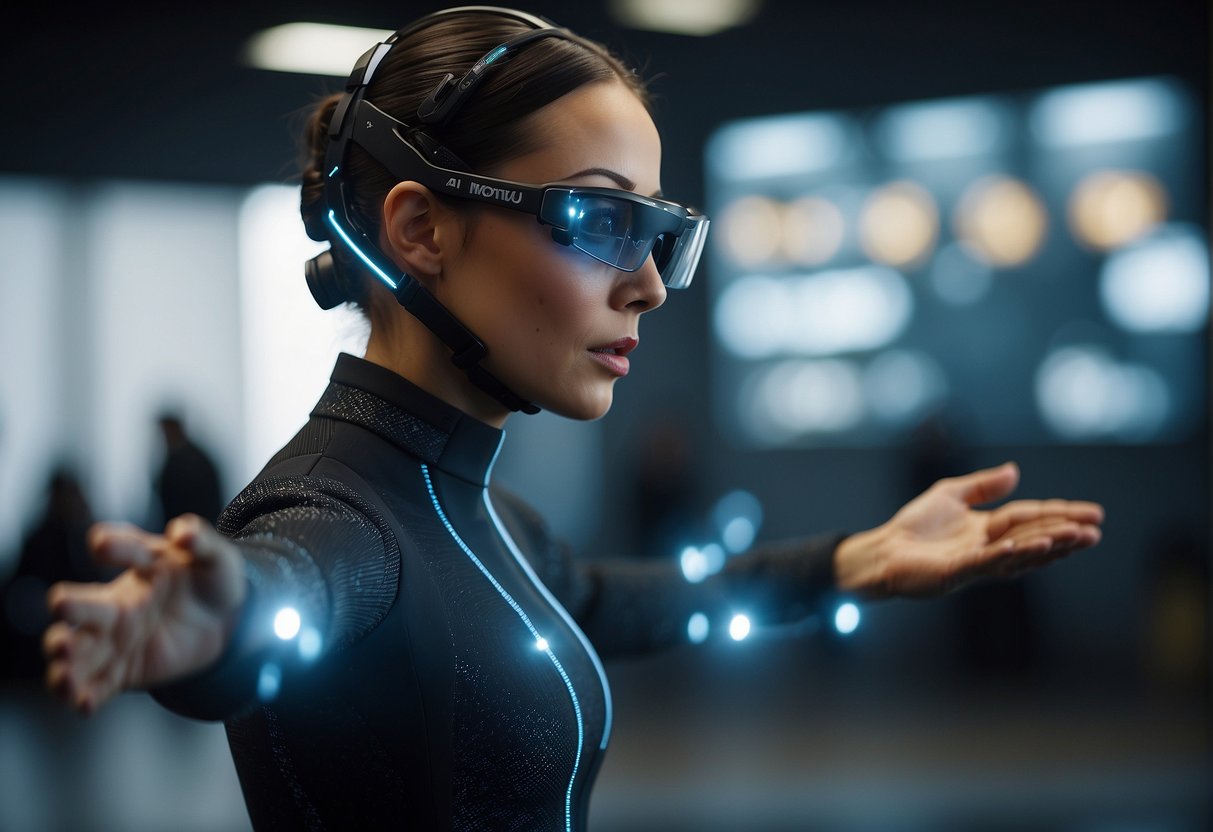
The evolution of AI in motion capture is marking a significant shift towards greater accessibility and is setting new trends for the future. Advancements in technology are consistently lowering barriers and expanding the potential for human motion capture across various environments and distances.
Making Motion Capture More Accessible
With the integration of AI, motion capture technology is becoming more widely accessible. Companies are developing complete technology bundles that enable real-time, markerless motion capture. These solutions are game changers, as they can track natural human motion directly from video, bypassing the need for expensive and complex setups. This democratization of technology is a crucial resource for creatives and researchers who previously might have been limited by the cost and technicality of traditional motion capture systems.
The Future of AI in Motion Capture
The future of AI in motion capture points to a trajectory of rapid innovation. With tools capable of rotoscoping and predicting joint stiffness, AI-driven approaches are transcending previous limitations. They allow for capturing movements in a variety of environments, no longer confined to the tethered space of a studio. As AI technology continues to improve, the distance from which accurate motion can be captured is expected to increase, leading to even more adaptable and robust applications in the field.
Frequently Asked Questions
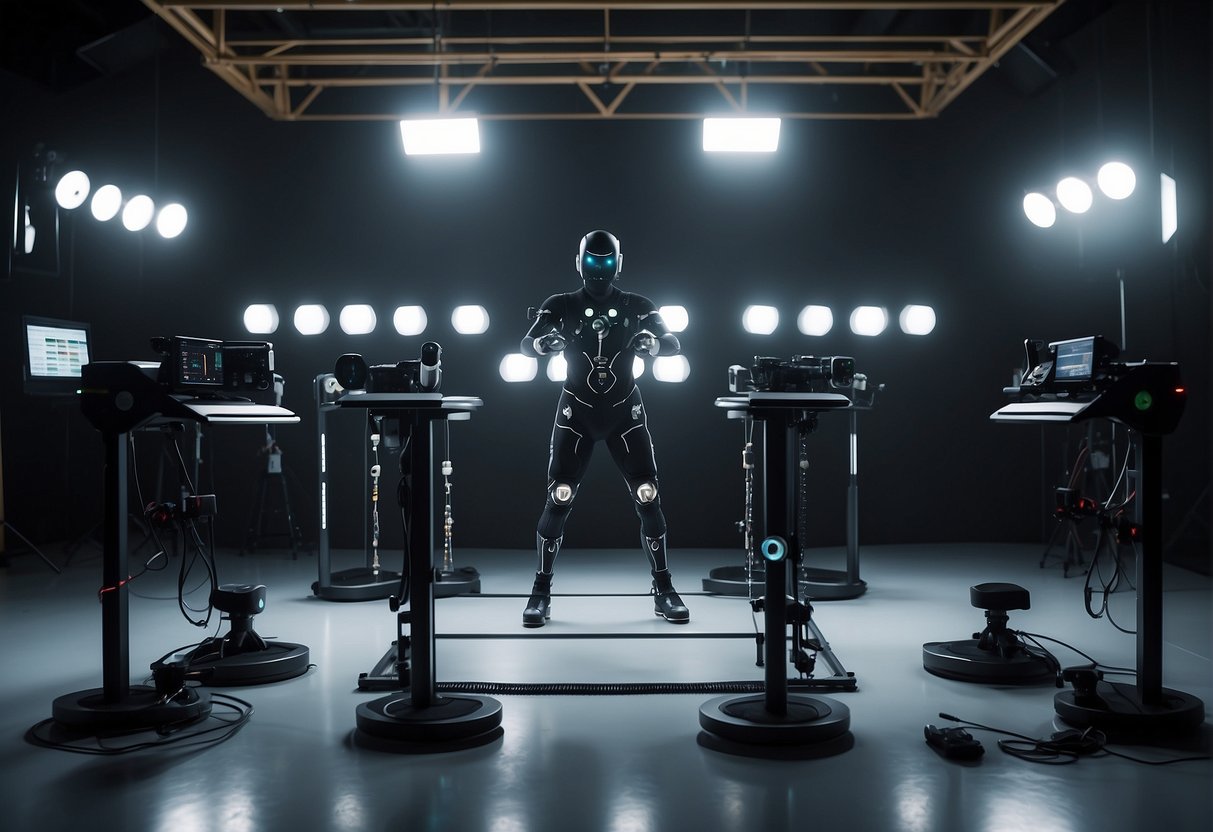
AI motion capture, an evolving technology in the animation industry, enables capturing and digitizing realistic movements with increased efficiency and reduced costs. These FAQs address common inquiries about AI-driven motion capture and its applications.
What software solutions are available for AI-driven motion capture?
There are several software solutions that make AI-driven motion capture accessible. Rokoko Vision offers a free AI motion capture tool with a simple 3-step process for animating characters, while Plask Motion provides an AI-powered animation tool that simplifies the creation of 3D animations.
How can AI tools enhance the process of 3D animation?
AI tools significantly boost the quality and efficiency of 3D animation. By capturing and digitizing real-world movements, animations become more realistic, fluid, and detailed, saving time for creators and artists in the animation field.
Where can I find open-source AI motion capture projects?
While this search did not yield any direct links, open-source AI motion capture projects can typically be found on platforms such as GitHub. Advanced users often share their projects for collaborative development and use by the animation community.
Can you extract motion capture data from standard video using AI?
Yes, certain AI motion capture solutions are designed to extract motion capture data directly from standard video footage. This allows for a broader range of inputs and simplifies the capture process.
How do AI motion graphics generators improve the animation pipeline?
AI motion graphics generators streamline the animation pipeline by automating key processes. This enables faster turnaround times and consistency in the quality of the animations produced, directly impacting and advancing the animation and gaming industries.
What are the free or freemium alternatives to Move AI for Android devices?
When it comes to free or freemium options similar to Move AI for Android devices, solutions such as Rokoko Vision allow users to access motion capture capabilities at no cost, with more advanced features available on a subscription basis.