Language Processing Unit: Unveiling the Future of Human-Machine Interaction
In the rapidly evolving field of artificial intelligence (AI), innovative hardware solutions like Language Processing Units (LPUs) are emerging to specifically handle the language-centric tasks that were traditionally managed by more general-purpose processors like CPUs and GPUs. An LPU is designed to facilitate efficient processing of natural language data, a staple in modern AI endeavors. This specialized hardware is optimized for tasks that involve natural language understanding and generation, which are integral components of various AI-powered applications.
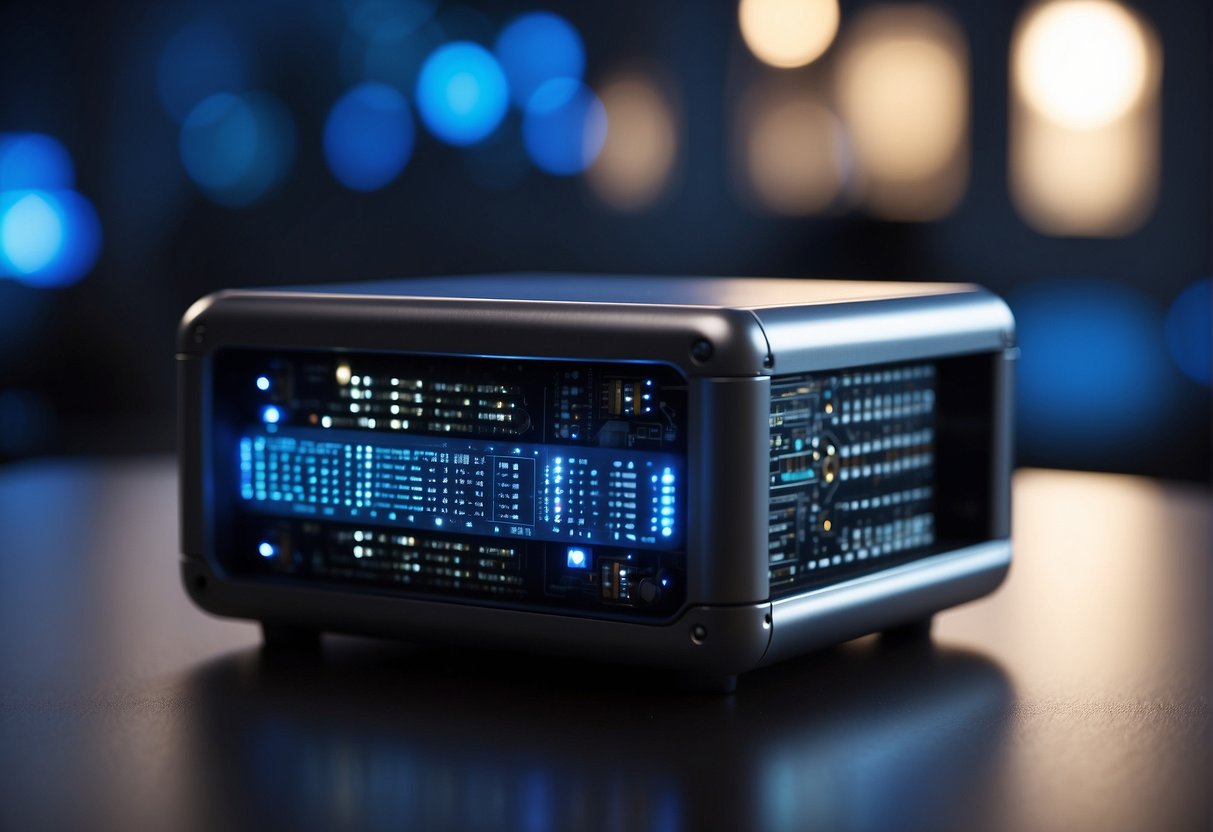
Language Processing Units are a cornerstone of AI that contributes significantly to the advancement of technologies such as voice assistants, real-time translators, and chatbots. They possess architectures tailored to language processing, allowing them to handle large volumes of linguistic information with impressive speed and accuracy. As the complexity and volume of natural language data grow, the LPU’s ability to process and interpret this data efficiently becomes increasingly vital. These units are not stand-alone solutions; they work in tandem with existing technologies, ensuring seamless integration and bolstering the overall AI system’s performance.
Key Takeaways
- LPUs are specialized for efficient natural language data processing in AI applications.
- The architecture of LPUs enables improved speed and accuracy for language understanding and generation.
- Integration with current technologies enhances the performance of AI systems utilizing LPUs.
Fundamentals of Language Processing Units
Language Processing Units (LPUs) are at the forefront of accelerating AI-driven language tasks, marrying high-speed computation with advanced language understanding capabilities.
Conceptual Overview
The essence of LPUs lies in their architectural design, optimized for the task of language processing. Distinct from general-purpose processors, an LPU focuses on inference, the phase where a trained model makes predictions or decisions. By specializing in this area, LPUs achieve remarkable speeds in processing language, therefore improving the performance of applications involving natural language processing (NLP) and machine learning. They are engineered to handle the nuances and complexities of human language, providing a robust solution for AI systems that require real-time language understanding.
Historical Context
Artificial intelligence has evolved significantly, with LPUs representing the latest innovation building upon the legacy of predecessors like CPUs, GPUs, and TPUs. Born out of the necessity for more efficient hardware tailored to AI’s unique requirements, LPUs provide an end-to-end solution specifically for AI language models. By integrating experience from the development of Google’s Tensor Processing Unit (TPU), innovators have contributed to the creation of LPUs to specifically address the high-performance needs of language-based AI tasks, setting a new standard for speed and efficiency in tech relevant to machine learning and natural language processing.
Language Processing Unit Architecture
The architecture of Language Processing Units (LPUs) is a critical advancement in the AI hardware space, tailored for high-performance in natural language processing (NLP). Distinct from traditional CPUs and GPUs, LPU architecture is designed to handle the unique demands of NLP tasks with noteworthy efficiency.
Hardware Specifications
Language Processing Units are constructed to maximize compute density and memory bandwidth, crucial for deep learning and natural language processing tasks. They feature a specialized Instruction Set Architecture (ISA) that optimizes the execution of sequential workloads. LPUs like the one developed by Groq demonstrate a significant reduction in latency, enabling faster inference times.
- Computing Cores: Optimized for NLP, with high parallelization capabilities.
- Memory Systems: Advanced on-chip memory to alleviate bottlenecks.
- Interconnects: Efficient data transfer mechanisms to maintain speed.
This focus on low latency and high performance is a distinct departure from the architectures of conventional CPUs and GPUs, the latter being a mainstay in AI workloads until GPUs like those from Nvidia were challenged by task-specific AI hardware like TPUs and now LPUs.
Software Integration
The efficacy of a Language Processing Unit is also linked to its seamless software integration. Language Processing Units must be accommodated by machine learning frameworks to leverage their full potential in deep learning models.
- AI Frameworks Compatibility: Ensuring LPU integration with leading frameworks.
- Scalability: Support for scaling LLMs without compromising performance or latency.
With organizations like AMD, Arm, and Intel continuously advancing their technology, the introduction of LPUs by Groq and others signals a shift towards more diversified and optimized processing environments for AI and deep learning, particularly in the U.S. AI hardware market.
LPU Performance and Utilization

The Language Processing Unit (LPU) represents a significant leap in computational linguistics, specifically tailored for the speed and efficiency required by contemporary AI models. This specialized hardware is designed to meet the increasing demands for higher throughput and long context understanding in large language models (LLMs).
Speed and Efficiency
The LPU’s ability to accelerate AI inference tasks is exemplified by its impressive generation rate of 500 tokens per second, a stark contrast to earlier models such as ChatGPT-3.5’s 40 tokens per second. In practice, this translates into faster machine translation and more fluid interaction with natural language applications. For instance, Groq’s LPU is reported to deliver superior performance, managing over 300 tokens per second per user on certain AI applications.
Application in AI Models
Utilization of LPUs within AI models revolves around their adeptness at managing tasks that require understanding and generating human-like text. With a focus on LLMs, these processors aid in parsing long contexts which is essential for maintaining coherence over lengthy conversations or complex interpretive tasks. The efficiency of LPUs in language processing allows for scalable deployment matching the demand of today’s AI workloads, especially in real-time applications where immediate response is crucial. This creates a conducive environment for advanced computational linguistics research and practical AI solutions.
Integration with Existing Technologies
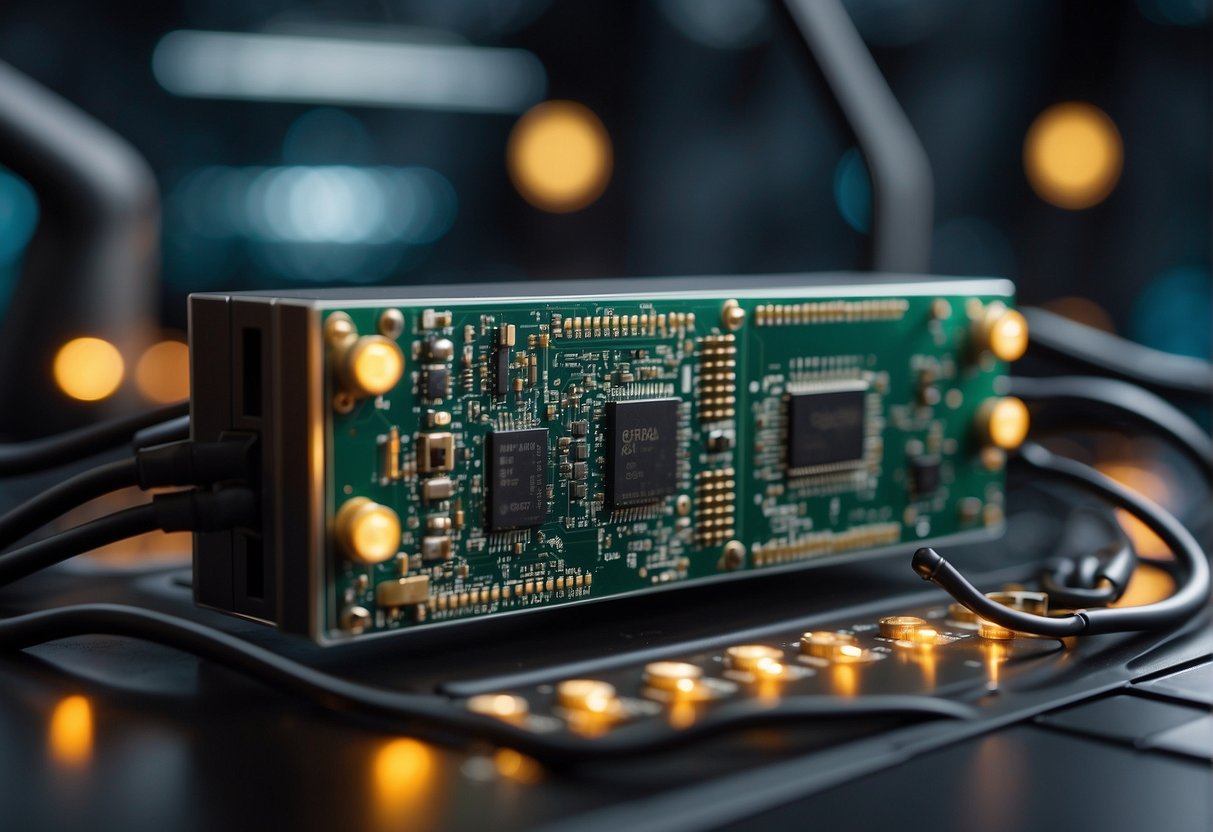
Language Processing Units (LPUs) mark a significant advance in the field of linguistic computation, interfacing seamlessly with a range of existing technologies to enhance processing capabilities. This integration is pivotal for expanding the utility of LPUs beyond standalone implementations.
APIs and Standardization
The integration of LPUs with existing software ecosystems is facilitated by Application Programming Interfaces (APIs). These interfaces allow for the efficient exchange of information between the LPUs and other computing elements. For instance, Groq Inc. has made strides in establishing standardized APIs that ensure their LPUs can easily exchange data with software reliant on TensorFlow or PyTorch, leading AI frameworks. This standardization of communication protocols is crucial not only for software interoperability but also for promoting widespread adoption by reducing integration complexity.
Compatibility with Current Systems
Intel and other technology leaders have prioritized the compatibility of LPUs with current systems. Through architectural design, LPUs are constructed to complement deep neural networks, leveraging models like BERT and Word2Vec to significantly boost language-related tasks. The underlying transformational grammar principles utilized by LPUs align with existing deep learning paradigms, ensuring that integration with current systems is both practical and efficient. By considering the operational frameworks of ArtificialAnalysis.ai and Mixtral, LPUs are designed to operate in concert with these platforms, merging advanced grammatical analysis with the vast processing resources available in modern AI and machine learning environments.
Language Processing Techniques and Advances
Advancements in language processing have revolutionized how machines understand and generate human language, leading to more intuitive human-computer interactions.
Natural Language Understanding
Natural Language Understanding (NLU) is essential for machines to interpret human language in a meaningful way. Utilizing transformer models such as BERT (Bidirectional Encoder Representations from Transformers), systems can now understand context better than ever before. This breakthrough has improved information extraction, sentiment analysis, and morphology comprehension, allowing for more accurate parsing and interpretation of language nuances.
Machine Translation
Machine translation has seen significant improvements, particularly with the integration of machine learning and probabilistic models. Current technologies use sophisticated algorithms to translate text or spoken words from one language to another, maintaining a high degree of grammatical and contextual accuracy. These advances have been instrumental in removing language barriers on the internet, providing instant translations that are remarkably fluent.
Generative AI and Applications
Generative AI leverages natural language generation techniques to create content, from composing emails to generating reports. One prominent application is grammatical error correction, where AI can correct text in real-time, supporting writers with varying language proficiency levels. These systems are not restricted to syntax; they can produce creative and contextually relevant text, mimicking human-like language production.
Innovations in Language Processing Hardware
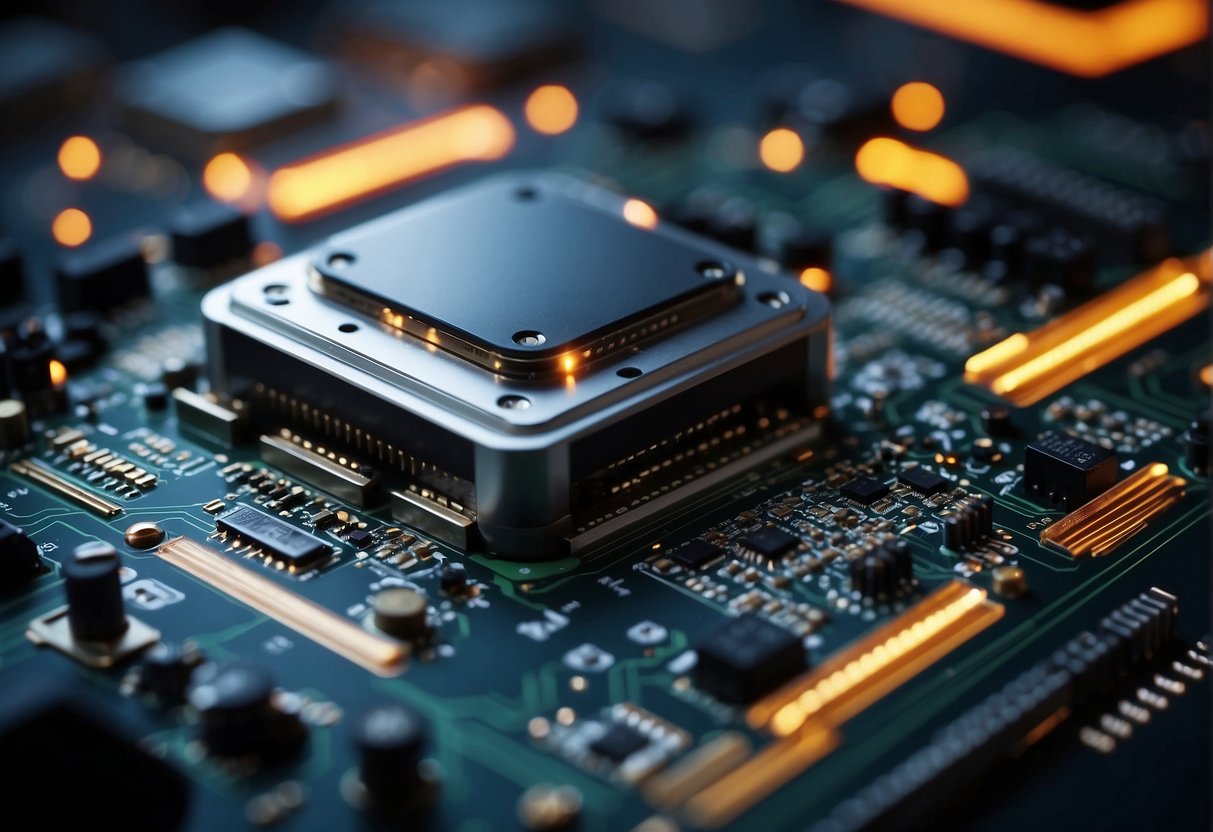
The quest for ultrahigh-speed computation in AI language processing has significantly revolutionized hardware design. This focus has yielded specialized processing units that are finely tuned for handling the immense computational demands of large language models (LLMs).
Evolution of Processing Units
The landscape of processing units has seen a marked transformation from General Purpose GPUs (GPGPUs), such as those from NVIDIA and AMD, to the emergence of bespoke units like Google’s Tensor Processing Unit (TPU). Initially, GPUs were repurposed for AI tasks due to their highly parallel structure, excellent for matrix operations that form the crux of neural network computation. However, as AI models have grown in complexity, even the most advanced GPUs began confronting challenges with efficiency and latency.
This need for specialized hardware gave rise to the next generation of AI processors: TPUs. Google’s introduction of the TPU showcased a leap in processing capability, with a design geared explicitly towards accelerating the matrix calculations essential for machine learning tasks. TPUs marked a significant shift towards specialized hardware for neural network computation but were largely proprietary and not as widely accessible.
Dedicated LPU Systems
The development of Dedicated Language Processing Units (LPUs) indicates a further specialization within the AI hardware ecosystem. Companies like Groq have taken a bold step with their LPU, focusing on eradicating the bottlenecks encountered with traditional processors. Groq’s innovative approach has set a new precedent in AI language processing, with the company demonstrating impressive speeds running open-source LLMs.
Groq’s LPU stands out by targeting the specific needs of language models. Unlike general-purpose GPUs, the LPU’s architecture is designed to handle the intricacies of language, which involves managing sparse data and rapid context switching – challenges that NVIDIA GPUs and CPUs find taxing. The incorporation of ARM’s flexible and power-efficient architectures into LPU designs may also add to overall system adaptability and efficiency.
The LPU’s pronounced focus on addressing external memory bottlenecks further empowers performance in LLMs. This is essential for GenAI applications where both speed and accuracy are paramount. The ability of LPUs to process language at groundbreaking speeds promises a new era for applications like real-time translation, conversational agents, and complex data analysis tasks, heralding a new standard in the high-performance AI chip market trumping conventional GPUs and CPUs.
Practical Applications of LPUs

Language Processing Units (LPUs) are revolutionizing the way computers understand and generate human language. They enable the development of more intelligent and responsive tech applications across various sectors.
Commercial Use Cases
Chatbots and Customer Service: LPUs significantly enhance the abilities of chatbots by improving their understanding of natural language. This leads to more effective and human-like interactions in customer service applications. Groq’s LPU, for instance, is known for running language models that provide support at speeds of up to 500 tokens per second, which facilitates near real-time responses.
Financial Sector: In the financial industry, LPUs assist in interpreting complex electronic health records, extracting key information with named entity recognition, which aids in fraud detection and customer service automation. The computational capabilities of LPUs also help in analyzing financial documents for actionable intelligence.
Academic and Research Implications
Computational Linguistics: LPUs are integral to advancing the field of computational linguistics, providing the computational power necessary to process large datasets for linguistic analysis. The applications range from speech recognition to text-to-image generation, helping researchers unlock new frontiers in human-computer interaction.
Educational Technology: Academic institutions adopt LPUs to personalize learning experiences. LPUs support LLMs (Large Language Models) that adaptively generate educational content and assess student responses, making distance learning and online education more interactive and tailored to individual student needs.
By employing LPUs for both commercial and academic purposes, organizations are able to better harness the power of language in technology and intelligence applications. Their role in broader internet and computational advancements proves that LPUs are foundational to the development of the next generation of smart applications.
Ethical Considerations and Societal Impact

The ethical implications and societal consequences of Language Processing Units (LPUs) extend from the foundational principles of artificial intelligence to the practical applications affecting culture and psychology. These impacts necessitate judicious guidelines and informed use within various sectors.
Responsible AI Development
Responsible development of AI, particularly in the realm of LPUs, entails adhering to ethical principles to prevent harm and ensure transparency. The Turing Test, a method for determining a machine’s ability to exhibit human-like intelligence, underscores the importance of distinguishing between AI and human behaviors, raising ethical questions about deception and trust. For instance, the historical chatbot ELIZA challenged perceptions of machine intelligence and elevated discussions about ethically programming responses in psychological domains.
- Transparency: Developers must document LPU functionalities and limitations, clarifying their abilities.
- Accountability: Clear guidelines should define who is responsible for the outcomes of LPU interactions.
- Privacy: Safeguards are essential to protect user data from misuse, especially in sensitive applications like healthcare.
Language Processing in Various Industries
LPUs are increasingly integrated across industries, from healthcare to finance, each presenting unique ethical challenges. In healthcare, LPUs analyze patient language to support clinical decisions, necessitating stringent protocols to mitigate biases and protect sensitive information. In contrast, in customer service, LPUs enhance user experience yet raise concerns about cultural sensitivity and the automation of jobs.
- Healthcare: Standards to ensure non-discriminatory practices and confidentiality when LPUs interface with patient data.
- Finance: Regulations to prevent LPUs from perpetuating biases in loan approvals or financial advice.
Employing LPUs demands a balancing act between harnessing their potential and acknowledging their societal impact, particularly on labor markets and cultural dynamics. It is vital for ongoing dialogues between technologists, ethicists, and policymakers to shape artificial intelligence development in a responsible manner.
Future Trends and Predictions

The trajectory of advancements in Natural Language Processing (NLP) is shaped by both innovative applications of technology and market dynamics. This section examines the significant technological breakthroughs on the horizon and the evolving market landscape influencing the NLP field.
Technological Advancements
Technological innovation continues to drive NLP forward with trends like increased adoption of generative AI and enhanced pre-trained models, which underscore the integration of deep learning and machine learning techniques. There is an expected surge in large language models (LLMs) aimed at solving more complex issues, indicating a step towards combinational AI. These advancements do not stand alone; they are further propelled by the growth in processing power and algorithmic sophistication.
The following list delineates the anticipated technological trends:
- Pre-Trained Models: Prevalent use across various domains due to their capacity to fine-tune with less data.
- Generative AI: Increasing influence in content creation and problem-solving scenarios.
- Combinational AI: Integration of LLMs with technologies such as LangChain to address complex issues.
Language Processing Market Outlook
Market outlook perspectives show substantial growth in the NLP sector, bolstered by a demand for refined diagnostic capabilities to manage the influx of unstructured data. As machine learning and NLP become more tightly interwoven, industry adoption is anticipated to expand to a broader range of sectors, highlighting NLP’s versatility.
Here are the key points for market growth and adoption:
- Data Volumes: An increase in unstructured data volume drives the need for NLP solutions.
- Industry Implications: More industries are turning to NLP to gain insights from data, from healthcare to finance.
- Research Investments: Funding and research in NLP signal an unwavering commitment to future innovations.
Conclusion
The advent of the Language Processing Unit (LPU) has signaled a significant shift in the AI chip market. Innate abilities to handle complex language processing tasks at unprecedented speeds are its hallmark. The LPU’s design caters specifically to the nuanced demands of high-level language tasks, including natural language processing (NLP) and summarization.
Performance benchmarks suggest that the LPU excels beyond traditional CPUs and GPUs for AI-driven language workloads. This efficiency boosts AI developers’ capability to execute sophisticated models that rely on deep linguistic analysis, such as sentiment analysis and contextual understanding. The development of LPUs like the Groq LPU Chip is a testament to the ongoing innovation within the AI hardware landscape.
Looking prospectively, the integration of LPUs may augment the efficiency of AI applications, leading to more responsive and accurate language-based services. As technology advances, it is anticipated that LPUs will become more commonplace in the data centers and edge devices, which fuels AI’s ongoing evolution.
In reflection, it can be recognized that the AI industry’s trajectory is markedly influenced by such specialized processors. The LPU represents a fundamental stride towards narrowing the gap between human language complexity and machine proficiency, which carries the potential to redefine AI’s role in society.
Frequently Asked Questions
In exploring the realm of language processing units (LPUs), certain queries frequently arise regarding their practical applications, inner workings, and the nuances of their role in modern computing.
What are examples of language processing units in practical applications?
Language processing units are essential in facilitating efficient natural language interactions between humans and machines. They are employed in speech recognition systems, language translation services, and in tools that perform sentiment analysis, significantly boosting the performance of these tasks by accelerating the underlying processes.
How does a language processing system function within a compiler?
A language processing system within a compiler translates source code into machine code. It parses the programming language inputs, conducts syntactic and semantic analysis, and then generates a target language, typically through several stages, including lexical analysis, parsing, semantic analysis, optimization, and code generation.
What are the various types of language processors and their differences?
Language processors come in different forms, such as compilers, interpreters, and assemblers, each with distinct functionalities. Compilers convert code from a high-level language to machine language in one full sweep, while interpreters do this line-by-line, and assemblers translate assembly language to machine code, working closely with the computer’s hardware.
How does natural language processing (NLP) work and what are its main objectives?
Natural language processing works by combining computational linguistics—rule-based modeling of human language—with statistical, machine learning, and deep learning models. The main objectives are to enable computers to understand, interpret, and generate human language in a valuable manner. These capabilities are explained in an introduction to NLP.
Can you describe the structure of a language processing system with a diagram?
The structure of a language processing system typically includes components such as a tokenizer, parser, semantic analyzer, and often a dialogue manager, among others. Diagrams illustrating this structure usually show the flow of data through these components, from input to processed output. However, including an actual diagram within the text is beyond the scope here.
In what ways can a language processing unit be integrated into modern computing architectures such as those offered by companies like Groq?
A language processing unit can be integrated into modern computing architectures to optimize specific language-related tasks. Firms like Groq offer architectures that potentially accommodate dedicated LPUs for handling language tasks efficiently, separate from traditional CPUs, enhancing speed and performance in large-scale AI and machine learning workflows.