Groq: Revolutionizing AI Hardware with Tensor Streaming Processors
In the competitive landscape of artificial intelligence (AI) innovation, Groq stands out as a trailblazer in AI computation speeds and hardware efficiency. Emerging from a background rich with industry expertise, with founders including former Google engineers, Groq has quickly positioned itself as a company at the forefront of accelerating AI capabilities. It focuses on delivering high-performance compute solutions that promise to elevate the processing power needed for complex machine learning tasks.
Groq’s technology is built around custom hardware designed specifically for optimized AI operations, enabling significant advancements in computational speed. This technology serves a wide range of AI applications, from the acceleration of autonomous vehicle technology to improvement of data center efficiencies. By producing chips that can carry out AI inference at ultra-low latency, Groq is directly responding to the increasing demand for faster, more reliable, and energy-efficient AI computing in various industries.
Key Takeaways
- Groq has cemented its role in advancing AI processing speeds.
- Custom hardware and technology by Groq cater to a spectrum of AI applications.
- Groq’s innovations drive industry trends in efficient AI computing.
Groq Company Overview
Groq is a forward-thinking company specializing in high-performance, low-latency computing solutions for artificial intelligence (AI), machine learning, and high-performance computing sectors.
Founding and Leadership
Groq was established in 2016 by former Google employees, with Jonathan Ross, a key figure in the company, taking up the mantle of leadership. As of the last update, the company operates from its headquarters in Mountain View, California, and falls under the industry category of Hardware & Electronics. Leadership is instrumental in setting the strategic direction and maintaining the innovative spirit of Groq’s endeavors.
Groq Inc. Development
In the development sphere, Groq has made significant strides, exemplified by their AI chip advancements. Its first AI chip has been successfully launched and integrates into various industries, including autonomous vehicles and data centers. The company has leveraged considerable funding to accomplish this feat, with a substantial $300 million raised to support these initiatives. At the organizational level, Groq Inc. showcases a robust team, with the number of employees ranging between 101 and 250, suggesting a well-sized talent pool driving its innovative technology forward.
Groq Technology and Hardware
Groq has significantly advanced AI infrastructure by developing tailored hardware that provides unparalleled computational speeds for AI models, differentiating itself from conventional AI solutions that utilize GPUs or TPUs.
AI Chips and Hardware
Groq leverages an innovative Tensor Streaming Processor (TSP) technology, central to their hardware, which primarily consists of AI inference chips called Groq LPU. Unlike typical GPUs (Graphics Processing Units) and TPUs (Tensor Processing Units), the Groq chips are designed to execute operations in a deterministic manner, reducing the latency that is often associated with traditional hardware architectures. Groq’s offering is considered a type of ASIC chip (Application-Specific Integrated Circuit), which means it is specifically designed for a particular use, rather than being intended for general-purpose computing.
This advanced semiconductor technology allows for highly efficient data processing, making it ideal for intensive AI solutions requiring fast computations. Moreover, their custom hardware approach enables the execution of complex AI models with exceptionally high throughput, providing a critical edge in high performance computing.
Performance Metrics
Groq’s technology stands out with impressive performance metrics, having been reported to deliver AI computations up to 75 times faster than what an average human can type. This is attributed to the chip’s architecture, which provides the ability to execute millions of operations in a single clock cycle without the need for batching.
The unique design of Groq’s AI Accelerator Card amplifies its computational abilities, making it suitable for an array of applications, from machine learning workloads to real-time AI inference. It benchmarks as one of the fastest hardware platforms for running AI language models, progressing toward instantaneous processing times that are essential for real-world AI applications.
Groq Products and Services

Groq has developed a strong portfolio centered around its state-of-the-art processors and innovative API access solutions, catering to a variety of high-performance computing needs.
Language Processing Units
Groq offers the Groq LPU™ (Language Processing Unit), a breakthrough in the field of artificial intelligence, particularly enhancing real-time inference for generative AI products. These chips are known for their speed and efficiency in handling complex AI tasks. For instance, the Llama 2 model is supported by Groq’s LPU, enabling superior performance in language translation and text generation.
Tensor Streaming Processor
Tensor Streaming Processor (TSP) is another cornerstone of Groq’s technological innovation. These processors are designed to dramatically accelerate machine learning workloads. They leverage a unique architecture that allows for rapid data streaming, significantly boosting computation speeds. Groq’s TSP technology is integral to their GroqChip™ and is also a key component of the array of services provided through GroqCloud, which offers clients cloud-based access to Groq’s computing capabilities.
Performance and Benchmarks
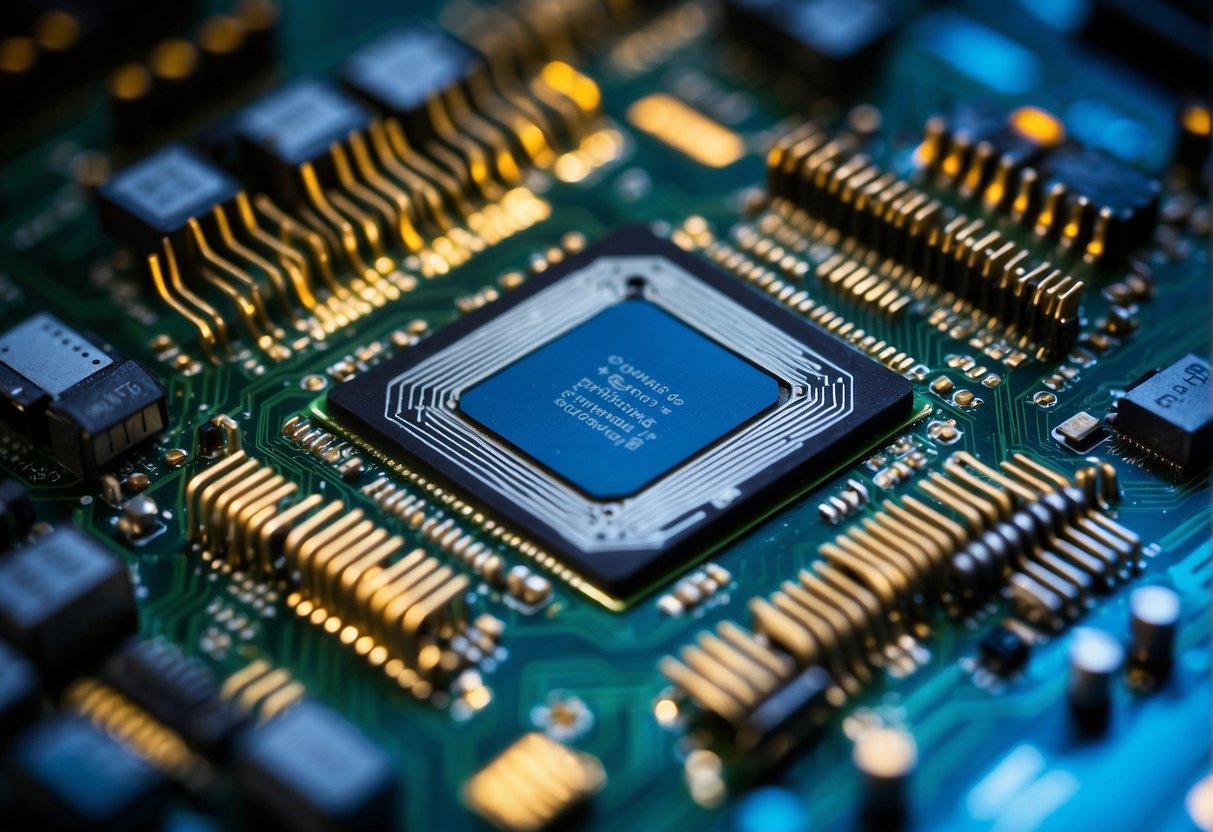
Groq has made significant strides in improving AI processing efficiency, showcasing exceptional results in recent benchmarks that focus on speed and responsiveness. These benchmarks serve as critical indicators of the capabilities of Groq’s AI accelerator technology compared to its competitors.
Speed and Throughput
Groq’s AI accelerator technology has achieved impressive speeds, with public benchmarks showing capabilities of processing up to 500 tokens per second. This indicates a substantial advantage in throughput when compared with the traditional GPT 3.5 model’s token processing rate.
- Token Processing Speed:
- Groq: 500 tokens per second
- GPT 3.5: 30-50 tokens per second
This blistering computation speed asserts Groq’s dominance in throughput over time, positioning it as a standout contender in the AI space.
Latency and Response Times
When considering Latency vs. Throughput, Groq’s technology demonstrates a competitive edge with lower latency and faster total response times. In practical terms, this implies that Groq’s AI accelerator can deliver responses more quickly, marking a significant improvement in user experience.
- Latency and Throughput Metrics:
- Lower Latency: Enables quicker data processing
- Reduced Total Response Time: Leads to increased efficiency
These benchmark results highlight minimal throughput variance, showcasing Groq’s consistent performance over various trials. These attributes firmly establish Groq’s solutions as reliable and superior within the landscape of high-performance AI chip market.
AI Applications and Use Cases

When considering the implementation of AI technologies, two core areas where they exhibit transformative potential are in developing enterprise-scale models and streamlining autonomous systems.
Enterprise-Scale Models
Enterprise-scale models leverage AI to manage and analyze vast quantities of data. Particularly, Natural Language understanding and generation are crucial for businesses aiming to interact effectively with customers through AI applications, such as AI Chatbots and automated customer service interfaces. By utilizing Machine Learning algorithms, these applications can provide real-time, natural conversations that enhance user experience.
- Examples:
- AI chatbots for customer service
- Language translation services
- Content creation and summarization tools
- Sentiment analysis for market research
Enterprise-scale applications consistently require robust and high-performance computing infrastructure, which AI companies target to optimize with specialized hardware. Systems like Groq’s platform are engineered to accommodate the compute-intensive nature of large language models with notable efficiency.
Autonomous Systems
The integration of AI in Autonomous Systems advances how machines operate and react to their environment. A quintessential example is autonomous vehicles; Machine Learning models embedded within these systems process sensory data to make real-time decisions, requiring hardware with low latency and high reliability.
- Key Components:
- Real-time decision-making algorithms
- Sensor data interpretation and action planning
- Ongoing learning and adaptation to new scenarios
In domains like manufacturing and logistics, AI-driven automation can increase precision, safety, and overall productivity. These systems are powered in environments such as data centers, where the speed and efficiency of computation are paramount. The data centers thus act as the neural epicenters for a broad scope of AI applications, from powering autonomous vehicles to running enterprise-scale language models for Generative AI Applications.
Groq’s Competitive Landscape

Groq has positioned itself as a significant player in the high-performance AI chip market, challenging established giants and shaping a competitive landscape where technological advancements and strategic alliances are key.
Market Comparison
The AI chip industry, where traditionally NVIDIA, Intel, and AMD have been the dominant forces, is seeing Groq emerge as a formidable contender. Groq’s LPU demonstrates real-time inference, offering instant responses essential for generative AI products. This capability has redefined industry benchmarks, necessitating a response from current market leaders.
- NVIDIA: Known for GPUs that cater to machine learning workloads, yet Groq’s innovation challenges their hold over real-time processing.
- Intel and AMD: Both have invested heavily in AI but must now adapt to the shifts Groq is introducing with its LPU technology.
- Market Dynamics: The entry of Groq reiterates the industry’s need for continual evolution and sets the stage for a tech-driven rivalry.
Collaborations and Competitions
Groq’s trajectory is not solely about competition; it encompasses strategic initiatives, some of which involve collaboration with other tech entities, while others directly compete for market share.
- Collaborations: By engaging with companies on the software side of AI, Groq leverages collective expertise to enhance the practical applications of its chips.
- Competitions: The dynamics between Groq and companies like Meta, as well as individuals such as Elon Musk with his ambitions in AI, represent a blend of competition and potential collaborative breakthroughs.
The industry is watching as Groq navigates both competing with and potentially collaborating with these entities to move the AI market forward.
Developer Resources and Community

Groq provides comprehensive resources and community support geared towards developers working with AI accelerators. These offerings are designed to streamline the development process, providing tools and platforms that ensure efficient workflow.
APIs and Access
Groq facilitates developers’ access to AI accelerators with a broad range of APIs that allow for seamless integration and interaction with the Groq hardware. Developers can leverage these APIs to optimize their AI models and enhance application performance. The APIs serve as a gateway to leveraging the full potential of Groq’s deterministic, single-core streaming architecture for high-speed GenAI inference.
Support and Documentation
Extensive support and documentation are cornerstones of the developer resources provided by Groq. The company ensures developers have access to detailed compilers and platform documentation, empowering them to effectively harness the power of their AI Language Processing Unit (LPU). In addition, there are community-driven forums and technical support channels where developers can exchange knowledge, seek advice, and find mentorship, as highlighted in the guide on how to build a developer community. This supportive environment is instrumental in fostering a community that collaborates and grows together.
Industry Insights and Trends

In examining the current trajectory of the AI sector, one observes significant market forces shaping development alongside rapid technological progress. Groq’s position within this landscape is defined by their innovative approach to processing AI workloads.
Market Influences
Amidst the dynamic landscape of AI, there is a consistent drive towards more effective and efficient computing solutions. Artificial Intelligence has permeated various industries, creating a demand for specialized hardware capable of handling complex AI tasks. In response, Groq has established itself by offering solutions through chips that are tailored for AI operations. The role of GPUs, traditionally favored for their parallel processing capabilities, is now being challenged by LPUs (tensor processing units) which are designed to accelerate machine learning tasks. Companies like Groq are key players in this transformation as they introduce new paradigms in processing power.
The AI industry growth is fueling capital investment in startups focusing on new hardware innovations. The McKinsey report on the state of grocery in North America notes the surge in venture capital funding, a testament to the belief in the transformative potential of these technologies.
Technological Evolution
Groq’s approach to the technological evolution within the AI industry is distinguished by its departure from conventional hardware designs. With their singular LPU design, they deliver a chipset that accelerates a wide range of AI models. This stands in contrast to the multipurpose nature of traditional CPUs and GPUs. Their technology specializes in executing specific AI tasks with remarkable efficiency, driving advancements in the field that align with prevailing technological trends.
As highlighted by an article on Groq, the company’s AI Language Interface is not only a testament to their innovation but also an indication of where AI hardware may be heading—towards more specialized and optimized solutions.
Customer Impact and ROI

When assessing the value Groq’s innovative technologies bring to the table, it’s critical to focus on the tangible benefits observed by their customers. Specifically, Groq’s language processor and related products have had a profound impact on the efficiency and return on investment (ROI) for businesses integrating these AI solutions into their operations.
Efficiency Gains
Groq’s language processor has achieved remarkable levels of efficiency. Their hardware is capable of hitting an extraordinary 100 tokens per second on large language models, directly reflecting on the workload capacity and operational speed users can enjoy. Companies that have integrated Groq’s solutions have reported significant reduction in the time required to process data. For example, with TierPoint’s data center, customers have found that the high-speed LPU Inference Engine robustly supports large language models, contributing to more efficient use of computational resources.
Financial Metrics
Financially, Groq’s technology can be a game-changer for its clients. By accelerating the speed and efficiency of large-scale AI models, Groq indirectly impacts the ROI for businesses investing in AI-driven initiatives. Clients leveraging Groq platforms potentially see reduced operational costs and enhanced revenue opportunities due to the increased capacity to manage AI workloads effectively. While specific ROI will vary across organizations, the underlying efficiency improvements serve as a cornerstone for positive financial metrics, aligning with trends observed across successful businesses that place a high priority on advanced customer experience metrics and service enhancements. Groq’s commitment to advancing AI technology, as seen in collaborations with Meta AI and other tech pioneers, continuously drives these financial benefits forward.
Frequently Asked Questions
In this section, we address some of the most common inquiries surrounding Groq, offering insights based on their recent activities and industry presence.
What is the primary focus of Groq’s business?
Groq primarily specializes in the field of machine learning and artificial intelligence, focusing on high-performance computing to optimize workload efficiencies for various businesses.
What sets Groq’s processors apart from NVIDIA’s offerings?
Groq’s processors are claimed to be significantly more efficient, touting that they are 10 times faster than NVIDIA GPUs while also being cost-effective and requiring less electricity, specifically in handling large language model workloads.
Who are the major investors in Groq?
Groq has received substantial funding from various sources, with details indicating that they have raised a total of $362.6 million over five rounds of funding. Major investors have shown continued support, reflecting confidence in the company’s direction and technology.
What are the latest advancements in Groq’s Tensor Streaming Processor (TSP) technology?
Recent updates suggest that Groq has developed advancements in its Tensor Streaming Processor (TSP) technology, aimed at delivering ultra-low latency and record-setting performances in AI, ML, and high-performance computing sectors.
How has Groq’s market valuation evolved over the recent period?
While the specific current market valuation is not disclosed in the provided information, Groq’s funding history suggests a progressive increase in valuation, anchored by substantial funding rounds and strategic partnerships, like their recent collaboration with Samsung’s Foundry business.
What milestones has Groq achieved since its inception?
Since its founding in 2016, Groq has reached several milestones, including significant funding rounds, technological advancements in processor efficiency, and establishing partnerships for manufacturing its next-generation processors using advanced 4-nanometer technology.