Nvidia Eureka: Unveiling the Future of GPU Technology
NVIDIA’s Eureka is a groundbreaking AI agent that is revolutionizing the field of robotics by teaching robots sophisticated skills on their own. Combining the power of large language models, such as OpenAI’s GPT-4, and state-of-the-art GPU-accelerated simulation technologies like NVIDIA Isaac Gym, Eureka enables scalable search in reward function space and accelerates robot learning. Researchers from NVIDIA, UPenn, Caltech, and the University of Texas at Austin are optimistic about Eureka’s potential to transform industries requiring dexterous robot control and realistic animations.
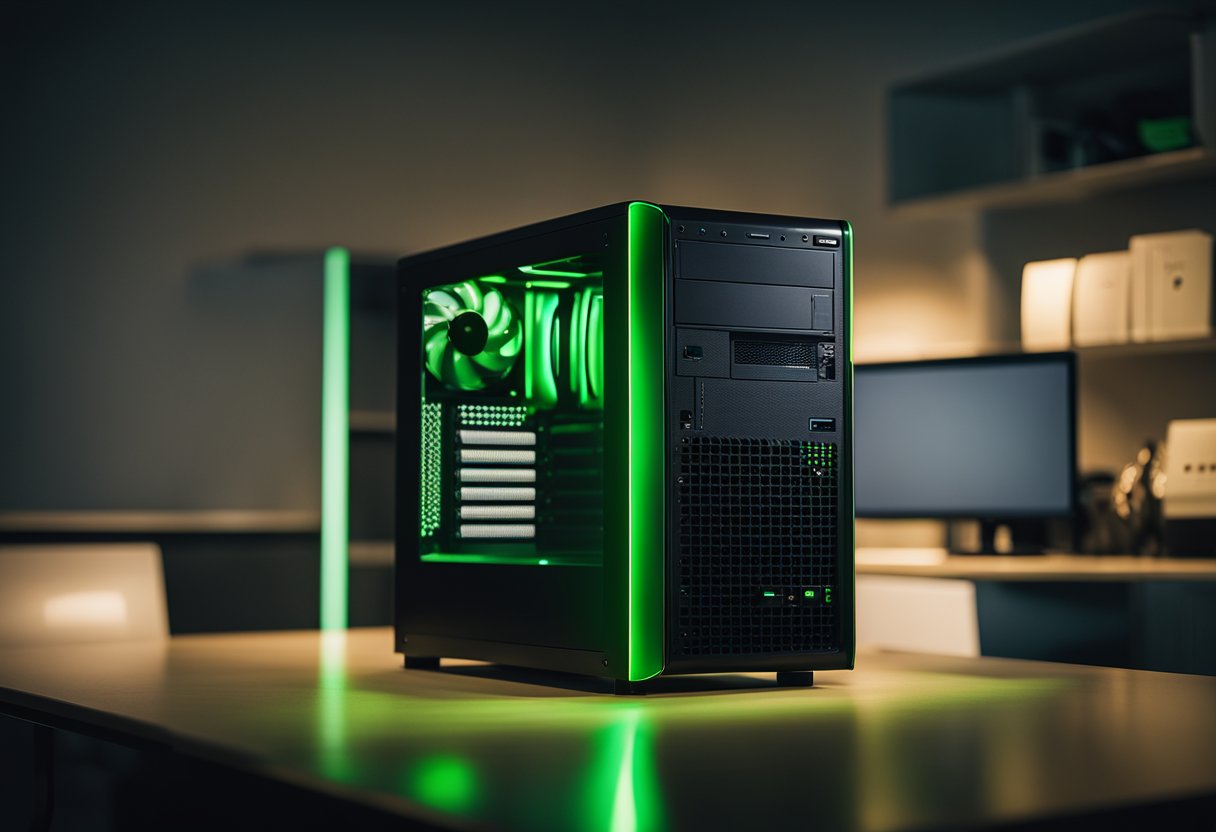
Eureka leverages reinforcement learning and NVIDIA’s Isaac Gym for rapid evaluation of reward candidates. Isaac Gym, a powerful simulation environment, plays a crucial role in optimizing and testing the AI agent’s capabilities. The inclusion of large language models like GPT-4 supervises the training process, leading to faster and more efficient learning.
The Eureka project was led by an exceptional team, including Anima Anandkumar, the director of machine learning research at NVIDIA. Eureka’s innovative approach not only optimizes reward functions, but can also benefit a multitude of robotic applications and influence the future of robotics. As the field continues to advance, Eureka showcases the potential for significant contributions to numerous industries.
Key Takeaways
- Nvidia Eureka is a cutting-edge AI agent that accelerates robot learning using large language models and GPU-accelerated simulations.
- Reinforcement learning and Nvidia’s Isaac Gym play crucial roles in Eureka’s ability to teach robots sophisticated skills.
- Eureka has the potential to transform industries requiring dexterous robot control and realistic animations, influencing the future of robotics.
Nvidia Eureka: A Breakthrough in Technology
Nvidia has recently unveiled Eureka, a groundbreaking combination of large language models like GPT-4 and GPU-accelerated simulation technologies, developed by researchers from Nvidia, UPenn, Caltech, and the University of Texas at Austin. This innovative technology aims to revolutionize the way robots learn and acquire new skills while providing a new way to produce physically realistic animations for artists.
Eureka utilizes OpenAI’s GPT-4 to design training goals for robots, allowing them to learn more accurately and efficiently in performing complex manual tasks. The AI agent is capable of automatically generating algorithms, which enable robots to undergo reinforcement learning and adapt to their environment quickly.
The breakthrough technology not only accelerates robot training but also has significant implications for various sectors, including manufacturing, logistics, healthcare, and entertainment. Nvidia’s Eureka aims to propel the field of robotics and artificial intelligence, positioning the company at the forefront of innovation in these domains.
By efficiently blending GPT-4 with GPU-accelerated simulations, Eureka exhibits the potential to dramatically transform the landscape of robot learning and technology. This development marks an exciting milestone in Nvidia’s commitment to driving innovation and advancement in the fields of AI and robotics.
The Significance of Reinforcement Learning
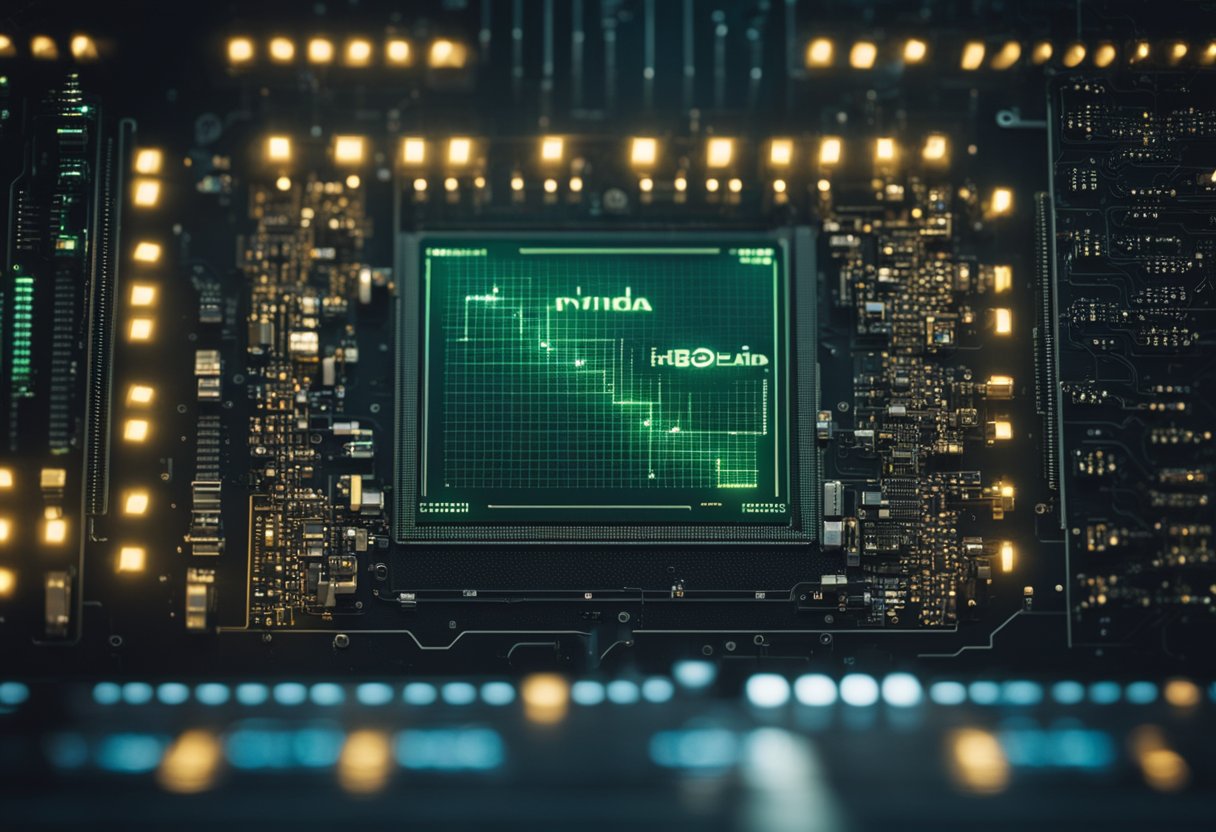
Reinforcement learning has emerged as a crucial technique in the world of artificial intelligence, often used to teach robots and machines how to navigate and learn from their environment. Algorithms play a pivotal role in this process, shaping the way AI entities gather new data and subsequently refine their decision-making processes.
NVIDIA Research has recently made groundbreaking strides with their Eureka AI project, tackling the challenge of reward design in reinforcement learning. Eureka combines generative and reinforcement learning methods, paving the way for more efficient trial-and-error learning for robots and improved outcomes. Eureka-generated reward programs reportedly outperform human-written ones in over 80% of tasks, demonstrating the potential of this innovative approach.
One of the key benefits of Eureka’s approach lies in its gradient-free in-context learning technique for reinforcement learning from human feedback (RLHF). This method enables seamless incorporation of human input to enhance the quality and safety of generated rewards without requiring model updating. As a result, the AI system becomes more adaptable and responsive to changing environments and user requirements.
The advancement of reinforcement learning technologies like NVIDIA’s Eureka enables researchers and developers to overcome long-standing limitations in AI and robotics. By streamlining reward design and facilitating better integration with human guidance, Eureka accelerates the AI’s ability to tackle complex tasks and learn from its surroundings. This breakthrough in reinforcement learning ultimately paves the way for faster innovation and more practical applications in the AI and robotics industry.
Isaac Gym and Eureka
NVIDIA’s Eureka is a breakthrough in robot learning that utilizes advanced AI algorithms to enable robots to perform complex tasks rapidly. Central to Eureka’s effectiveness is the Isaac Gym, a cutting-edge physics simulation reference application specifically designed for reinforcement learning research.
Isaac Gym leverages state-of-the-art GPU-accelerated simulation to expedite the evaluation of reward candidates, allowing scalable search in reward function space. Thanks to efficient parallelization, Isaac Gym makes it possible for Eureka to process vast amounts of data quickly, resulting in efficient learning and improved performance.
By combining Isaac Gym with the power of NVIDIA’s Omniverse platform, Eureka can take full advantage of real-world simulation environments. As a result, Eureka can “learn to learn” by fusing language models’ pattern detection capacity with advanced simulation technologies like Isaac Gym.
The Voyager project is another example of how Isaac Gym can be employed for research purposes. Voyager, which focuses on optimizing robot control policies, benefits from the high-performance simulation and parallelization capabilities of NVIDIA Isaac Gym, leading to better results in autonomous robot learning.
In summary, Isaac Gym, with its GPU-accelerated simulations, plays a crucial role in Eureka’s ability to revolutionize robot learning and achieve impressive results in complex tasks. Isaac Gym not only supports Eureka’s learning capabilities but also enhances the performance of other robotics projects such as Voyager, solidifying its importance in the field of robotics research.
Role of Large Language Models
Large Language Models (LLMs) serve as powerful tools in the field of artificial intelligence and natural language processing. With their ability to comprehend, generate, and translate text, they have emerged as valuable assets in numerous applications and industries.
One such influential LLM is GPT-4, developed by OpenAI. Like other LLMs, GPT-4 relies on deep learning algorithms and has been trained on vast datasets. These models have made significant strides in understanding human language and are crucial in AI applications, ranging from simple chatbots to complex problem-solving.
In the context of NVIDIA’s Eureka project, LLMs, particularly GPT-4, play a vital role in advancing robotics research. Eureka leverages the GPT-4 large language model to enable efficient learning of complex tasks such as dexterous pen spinning. The LLM serves as a high-level semantic planner, guiding the robot in mastering intricate manipulation tasks.
LLMs have shown immense potential in reinforcement learning, a process of trial and error to help robots learn effectively. With Eureka, the focus is on achieving human-level reward design, aiming to create AI agents that can adapt to challenging environments. Organizations across multiple sectors are now recognizing the benefits these LLMs hold for enterprise solutions.
In summary, the role of LLMs, such as the GPT-4 large language model, extends well beyond text-based tasks. The advancements made in this field have the power to revolutionize not only robotics research but also a multitude of industries, contributing to the development of cutting-edge AI applications and solutions.
Anima Anandkumar and the Eureka Team

Anima Anandkumar is the senior director of AI research at NVIDIA and played a significant role in the development of Eureka, a groundbreaking algorithm in robot learning. She worked alongside a talented and diverse team of researchers to pioneer this innovative approach to reinforcement learning. This team includes William Liang, Guanzhi Wang, De-An Huang, Osbert Bastani, Dinesh Jayaraman, and Yuke Zhu, who have collaborated to bring about this major breakthrough in artificial intelligence.
The Eureka project is a shining example of how collaborative research can produce groundbreaking advancements. Anima Anandkumar’s leadership combined with the expertise of her team has allowed them to develop an algorithm that integrates generative and reinforcement learning methods, revolutionizing the field of robotics.
The Eureka algorithm leverages OpenAI’s GPT-4 language model for designing training goals and facilitating accelerated robot learning. By integrating generative and reinforcement learning methods, the Eureka team has created a reward system that is efficient and superior to previous approaches. The use of NVIDIA’s expertise in AI and powerful computing resources enabled the team to make significant progress in solving complex robotics tasks.
Through their research, the Eureka team has demonstrated how the new algorithm can be applied for robots to learn complex skills, such as the rapid spinning of a pen or tossing and catching balls at a human level. NVIDIA Research’s breakthrough in the Eureka project has the potential to transform the way robots are trained and advance the field of robotics as a whole.
Anima Anandkumar and her collaborative Eureka team have given the AI and robotics industries groundbreaking advancements, showcasing the power of innovation and teamwork. The Eureka algorithm’s development is a testament to the collective expertise and dedication of the researchers involved in this project, setting a new standard for the robotics and AI fields.
Key Features of Nvidia Eureka
Nvidia Eureka is a cutting-edge AI agent designed to revolutionize the way robots learn complex skills. One of its most innovative features is its adaptive learning approach, which allows it to operate without task-specific prompts or pre-defined reward templates. Eureka can receive feedback from users to adjust its training goals, constantly refining its performance.
Another key aspect of Eureka is its ability to generate its own reward programs. These reward algorithms are crucial for facilitating robot learning through trial and error. In fact, Eureka’s autonomous reward programs have been shown to outperform human-written ones in more than 80% of tasks.
In terms of practical application, Eureka demonstrates remarkable versatility. It has been trained to handle varying types of robotic systems and tasks, from simple movements to more intricate dexterity challenges.
Eureka’s skill in handling complex tasks with ease is largely due to its integration with OpenAI’s GPT-4 language model. The advanced AI capabilities provided by GPT-4 allow Eureka to design effective training goals that accelerate the learning process for robots, as highlighted by researchers from Nvidia, UPenn, Caltech, and the University of Texas at Austin.
By maintaining a confident, knowledgeable, neutral, and clear tone, it becomes evident that the key features of Nvidia Eureka have the potential to transform the robotics industry. Its adaptive learning capabilities, autonomous reward design, and ability to sharpen the skills of robots across numerous domains showcase the power and promise of this groundbreaking technology.
Robotic Applications and Skills
NVIDIA’s Eureka has revolutionized the field of robotics by using AI mastery to teach robots various complex tasks. Eureka efficiently combines large language models and NVIDIA GPU-accelerated simulation technologies to enable robots to learn a diverse range of skills. Leveraging the power of GPT-4, the Eureka agent can autonomously teach robots intricate motor skills and adapt to varied feedback in the real world.
One impressive application of Eureka is enabling robots to learn pen-spinning techniques. This seemingly mundane task demonstrates dexterous robot control, utilizing advanced manipulation skills and precise hand-eye coordination. Similarly, Eureka empowers robots to master catching balls, showcasing their improved dexterity and responsiveness.
In more practical scenarios, Eureka helps robots excel at everyday tasks, such as opening drawers and using a robotic hand for various purposes. These skills are crucial for robots operating in industrial and consumer applications, where efficient and precise manipulation is paramount.
A key aspect of Eureka’s success is its ability to create effective policies for robots to follow. The agent employs the GPT-4 LLM and generative AI to write software code and provide rewards to robots as part of the reinforcement learning process. This ensures that the robots develop accurate and practical manipulation skills, all without needing predefined reward templates or task-specific prompting.
Another impressive feat of Eureka is teaching robots to handle scissors. This complex task demands extreme dexterity and precision, making it particularly challenging for robots to master. However, with Eureka’s unique approach to learning, robots can conquer this intricate skill, further expanding their range of practical applications.
In summary, NVIDIA’s Eureka has taken robot learning to new heights by leveraging advanced AI techniques and reinforcement learning. From pen-spinning to handling scissors, Eureka equips robots with a wide array of dexterous control and manipulation skills, paving the way for their increased presence in various industries and real-life applications.
Simulated Environment: Omniverse and Isaac Gym
NVIDIA Omniverse is a powerful platform for creating 3D tools and applications, featuring an array of simulation technologies. It is based on the OpenUSD framework, which ensures compatibility and extensibility for various use cases. One key application of Omniverse is in the field of robotics, where it combines with Isaac Gym to deliver an enhanced simulated environment for training and testing AI-based robots.
Isaac Gym is an extensible robotics simulator designed to provide a faster and better way to design, test, and train AI-based robots. This GPU-accelerated simulation technology integrates seamlessly with NVIDIA Omniverse, enabling researchers and developers to create scalable, photorealistic, and physically accurate virtual environments. The combined power of Omniverse and Isaac Gym allows for high-fidelity simulations, which aids in the development of more sophisticated robotic solutions.
The Omniverse Isaac Gym extension encompasses a variety of features that simplify the process of connecting reinforcement learning libraries and algorithms with other components in Isaac Sim, such as physics simulation. By inheriting from gym.Env, this interface makes it easy to bridge the gap between common RL libraries and the powerful simulation capabilities of Omniverse. As a result, developers can focus on creating effective learning algorithms for their AI-driven robots.
In summary, the synergy between NVIDIA Omniverse and Isaac Gym enhances the capabilities of developers and researchers in the field of robotics. By providing a comprehensive, GPU-accelerated simulation environment, these technologies facilitate the creation of highly sophisticated AI-based robotic solutions and accelerate the pace of innovation.
Impacts and Future of Robotics
Nvidia’s Eureka AI promises to have a significant impact on the world of robotics. This advanced AI system has the potential to revolutionize the field by allowing robots to learn complex tasks more efficiently and adapt to new situations more effectively. It is expected to enhance the versatility of robotic systems, making them more useful in a wide range of applications and industries.
One notable area where Eureka can make a difference is in the realm of computer vision. By enabling robots to process and analyze visual data more accurately, they will be better equipped to navigate and interact with their environments. This enhanced vision capability can lead to improved performance in tasks such as object recognition, obstacle avoidance, and navigation in dynamic settings.
When it comes to handling complex tasks, Eureka’s innovative approach to combining generative and reinforcement learning algorithms is a significant breakthrough. This allows robots to learn faster and adapt more easily to new situations, making them more capable of performing intricate tasks that were previously out of reach. For example, Eureka has already been used to teach a robotic hand to perform rapid pen-spinning tricks as effectively as a human.
The future of robotics is bright, with Eureka paving the way for more adaptable and versatile robotic systems. These advanced AI-driven robots will be able to take on tasks that were once considered too difficult or dangerous for humans, such as disaster-response missions, advanced medical procedures, and highly specialized industrial tasks. Furthermore, their ability to learn and adapt quickly to new situations will enable them to seamlessly integrate into a variety of workplaces, making them invaluable tools in the ever-evolving world of industry and technology.
As the field of robotics continues to progress, it is clear that Nvidia’s Eureka AI will play a significant role in shaping the landscape and pushing the boundaries of what is possible. Its impacts on areas like vision, adaptability, and the ability to perform complex tasks are just a few examples of the transformative potential that this technology offers. By harnessing the power of Eureka, the future of robotics is poised to be more versatile, capable, and exciting than ever before.
Conclusion

Nvidia’s Eureka has demonstrated remarkable capabilities in revolutionizing robotics training through its use of GPT-4 and reinforcement learning methodologies. This translates into significant self-improvement for the robots, achieving a performance improvement of over 50% compared to previous methods. The ability to autonomously develop reward programs for trial-and-error learning further cements Eureka’s value in improving robotic performance.
When discussing normalized improvement, Eureka’s application of GPT-4’s language model for complex skill acquisition is crucial. By integrating a versatile and adaptable system with cutting-edge language models, Eureka is equipped to handle a wide range of training goals for robots.
Decision-making in robotics is directly related to the quality of training and learning techniques employed. Eureka’s AI-driven approach enables robots to acquire intricate tasks that go beyond human capabilities, thus enhancing their decision-making capabilities. This is a testament to Eureka’s transformative role in robot training.
In conclusion, Nvidia’s Eureka establishes a new benchmark in the field of autonomous robot learning. Its innovative integration of GPT-4 and reinforcement learning enables robots to achieve unprecedented levels of dexterity and autonomy. These advancements hold vast potential for the future of robotics and AI-driven industries.
Frequently Asked Questions
What is the purpose of Nvidia Eureka?
Nvidia Eureka is an AI agent developed by Nvidia Research that leverages OpenAI’s GPT-4 to teach robots complex tasks. Its main objective is to revolutionize the field of robot learning and enable robots to perform intricate tasks that were once challenging or impossible to accomplish.
How does Nvidia Eureka contribute to robotics?
Eureka is a prime example of cutting-edge technology in the realm of AI and robotics. It eliminates the need for task-specific prompting or predefined reward templates, thereby allowing robots to learn sophisticated skills more smoothly. Furthermore, Eureka readily incorporates human feedback, resulting in more accurate alignment with a developer’s vision and objectives.
What industries can benefit from Nvidia Eureka?
Nvidia Eureka has the potential to benefit various industries, including manufacturing, logistics, healthcare, and research. Its ability to teach robots to carry out complex tasks can greatly improve their efficiency and effectiveness in these fields, resulting in cost savings, workplace safety, and faster production times.
What are the key features of Nvidia Eureka?
As an AI agent driven by OpenAI’s GPT-4, Nvidia Eureka’s key features include reinforcement learning, generative AI for writing software code, and easily adaptability to human feedback. These features allow robots to efficiently learn complex tasks without the need for extensive, predefined templates or prompting.
How does Nvidia Eureka compare to other AI platforms?
Nvidia Eureka stands out from other AI platforms due to its advanced use of GPT-4 and reinforcement learning principles, allowing it to teach robots with greater autonomy and efficiency. While other platforms may focus on different aspects of AI, Eureka primarily targets robotics and the mastery of intricate tasks.
Is Nvidia Eureka suitable for my project?
Determining if Nvidia Eureka is suitable for your project depends on your objectives and the complexity of the tasks you want to accomplish with robotics. If your project involves teaching robots to perform intricate tasks and requires an efficient, adaptable learning system, Nvidia Eureka could be an ideal solution to explore.