AI Fashion Design: Revolutionizing the Apparel Industry
Artificial Intelligence (AI) is reshaping numerous industries, and fashion design is no exception. With its ability to analyze vast amounts of data, predict trends, and generate novel design patterns, AI has emerged as a boon for both established fashion houses and up-and-coming designers. AI in fashion design is not just about automation; it’s a tool for enhancing creativity and personalization, enabling designers to create unique pieces that stand out in a crowded market.
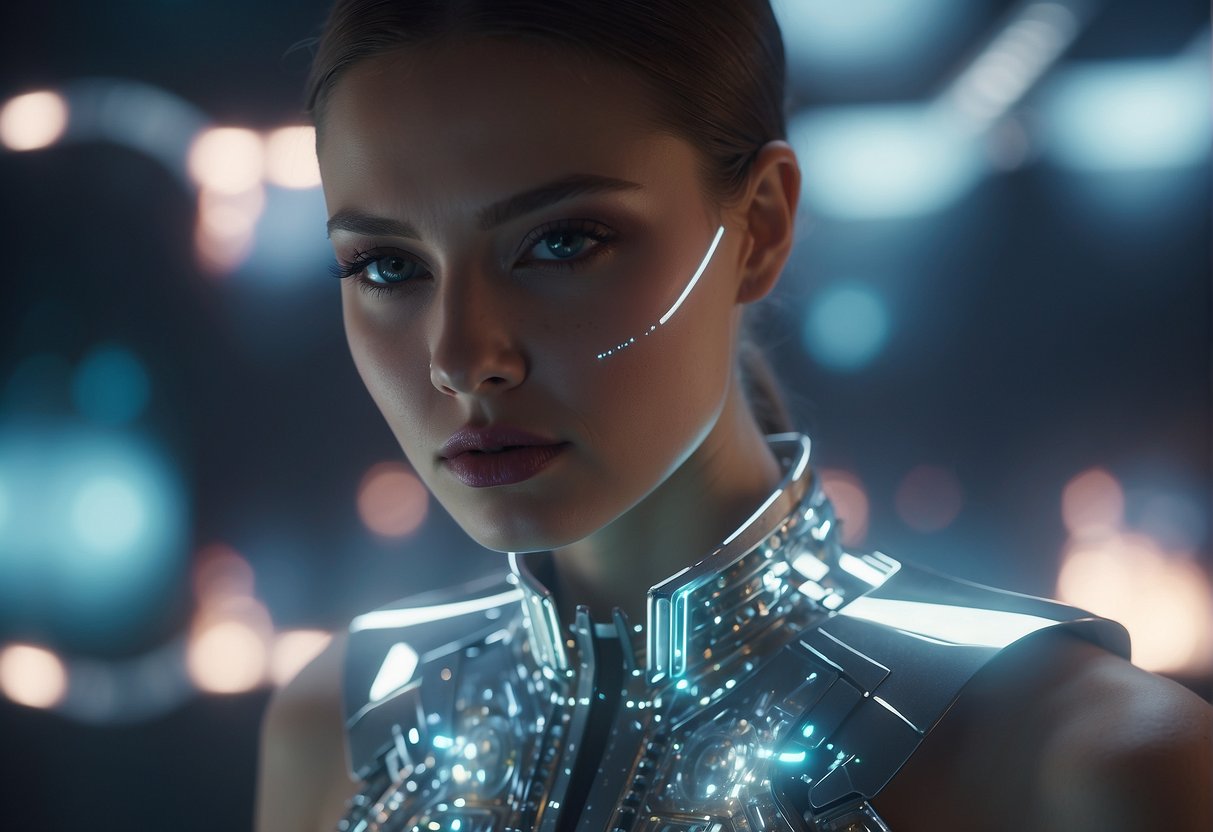
AI-driven tools offer a plethora of options for fashion designers, from simplifying the design process to tailoring customer experiences. These tools can generate designs based on specific parameters or assist in the creation of completely new concepts that might not be immediately intuitive to the human mind. Moreover, AI technology plays a significant role in streamlining production processes, marketing strategies, and even managing customer relations by providing insights that are precise and actionable.
Key Takeaways
- AI empowers fashion designers by enhancing creativity and providing personalized experiences.
- AI tools streamline the design, production, and marketing processes in the fashion industry.
- The adoption of AI in fashion design is leading to more innovative and sustainable business models.
Foundations of AI in Fashion Design
In the fashion industry, AI has become instrumental in revolutionizing design processes and enhancing creative exploration by providing advanced tools and analytics. The foundations of AI in fashion incorporate cutting-edge technology that transforms how designers conceptualize and create clothing.
Evolution of AI in the Fashion Industry
The introduction of artificial intelligence to the fashion sector has shifted the traditional paradigms of designing and production. Initially, AI’s role was limited to simple analytics and trend forecasting. However, it quickly progressed to more complex tasks, such as pattern recognition, 3D design simulations, and personalized suggestions. Designers now use AI to draw inspiration from vast databases and generate unique designs, reflecting the rapid evolution and deep integration of AI into the fashion industry.
Key AI Technologies and Frameworks
Several key technologies and frameworks form the backbone of AI in the fashion realm:
- Machine Learning (ML): Leveraging large datasets to predict trends and customer preferences.
- Neural Networks: Mimicking the human brain to create intricate patterns and textures.
- Generative Adversarial Networks (GANs): Facilitating the creation of original designs by pitting two networks against each other.
These frameworks not only aid in automating mundane tasks but also equip designers with sophisticated tools to translate abstract ideas into tangible products. They are crucial for companies to remain competitive in a fast-paced industry where innovation is key.
AI-Driven Design Process
The integration of artificial intelligence into fashion design is revolutionizing the industry, offering new possibilities for creativity and efficiency. AI algorithms aid in streamlining the design process, allowing for rapid design iteration and informed decision-making.
Incorporating AI into Creative Design
In exploring the AI fashion landscape, one finds that AI’s role in creative design is multifaceted. Tools enabled by artificial intelligence take sketches or concepts and transform them into detailed designs. This transition exemplifies how AI-driven solutions are scaling fashion brands by making the creative process more accessible and robust.
Generative AI for Fashion Creation
AI Fashion has been significantly enhanced by the advent of generative AI. These AI systems generate new concepts and styles by applying complex algorithms, often creating designs that reflect current trends and consumer preferences. The incorporation of generative AI in the fashion creation process fosters a collaboration between technology and human designers, pushing the boundaries of conventional fashion design.
Enhancing Speed and Decision-Making
Speed and decision-making are two critical aspects greatly improved by AI in fashion. Algorithms process vast amounts of data rapidly, enabling fashion designers to make informed choices quickly. This speed translates to a dynamic fashion design environment, where decision timelines are slashed, and efficiency breeds development opportunities. AI’s contribution to rapid design iteration means designers can prototype and modify designs almost instantaneously, reducing the time from conception to final product.
AI Tools and Applications for Designers
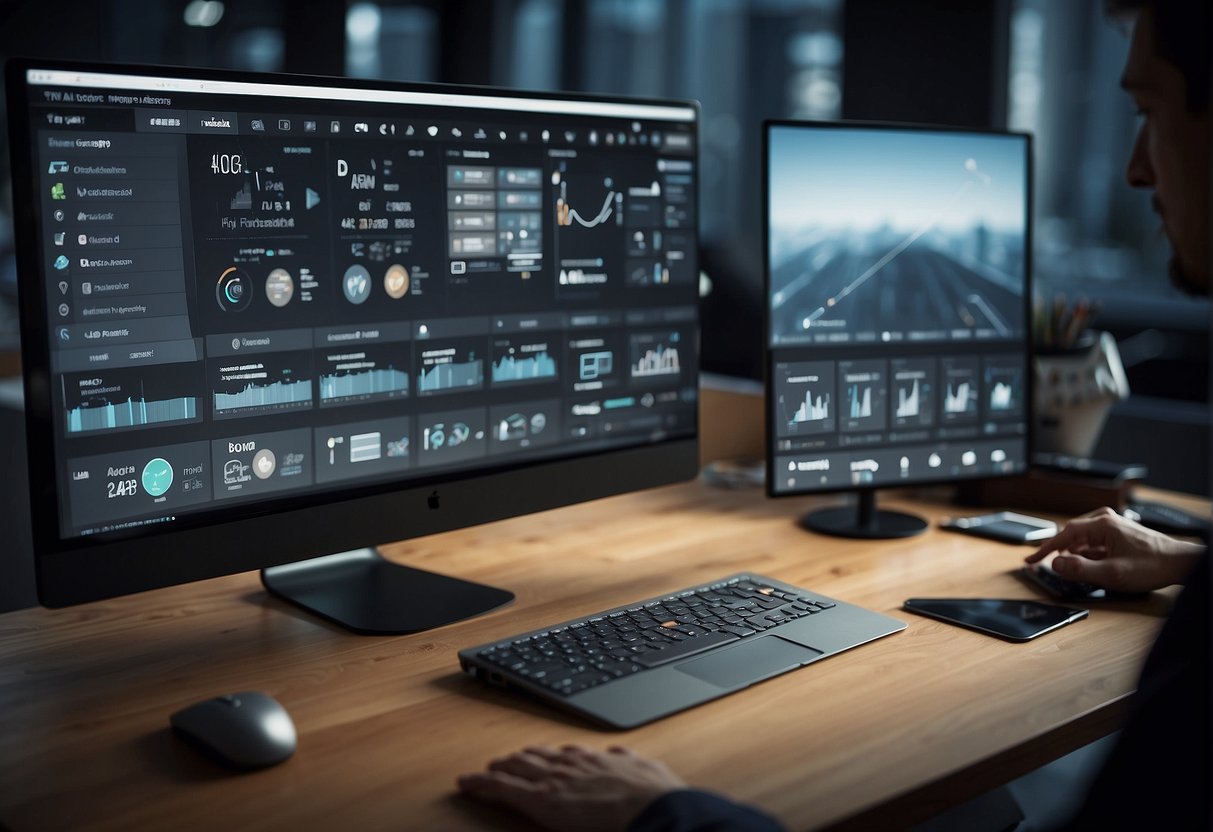
This section examines specific AI tools that are shaping the fashion design landscape, the integration of these tools into standard workflows, and how they enhance organizational productivity.
Popular AI Fashion Designer Tools
Several AI tools have risen to prominence, providing designers with innovative capabilities. The New Black is at the forefront, offering a platform that allows for instant translation of concepts into AI-generated designs. For UI enhancements, tools like YesPlz improve the user experience through AI, while Designovel and Botika have emerged as pivotal in integrating machine learning to craft and predict design trends.
Integrating AI Tools into Design Workflows
Integration of AI into design workflows is vital for a seamless co-creation process. Designers leverage APIs provided by platforms like ZMO.AI to embed AI capabilities directly into their existing software ecosystems. CALA offers a comprehensive suite that streamlines design production, from concept to completion, by employing advanced machine learning techniques.
Maximizing Productivity with Organizational Tools
For organizational efficiency, AI tools such as AblO are essential in managing design projects and enabling team collaboration. These tools not only facilitate the tracking of progress but also provide insights derived from AI to optimize workflow and resource allocation.
Each AI tool and application mentioned is instrumental in transforming the creative processes of fashion designers, offering a blend of advanced technology and practicality to meet the demands of modern design challenges.
AI in Fashion Production and Marketing
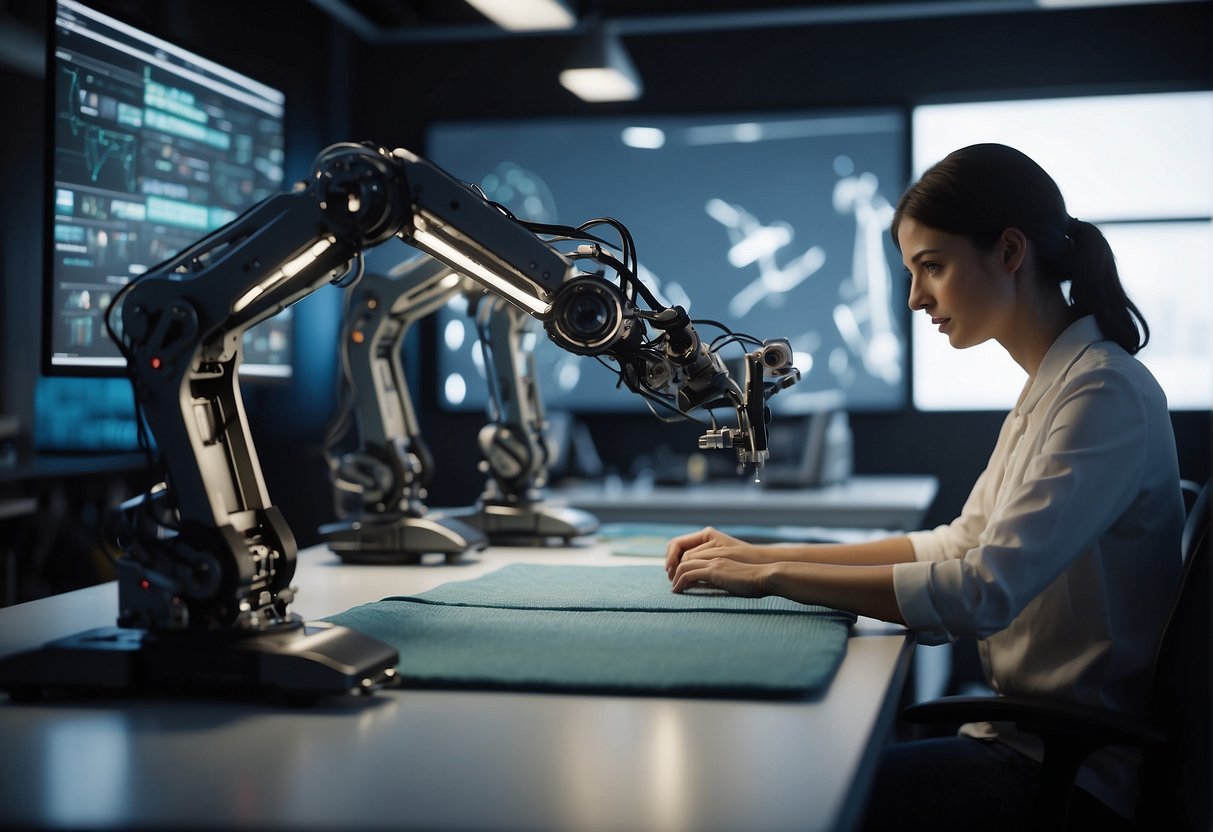
Artificial intelligence is revolutionizing the fashion industry by streamlining production processes and enhancing marketing strategies. AI-driven solutions are shaping the future of apparel creation and ecommerce, enabling fashion businesses to stay ahead in a highly competitive market.
Transforming Production with AI
The integration of AI in fashion production has led to the automation of complex tasks, from initial design to the final stages of manufacturing. AI algorithms can now convert sketches and mood boards into detailed 3-D models of furniture and jewelry, greatly reducing the time and cost associated with product development. In apparel manufacturing, AI enhances precision in cutting fabrics and predicts the quantity of materials needed, minimizing waste and optimizing resource allocation.
AI in Trend Forecasting and Marketing
In marketing, AI’s predictive analytics enable trend forecasting with a high degree of accuracy, identifying upcoming styles and customer preferences. This allows businesses to tailor their inventories to anticipated demands. Moreover, AI-powered tools are employed to create targeted advertising, ensuring that the right products reach the right consumers through data-driven campaigns. By analyzing consumer data, AI assists in developing personalized marketing strategies, enhancing customer engagement and satisfaction.
Optimizing Ecommerce with AI
Ecommerce platforms leverage AI for product discovery, offering recommendations that align with individual tastes and shopping behaviors. AI-driven chatbots provide personalized shopping assistance, while visual search technology enables consumers to find fashion items by simply uploading images. These advancements in AI contribute to a seamless shopping experience, reducing the gap between browsing and purchase, which is crucial for the long-term success of fashion ecommerce businesses.
The Role of AI in Personalization and Customer Experience

Artificial Intelligence (AI) in the fashion industry has transformed the way brands approach design and customer service. Leveraging AI technologies, they offer highly personalized and customer-centric experiences, from customized product offerings to improved shopping journeys.
Customized Fashion Experiences through AI
AI serves as a powerful personalization engine, adapting to individual taste and style to create personalized fashion recommendations. A hypothetical ChatGPT fashion stylist, for instance, could analyze a customer’s preferences based on their interactions and past purchases, offering bespoke outfit suggestions. AI fashion designer tools utilize machine learning to generate unique patterns and designs, catering to the customer’s desire for individuality.
AI and the Changing Retail Landscape
The incorporation of AI in retail has revolutionized the customer journey—both online and offline. For example, VisualHound technology can track a shopper’s in-store movements, providing insights into popular products and customer behavior, which in turn enhances the store layout and product placement for a better shopping experience. AI-powered chatbots assist customers in real-time, improving service and streamlining the purchasing process.
Sentiment Analysis for Customer Preferences
Sentiment analysis is another aspect where AI excels, examining customer reviews and social media reactions to gauge overall sentiment around products and brands. This analysis informs future designs by highlighting what customers enjoy and areas that need improvement. Brands can then adjust their offerings to better align with customer preferences, ensuring satisfaction and fostering loyalty.
Innovative Examples of AI in Fashion
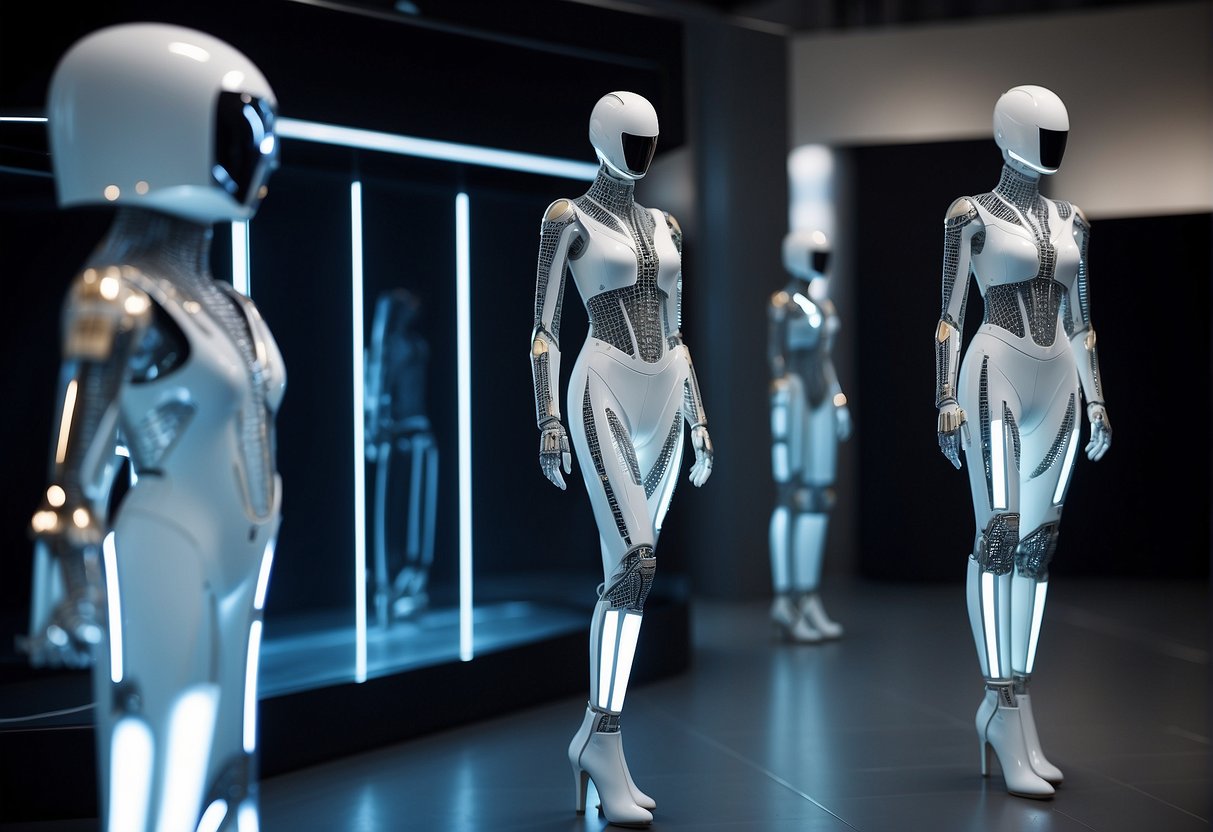
The fashion industry is witnessing a transformative era where artificial intelligence propels creativity and efficiency to new heights. These technological advancements showcase AI’s potential to redefine the traditional paradigms of fashion design and production.
Case Studies of AI Tools in Action
- AI-Driven Design Development: Fashion designers are leveraging AI tools like DALL-E, which uses deep learning to generate images from textual descriptions, thereby providing an infinite array of design inspirations that were previously unimaginable. This capability allows designers to iterate rapidly, producing innovative concepts that resonate with the dynamic nature of the fashion industry.
- Personalization at Scale: ChatGPT, an AI conversational model, is facilitating personalized shopping experiences by generating bespoke product descriptions and styling advice. Its advanced design capabilities enable retailers to offer custom fashion advice at an unprecedented scale, tailoring suggestions to individual preferences and enhancing customer engagement.
Emerging Startups Revolutionizing Design
- Generative AI Fashion Platforms: Specific startups have anchored themselves firmly in the industry by developing platforms that support the co-creation process between AI and designers. These entities provide tools that not only generate novel design patterns but also predict future trends, making generative AI fashion the new black among forward-thinking designers.
- Innovation Hubs for Design Tech: There are hubs like the Laboratory for Artificial Intelligence in Design (AiDLab), which take a pioneering step in holding fashion shows featuring designs produced with the assistance of AI, thereby demonstrating practical applications of AI in the realm of high fashion.
Ethical Considerations and Sustainability

In the realm of fashion, the integration of artificial intelligence presents both ethical challenges and opportunities for enhancing sustainability. As AI reshapes creative processes and the fashion supply chain, it is critical to navigate these waters with a deliberate focus on moral imperatives and environmental responsibility.
Addressing Ethical Challenges of AI in Fashion
AI’s impact on creative integrity: Marrying AI with fashion design raises questions about the originality and authenticity of artistic vision. Designers are experimenting with AI algorithms to generate new patterns and styles, leading to a discourse on the ownership of creative outputs instigated by machine intelligence.
Transparency in production: Ethical considerations also extend to transparency within the fashion supply chain. AI can aid in providing a clear view of the product journey, from raw material sourcing to final garment creation, but it also necessitates vigilant oversight to ensure fair labor practices and data privacy are upheld in these technologically advanced processes.
AI’s Role in Promoting Sustainable Practices
- Optimization of resources: AI can significantly reduce waste by forecasting trends and consumer demand, thereby optimizing inventory levels and minimizing overproduction.
- Eco-friendly materials and processes: By aiding in the selection of sustainable materials and streamlining production methods, AI technologies promote eco-conscious practices within the industry.
- Energy efficiency: In terms of energy consumption, AI’s predictive maintenance can ensure machinery operates at peak efficiency, reducing the fashion industry’s overall carbon footprint.
AI and sustainability in the fashion industry are increasingly recognized as intertwined issues, with AI’s potential benefits and limitations shaping the future of ethical fashion.
Future Trends and Predictions
The intertwining of machine intelligence and the fashion landscape is setting a transformative trajectory for the industry. The utilization of generative artificial intelligence in fashion design not only optimizes existing processes but also pioneers novel avenues for creativity and personalization.
Where is AI Fashion Heading?
Generative artificial intelligence is becoming a central player in the evolution of fashion design, merging the creative instincts of designers with data-driven technology. This synergy is anticipated to catalyze bespoke design experiences where consumer preferences, informed by AI analytics, influence the actual creation of apparel. Companies like ELLE have provided forecasts showcasing the potential financial uplift that this technology may add to the fashion industry in the coming years.
- Customization: With AI, the future is expected to embrace higher levels of customization, offering shoppers apparel that aligns more closely with their unique tastes.
- Sustainability: By predicting trends more accurately, AI is positioned to enhance the industry’s sustainability, reducing waste generated from overproduction.
Anticipating Changes in Fashion and Technology
The fashion industry is recognizing the untapped potential of AI in various domains, from trend forecasting to consumer behavior analytics.
- Evolution of Design: There is anticipation that AI will not only assist designers but could also autonomously generate viable design options, melding historical fashion data with emerging trends.
- Technology Integration: Advancements in technology are forecasted to continually integrate into retail experiences, providing innovations like voice-activated fittings or personalized styling recommendations.
Futurists expect these integrations to be omnipresent, suggesting machine learning algorithms will become integral in decision-making processes from the drawing board to the sales floor.
Getting Started with AI Fashion Design
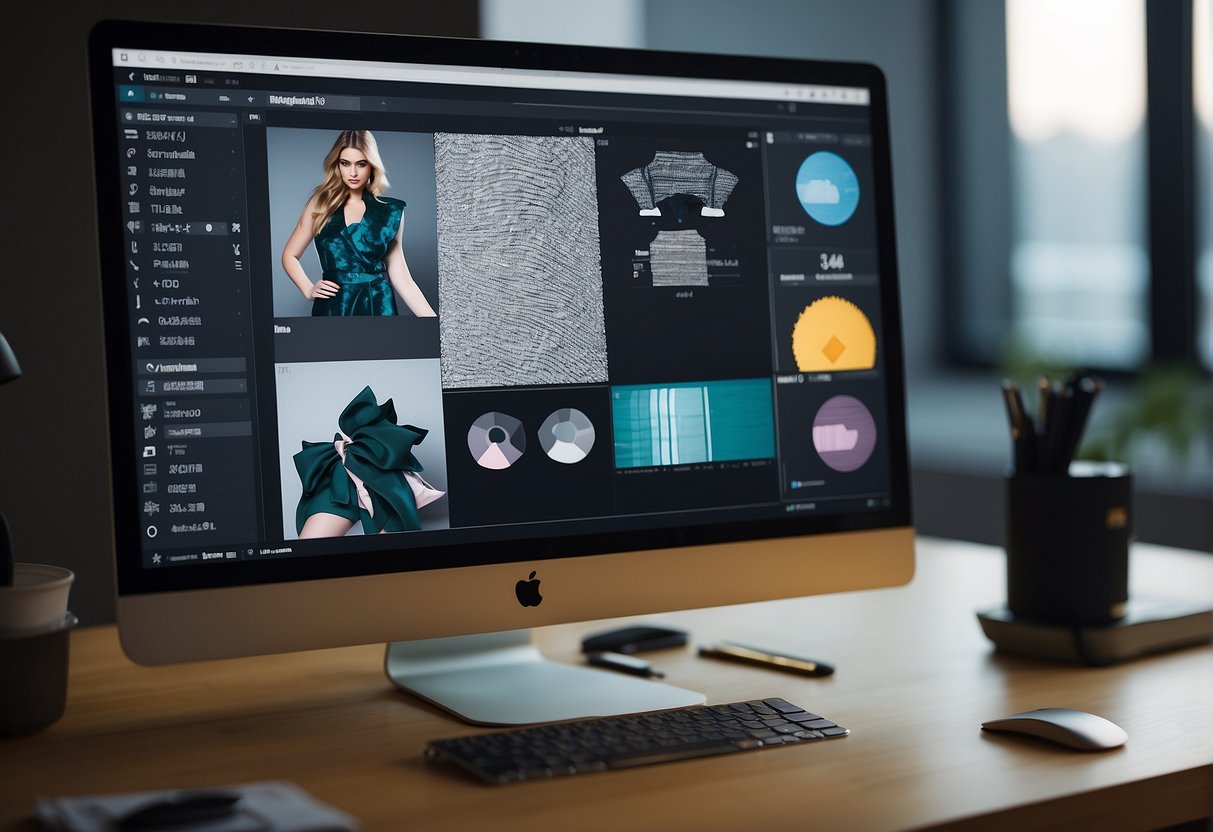
Integrating AI into the fashion design process enables designers to leverage innovative tools and harness creativity more efficiently. Starting with AI in fashion requires selecting the appropriate tools and building relevant skills.
Choosing the Right AI Tools for Beginners
When beginners are considering AI tools for fashion design, accessibility is key. They should look for intuitive platforms that offer a complimentary trial to explore features without commitment. For example, AI tools that provide 3D design capabilities can greatly enhance the creative process, allowing designers to visualize garments in a more realistic context.
- Leading AI Fashion Tools: Identify tools with a strong reputation for supporting fashion design and creativity.
- Ease of Use: Select platforms known for user-friendly interfaces.
- Trial Periods: Take advantage of complimentary trials to test tool capabilities.
Developing Skills for AI-Enhanced Fashion Design
Developing skills in AI-based design processes is essential for making the most of AI fashion design tools. Designers should focus on understanding how to manipulate AI models to produce on-model images and refine their creative process.
- Training Resources: Look for AI tool providers that offer extensive tutorials and knowledge bases.
- Practice Projects: Engage in hands-on projects to apply AI capabilities in real-world scenarios.
- Community Support: Join forums or groups where fellow designers share tips and experiences.
By focusing on accessible AI tools that come with educational support and community backing, individuals can ease into AI-enhanced fashion design confidently and effectively.
Integrating AI into the Fashion Business Model
The fashion industry is witnessing a transformative shift with the integration of Artificial Intelligence (AI), reshaping everything from trend forecasting to materials selection. Through strategic application and an understanding of AI’s competitive edge, fashion businesses can leverage technological advances to stay ahead.
AI Application Strategies for Fashion Brands
Fashion brands can adopt AI to enhance various aspects of their business, investing in AI-driven analytics for precisely predicting fashion trends, thereby aligning product lines with consumer desires. Additionally, AI facilitates the creation of high-fidelity designs by transforming initial concepts, such as sketches or mood boards, into detailed digital models. AI systems can also assist in optimizing supply chains, matching materials with design requirements while also improving sustainability through waste reduction.
Navigating Competition with AI Capabilities
In the competitive landscape of the fashion industry, brands must leverage AI to gain an edge. This might involve utilizing automated design systems to not only quicken the design process but also to allow for mass customization, providing a unique value proposition to consumers. By leveraging AI for real-time market analysis, brands can swiftly adapt to shifting fashion landscapes, outpacing competitors who rely on more traditional methods.
- Fashion Trend Forecasting: Harnessing AI’s predictive power to analyze and forecast trends.
- Materials Management: Utilizing AI to identify sustainable materials and optimize inventory.
In this emerging AI-centric environment, those who invest in AI enhance their design agility and customer experience, setting new industry benchmarks.
Frequently Asked Questions
In this section, we explore common inquiries regarding AI in the fashion industry, from leading software tools to educational resources, highlighting how artificial intelligence is revolutionizing fashion design and retail operations.
What are the leading AI software tools for fashion design?
The fashion industry’s interest in AI tools is growing, with applications like Adobe’s Sensei facilitating intelligent design by streamlining workflows. Another notable tool is IBM’s Watson, which offers trend prediction and customer insight analysis.
How can AI contribute to the innovation of online fashion creation?
AI transforms online fashion creation by enabling virtual try-ons and facilitating personalized shopping experiences. These innovations improve the user experience and provide retailers with valuable consumer behavior insights.
Are there any free resources for those looking to utilize AI in fashion design?
Yes, there are several free resources for those interested in AI and fashion design. Websites like Coursera and edX offer courses and tutorials. Additionally, open-source AI tools such as TensorFlow provide a platform for experimentation and development.
In what ways can an AI fashion design generator enhance the design process?
An AI fashion design generator can significantly speed up the design process by generating numerous iterations and variations of designs. It can also assist in creating sustainable designs by analyzing material properties and suggesting alternatives.
What educational courses are available for learning AI applications in fashion design?
Institutions are now offering specialized courses in fashion technology, which include learning about AI applications. For example, the Fashion Institute of Technology provides programs focused on fashion design and technology incorporating AI.
What are some notable impacts of AI on the operational processes of fashion retailers like Zara?
Retailers like Zara are using AI to optimize inventory management and supply chain operations. AI helps in forecasting trends, managing stock levels in real-time, and streamlining the distribution process, leading to enhanced efficiency and reduced waste.