How to Make AI Music: A Comprehensive Guide for Beginners
The rise of artificial intelligence has led to an explosion of creativity in various fields, including the world of music production. AI music generation refers to the use of advanced algorithms and machine learning techniques to create entirely new compositions, without any human intervention required. This groundbreaking technology has the potential to revolutionize not only how music is created but also how it’s consumed, opening up new frontiers of possibility for artists, producers, and music enthusiasts alike.
Aspiring musicians and industry professionals can harness AI technology to compose unique tracks with the help of various AI music generators available today. These tools are designed to cater to a wide range of genre preferences and are often customizable, allowing users to experiment with different styles and soundscapes. Additionally, AI-generated tracks can be instrumental in enhancing a range of media projects, such as podcasts, videos, and advertising campaigns, without the need to worry about royalty fees or copyright issues.
Key Takeaways
- AI music generation is transforming the way music is created and consumed.
- Utilizing AI music generators can lead to personalized and unique compositions.
- AI-generated tracks offer various applications, including multimedia projects and royalty-free usage.
The Art of Creating AI Music
In the ever-evolving world of music production, AI-generated music has emerged as a powerful tool for creating unique and compelling pieces. Whether you’re a seasoned artist or new to the field, you can harness the power of AI to generate fresh compositions tailored to your needs.
To begin creating AI music, first familiarize yourself with the various AI music generators available. These platforms come equipped with advanced algorithms and machine learning capabilities to craft music that resonates with audiences. By exploring different options, you will find the perfect AI generator suited to your creative style.
Once you’ve chosen an AI music generator, immerse yourself in its interface, and learn the features it offers. Some platforms allow you to import existing music tracks and generate new compositions based on your past work. Others enable you to create new music by pulling inspiration from various genres and instruments.
The key ingredient for crafting a truly unique AI-generated piece is your input. Even as AI assists in generating music, injecting your artistic vision into the process remains crucial. For instance, you might want to provide modifications to melody, rhythm, and harmony to ensure your compositions share your personal style.
Don’t hesitate to experiment with different AI tools and approaches. Listen to the generated music, and identify areas where improvements can be made. As you work with the AI, you’ll foster a greater understanding of how it operates and how best to adapt your creative process.
Although AI-generated music has its limitations, combining it with your own artistic influence will give you a competitive edge. By staying confident, knowledgeable, clear, and neutral in your approach, you’ll unlock the full potential of AI music creation. Embrace this cutting-edge technology and watch your musical horizons expand.
Essential Components in Ai Music
Understanding Instruments
When creating AI music, it’s crucial to have a grasp of various instruments found in different musical styles. Ci music algorithms rely on large datasets comprising musical elements such as melodies, harmonies, and rhythms. Your AI music’s success depends on how well it recognizes and combines multiple instruments, including traditional ones like pianos or guitars and more modern synthesizers.
Discovering Genres
The plethora of genres available allows AI music algorithms to generate diverse and creative soundscapes. Genres such as hip-hop, techno, pop, and electronic music can greatly influence the AI’s music composition process. By experimenting with various styles, you can create unique AI-generated songs or develop hybrid genres that combine characteristics of various musical styles.
The Role of Vocals and Voices
Vocals and voices play a significant part in crafting engagement in AI music. There are AI music generators with voice capabilities that emulate human voice qualities, enabling you to create vocal tracks or simulate interactions between various artists. In some cases, the tone and texture of a vocal performance can become crucial in conveying emotion and enhancing the listening experience.
Harnessing Moods and Energy
Lastly, it’s essential to consider the mood and energy of your AI music compositions. AI-generated music can evoke specific emotions or align with specific themes, guided by your input. By adjusting the energy level and desired mood, you can enhance the listening experience and tailor your music to diverse settings. With creative use of moods and energy, your AI-composed tracks can evoke powerful emotions and captivate listeners.
Benefits of AI Music for Different Professions
Content Creators and Podcasters
As a content creator or podcaster, you will find AI music beneficial for creating tailored background music, soundscapes, and themes for your videos and episodes. With AI-generated music, you can set the desired mood without worrying about royalty fees. Additionally, you will save time and resources while maintaining a professional and unique sound for your content. Some popular platforms for generating AI music include Loudly and Snapmuse.
Benefits of AI-generated music for content creators and podcasters:
- Customization: Create tailored tracks that enhance your content’s theme and message.
- Unique: AI-generated music helps you stand out with a distinct sound.
- Time-efficient: Save time compared to searching or creating traditional music.
- Cost-effective: Avoid royalty fees and expensive licensing agreements.
Musicians and Music Producers
For musicians and music producers, AI music offers an innovative way to produce new songs, explore creative ideas, and replicate specific styles. It can serve as a powerful tool to generate new melodies, harmonies, or entire compositions to augment your creative process. AI music technology is becoming increasingly popular – a survey by Ditto found that nearly 60 percent of artists use AI in their music projects.
Benefits of AI-generated music for musicians and music producers:
- Creativity: Explore new genres, styles, and ideas with AI-generated compositions.
- Efficiency: Speed up the music production process with AI assistance.
- Flexibility: Integrate AI-generated music into your existing workflow and projects.
- Inspiration: Use AI-generated tracks as a starting point to build upon and develop further.
Advertisers and Filmmakers
AI-generated music provides a novel solution for advertisers and filmmakers to create custom soundtracks and jingles for commercials, movies, and other audiovisual projects. With AI music, you have access to a virtually unlimited library of unique tracks, enhancing your advertisement or film’s emotional impact and storytelling. The future of AI music in advertising and film looks promising, as it allows you to quickly create appealing and tailor-made music suited to your project’s needs.
Benefits of AI-generated music for advertisers and filmmakers:
- Customization: Create music tracks that match your project’s specific needs and objectives.
- Quick: Produce soundtracks fast without sacrificing quality.
- Budget-friendly: Reduce music production costs by avoiding traditional licensing fees.
- Adaptive: Easily adjust AI-generated music to fit changes in your project as it evolves.
AI Music Generators and Other AI Tools
As you venture into the world of AI music creation, you’ll come across several AI music generators and tools that can elevate your projects. These generators rely on cutting-edge AI algorithms, making music creation more accessible to everyone, regardless of musical expertise.
One notable AI music generator is Amper Music, applauded for its user-friendly interface. It’s perfect for beginners, as it doesn’t require profound knowledge of music theory or composition. Amper crafts tracks from pre-recorded samples, simplifying the entire process.
Here’s a list of some promising AI music generators and tools you might want to explore:
- Mubert: A platform that offers a step-by-step tutorial on how to create your AI-generated music +.
- Landr: Combining AI music generation with a voice component, this tool adds versatility to your tracks.
- Synthesizer V: Known for its vocal synthesizer capabilities, it’s a great addition for AI music projects.
- Revocalize: Another audio tool that focuses on vocal synthesis, enhancing your AI-generated tunes.
It’s essential to keep in mind that these AI tools can not only generate melodies and tunes but also manipulate audio, making them versatile for different projects. For example, both DeepMind and YouTube have recently collaborated to release a gen-AI model for music called Lyria, aimed at complementing creators’ work.
Another fascinating AI tool is OpenAI’s Jukebox, offering automatic music generation based on piano roll technology. This method enables users to specify factors such as timing, pitch, velocity, and instrument for each note to be played.
In summary, using AI music generators and other AI tools can transform your creative process. Experiment with platforms like Amper Music, Mubert, Synthesizer V, and innovative projects like OpenAI’s Jukebox to find the ideal AI technology for your music needs. Keep exploring, and you’ll undoubtedly discover new ways to bring your ideas to life.
Features of High-Quality AI Music
Track Duration and Rhythm
One crucial aspect of AI-generated music is the ability to set the track duration. You have the flexibility to specify the length of your desired tracks, ensuring they fit seamlessly into videos, podcasts, or any other projects. AI music generators also consider the rhythm, providing various options from calm, slow beats to upbeat tempos that cater to your creative needs.
Language and Text Prompt Features
AI music generators work with a multitude of languages, including English. However, their ability to transform text prompts into audio is truly remarkable. With text prompt features, you can provide a combination of genres, moods, or musical styles as input. The AI uses this information to create custom tracks that align with your vision. Google’s MusicLM exemplifies this function, turning text descriptions into unique audio samples.
Instant Music Creation and Customization
Speed is paramount in modern music production, and AI music generators excel in providing instant music creation. High-quality AI tools are capable of producing music within seconds, offering on-the-fly customization to suit your preferences and requirements. This instant composition saves you time and simplifies your creative process.
In conclusion, AI-generated music brings a new dimension to music creation. The features it offers, such as track duration and rhythm, language and text prompt capabilities, and instant music creation and customization, enhance the efficiency and ease of producing unique pieces.
Understanding Royalty-Free AI Music
When you’re looking to create music for your projects, one of the options available is using royalty-free AI music. In this section, we’ll explore what it is, how it works, and the benefits it offers.
Royalty-free music allows you, as a content creator, to use a musical piece without the obligation of paying ongoing royalties or license fees. This type of licensing offers a cost-effective solution for using music in your projects while avoiding legal issues. On the other hand, AI music refers to music that is generated using artificial intelligence algorithms based on musical theory, data science, and machine learning1.
Now, when we combine these two concepts, we get royalty-free AI music which provides unique, original compositions created by AI platforms like AIVA. This type of music offers an array of benefits for you and your projects:
- Cost-effective: Royalty-free AI music eliminates the need for paying royalties to composers or copyright holders, making it an affordable option.
- Hassle-free: Using AI-generated music ensures you stay clear of copyright issues, allowing you to focus on your content creation.
- Uniqueness: AI-generated music offers unique compositions tailored to your specific needs. Platforms like Beatoven.ai enable you to customize tracks based on mood and style.
- Efficient: With the help of AI, creating a piece of music is fast, allowing you to integrate the composition into your project with minimal delay.
As you embark on your creative journey, remember, royalty-free AI music can be an indispensable resource for your needs. By using AI-generated music services, you will be able to create original, copyright-free music, perfect for all your projects.
Footnotes
Learning How to Use AI Music
Learning to create AI-generated music has become increasingly accessible, thanks to the development of various tools and platforms. You can now make unique tracks by utilizing AI music generators, even if you don’t have any prior experience in music production.
To begin, you can explore platforms like Elegant Themes which offer a step-by-step guide on how to generate AI music. These platforms typically provide you with user-friendly interfaces that enable you to input specific musical elements such as genre, tempo, and duration. Following the tutorials provided should help you get a grasp on the basics of AI music creation in no time.
Another aspect to consider when working with AI-generated music is understanding how to integrate APIs. APIs, or Application Programming Interfaces, allow you to add the functionality of AI music generators to your own projects such as apps, websites, or even games. By leveraging APIs, you can strategically integrate AI music and create customized solutions tailored to your unique needs.
To help you get started with APIs, here are a few resources you might find useful:
- Official documentation: Make sure to thoroughly review the API documentation provided by the AI music generator platform. This will give you a solid understanding of the API’s capabilities and limitations, as well as how to properly implement it.
- Code samples: Seek out code samples and examples shared by the platform itself or by the developer community. These resources can offer invaluable insights and best practices to follow when implementing the API in your project.
- Online tutorials: Take advantage of the multitude of online tutorials, both official and user-generated, that can help guide you through the process of integrating AI music APIs into your projects. By following these tutorials, you can learn from others’ experiences and quickly build your own expertise.
In summary, learning to create AI music is not only a fascinating endeavor but also a valuable skill to have in today’s technology-driven world. By understanding the basics of AI music generators and becoming proficient in using APIs, you will be able to integrate this cutting-edge technology into your own creative projects. As a result, you’ll be able to produce unique, engaging, and high-quality AI-generated music that truly resonates with your audience.
Exploring Advanced Concepts
Generative Models in Music Creation
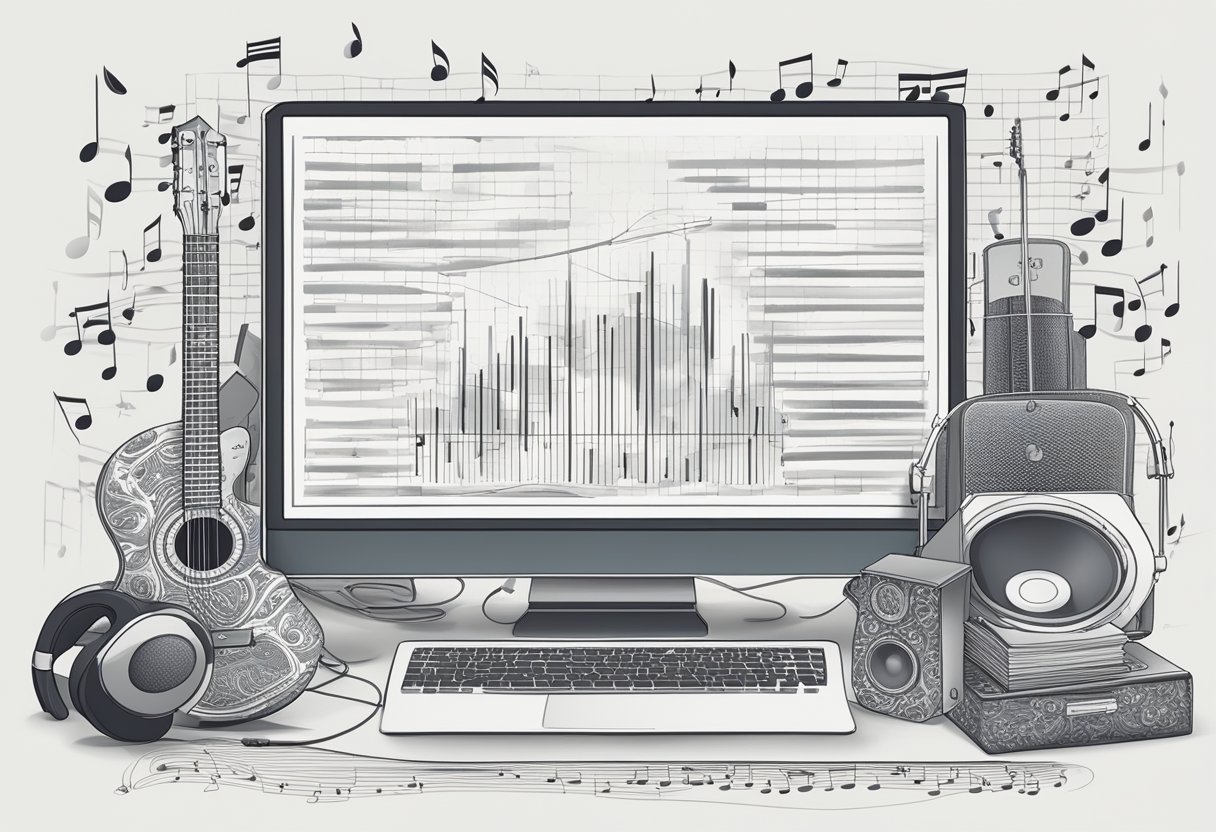
In the realm of AI music, generative models play a crucial role when it comes to composing unique and complex pieces. To begin with, you should gather a large dataset of music from various genres and preprocess it to extract useful features, as mentioned in this guide. Once you’ve trained the AI model on the dataset, it can learn patterns and structures within the music and use this knowledge to create new compositions inspired by the original data. To enhance your understanding of generative models, consider looking into popular AI music platforms like Loudly and others.
Here are some key benefits of using generative models in music creation:
- Versatility: AI models can learn from a diverse range of music styles and generate tracks that uniquely combine different elements.
- Innovation: Generative AI can surprise you with unexpected combinations and novel melodic patterns.
- Efficiency: Training an AI on a vast dataset streamlines the creative process and helps you produce music at a faster pace.
Distilling Character and Harmonies from AI Music
AI music can take various forms, from generating complete pieces to writing specific aspects of a composition. To create music that reflects your taste and style, you should focus on distilling character and harmonies from the AI-generated tracks.
Some important steps to consider when distilling character and harmonies are:
- Evaluation: Listen to the AI-generated pieces and analyze which elements resonate with your musical sensibilities.
- Extraction: Identify the desired characteristics, such as tempo, chords, or melodies, and extract them from the AI-generated output.
- Enhancement: Improve or modify these elements to fit your artistic vision. For instance, you could adjust the chord progression or add your unique touch to a melody.
- Integration: Combine the extracted elements and your enhancements to form a cohesive composition that reflects your creative vision.
By carefully examining and refining the output of AI-generated music, you can leverage the power of generative AI and create compositions that truly represent your musical identity. Remember, AI music is a tool that can aid you in your creative process, but ultimately, it’s your vision and expertise that gives the final product its soul.
FAQs
What are the best AI music generator tools?
There are various AI music generator tools available, each offering unique features and capabilities. Some popular options include Built In and Junai AI. Explore different platforms to find the one that best suits your creative needs.
How can I use an AI song lyrics generator?
AI song lyrics generators utilize machine learning algorithms to create lyrics based on your input or a specific theme. You can use these generators by first choosing a platform. Then, simply provide the required input, such as keywords, phrases, or a theme, and the generator will produce lyrics based on the provided information.
Which apps offer AI-generated music for free?
Some platforms offer free AI-generated music, typically with certain limitations. For example, Musicfy allows you to create AI-generated music for free without requiring a credit card. Be sure to check the terms and conditions of each platform, as some may offer limited features or usage restrictions.
How can AI artists create unique music?
AI artists employ machine learning algorithms to analyze vast amounts of data and determine patterns in music composition. These patterns are then used to create unique music compositions, blending artificial intelligence with musical creativity. As a result, AI-generated music can be innovative and distinctive, reflecting the capabilities of the AI software.
Is it possible to make AI-generated song covers?
Yes, creating AI-generated song covers is possible using AI vocals. Platforms like Soundkickers provide customizable AI voices for different music genres, enabling artists to recreate their favorite songs with AI-generated vocals. However, it’s essential to consider ethical and copyright implications when creating AI-generated covers.
Which platforms provide AI music generators online?
Various platforms offer AI music generators online, including Junai AI and Musicfy. These platforms typically require an internet connection to use the AI algorithms, and some may even offer browser-based tools, allowing you to create music without downloading any software. Experiment with different platforms to find one that meets your requirements and preferences.