Future of AI in Business: Navigating the Next Decade of Innovation
Artificial intelligence (AI) is rapidly shifting the landscape of the business world. It offers transformative potential through its ability to automate processes, analyze vast quantities of data, and create new ways of engaging with customers.
As technology advances, businesses are leveraging AI to optimize operations, innovate products, and redefine industry standards. Integrating AI into business strategies streamlines existing practices and paves the way for the development of new business models built upon intelligent insights and automation.
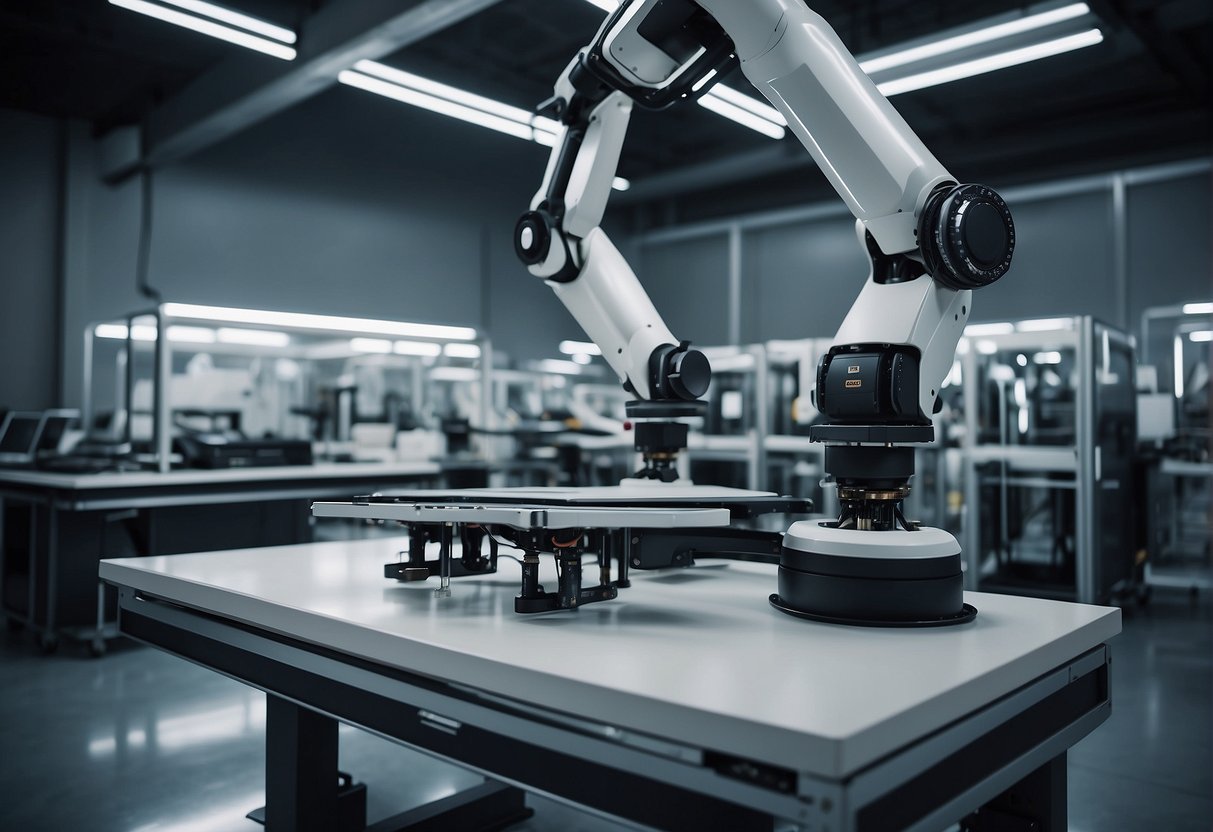
The evolution of AI in business is marked by continuous growth and adaptation. Across sectors, companies are harnessing AI technologies to enhance customer experiences, drive optimization, and overcome challenges that were once thought insurmountable.
Notwithstanding the complexities of its implementation, AI’s strategic application promises considerable gains in efficiency and effectiveness. As businesses continue to embrace AI, the interplay between human and machine intelligence becomes increasingly synergistic. This fosters an environment that is more responsive to consumer needs and market dynamics.
Key Takeaways
- AI is transforming business operations through automation and data analysis.
- Strategic implementation of AI leads to efficiency gains and enhanced customer experiences.
- The synergy between human and machine intelligence is crucial to the future of business.
Evolution of AI in Business

The landscape of business has been profoundly reshaped by AI, marking a paradigm shift in how industries innovate and compete. This evolution reflects an increasing integration of technology within market strategies and operations.
Historical Overview
Artificial intelligence has come a long way from its theoretical roots in the mid-20th century. Initially, it served as a novel tool for performing calculations and simple tasks.
As computing power accelerated, AI became more sophisticated, catalyzing its migration into business sectors. In previous decades, automation and rule-based systems laid the groundwork for machine learning. This allowed computers to adapt and learn from data without being explicitly programmed.
The commercial application of AI began to flourish, with industries recognizing its potential to drive efficiency and innovation.
Current Trends in AI
Today, the artificial intelligence market is characterized by rapid growth and integration across diverse business operations. AI technology is no longer peripheral but central to business strategies.
Key trends include the use of AI for:
- Enhancing customer experience with AI-powered chatbots for real-time interaction.
- Optimizing marketing efforts through personalized email campaigns.
- Streamlining operations and supply chain management with predictive analytics.
- Bolstering cybersecurity with robust fraud detection systems.
Industries are also exploring generative AI, which has the potential to revolutionize content creation and design processes within businesses. This marks a significant shift from AI as a mere tool for automation to a source of creative and strategic input.
Key AI Technologies Reshaping Business
Artificial Intelligence (AI) is a catalyst for change across various sectors. Today’s businesses adopt AI technologies not just to streamline operations but also to gain strategic insights and to innovate.
These key AI advancements are instrumental in redefining how businesses approach challenges and opportunities.
Automation and Machine Learning
Automation driven by machine learning algorithms is transforming business processes by reducing manual workloads and enhancing efficiency.
For example, predictive maintenance systems anticipate equipment failures before they occur, saving substantial costs and reducing downtime. Businesses are now able to allocate human labor to more critical, strategic tasks.
Natural Language Processing (NLP)
Natural Language Processing (NLP) enables machines to understand and respond to human language, facilitating more natural interactions between AI and users.
For instance, AI-powered chatbots provide instant support and services to customers, vastly improving user experiences and customer satisfaction. NLP is essential in handling vast quantities of unstructured data to glean insights and trends.
Predictive Analytics
AI’s predictive analytics employ data, statistical algorithms, and machine learning techniques to identify the likelihood of future outcomes based on historical data.
This ability can lead to more informed decision-making in areas such as market trends, customer behavior, and risk management. By analyzing past and current data, predictive models can forecast customer trends with a surprising degree of accuracy.
Generative AI
Generative AI is poised to revolutionize creative tasks in business. It can generate novel content, from writing to synthetic media creation, by learning from an extensive array of existing data.
The evolution of multi-modal AI technology underscores its potential to unlock unique business applications and opportunities, meeting needs that traditional AI systems could not satisfy, thus fostering an environment of innovation.
Strategic Implementation of AI

The successful implementation of AI technologies in business hinges on their seamless integration, informed decision-making processes, and stringent adherence to data security and privacy regulations.
Integrating AI into Business Operations
Organizations are rapidly integrating artificial intelligence to enhance their operational efficiency. The introduction of algorithms into everyday processes can streamline tasks, reduce human error, and significantly boost productivity.
For instance, the distribution of AI across different business functions supports machine learning operations, which can lead to profound improvements in customer service and inventory management.
AI and Decision-Making
In the realm of decision-making, businesses are leveraging AI to analyze large datasets, garner insights, and inform strategic choices.
Predictive analytics, powered by machine learning algorithms, allows companies to forecast market trends and consumer behavior with a higher degree of accuracy. This capacitates them to make data-driven decisions that align with their long-term business objectives.
Data Security and Privacy
As businesses embed AI into their operations, concerns regarding data security and privacy take the forefront.
It is essential that privacy regulations are thoroughly understood and adhered to when implementing AI systems. Safeguarding against data breaches and ensuring the ethical use of data through AI governance policies are key to maintaining public trust and compliance with global standards such as the General Data Protection Regulation (GDPR).
AI Impact on Business Sectors
Artificial Intelligence (AI) is revolutionizing various business sectors by enabling enhanced data analysis and automation. Key developments in AI technologies are specifically transformational in the areas of marketing, sales, customer service, manufacturing, supply chain, and financial services.
AI in Marketing and Sales
Marketing strategies are evolving as AI allows for precise customer targeting and data-driven decision making.
Intelligent algorithms analyze consumer behavior, enabling businesses to tailor their marketing campaigns to individual preferences. In sales, AI tools like CRMs are being augmented with predictive analytics to forecast sales trends and identify potential leads, effectively increasing conversion rates.
AI in Customer Service
In customer service, AI-powered chatbots and virtual assistants provide instant, round-the-clock support.
These tools are capable of handling a broad range of inquiries, leading to improved customer satisfaction rates. They also collect valuable insights on customer preferences, which can be used to inform business strategies.
AI in Manufacturing and Supply Chain
AI greatly enhances manufacturing efficiency through predictive maintenance and automation, reducing downtime and optimizing production processes.
In the supply chain arena, AI enables real-time tracking and predictive analytics for managing inventory, foreseeing supply demands, and reducing waste, resulting in a more streamlined operation.
AI in Financial Services
The financial services sector benefits from AI in various ways.
Risk management has been improved with the aid of algorithms that can detect patterns indicative of fraud. Additionally, AI contributes to portfolio management by personalizing investment strategies to align with individual risk profiles and financial goals, making it a critical tool for businesses in finance.
Enhancing Customer Experiences with AI

Artificial Intelligence (AI) is transforming the landscape of customer experience, offering groundbreaking ways to deliver personalized engagement and streamline interactions.
Personalization and Customer Engagement
Companies leverage AI to analyze customer data, enabling a personalized customer experience that resonates on an individual level.
With technologies capable of monitoring buying habits and browsing behaviors, businesses can tailor their offerings and recommendations. For instance, AI-powered tools from Harvard Business Review can create “intelligent experience engines” that dynamically adjust the user’s experience, providing them with options and solutions that align with their preferences and history.
Chatbots and Virtual Assistants
AI-driven chatbots have become integral to maintaining 24/7 customer service. These virtual assistants can handle a variety of tasks, from answering frequent queries to guiding users through troubleshooting processes or transaction steps.
The integration of chatbots in customer service not only improves efficiency but also ensures customers receive instant assistance. This was highlighted by McKinsey’s research into AI-enabled customer engagement. These sophisticated chatbots are now capable of engaging in natural language conversations, providing a seamless customer service experience.
AI-Driven Business Optimization
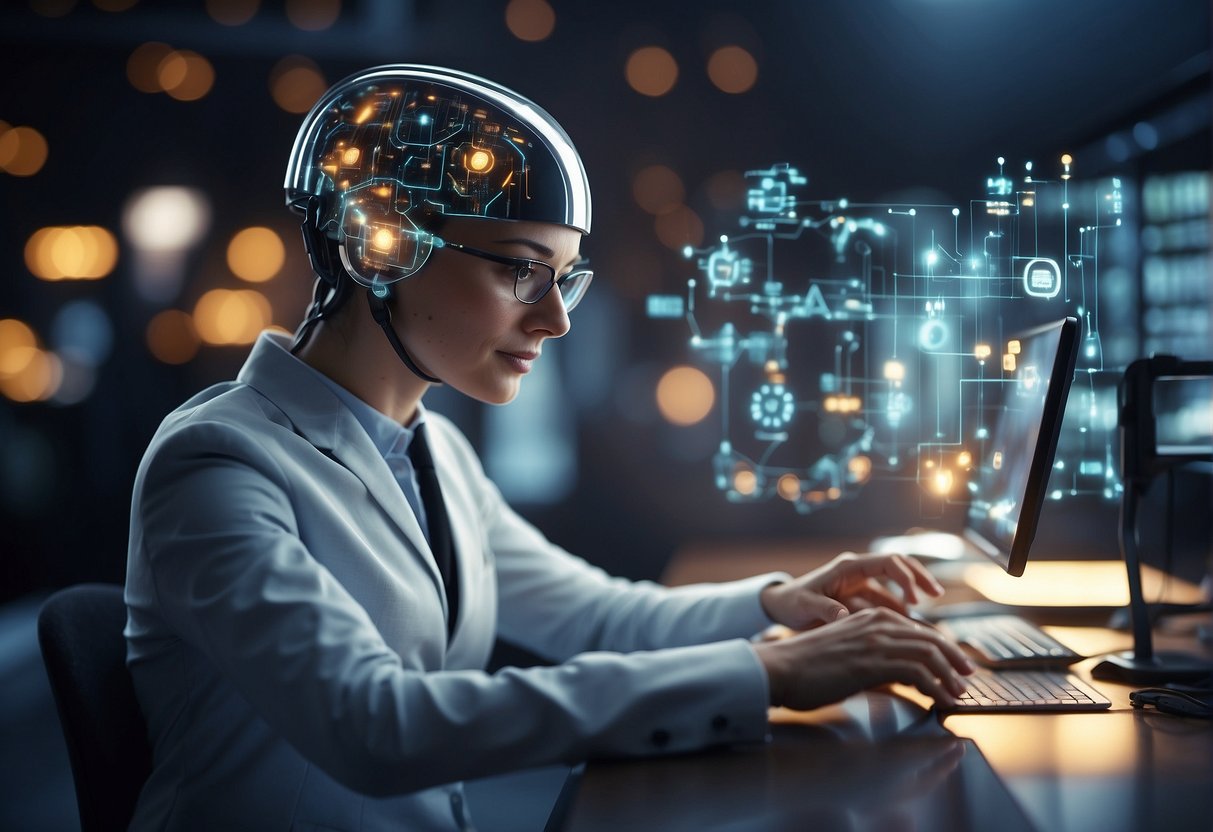
The advent of artificial intelligence (AI) has brought about transformative changes in the way businesses optimize their operations. By harnessing AI’s capabilities, companies are able to significantly enhance operational efficiency and multiply their productivity through advanced process automation.
Enhancing Operational Efficiency
Businesses have been adopting AI to streamline their workflows and make data-driven decisions, leading to significant gains in efficiency. For instance, AI-powered analytics can predict customer behavior, enabling businesses to manage inventory more effectively.
According to a piece by Forbes, the AI industry’s growth is expected to continue thanks to such applications that boost operational efficiency across various sectors.
- Customer Service: AI chatbots provide swift, round-the-clock customer support.
- Maintenance: Predictive maintenance minimizes downtime by identifying potential issues before they arise.
Process Automation and Productivity
Process automation, another critical facet of AI in business, is all about replacing repetitive tasks with intelligent systems. AI’s role in this domain not only saves time but also contributes to a higher overall productivity.
Employees are freed from mundane tasks and can focus on more complex, value-adding activities. An article from Harvard’s Professional & Executive Education blog (Harvard) discusses how machine learning integrates into operations, thereby enhancing productivity. Specific applications include:
- Document Processing: Automated data extraction from documents reduces manual entry errors.
- Sales Optimization: AI algorithms analyze sales data to forecast trends and tailor marketing strategies.
Challenges and Considerations

The integration of AI into business operations brings forth complex challenges and considerations that are pivotal for sustainable and responsible implementation. These challenges range from ethical dilemmas and regulatory requirements to the pervasive issues of biases and misinformation.
Ethical Implications
The deployment of AI technologies touches upon various ethical implications that businesses must navigate carefully. The growth of ethical AI necessitates a framework that addresses potential harm to society, ensuring that AI works to the benefit of all stakeholders.
For instance, AI applications in hiring must avoid perpetuating discrimination and should be monitored to ensure they are aligned with societal values.
Regulatory Compliance
Regulatory compliance emerges as a critical concern as governments around the world develop and enact legislation to control AI’s impact. Companies must stay abreast of laws that govern data privacy, algorithmic transparency, and accountability to avoid sanctions and maintain public trust.
Compliance with established and emerging regulations, like the GDPR in Europe, is an ongoing process demanding continuous vigilance.
Mitigating Biases and Misinformation
Among the chief obstacles in AI application is the challenge of mitigating biases and misinformation. Unchecked biases within AI models can lead to skewed outcomes, which in turn can escalate societal disparities.
Businesses must invest in tools and practices that detect and neutralize biases within datasets and algorithms. Additionally, combatting misinformation propagated by AI systems is essential for maintaining the integrity of information within the business ecosystem.
Future Predictions for AI in Business

Artificial intelligence (AI) is set to be a game-changer in how businesses operate and compete. The impending transformations and their impact on the job market are pivotal to understanding the trajectory of modern business practices.
Long-Term Business Transformations
As AI technology advances, business operations are anticipated to evolve at a substantial rate. A prediction from PwC’s 2024 AI Business Predictions indicates that revenue growth and customer engagement approaches will be redefined through AI-driven analytics and personalized services.
CEOs are acknowledging the necessity to integrate AI into their strategic initiatives to remain competitive and enhance operational efficiency.
In terms of society and education, the proliferation of AI is expected to demand a restructuring in workforce education, emphasizing technical skills and continuous learning. AI’s capacity to analyze vast amounts of data will become a cornerstone in decision-making processes, fundamentally altering the landscape of business intelligence.
AI in the Evolving Job Market
The intersection of AI and the job market presents a transformative shift in the workplace landscape. For instance, AI’s role in automating routine tasks will not only enhance productivity but also necessitate the creation of novel roles centered around AI oversight and ethical considerations.
According to Forbes, this technological shift opens the door for new jobs for humans, highlighting the evolution of the workforce in tandem with AI advancements.
The anticipation for job market expansion is also echoed by academics and industry leaders who stress the importance of an adapted education system that prepares individuals for an AI-augmented society. Thereby, the convergence of AI and education is pivotal in shaping a workforce that is resilient and adaptable to technological disruptions.
Preparing for an AI-Driven Future
As businesses endeavor to harness artificial intelligence (AI), they face a dual challenge: developing robust AI education and cultivating innovation and creativity. These focal areas are critical to maintaining a competitive edge in an increasingly AI-centric business landscape.
Strengthening AI Education
Education serves as the foundation for all AI endeavors in the business world. Companies must invest in educational programs that deepen the AI knowledge of their workforce, from basic machine-learning concepts to advanced AI applications.
Initiatives such as partnerships with academic institutions and in-house training programs can lead to a more savvy, AI-literate staff. This educational fortification not only empowers employees but also ensures a company’s competitive advantage by fostering a culture of continuous learning.
Fostering Innovation and Creativity
AI’s potential in business hinges on the dual pillars of innovation and creativity. Businesses must cultivate an environment where creative thinking is encouraged and innovative ideas are pursued.
They can achieve this by creating interdisciplinary teams, dedicating resources to research and development, and celebrating novel AI applications that can propel the company forward. Encouraging risk-taking and outside-the-box thinking is indispensable for staying ahead of the curve in the dynamic field of AI.
Frequently Asked Questions
In this section, readers will find answers to critical inquiries about how artificial intelligence is shaping the future of business. These explorations will touch on transformation, risks, and the potential for AI to drive competitive advantage and reshape the workforce.
How is AI transforming business operations and decision-making processes?
Artificial intelligence is revolutionizing business operations by automating routine tasks and fostering data-driven decision-making. This can lead to increased efficiency and productivity for firms, as AI analyzes vast amounts of data to inform strategies.
What are the potential risks and ethical considerations for businesses implementing AI technologies?
While AI holds immense potential, it also presents risks such as privacy concerns, biases in decision-making, and ethical dilemmas. Businesses must navigate these issues cautiously to ensure responsible AI deployment.
How can businesses leverage AI to gain competitive advantage and improve customer experiences?
AI can provide businesses with a competitive edge by personalizing customer experiences, optimizing supply chains, and innovating products. It contributes to the tailoring of services and offerings to individual customer preferences.
How will AI integration affect the future job market and workforce requirements in business?
AI integration is predicted to disrupt job markets, automating certain roles while creating new opportunities in AI management and development. Businesses will need to adapt by reskilling employees and shaping future workforce strategies.
What advancements in AI are predicted to significantly impact business strategies in the next decade?
Advancements in AI, including the development of more intelligent and autonomous systems, are expected to drive change in business strategies by enabling new levels of efficiency and innovation in various sectors.
In what ways can AI contribute to solving complex business problems, and what are the limitations?
AI can solve complex business problems by offering predictive insights. It can also automate complex analyses. However, its limitations lie in the quality of data and the need for human oversight.