
AI Business Automation: Maximizing Efficiency and Productivity
Artificial intelligence (AI) has become a pivotal force driving innovation in the business landscape. As organizations strive for efficiency and a competitive edge, AI-driven business automation emerges as a transformative solution. These systems enhance decision-making, streamline operations, and personalize customer interactions by leveraging data, machine learning, and advanced analytics. Businesses using artificial intelligence are setting new benchmarks for what can be achieved, optimizing both internal processes and customer-facing activities.

AI business automation grants companies the power to analyze vast amounts of information and perform tasks that traditionally required human cognition, often at a scale and speed that far exceed human capability. Solutions range from simple process automation to complex AI-driven decision engines that can adapt and improve over time. Industries across the spectrum, from finance to healthcare, are harnessing AI for tasks like predictive maintenance, fraud detection, and customer service optimization, leading to tangible benefits in cost savings and service quality improvements.
Key Takeaways
- AI business automation revolutionizes how companies operate, offering speed and precision in data-driven tasks.
- Automation technologies innovate customer service and operational efficiency, leading to cost reduction and growth.
- Strategic implementation of AI automation is shaping the future of work, enhancing productivity and business resilience.
Understanding the Foundations of AI Business Automation
The advent of AI business automation is redefining the landscape of enterprise operations, intertwining the capabilities of machine learning, algorithms, and data to enhance efficiency and support the workforce.
Key Components of AI Business Automation
AI business automation is anchored by several core components that work in harmony:
- Algorithms: The logic-based sequences that guide decision-making processes.
- Machine Learning: A subset of AI that enables systems to learn and improve from experience.
- Bots: Virtual assistants that perform tasks and interact with users.
- Data Analysis: The interpretation of raw data to find actionable insights.
- Integration: Combining AI with existing business systems to streamline operations.
These elements are essential in creating robust AI systems that automate complex business operations, from basic data entry to more intricate decision-making tasks.
The Role of Data in Automation
Data is the fuel that powers AI business automation. It drives the learning processes for machine learning models and provides the foundation from which AI derives insights and makes informed decisions. Two vital aspects of data in automation include:
- Data Quality: High-quality, accurate data is crucial for the effectiveness of AI systems.
- Data Governance: Proper management and ethical handling of data are paramount to ensure trust and compliance.
Organizations rely on extensive data sets to train AI, which, in turn, continuously refines algorithms and enhances the automation process. This symbiotic relationship between data and AI components allows businesses to execute tasks efficiently, reduce human error, and free up people to focus on more strategic work.
Strategies for Implementing AI in Business
In evolving enterprises, the integration of AI can serve as a cornerstone to foster efficiency and innovation. It demands an orchestrated approach entailing readiness assessment, judicious tool selection, and prudent scale management.
Assessing AI Maturity and Readiness
To embark on AI implementation, businesses must first evaluate their AI maturity level. This involves an examination of existing workflows and systemic capabilities to identify areas where AI can add substantial value. Furthermore, assessing organizational readiness not only highlights potential areas of enhancement but also allows for a more tailored AI strategy that aligns with business objectives and infrastructural constraints.
Choosing the Right AI Tools and Platforms
Selecting appropriate AI tools and platforms is critical for a successful AI strategy. It requires a detailed analysis of the market to find solutions that are well-suited for the company’s unique needs. Criteria such as integration ease, scalability, and support should influence the decision-making process. Companies like IBM offer guidance on evaluating potential tools and vendors, which is crucial for enterprises to make informed decisions.
Achieving Scale and Managing Growth
As the AI implementation unfolds, scaling intelligently is imperative for sustained growth. Enterprises should focus on creating an environment where AI can evolve alongside their business. This means not only expanding AI’s role as demand grows but also ensuring robust management frameworks are in place. Adequate training and support mechanisms are essential for enterprise automation to flourish, permitting the business to leverage AI effectively without compromising on quality or operational integrity.
Operational Efficiency Through AI Automation

In the pursuit of operational efficiency, businesses are turning to process automation and AI technologies. These advanced tools not only streamline workflows but also enhance production rates and deliver cost-saving benefits that significantly enhance the return on investment (ROI).
Optimizing Workflows with Process Automation
By incorporating process automation, companies can refine their workflows, eliminating redundant tasks and freeing up human resources for more critical thinking tasks. For instance, Juan Perez, EVP and CIO of Salesforce, suggests that automation addresses market challenges by providing immediate efficiency solutions. It helps in mapping out business processes in a way that identifies bottlenecks, leading to practical and impactful changes.
Enhancing Production with AI Technologies
AI technologies have introduced unprecedented capabilities in production lines. These technologies range from predictive maintenance to real-time quality control checks, which are vital in enhancing production efficiency. The introduction of AI-powered smart analytics contributes actionable insights that assist in making informed decisions, optimally impacting the operations positively.
Cost-Saving Benefits and ROI
The financial impact of AI automation is evident in the significant cost savings it offers. By automating repetitive and time-consuming tasks, businesses reduce operational costs. This strategic cost management directly affects the ROI, as the initial investment in AI automation tools tends to pay off by curbing expenses and boosting revenue streams. Through strategic automation, enterprises find that they can achieve operational excellence with a tangible, positive impact on their bottom line.
Innovation and Growth with AI Automation

Advancements in AI automation are spearheading innovation and growth across various business landscapes. Companies leverage AI to transform business models, drive performance, and exploit market opportunities.
Catalyzing Innovation with AI
Innovation in business is being rapidly catalyzed by AI automation, where firms are seeing substantial gains in productivity and scalability. Significant research, such as insights from McKinsey, highlights AI’s role in propelling productivity growth, potentially reaching 2 percent annually over the next decade.
AI-Driven Business Model Transformation
AI-driven innovations foster new business models that disrupt traditional markets. Consulting firms like Bain & Co emphasize scalability and performance improvement, revealing how companies that embed AI into their operations can scale new heights in efficiency and competitive advantage.
Exploiting Market Opportunities with AI Analytics
The use of AI analytics has surged, enabling companies to identify and exploit new market opportunities through data-driven insights. This strategic application ensures better performance forecasting and sophisticated market analysis, driving informed business decisions and growth.
AI Automation in Specific Industries
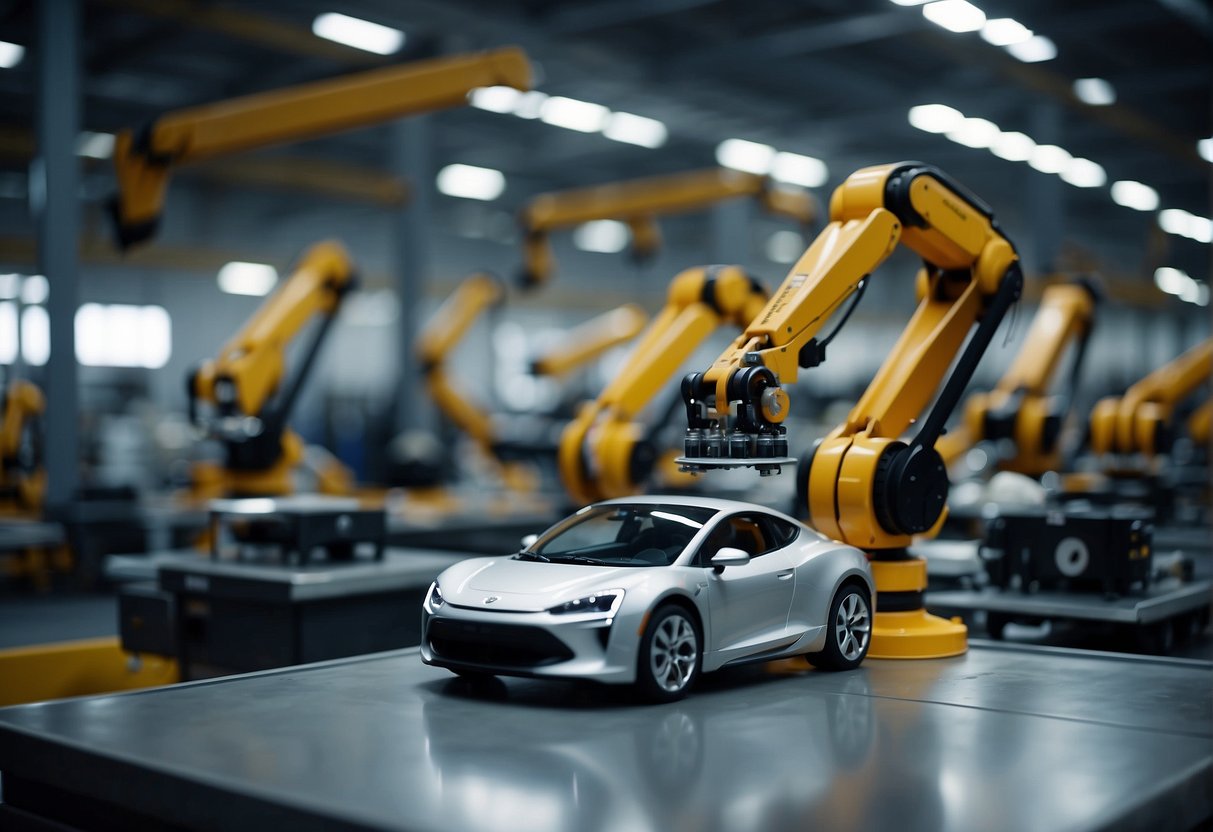
AI-driven automation is fundamentally reshaping multiple industries by enhancing efficiency and accuracy. This transformation is not restricted to just traditional sectors; it affects every realm from manufacturing to financial services.
Manufacturing and AI
In manufacturing, AI automation enhances production lines, enabling machines to predict and prevent maintenance issues before they occur. Robotics integrated with AI algorithms are implemented to handle complex tasks such as assembly, packaging, and even quality control with utmost precision. An example of this integration is AI for Business Automation in modern computing architectures that facilitate daily operations in manufacturing.
AI Automation in Healthcare
Healthcare is experiencing a revolution due to AI, where automation extends from administrative tasks to life-saving diagnostic support. AI is utilized to process patient data rapidly, thus aiding in faster and more accurate diagnoses. Telemedicine and AI are closely entwined, with virtual assistants providing patient support and aiding in healthcare delivery, especially in remote areas.
AI in Financial Services and Insurance
The financial services and insurance industries are leveraging AI for risk assessment, fraud detection, and enhancing customer service. AI tools process vast numbers of claims and transactions to identify patterns that suggest fraudulent activity. Furthermore, AI assists in personalizing insurance policies by analyzing data points to tailor plans that best fit individual needs. As noted in AI, automation, and the future of work: Ten things to solve for, embracing AI safely is crucial as we reap the productivity benefits these technologies bring.
AI Automation Technologies and Solutions

Integrating AI automation into business processes transforms the efficiency of operations. These solutions streamline tasks, enhance decision-making, and revolutionize interactions.
Robotic Process Automation (RPA)
Robotic Process Automation, commonly known as RPA, utilizes bots to automate routine and repetitive tasks. Businesses adopt tools like UiPath to navigate systems just as a human would, but with greater accuracy and speed. RPA executes a wide range of rule-based tasks, from data entry to complex workflows. Notably, these automation tools often come with a user-friendly RPA studio environment that allows for the designing and management of automation workflows.
Natural Language Processing (NLP) and Chatbots
Natural Language Processing (NLP) empowers chatbots to comprehend and respond to human language, enabling fluid customer interactions. These bots analyze text or voice commands, understand context, and provide relevant responses. NLP-driven chatbots excel at tasks such as customer service inquiries and providing instant support, streamlining communication channels.
Machine-Learning Algorithms and Predictive Analytics
Machine-learning algorithms are at the core of advanced AI solutions, driving predictive analytics to anticipate future trends and outcomes. These algorithms process large datasets to identify patterns and make informed predictions, crucial for strategic planning. Such analytics enhance decision-making by assessing the likelihood of future events, helping businesses to preemptively address potential issues or capitalize on upcoming opportunities.
Enhancing Customer Experiences

Artificial Intelligence (AI) is revolutionizing how businesses interact with customers. It enhances customer experiences by providing personalized service and support, accurate product recommendations, and interactive digital assistants.
AI in Customer Service and Support
AI technology is instrumental in streamlining customer service processes. Intelligent chatbots and automated response systems address customer inquiries efficiently, often resolving simple issues without human intervention. For instance, AI can triage support tickets to ensure they’re handled by the most appropriate agent or department, leading to quicker resolution times. Moreover, analysis of customer interaction data can help businesses preemptively address service issues, improving overall satisfaction.
Using AI for Product Recommendations
Businesses are utilizing AI to analyze customer data and behavior, resulting in precise product recommendations. Algorithms take into account past purchases, search history, and even social media activity to suggest items that customers are more likely to purchase. McKinsey highlighted that AI-enabled services can significantly enhance cross-sell and upsell opportunities, which in turn drive revenue growth.
Personalized Interactions with Digital Assistants
Digital personal assistants use AI to provide a personalized experience to each user. They utilize natural language processing and machine learning to understand and predict user needs, making interactions more intuitive and efficient. By synthesizing vast amounts of data from various customer interactions, digital assistants can offer contextual help and support, tailored to the individual’s preferences and habits, improving the overall customer journey.
AI’s Impact on the Workforce and Workplace

The adoption of AI and automation heralds significant changes in the workforce, requiring a shift in skills, and introduces novel modes of human-AI collaboration in the workplace.
Workforce Transformation and Skill Shifts
The workforce is undergoing a transformative period as AI integration becomes more prevalent. Executives and management face the challenge of steering this transition. A study by McKinsey & Company highlights a necessary evolution in workforce skills due to the impact of AI and automation. The demand for manual and repetitive tasks is diminishing, while the need for analytical and technical skills is on the rise. This indicates a clear shift toward advanced cognitive skills, social and emotional skills, and the ability to work seamlessly with technology.
Additionally, as routine tasks are automated, the emphasis on skills that AI cannot easily replicate, such as creativity, critical thinking, and complex information processing, increases. People need to adapt by acquiring new skills that are complementary to the capabilities of AI, ensuring that they can stay relevant in the evolving job market.
Human-AI Collaboration in the Workplace
Human-AI collaboration is becoming a staple in modern workplaces. This collaboration offers a dual advantage: AI handles large volumes of data and repetitive tasks, freeing people to focus on more strategic and creative work. For example, AI’s role in the workplace is not to replace, but to augment human capabilities and collaborate on tasks that benefit from human insight and machine efficiency.
Executives and management teams must therefore ensure that workplaces are designed to foster a symbiotic relationship between AI and employees. The integration of AI tools can enhance decision-making processes and operational efficiency. A focus on collaboration between AI systems and the workforce leads to improved productivity, innovation, and employee satisfaction.
Security, Compliance and Ethical Considerations

Incorporating AI into business processes necessitates a robust approach to data security, adherence to regulatory norms, and ethical deployment. Ensuring the protection of sensitive data and maintaining trust are paramount, while navigating the complex landscape of regulations and ethical considerations is essential for any responsible entity.
Ensuring Data Security and Privacy
Businesses must prioritize strong safeguards against unauthorized access and data breaches. It’s crucial to deploy encryption and access controls to protect information integrity during AI processes. Confident and diligent application of best practices in data security ensures that the privacy of users and clients are upheld, sustaining a trusted relationship.
- Measures to implement:
- Data encryption at rest and in transit
- Regular security assessments
- Comprehensive access control policies
Regulatory Compliance and AI
Compliance with regulations like GDPR and HIPAA is not optional when AI systems handle personal data. Companies must stay informed of the latest legislation and ensure their AI tools are designed with compliance at their core. This includes conducting impact assessments, reporting mechanisms, and transparent data management.
- Compliance checklist:
- Impact assessments for new AI deployments
- Regular audits of AI systems
- Transparent data processing and handling procedures
Ethical Implications of AI Automation
AI automation must be developed and deployed with a clear ethical framework in mind to avoid biased outcomes and discrimination. It involves creating AI that is fair and explainable. Firms should engage with public discourse and expert analysis on the ethical use of AI and automation, assessing the consequences of their technologies on society.
- Ethical guidelines:
- Development of bias-free AI models
- Explainable AI (XAI) practices
- Active engagement with stakeholders on ethical matters
The Future of AI Business Automation

The advent of AI and automation technologies is set to redefine corporate efficiency and innovation strategies, particularly as businesses navigate the complex landscape molded by economic and environmental pressures.
Generative AI and Future Innovations
Generative AI is expected to catalyze disruptive innovations in business automation. By leveraging algorithms capable of creating new content, generative AI can automate complex design, writing, and decision-making processes. Companies like McKinsey underscore the potential of AI to dramatically enhance productivity and spawn new products and services that were previously unimaginable.
Adapting to Global Economic and Environmental Changes
Business automation is not an isolated advance; it must adapt to the broader context of the global economy and climate change. Automation strategies are increasingly designed to enhance resilience to economic volatility and to optimize for sustainability. Forward-thinking firms are investing in AI systems that can analyze market conditions and dynamically adjust operations, minimizing resource waste and reducing the carbon footprint.
Predictions for AI and Automation Evolution
The future holds predictions for AI and automation that are grounded in technological advancement and practical implementation. From UiPath’s viewpoint, organizations will likely scale AI solutions to enact more significant transformation across various sectors. We also anticipate substantial news coverage as each breakthrough promises to reformulate the business processes further, making them more efficient and adaptable to changing market demands.
Successful Case Studies
The business landscape is punctuated with success stories of companies harnessing the power of AI for automation. These case studies not only show the transformative impact of technology but also provide real success metrics, serving as a beacon for other enterprises looking to embark on their AI journey.
AI Transformation Journeys
United States Financial Services: This entity saw a -100% automated overhaul in due diligence reviews of loan-related documents. Their AI adoption fueled a significant 15%+ compounded annual growth rate. The rapid automation marked an inflection point for their operation efficiency, setting an industry standard for financial services automation 30 Intelligent Automation Case Studies / Success Stories in 2024.
Global Professional Services, Deloitte and IBM partnership drastically cut down management report preparation time from 5-8 days to just 1 hour. Professional services were redefined with this shift, showcasing a practical blueprint for AI integration across multinational corporations.
Quantifying Benefits and Success Metrics
| Company | Metric Improved | Improvement Detail |
|---|---|---|
| United States Financial Services | Growth Rate | 15%+ CAGR with automation |
| Deloitte & IBM | Report Preparation Time | Reduced from 5-8 days to 1 hour |
Consulting giants like McKinsey & Company and Bain & Company emphasize that success metrics are vital for quantifying the impact of AI automation. These metrics often include response times, error rates, cost savings, and revenue growth. Case studies note the importance of establishing clear metrics pre-implementation to measure the post-implementation success more accurately. For example, one report highlights how AI has moved from hype to providing verifiable business value, personalizing customer experiences and improving operational efficiency with measurable metrics.
Strategic implementation of AI paves the way for not only streamlined operations but also for sustainable business growth, a truth echoed across an array of case studies in sectors diverse as finance and industrial manufacturing.
Frequently Asked Questions
The integration of artificial intelligence (AI) in business is transforming operations, enhancing decision-making, and streamlining tasks. This section addresses common inquiries regarding AI applications in the corporate environment.
What are some practical examples of artificial intelligence in business?
Artificial Intelligence is frequently utilized for customer service through chatbots and virtual assistants, which provide speedy customer interactions. Businesses also use predictive analytics in AI to forecast future trends and customer behavior.
What are the primary benefits of implementing AI in business processes?
The implementation of AI in business processes leads to increased efficiency and productivity as machines handle repetitive tasks. It also enhances data analysis capabilities, allowing for more informed decision-making.
In what ways can AI innovate and generate new business ideas?
AI can identify patterns and insights in large data sets that humans may overlook, presenting opportunities for new business ideas. Additionally, it can inspire innovative product development by simulating outcomes and providing predictive modeling.
How do AI technologies differ from traditional business intelligence automation?
AI technologies excel in their ability to learn and adapt over time, unlike traditional business intelligence automation that follows static, pre-defined rules. AI systems can process unstructured data and continuously improve from new information.
What are common challenges and disadvantages associated with using AI in business?
Common challenges include the high initial investment for AI adoption, data privacy concerns, and the need for skilled personnel to manage sophisticated AI systems. Businesses may also face ethical considerations surrounding AI usage.
What steps are involved in successfully implementing AI into existing business workflows?
Successful AI implementation requires clear definition of business goals, selection of AI technologies that align with those objectives, and integration into existing workflows with minimal disruption. Continuous monitoring and refinement of the AI systems are essential for sustained efficacy.