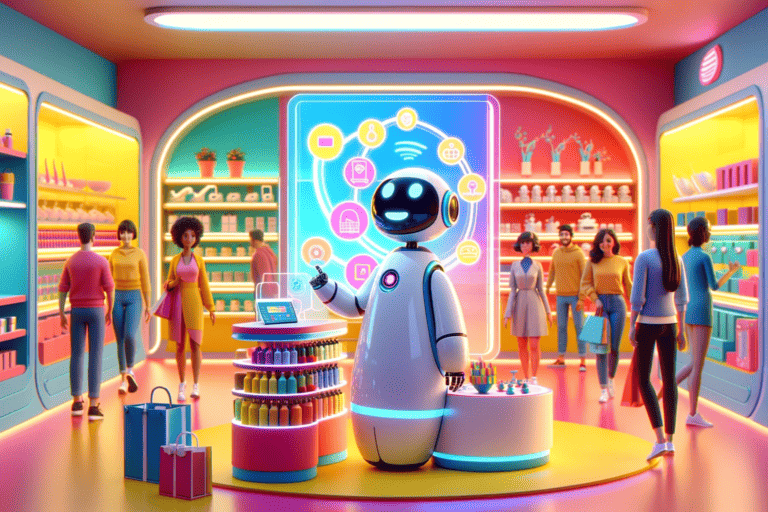
GPT Store: Your Ultimate Guide to AI Model Marketplaces
The GPT Store represents a significant leap in the accessibility and customization of AI technology. Created and launched by OpenAI, this platform serves as a marketplace for custom versions of Generative Pre-trained Transformers (GPTs). Offering tools and resources for individuals and businesses to develop bespoke GPT applications, the GPT Store simplifies the process of personalizing AI to specific needs without requiring deep technical skills.

Through the GPT Store, developers can share their unique GPTs with a wider audience, while users can discover and utilize GPTs tailored to diverse functions or industries. This has opened up several avenues for innovation, enabling not just programmers but also enthusiasts with varying degrees of expertise to participate in the AI landscape. Importantly, the platform paves the way for potential monetization opportunities for creators and provides a collaborative environment for teams to engage with AI technology effectively.
Key Takeaways
- The GPT Store provides a platform for creating and sharing custom AI models.
- It democratizes AI development by requiring minimal technical expertise for participation.
- The store fosters a collaborative ecosystem for both individual creators and teams.
Understanding GPT Stores

GPT Stores represent a significant innovation by OpenAI, serving as a centralized marketplace where developers and enterprise users can discover, create, and deploy tailored AI solutions. Utilizing the powerful GPT-3 and GPT-4 language models, GPT Stores enable a broad spectrum of applications, spanning from research to education and beyond.
Key Aspects of GPT Stores:
- Accessibility: Users without coding skills can easily build and contribute their custom GPTs.
- Variety: Offers diverse GPTs catering to different fields such as productivity and lifestyle.
- Integration: Allows connection to external APIs, enabling GPTs to interact with real-world data and services.
The entry of GPT Stores into the marketplace streamlines the process for developers to share their GPT-based applications. Each GPT can be tailored to specific enterprise needs, demonstrating OpenAI’s commitment to customizable AI technology.
In the Educational Context:
- GPTs can act as tools to assist in learning and tutoring.
- They offer innovative methods to engage with educational content.
For Research and Development:
- Researchers can harness these models for advancing AI and linguistic studies.
- GPT Stores potentially provide a platform for showcasing research-based GPT applications.
The emergence of GPT Stores emphasizes OpenAI’s role at the forefront of AI technology. It presents users with a new realm of possibilities for utilizing AI, setting a new standard in the democratization and application of these advanced models.
Building and Customization
https://www.youtube.com/watch?v=5–JexprHuk&embed=true
As enterprises and developers seek to leverage AI, the GPT Store emerges as a pivotal resource for creating custom versions of AI models tailored to specific purposes. It not only enables personalization at scale but also upholds the integrity of the GPT brand.
GPT Builder and Development Tools
The GPT Builder equips creators with a user-friendly interface to develop and customize AI models without needing extensive coding experience. It streamlines the creation process by providing essential development tools and APIs, which facilitate the integration of custom actions into various applications.
-
Development Tools:
- Visual Editor: For defining model behavior
- Code Sandbox: To test custom scripts
- API Access: For seamless application integration
-
Supported Custom Actions:
- Personalized Responses: Tailoring dialogue to user preferences
- Data Handling: Managing user data with custom parameters
Creating Custom Versions for Specific Purposes
Developers and verified builders leverage the GPT Builder to create custom versions of AI models that address the unique needs of an enterprise or individual creator. These custom models can be tailored for a variety of uses, such as customer service, educational tools, or unique content creation.
- Customization for Specific Purposes:
- Customer Support Bots: Designed for resolving queries efficiently
- Educational Tools: Providing interactive learning experiences
Branding and Guidelines
Maintaining consistency with the GPT brand guidelines is crucial for creators. A company’s image can be enhanced by aligning the custom AI’s personality and responses to their brand identity, while also adhering to OpenAI’s policies. This not only supports brand integrity but also ensures that enterprise customers receive an AI that is consistent and reliable.
-
Branding Elements:
- Visual Design: Incorporating company logos and color schemes
- Tone of Voice: Aligning AI communication with brand personality
-
Guidelines for Creators:
- Respect GPT’s ethical use cases
- Ensure user privacy and data protection
By providing robust tools and clear guidelines, the GPT Store fosters an ecosystem where developers and enterprises alike can build powerful, personalized AI applications with confidence.
Monetization and Growth
https://www.youtube.com/watch?v=BWHqOG0LfVk&embed=true
The GPT Store emerges as a significant development in OpenAI’s monetization strategy, offering developers and businesses a novel way to generate revenue through AI technology. It represents a dual thrust in OpenAI’s business approach: creating income streams for creators and expanding market reach.
GPT Builder Revenue Program
OpenAI’s GPT Store is not just a source of cutting-edge AI models; it’s a platform that now incorporates a revenue-sharing model known as the GPT Builder Revenue Program. Developers can earn money by designing and publishing custom GPTs tailored for specific user needs. As creators produce more valuable and innovative GPTs, their profit potential within this entrepreneurial ecosystem increases.
Expansion into New Markets
The store is set to catalyze growth by enabling the expansion into new markets, particularly within the enterprise sector. By complementing the traditional App Store, OpenAI provides a specialized marketplace, distinct from Apple’s App Store, which allows businesses to integrate custom GPT solutions securely. This strategic move broadens the company’s reach, inviting enterprises to leverage custom AI models for their specific operational needs, potentially transforming various sectors and inviting widespread adoption.
User and Team Engagement

The GPT Store by OpenAI has revolutionized the way users engage with AI and how teams can leverage technology to enhance productivity within their workspace. It introduces a dynamic environment for personalized user engagement and robust team collaboration tools.
Engaging with ChatGPT Plus
For individual users, ChatGPT Plus offers an enriched conversational experience with AI. Users can engage with custom chatbot roles, facilitating a variety of tasks tailored to their personal needs. They have the option to manage these tasks in a private section, ensuring a personalized and efficient workflow.
Collaboration Features for Teams
OpenAI’s ChatGPT Team plan caters to teams of all sizes, focusing on collective work and productivity. This plan incorporates features such as admin controls and a team workspace. The workspace is designed to foster collaboration, allowing multiple members to interact with the AI, share insights, and streamline tasks. Teams can benefit from dedicated private sections within the workspace, which offer an exclusive area for focused group work.
Advanced Applications and Tools

The GPT Store heralds a new era of efficiency and customization, offering tools that seamlessly integrate with workspaces and enhance productivity in various sectors through AI-assisted tasks.
Integration with Workspaces and Plugins
In modern workspaces, the integration of AI tools with existing platforms is crucial. The GPT Store provides plug-and-play solutions, which include a variety of plugins that can be easily incorporated into various workspaces. These plugins range from simple custom actions designed to optimize routine tasks to complex programming aids that assist with code generation and data analysis. For instance, an AI assistant plugin can be tailored to automate searching the web or analyzing data, significantly boosting productivity.
AI-Assisted Tasks in Various Sectors
The GPT Store’s applications extend across multiple sectors, from home automation to education and beyond. AI-assisted tasks are transforming the landscape, whether it’s through education-focused applications that provide interactive learning experiences or through technologies targeted at data analysis in research settings. In each of these sectors, custom actions developed for specialized tasks enable users to focus on creativity and strategic thinking while the AI handles the groundwork.
The benefits of these AI applications are clear: they provide users with the tools to perform tasks more efficiently and accurately, making the GPT Store an indispensable resource in the continually evolving digital world.
Frequently Asked Questions

This section provides clear and straightforward answers to common inquiries regarding the GPT Store.
How can one access the GPT Store?
Individuals can explore and access the GPT Store by visiting the official OpenAI website. It is designed to be a central hub for users to find a wide array of custom ChatGPTs.
When is the GPT Store expected to launch?
The GPT Store was officially launched on January 10, 2024, and has since been accessible for users and developers alike.
Can users monetize their creations through the GPT Store?
Yes, creators can monetize their GPTs once approved and listed in the GPT Store, earning money based on user engagement, subject to OpenAI’s terms.
What are the options for purchasing GPT?
Details regarding purchasing options are provided within the GPT Store platform, allowing users to select from the different GPTs that were created and listed by various developers.
Where can one find the official ChatGPT website?
The official ChatGPT website is available through the main OpenAI website, which hosts comprehensive information on the project and access to the GPT Store.
What does the acronym ‘GPT’ stand for?
‘GPT’ stands for Generative Pre-trained Transformer, referring to the machine learning model architectures used to power applications like ChatGPT.