AI for Digital Marketing: Strategies for Smart Campaigns
Last updated on December 29th, 2023 at 08:54 am
Artificial intelligence in digital marketing harnesses cutting-edge technology such as machine learning, natural language processing, and data analytics to revolutionize the way businesses engage with their customers. By utilizing AI, digital marketers can enhance customer experiences, offer personalized recommendations, and automate repetitive tasks, freeing up time for strategic planning and creative thinking.

In recent years, AI has enabled digital marketing strategies that appeared unimaginable a decade ago. Its integration assists in understanding complex customer data, predicting consumer behavior, and optimizing campaigns in real-time. AI tools are now indispensable for digital marketers aiming to remain competitive, offering capabilities ranging from content generation to advanced customer relationship management systems. The move towards AI-driven marketing is not just a trend but a fundamental shift in the digital marketing landscape, one that is reshaping the future of how businesses interact with their audience online.
Key Takeaways
- AI enables personalization and automation in digital marketing, enhancing customer engagement.
- The adoption of AI tools improves efficiency and insights into consumer behavior.
- Continuous evolution and integration of AI in digital marketing are crucial for staying competitive.
The Evolution of AI in Digital Marketing
Artificial Intelligence (AI) has significantly transformed the landscape of digital marketing. From its inception, AI technology has been progressively integrated into various marketing strategies, ensuring more efficient and effective campaigns. Digital marketing experts harness the power of machine learning algorithms to analyze consumer behavior, optimize ad targeting, and personalize the customer journey.
In the early stages, AI applications in marketing were relatively simple, like automating repetitive tasks and managing data. As technology evolved, AI systems adopted more complex functions like predictive analytics and natural language processing. This facilitated a deeper understanding of customer interactions, leading to more nuanced marketing strategies.
The incorporation of machine learning into digital marketing tools has enabled the automation of complex decision-making processes. Marketers can now predict consumer behavior and outcomes with a higher accuracy, leading to tailored content and product recommendations that resonate with individual users.
Moreover, the capabilities of AI are constantly expanding. AI in marketing has moved beyond automation towards creating immersive and interactive experiences for consumers. Chatbots, content generation, and dynamic pricing models are some of the latest advancements that are continuously refining the connection between brands and their audiences.
AI’s impact on digital marketing is evident in the improved accuracy of customer segmentation, the efficiency of campaign management, and the overall enhancement of user experience. As artificial intelligence technology continues to advance, it promises an even more sophisticated and interconnected digital marketing ecosystem.
Understanding AI and Its Core Technologies

Artificial intelligence (AI) is revolutionizing digital marketing by providing advanced tools for data collection, analysis, and automated decision-making. This section explores the core technologies that underpin AI’s transformative power in marketing strategies.
Key AI Technologies
AI encompasses various technologies, each contributing uniquely to digital marketing. Machine learning (ML) allows systems to learn from data, identifying patterns and making decisions with minimal human intervention. Deep learning, a subset of ML, leverages layered neural networks to process data in more complex and nuanced ways. Natural language processing (NLP), another critical AI technology, enables machines to understand and respond to human language, facilitating conversational marketing via chatbots and virtual assistants.
Machine Learning and Deep Learning
Machine learning is at the heart of AI’s ability to process vast quantities of marketing data. Through algorithms and statistical models, ML provides actionable insights into customer behavior. Deep learning extends these capabilities by processing data through neural networks that simulate human brain functions, allowing for more refined data interpretation and predictive analytics that can shape targeted marketing campaigns.
Natural Language Processing (NLP)
AI in digital marketing harnesses the ability to understand and generate human language, thanks to natural language processing. Through NLP, AI tools can analyze customer sentiment, interpret search queries, and personalize content. Generative AI utilizes NLP to create engaging and relevant marketing copy, thereby enhancing the customer experience across various touchpoints. These sophisticated NLP applications enable more meaningful customer interactions, fostering loyalty and driving conversion rates.
Strategies for Integrating AI in Marketing

The integration of AI in marketing strategies enhances customer insights, enables advanced personalization, and improves predictive analytics which collectively contribute to a more efficient and effective marketing approach.
Enhancing Customer Insights through AI
Marketing professionals can gain deep customer insights by using AI tools to analyze customer data. AI algorithms can sift through large volumes of data to detect patterns and trends that humans might overlook. In the realm of content marketing, this means understanding what topics and formats resonate with audiences.
Leveraging AI for Personalization
AI facilitates personalization at scale, allowing for the creation of personalized content that aligns with individual customer preferences. By utilizing a customer data platform, businesses can tailor their messaging and offerings, which can lead to increased conversion rates.
Predictive Analytics in Marketing
Predictive analytics leverage AI to forecast future customer behavior based on historical data. Marketers can apply these insights for targeted advertising, ensuring that the right message reaches the right customer at the right time.
AI-Driven Content Generation
Content generation, powered by AI, can produce relevant and engaging articles, blog posts, and other content formats efficiently. This automation supports consistent content marketing efforts without sacrificing quality.
Utilizing Chatbots for Improved Customer Service
Chatbots, enabled by AI, provide customer service around the clock. These chatbots can handle a variety of customer interactions, from answering common questions to guiding users through a complex sales process, enhancing overall customer experiences.
By adopting these strategies, marketers can leverage AI to transform their approach and execute data-driven campaigns that are both efficient and highly effective.
Practical Applications of AI in Marketing

The integration of artificial intelligence into marketing has revolutionized how businesses approach their marketing strategy. Marketers can tailor their efforts to precise segments of their audience, optimize user experience on e-commerce platforms, and gain valuable insights into customer behavior.
Search Engine Optimization (SEO)
Artificial intelligence plays a pivotal role in search engine optimization, enhancing a business’s visibility online. AI-driven tools conduct keyword research and optimize content to align with search engine algorithms. They analyze vast amounts of data to identify trends that inform SEO strategies, making it easier to capture organic traffic.
Email Marketing Automation
Email marketing automation uses AI to personalize communication with customers. By segmenting an audience based on behaviors and preferences, AI optimizes email campaign effectiveness. Businesses employ AI to determine the best sending times, subject lines, and content, resulting in higher open rates and engagement.
Customer Relationship Management (CRM)
AI has significantly improved the functionality of CRM systems. It can predict customer needs, provide timely responses, and streamline the marketing function. By analyzing customer data, AI identifies patterns that help tailor the user experience, enhancing customer satisfaction and loyalty.
Social Media Marketing
When it comes to social media marketing, AI tools can curate and schedule content, execute audience segmentation, and analyze engagement data. They offer predictive insights to perfect posting times and content preferences, affording businesses the chance to engage their audience more effectively.
E-Commerce Optimization
AI in e-commerce excels at providing personalized shopping experiences. From recommendation engines to chatbots that assist in the purchasing process, AI applications boost conversion rates by analyzing customer interactions and preferences. They also tackle inventory management and pricing strategies, essential aspects of a successful ecommerce operation.
AI Tools and Technologies for Digital Marketers

Digital marketing is being revolutionized by AI technologies, offering enhanced capabilities in data analysis, content creation, and task automation. Marketers can leverage a variety of AI tools to gain insights, automate processes, and engage with customers more effectively.
Leading AI Softwares and Platforms
The market is abundant with AI softwares and platforms designed to streamline digital marketing strategies. For example, OpenAI has developed ChatGPT, a generative AI application that assists in content creation and customer service. Platforms like Descript offer podcasting and video editing solutions powered by AI, aiding in the efficient production of marketing materials. These software solutions provide comprehensive data analytics and machine learning capabilities to optimize marketing efforts.
AI-Enabled Marketing Tools
Several AI-enabled marketing tools specialize in task automation and personalized marketing experiences. AI marketing tools are instrumental for analyzing large datasets to understand consumer behavior. For instance, advanced CRM apps utilize AI to refine customer segmentation and targeting. Voice search and AI chatbots enhance the customer journey by providing immediate, conversational assistance, thereby aligning marketing messages more closely with user intent.
ChatGPT and Generative AI Applications
ChatGPT and other generative AI applications have opened new avenues in content creation, offering the ability to produce written content, code, and even art. These applications are powered by sophisticated algorithms that can write blog posts, generate reports, or compose social media updates in natural language. The flexibility and efficiency of these AI tools make them valuable assets for digital marketers looking to produce consistent and relevant content for their audience.
Measuring Success and ROI in AI-Driven Marketing
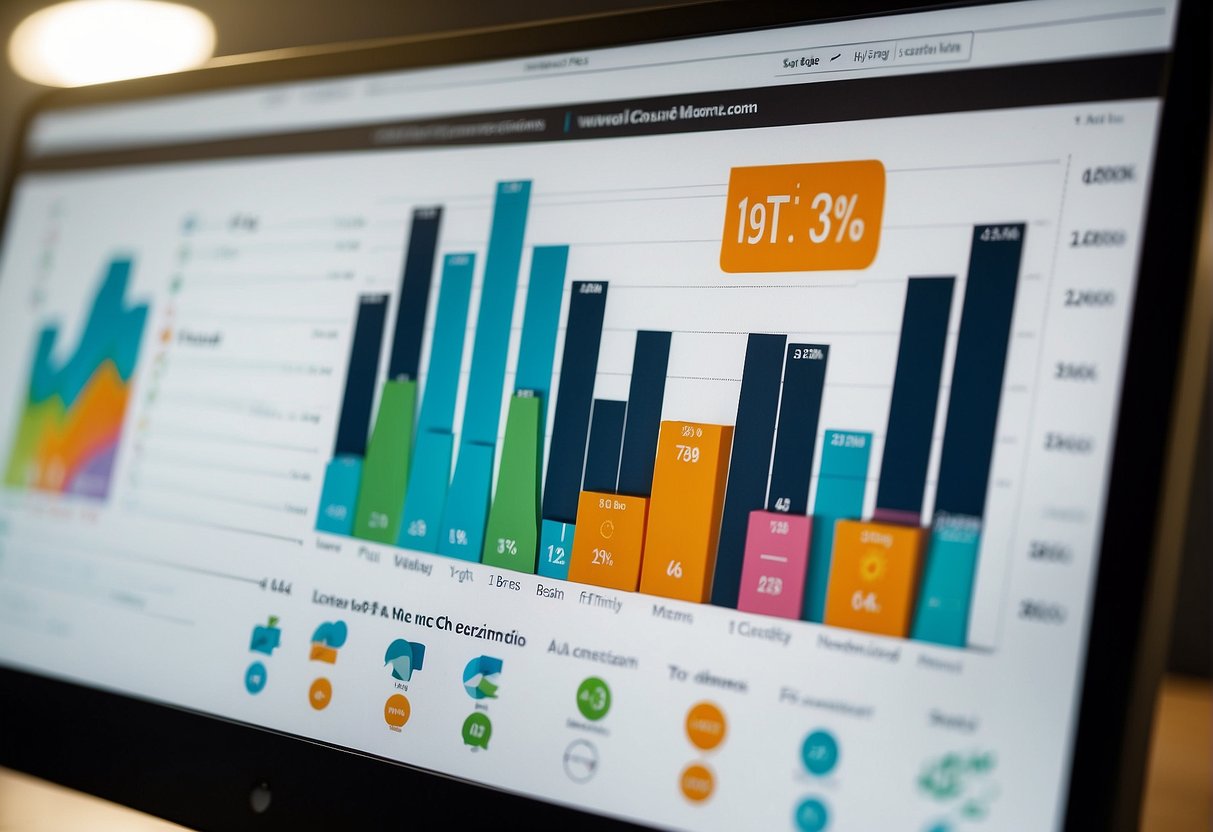
In AI-driven marketing, precise measurement tools and methodologies are essential for deriving actionable insights and maximizing return on investment. Advanced AI algorithms process vast amounts of historical data to provide marketers with accurate performance evaluations and predictive analytics for future strategies.
Key Performance Indicators (KPIs)
AI significantly enhances the capability to track and interpret Key Performance Indicators (KPIs), providing a more granular understanding of market dynamics. Marketers can rely on AI to sift through data to assess campaign effectiveness, monitor conversion rates, and adjust tactics in real-time. For instance, AI in marketing solutions can automate the tracking of engagement metrics and customer interactions, leading to a more accurate analysis of the investment’s effectiveness.
Forecasting and Predictive Metrics
The integration of predictive analytics in marketing allows for anticipatory strategies and forecasting. By examining past consumer behavior, AI tools can predict future outcomes, helping marketers to allocate resources more efficiently. These forecasts are grounded in data-driven insights, which aid in estimating the potential ROI of various marketing initiatives. AI’s extensive learning capabilities mean that the more historical data fed into the system, the more precise the forecasts become.
Customer Engagement and Experience
In digital marketing, effective customer engagement is a pivotal element that influences ROI. AI-driven tools excel in personalizing customer interactions and enhancing the overall customer experience. They analyze past purchase history and browsing behaviors to tailor content, recommendations, and support, which can improve loyalty and sales. Advanced AI algorithms provide deep insight into customer preferences, leading to more engaging marketing approaches and positive customer journeys.
Challenges and Considerations in AI Adoption

Adoption of artificial intelligence (AI) in digital marketing presents significant opportunities for creating personalized experiences and enhancing decision-making. However, it also demands careful consideration of ethical concerns, data privacy, and building trust with the technology.
Ethical Concerns and AI
When integrating AI into digital marketing strategies, ethical issues come to the forefront. Marketers must establish guidelines ensuring AI is not perpetuating biases or misinformation. Decisions on how AI categorizes and targets consumers, as fostered by customer data, should be monitored to avoid ethical pitfalls.
Data Privacy and Security
The security and privacy of customer data collected for AI-driven marketing are paramount. Companies face the challenge of safeguarding this data against breaches, as well as complying with stringent regulations like GDPR. Secure data collection practices and transparency with customers about their data usage are critical for maintaining privacy and security.
Building Trust with AI Technologies
For AI to be effective in marketing, customer trust is essential. Addressing concerns about AI and demonstrating its value in providing a personalized experience can enhance customer relationships. Clear communication about how AI aids in decision-making processes can foster trust, as seen through tools that manage automated email campaigns or lead scoring.
The Future of AI in Digital Marketing

Artificial intelligence is poised to revolutionize digital marketing through advanced data analysis and predictive analytics, which will transform customer experiences and make marketing decisions more efficient.
Trends and Innovations
The forefront of AI in digital marketing is characterized by innovations that focus on enhancing customer experience and efficiency. These include real-time predictive analytics that anticipate customer behavior, enabling marketers to dynamically tailor their strategies. Data-driven insights also play a pivotal role in understanding consumer trends, thus allowing for highly targeted campaigns.
The Role of AI in Future Marketing Strategies
AI in marketing strategies of the future will rely heavily on the ability to process vast amounts of data to understand customer behaviors and preferences. AI’s role extends to optimizing marketing budgets by determining the most effective channels for advertising, and it even assists in the creative process by generating adaptive content that is personalized for individual users.
Embracing Continuous Learning and Adaptation
To remain competitive, organizations will need to embrace continuous learning, constantly updating their AI systems with the latest data. This adaptation is critical as customer experiences evolve over time. AI leverages machine learning to iterate and improve its algorithms, ensuring that marketing efforts remain relevant amidst the ever-changing digital landscape.
In an era where personalized marketing is becoming a norm, AI’s future in digital marketing suggests a paradigm where both strategies and customer engagement are perpetually optimized through ongoing learning and refined data analysis.
Conclusion
In the landscape of digital marketing, AI for digital marketing has become a transformative force. Businesses utilizing AI technologies have observed substantial gains in efficiency and productivity. These improvements are not just operational; they directly contribute to enhanced ROI (Return on Investment) by streamlining advertising campaigns and customer interactions.
With AI, marketers can leverage algorithms and machine learning to personalize content, making it more engaging and relevant to their audience. This level of personalization fosters trust between brands and consumers, which is paramount for long-term customer relationships.
Benefits of utilizing AI in digital marketing are numerous, but perhaps most notable is the ability to analyze vast datasets swiftly. This capability provides actionable insights, allowing companies to make informed decisions quickly and confidently.
The utilization of AI tools also addresses a critical aspect of digital marketing: efficiency. These tools automate repetitive tasks, freeing up valuable time for marketers to focus on strategic planning and creative endeavors.
In conclusion, AI is not just a futuristic concept but a present-day asset that savvy marketers have integrated into their strategy. They appreciate AI’s role in driving growth, enhancing customer experiences, and in the ultimate analysis, bolstering the bottom line.
Additional Resources
For marketing professionals aiming to harness the power of AI in digital marketing, an abundance of resources is available to deepen their understanding and expertise. Several platforms and tools stand out due to their impact and relevance in the field.
Platforms and Tools:
- Facebook and Google: As the giants in social media and search engines, they offer their own AI-driven advertisement and analytics platforms, aiding marketers in targeting and tracking user engagement.
- Alexa and Siri: These voice assistants have changed how brands think about customer interaction, making it crucial for content creators to optimize for voice search.
Content Creation and Management:
- Midjourney: A platform that assists in automating the content journey, from ideation to distribution.
- Tools designed for content creators leverage AI to generate written and visual content, making jobs in digital marketing more efficient.
Customer Insights:
- AI-driven survey tools provide a nuanced understanding of customer preferences, allowing marketers to craft personalized experiences.
Developing Skills:
- Professionals should engage with webinars, courses, and online tutorials that focus on integrating AI into marketing strategies.
Staying Updated:
- Industry articles and case studies frequently provide insights into the latest trends and the evolving roles of AI in marketing.
Creating Engaging Experiences:
- The use of digital avatars in marketing campaigns has seen growth, tailored by AI to enhance user engagement.
Utilizing these resources effectively can offer a competitive edge to those looking to excel in digital marketing through the innovative use of AI technologies.
Frequently Asked Questions
Artificial Intelligence (AI) has become a cornerstone in enhancing digital marketing strategies. This section addresses key inquiries about the role and impact of AI in the marketing world.
What are some effective AI marketing tools currently available to professionals?
Professionals in the digital marketing industry currently leverage AI-driven tools such as ChatGPT for natural language processing and Adobe’s Sensei for data-driven insights to optimize campaigns and customer engagement.
What are the benefits of integrating AI into digital marketing strategies?
Integrating AI into digital marketing strategies offers benefits including personalized customer experiences and improved predictive analytics, enabling marketers to deliver content that resonates with the audience and anticipates market trends.
How can AI be applied to enhance a digital marketing agency’s services?
A digital marketing agency can enhance its services by utilizing AI for tasks like media buying, content creation, and content personalization, thereby streamlining operations and crafting more targeted and efficient marketing campaigns.
Can you provide examples of artificial intelligence transforming marketing practices?
Artificial intelligence has transformed marketing practices by introducing capabilities such as chatbots for customer service and deep learning algorithms for real-time ad bidding, reshaping how marketers interact with and reach their target demographics.
In what ways might AI change the landscape of digital marketing by 2023?
By 2023, AI is expected to drastically alter digital marketing by further automating decision-making processes and providing sophisticated tools for analyzing consumer behavior, thereby enabling more nuanced and agile marketing strategies.
How does generative AI contribute to content creation in digital marketing?
Generative AI contributes significantly to content creation in digital marketing by employing tools such as ChatGPT and Midjourney for generating text, images, and other creative outputs, fueling a revolution in how content is produced and distributed.