Future of AI Content Marketing: Trends and Strategies for 2024 and Beyond
As artificial intelligence (AI) continues to evolve and integrate into various sectors, its impact on content marketing is undeniable. The ability of AI to analyze vast amounts of data and predict consumer behavior is transforming the landscape of marketing communications.
Companies are turning to AI to create highly personalized content, streamline their marketing workflows, and enhance their strategies for better search engine optimization (SEO) and online visibility.

In the realm of content generation, AI is equipped with the potential to balance creativity with efficiency. Marketers can leverage AI tools to produce content at scale while maintaining a high degree of relevance and personalization. This significantly improves engagement with audiences across multiple channels.
Furthermore, AI’s role in measuring campaign success through advanced metrics and analytics exemplifies the continuous improvement of strategizing in AI content marketing.
Key Takeaways
- AI is revolutionizing personalized content creation and distribution in marketing.
- The efficiency and scope of marketing campaigns are enhanced through AI-driven analytics and SEO strategies.
- Content marketing’s future lies in embracing AI for competitive advantage while considering ethical implications.
AI-Generated Content: Balancing Creativity and Efficiency
AI-generated content is evolving the landscape of content marketing by blending the speed of automation with the unique flair of human creativity. This balance aims to enhance the efficiency of content creation while preserving the invaluable human touch.
Role of AI in Content Creation
AI has become an integral part of content creation, performing tasks with a speed that far exceeds human capability. It synthesizes information rapidly, generating drafts and collating data that provide a foundation for content marketers.
By handling the more mechanical aspects, AI allows content creators to allocate more time to strategy and creative ideation.
Efficiency in AI-led tasks does not compromise the value of content. For instance, several AI tools can produce well-structured drafts on complex topics which content creators can then refine and personalize to ensure the human touch is evident, making the content relatable and engaging.
Enhancing Human Creativity with AI
While AI-generated content excels at generating material quickly, human content creators bring creativity and context that AI cannot fully replicate. The merging of AI efficiency and human insight results in a potent combination where initial AI-generated outlines are enriched and expanded upon by creative professionals.
This symbiotic relationship enables content to reach new heights in terms of quality and innovation.
AI tools serve as creative partners, prompting humans with new ideas and perspectives that might not have been considered otherwise. In this collaboration, AI identifies patterns and suggests content variations, which can inspire content creators to explore new creative territories.
AI and the Creative Process
Incorporating AI into the creative process modifies the traditional workflow. Initial content generation by AI—such as drafting reports or assembling research—frees humans from time-intensive tasks, allowing a greater focus on the creative process.
AI can provide suggestions for content direction, but the human role becomes crucial in injecting personality, storytelling, and brand alignment.
The content generated by AI acts as a springboard for human creativity, providing a structure to build upon with nuanced and audience-specific adjustments.
The result is a diverse and rich content strategy where humans control the quality and integrity of the brand message, ensuring the content resonates with its intended audience.
Streamlining Marketing Workflows with AI

With the integration of AI, marketing teams can significantly enhance their workflow efficiency. From optimizing processes to distributing content and analyzing data, AI offers tools that transform the traditional marketing workflow into a more streamlined and effective mechanism.
Workflow Optimization Through AI
AI technologies have revolutionized the way marketing teams operate by automating routine tasks and facilitating collaboration. Automation tools streamline workflows by handling repetitive duties such as scheduling posts and segmenting email lists, which increases productivity and allows marketers to focus on more strategic activities.
By leveraging AI systems, organizations are able to orchestrate their workflows in a manner that prioritizes tasks efficiently, ultimately driving marketing efforts toward clearer goals and better results.
Content Distribution and Automation
Effective content distribution is paramount in digital marketing, and AI serves as a powerful ally in this domain. AI can automate content delivery across different channels, ensuring that each piece of content reaches the right audience at the optimal time.
This automated distribution not only amplifies reach but also maintains consistent engagement with audiences. Furthermore, AI provides insights into the best-performing content, allowing marketers to refine their content strategies on-the-fly for enhanced performance.
AI in Research and Data Analysis
The application of AI in marketing research and data analysis yields data-driven insights that are essential for informed decision-making.
AI excels at processing large volumes of data to identify patterns and trends that might go unnoticed by humans.
These insights can significantly influence the marketing strategy, helping to tailor campaigns that resonate with target demographics. AI’s advanced analytical capabilities ensure that content is fine-tuned and relevant, making each marketing initiative more impactful.
Personalization and AI
Advances in AI technology are transforming content marketing through enhanced personalization capabilities and precise segmentation. These developments are directed at engaging the target audience more effectively by catering to individual preferences.
Delivering Personalized Content
With AI-driven tools, delivering personalized content to consumers has become a sophisticated process.
AI algorithms analyze user data to understand individual behaviors and preferences, enabling content personalization at scale.
For instance, AI now commands the attention of global CMOs for its ability to generate unique experiences tailored to each user. This not only increases relevance but also enhances the consumer’s journey with the brand.
Segmentation and Targeting with AI
Segmentation is crucial in identifying the target audience and dividing them into distinct groups based on shared characteristics.
AI enhances this process by utilizing vast datasets, allowing for micro-segmentation.
For example, AI can distinguish between groups seeking cost-effectiveness versus those valuing premium features. This leads to more effective targeting and the delivery of content that resonates with each segment.
AI and Customer Engagement Strategies
AI shapes customer engagement strategies by predicting future behaviors and recommending actions.
It leverages past interactions and engagement patterns to forecast trends, helping brands reach out more proactively.
AI tools can personalize real-time interactions, adapting to customer feedback and navigating the future dynamics of hyper-personalization.
By doing so, they maintain a continuous and relevant dialogue with the audience, fostering loyalty and a deeper connection with the brand.
Enhancing SEO and Online Visibility with AI
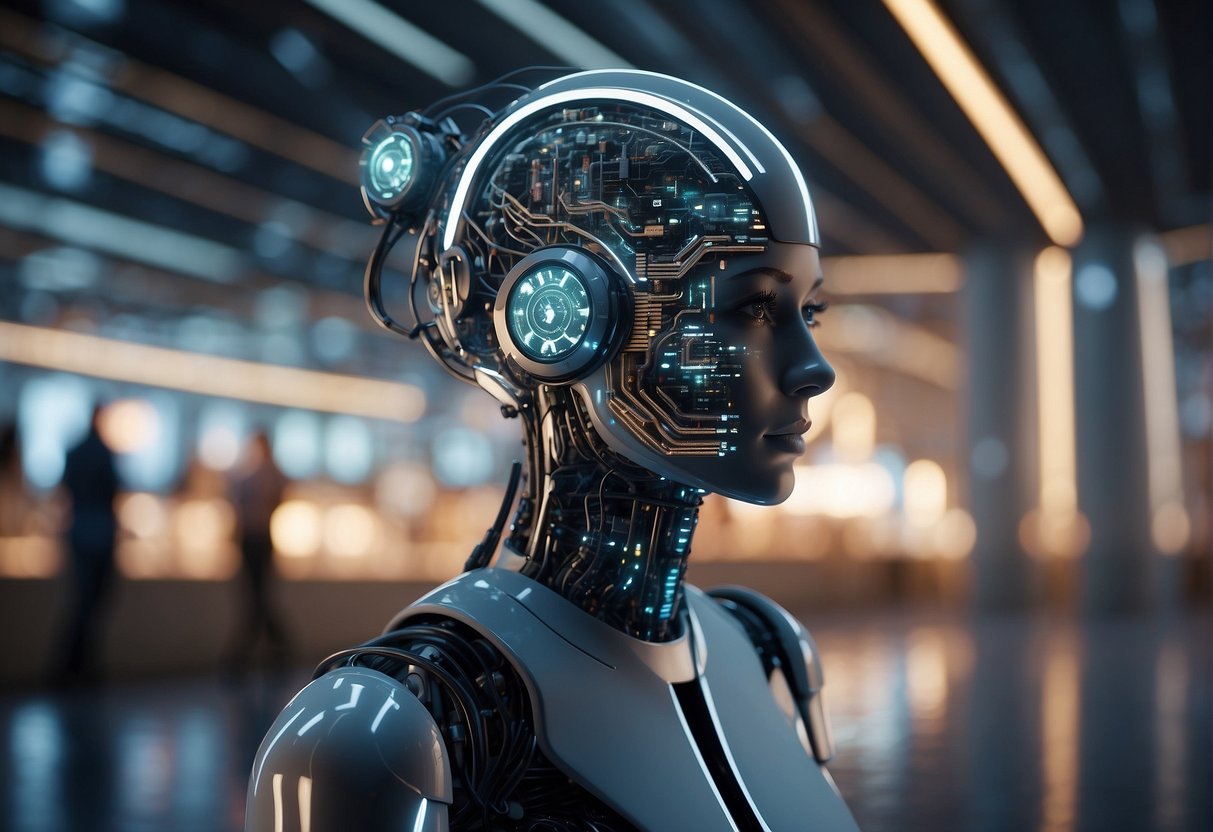
In the competitive landscape of content marketing, AI-powered solutions play a critical role in refining SEO strategies and amplifying online presence for brands. The following sections dissect the core components where AI intersects with SEO to drive better results.
AI Algorithms and SEO Strategy
Artificial Intelligence (AI) has revolutionized SEO strategy by introducing algorithms capable of analyzing vast amounts of data to predict trends and user behavior.
These algorithms assist in aligning link-building and on-page SEO tactics with the subtle nuances of search engine algorithms.
The integration of AI into SEO has not only streamlined processes but has also empowered marketers to make data-driven decisions that enhance their online visibility.
Content Optimization for Search Engines
The utilization of AI in content optimization is instrumental for ensuring that content is both relevant to readers and well-structured for search engines.
AI-powered tools analyze top-performing content to suggest improvements, such as keyword density and meta tags, to increase the likelihood of a higher search ranking.
By adopting AI-driven content marketing strategies, businesses can create content that resonates with both their audience and search engine algorithms, leading to improved organic traffic.
Leveraging AI for Keyword and Topic Suggestions
Identifying relevant keywords and topics is fundamental for successful SEO.
AI enhances this process by sifting through search data and predicting which topics and keywords will drive engagement.
It suggests a range of optimization strategies and content ideas tailored to audience preferences and search habits.
Understanding AI’s role in SEO can unveil opportunities to rank for niche keywords and subjects previously untapped by traditional research methods, placing marketers ahead of their competition.
Measuring Success: Metrics and Analytics
In the rapidly evolving landscape of AI-driven marketing, understanding and leveraging the right metrics and analytics is pivotal for measuring success and steering content strategies.
The Impact of AI on Marketing Metrics
AI has significantly reshaped the way marketing metrics are collected, analyzed, and utilized.
It provides real-time insights and predictive analytics, which are essential for understanding the effectiveness of content marketing efforts.
Marketing professionals now have access to detailed data on customer interactions and content performance that were previously difficult to obtain or interpret.
Key Metrics Influenced by AI:
- Engagement rates
- Conversion rates
- Customer sentiment analysis
Data-Driven Decisions for Content Strategy
Utilizing AI for data-driven decisions ensures that content strategy aligns with user needs and market trends.
By analyzing vast amounts of data, AI helps identify patterns and predict future behaviors. This enables marketers to tailor their strategies for maximum impact.
This approach guarantees that resources are invested in the right areas, and content is crafted to address the exact needs of the target audience.
Strategies Enhanced by Data:
- Content personalization
- Distribution channel optimization
- SEO and keyword adjustments
AI Tools for Measuring User Engagement
Several AI tools have emerged to accurately measure user engagement with content.
These tools track various user interactions, from click-through rates to time spent on a page. This provides a comprehensive view of how content resonates with audiences.
By interpreting these metrics, AI-driven platforms can suggest necessary changes to improve user experience and maintain a brand’s relevance in a competitive digital space.
- Bounce rates
- Social shares
- Comments and feedback
By applying these advanced AI analytics and metrics, marketers can continuously refine their content strategies. This leads to improved user experiences and a substantial increase in marketing success.
AI in Multichannel Content Marketing

AI is revolutionizing multichannel content marketing by optimizing content creation and distribution across various platforms, ensuring a cohesive and personalized user experience.
AI Across Different Content Formats
AI tools are adept at crafting and adapting content for diverse formats, from blog posts and articles to infographics and ebooks.
They analyze user engagement to determine which formats resonate most with a particular audience segment.
For example, if data shows that an audience prefers quick, informative videos, AI can assist in transforming existing text-based content into a compelling video, ensuring consistent messaging across all formats.
Effective Use of AI in Email and Social Media Marketing
In the realm of email marketing, AI enhances personalization by segmenting email campaigns based on user behavior, leading to higher engagement rates.
A customer who frequently opens emails about new technology releases might receive tailored content focusing on the latest tech products.
Similarly, AI-driven social media posts can determine the best times to post and the types of content that drive the most interaction. This fosters a stronger connection with the audience through relevant and timely content delivery.
AI for Video Content and Personalized Experiences
The rise of video content in marketing cannot be overstated and AI is the driving force in personalizing this format.
Tools like deep learning algorithms can analyze video engagement to suggest content tweaks or generate new videos that match the audience’s viewing preferences.
AI is also integral in crafting personalized experiences, whether by recommending products in a video or adjusting video pacing based on viewer retention data. This ensures that each user feels uniquely catered to in the multi-channel landscape.
Ethical Considerations and the Role of AI
In the evolving scope of content marketing, the responsible use of artificial intelligence (AI) pivots on navigating ethical considerations, particularly privacy and bias, while maintaining transparency in communication.
Balancing Personalization and Privacy
AI’s capability to personalize content is unparalleled, yet it must adhere to stringent privacy guidelines.
Marketers harness AI to analyze consumer behavior, but they must do so without infringing on individual privacy rights.
Employing encryption and anonymization techniques ensures security of personal data, striking a balance between effective marketing and privacy.
Addressing Bias in AI Content and Algorithms
Bias in AI algorithms can skew content and lead to misrepresentation.
It is imperative that marketers continuously audit AI systems, ensuring that they operate free from discriminatory biases.
This process often involves diverse data sets and algorithmic transparency to safeguard fairness and impartiality in AI-generated content.
Transparent Communication with AI Technologies
The interaction between consumers and AI should be rooted in clear and transparent communication.
This means disclosing the use of AI in content creation and customer interactions to foster trust.
Marketers should highlight the role of AI in their strategies, addressing possible concerns over ethical considerations to build consumer confidence in the technology used.
Building Competitive Edge with AI in Marketing

In the swiftly evolving landscape of digital marketing, companies are turning to artificial intelligence (AI) to carve out and maintain a competitive edge. AI’s analytical prowess allows for more personalized, efficient, and high-impact marketing strategies.
Incorporating AI for a Competitive Advantage
By harnessing the capabilities of AI, businesses can rapidly analyze consumer trends and behaviors, giving them a significant competitive advantage.
AI facilitates predictive analytics, enabling marketers to foresee consumer needs and craft targeted campaigns.
This level of insight can lead to more effective allocation of resources and higher conversion rates.
- Personalization: AI-driven tools can tailor content to individual users, enhancing the customer experience and increasing engagement.
- Efficiency: Automating routine tasks frees up human marketers to focus on strategy and creative endeavors.
AI and the Changing Dynamics of Public Relations
AI technology is redefining the realm of public relations (PR), demanding new strategies for managing brand reputation and consumer communication.
By analyzing social media sentiment and online behavior patterns, AI helps PR professionals address the public’s concerns more proactively and precisely.
- Social Listening: AI systems track and interpret public sentiment and emerging trends, allowing for swift, informed responses.
- Crisis Management: During a PR crisis, AI can assist in monitoring the situation in real-time and guiding the communications strategy.
Maintaining a Human Element in AI-Driven Campaigns
While AI’s role in marketing is growing, the creative insight of human content creators remains irreplaceable.
AI should be viewed as a tool to augment human skills, not replace them.
- Ethical Guidelines: AI must be managed with a code of ethics to ensure campaign integrity.
- Creative Direction: Human marketers provide the empathy and nuanced understanding that AI lacks, essential for resonating with audiences.
Conclusion: The Road Ahead for AI Content Marketing

AI content marketing stands at the precipice of a transformative era. As technologies evolve, marketers anticipate a surge in efficiency and personalization.
AI-generated content is scaling new heights, offering valuable insights and automation capabilities that were once the realms of science fiction. The growth is steady, as artificial intelligence integrates deeper into content strategies.
AI-powered content has proven its merit in creating engaging, relevant, and personalized content.
The future hints at AI becoming an indispensable tool for content creators, where the human-AI collaboration will likely influence content marketing outcomes significantly.
Marketers are poised to harness AI for tasks ranging from drafting articles to producing dynamic content suited for diverse audiences.
However, the human element retains its significance. AI will serve as an enhancement, not a replacement, in the creative process, ensuring that content retains its authenticity and emotional resonance.
Agility in adapting to AI tools while maintaining a human touch will be an asset for content marketers.
Frequently Asked Questions
Incorporating AI into content marketing strategies presents new opportunities and challenges. This section answers critical questions about the intersection of AI and content marketing.
How is AI expected to impact content marketing strategies?
AI is set to transform content marketing strategies by making content creation more efficient and data-driven.
It empowers marketers to produce content that aligns closely with audience interests and behavioral trends.
What role will generative AI play in the evolution of marketing?
Generative AI will take a central role in content marketing by automating content creation and idea generation, allowing for rapid scaling of marketing efforts while maintaining content relevance and variety.
How can marketers leverage AI for content personalization and targeting?
Marketers can use AI to analyze vast amounts of data for insights into personalized content that resonates with individual preferences, leading to more effective targeting and improved customer engagement.
What are the ethical considerations of using AI in content marketing?
Ethical considerations involve ensuring transparency about AI’s role in content creation and avoiding manipulation while respecting consumer privacy and avoiding the dissemination of biased or false information.
In what ways can AI enhance the creative process for content marketers?
AI can aid the creative process by providing content research and ideation tools, suggesting themes and angles that may not be immediately obvious, and by analyzing performance data to inform future creative decisions.
How will AI-driven analytics revolutionize marketing decision-making?
AI-driven analytics will enable real-time decision-making. It does this by swiftly processing consumer data and predicting trends. This allows for more agile and informed marketing strategies.