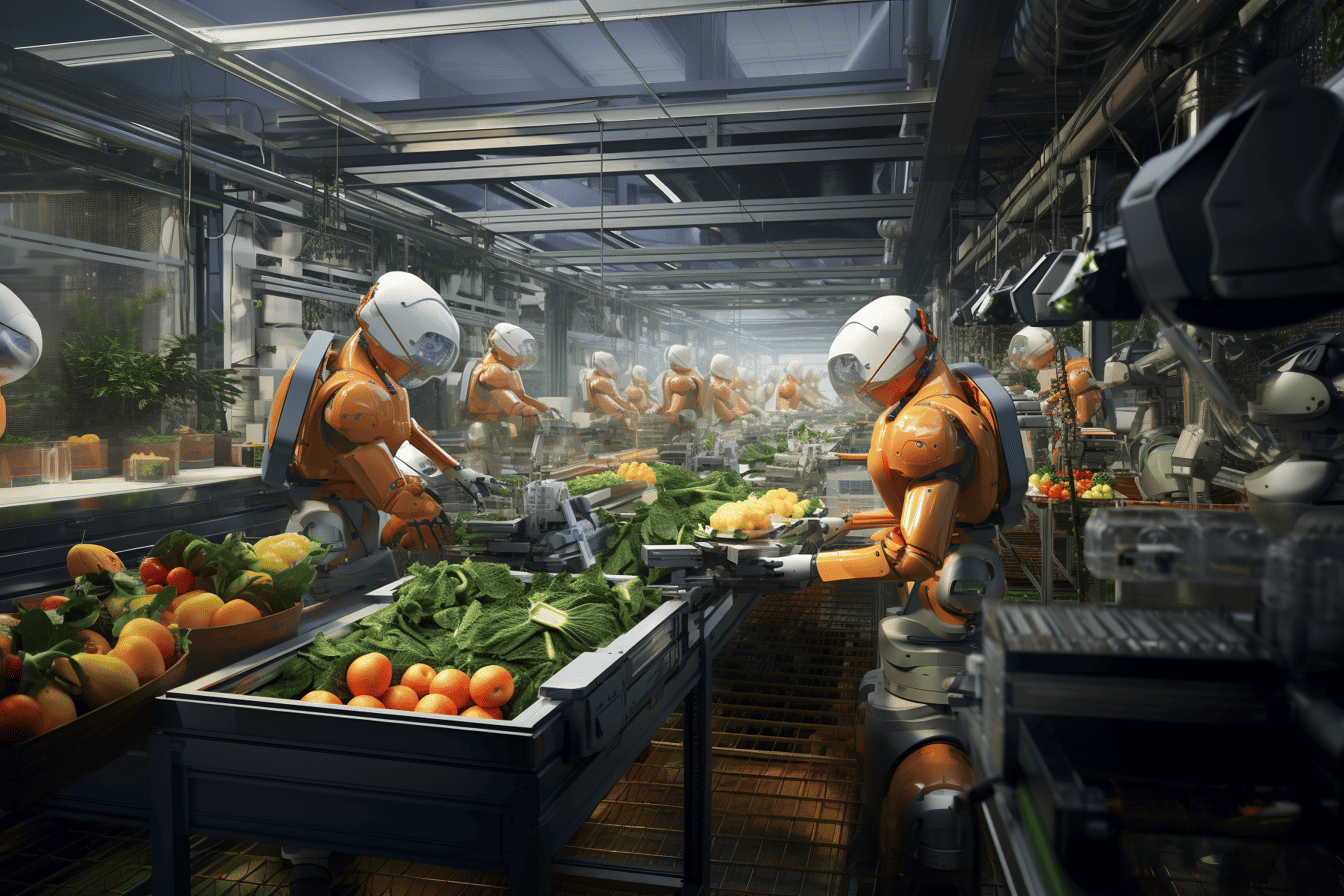
AI in Food Industry: Revolutionizing Production and Consumption
The integration of artificial intelligence (AI) in the food industry has advanced rapidly in recent years, driven by the need for greater efficiency in sorting, classification, quality control, and food safety. With the continuous growth in the world’s population and increasing demands for food, AI technologies have found their way into various aspects of food production and distribution, from farms to kitchens. Addressing challenges in food quality, safety, and sustainability, AI applications are rapidly changing how restaurants, food manufacturers, and other businesses operate.
As part of the Fourth Industrial Revolution, AI has started to revolutionize the food industry, improving processes at various stages. Smart farming solutions, supply chain optimizations, and inventory management are now increasingly being managed by AI tools. Nutritional analysis and waste reduction have also become important areas where AI is making a significant impact.
Key Takeaways
- AI is playing an increasingly significant role in the food industry, from quality control to supply chain management
- The adoption of AI in various processes is contributing to the Fourth Industrial Revolution
- Smart farming, waste reduction, and nutritional analysis are some key areas where AI is creating a positive impact
AI and The Fourth Industrial Revolution
As part of the fourth industrial revolution, AI has become a driving force in transforming various industries, including the food sector. It has led to significant advancements in quality, robotics, and automation, ultimately shaping the future of food production and distribution.
Impacts of AI in Food Industry
AI has impacted the food industry in several ways, helping to reduce waste, optimize supply chains, and enhance food logistics, safety, and delivery. For instance, machine learning algorithms and artificial intelligence-based systems are being employed to predict consumer demand, track inventory levels, and manage resources efficiently.
Automation and robotics have been adopted in food processing, leading to higher precision and consistency in both ingredient selection and product assembly. This not only improves food quality but also enables companies to save costs and increase production rates. In fact, investment in automation in the food sector has been on the rise. With the sales value of the market in China alone surpassing $123 million in 2018, it’s estimated that more than $500 million worth of robots will be sold to the global food and beverage industry by 2025 source.
Additionally, AI technologies have bolstered food safety measures. For example, predictive analytics tools are utilized to monitor equipment performance and prevent potential food contamination hazards. Furthermore, computer vision systems and sensor-based technologies are increasingly being integrated into quality control processes to identify and discard defective or subpar products.
In conclusion, I believe that the integration of AI into the food industry has paved the way for a more efficient, safe, and sustainable future. These advancements continuously enhance the production, distribution, and consumption of food, contributing to the realization of the fourth industrial revolution’s potential.
AI in Food Quality and Safety
Role of AI in Ensuring Food Safety
In recent years, I’ve noticed that artificial intelligence (AI) has made a significant impact on the food industry. One crucial aspect where AI is showing its potential is in ensuring food safety. AI technologies help detect contamination, identify pathogens, and even predict potential foodborne disease outbreaks. Through machine learning and computer vision, AI can recognize patterns and anomalies in the data, allowing the food industry to take preventive measures and minimize the risks of foodborne illnesses 1.
Additionally, AI-powered solutions can increase the accuracy and efficiency of food inspections. For instance, machine vision can streamline the sorting and classification of food products, making it easier to identify and remove contaminated items from the production line. This not only improves the overall safety of the food supply chain but also reduces waste and optimizes resources 2.
AI’s Contribution to Quality Maintenance
Quality maintenance is another area where AI is proving to be extremely valuable. AI-powered quality control systems are able to monitor various parameters, such as temperature, humidity, and pH levels, to ensure that food products meet strict safety and quality standards 3. This real-time monitoring helps detect issues early on, preventing spoilage and reducing the likelihood of recalls.
Moreover, AI algorithms can analyze vast amounts of data from food processing equipment to predict potential equipment failures and perform preventive maintenance. This proactive approach minimizes downtime, ensures consistent product quality, and ultimately saves food manufacturers time and money.
In conclusion, AI has become an essential tool in improving food safety and quality, helping the industry stay ahead of potential risks and maintain high standards for consumers’ well-being.
AI in Supply Chain and Inventory Management
Boosting Efficiency with AI
In my experience, artificial intelligence (AI) has significantly improved the efficiency of supply chain and inventory management processes in the food industry. AI applications have helped streamline processes by analyzing vast amounts of data from various sources, such as demand patterns, raw materials availability, and transportation routes. This enables food manufacturers and distributors to make data-driven decisions and optimize their supply chain operations.
One of AI’s critical benefits in supply chain management is in routing and scheduling. AI algorithms can analyze real-time information on factors such as road conditions, port congestion, and delivery points, to optimize transportation routes, reduce fuel consumption, and minimize delivery times. For example, I’ve seen how AI-driven solutions can help food distributors ensure the timely delivery of perishable goods while maintaining the required temperature conditions, thus preventing spoilage and reducing food wastage.
Analytics and Forecasting in AI-driven Supply Chain
Another area where AI has proven to be extremely valuable is in analytics and forecasting. By leveraging machine learning techniques, AI can process historical and real-time data to generate accurate demand forecasts, enabling organizations to enhance their inventory management. As a result, I’ve observed that companies can minimize stockouts, avoid excess inventory, and optimize their warehouse space utilization.
Additionally, AI-driven analytics can enable businesses to identify trends and patterns in their supply chain performance and uncover inefficiencies that may need improvement. Such insights can help organizations optimize their operations, enhance agility, and adapt quickly to fluctuations in the market. In the Food Industry, for-instance, AI has greatly helped in enhancing food logistics, optimizing the supply chain, and reducing food waste.
In conclusion, the use of AI in supply chain and inventory management within the food industry has undoubtedly revolutionized many aspects of these operations. Incorporating AI solutions can lead to increased efficiency, improved decision-making, and ultimately result in cost savings and increased profitability for organizations.
Smart Farming with AI
As the world moves deeper into the Fourth Industrial Revolution, I understand the importance of incorporating advanced technologies, such as artificial intelligence (AI), into various industries – including agriculture. In this section, I will discuss how AI is being utilized to overcome farming challenges, optimize crop yields, and shape the future of agriculture.
Overcoming Farming Challenges with AI
In the past, farmers relied heavily on manual labor and traditional methods to tend to their crops. However, with the advent of AI, I can optimally utilize resources and make well-informed decisions in various aspects of farming.
One of the ways I am using AI in agriculture is through precision farming. By combining AI-based analytics with sensors, I am able to monitor crop moisture, soil composition, and temperature in growing areas. In turn, this enables me to increase crop yields by learning how to take care of my crops and determining the ideal amount of water or fertilizer to use 1.
Moreover, smart farming solutions, like IoT-enabled irrigation and dynamic soil health mapping at farm level, have allowed me to leverage AI in remote sensing and automatic weather station data 2. This data further empowers me to make real-time decisions about resource allocation, planting schedules, and harvesting times.
AI is also transforming the way I manage pests, diseases, and weeds by using image recognition technology. By analyzing images captured by drones or stationary cameras, I can strategically target specific areas for chemical treatments, reducing the overall use of chemicals and minimizing their environmental impact.
Additionally, AI applications in post-harvest operations help me to streamline and optimize everything from sorting and grading crops to detecting spoilage and reducing waste 3. It ultimately leads to a more efficient and profitable farming system that can better adapt to the changing demands of society, the environment, and the global economy.
In conclusion, as a farmer, AI has become an indispensable tool in my toolkit, enhancing my ability to overcome the challenges of modern agriculture, and contributing to a more sustainable and productive food system – ultimately paving the way for the future of farming. It’s a challenge I welcome and continue to embrace with enthusiasm and confidence in the face of ongoing advancements in technology and innovation.
AI in Reducing Food Waste
AI’s Approach to Minimize Waste
The food industry has been facing challenges in reducing food waste and making the most out of available resources. As an expert in this field, I have been observing how artificial intelligence (AI) is transforming the way we tackle food waste.
One of the most promising AI applications in minimizing waste is through accurate forecasting and analytics. AI can enhance supply chain management and optimize purchasing decisions by predicting food demand more accurately. This helps industries avoid overstocking and prevent food spoilage. For example, the retail sector has been making headway in reducing food waste using AI-powered forecasting models.
Another area where I’ve seen AI make a significant impact is in the hospitality industry. Companies like Winnow utilize smart bins equipped with cameras and machine learning technology to monitor food waste in real time. This enables chefs and kitchen staff to analyze waste patterns, fine-tune their menus, and reduce waste in the process.
In the agriculture sector, AI helps farmers assess the quality of their crops through optical sensing technology, as demonstrated by Neolithics. This innovation enables farmers to detect potential diseases or poor-quality produce early on, reducing the risk of waste before it reaches consumers.
Furthermore, AI enables the development of more targeted marketing strategies for perishable goods. By analyzing consumer preferences and their purchasing patterns, industry stakeholders can create tailor-made offers that encourage consumers to buy products nearing their expiry date, resulting in reduced waste.
In my experience, utilizing AI technology is a valuable tool for addressing the global food waste problem. By leveraging innovations in machine learning and data analytics, various sectors of the food industry have the potential to significantly reduce waste and manage resources more sustainably.
AI and Nutritional Analysis
In recent years, the application of artificial intelligence (AI) in the food industry has gained significant attention, particularly in the area of nutritional analysis. AI’s potential to process vast amounts of data enables it to provide valuable insights into various aspects of nutrition, such as ingredient analysis, food recommendations, and personalized nutrition strategies.
AI in Personalized Nutrition
One of the most promising applications of AI in nutritional analysis is personalized nutrition. By analyzing an individual’s food journal, AI can account for factors such as dietary preferences, allergies, and health goals to offer tailored meal plans and guidance. For instance, AI can predict ingredients from photos in a consumer’s own food journal and determine whether these choices align with the user’s nutritional needs or goals.
Furthermore, AI can help enhance the accuracy and convenience of nutritional tracking. Traditionally, tracking nutrition requires tedious manual input and calculation. However, with AI-powered tools, I can easily scan my meals using my smartphone camera, which then automatically detects and logs the ingredients and their corresponding nutritional values.
AI can also play a significant role in creating personalized diets for specific health conditions. For example, individuals with hypertension or diabetes could benefit from AI-generated meal plans that consider their medical history, medication, and food preferences without compromising their health goals.
By leveraging AI capabilities, the food industry and consumers alike have much to gain in terms of optimizing nutrition to achieve a healthier and more satisfying lifestyle. As technology advances, AI’s potential in nutritional analysis will only continue to expand, providing more valuable insights and empowering individuals to make more informed decisions about their dietary habits.
Cost-Benefit Analysis of AI in Food Industry
Understanding ROI of AI Implementation
In order to accurately assess the benefits of AI in the food industry, it’s important to understand the return on investment (ROI) of AI implementation. One key aspect to consider is the reduction of operational costs due to more efficient processes, such as sorting fresh produce and improving supply chain management. As a result, companies can save time and resources, ultimately leading to increased profitability.
Moreover, AI’s role in enhancing product quality control cannot be overlooked. By implementing AI-driven solutions, the food industry can better monitor and ensure food safety compliance, enabling businesses to maintain high standards and reduce the risks associated with foodborne illnesses. I believe that maintaining a strong reputation for food safety is crucial for organizations in this sector, as it helps to secure consumer trust and loyalty.
In addition to cost and quality improvements, another benefit of AI adoption in the food industry is the potential for increased demand. As the world’s population continues to rise, food demand is predicted to increase by 59 to 98% by 2050. AI can play a significant role in meeting this demand by optimizing processes and enabling more efficient production methods.
It is crucial for businesses to carefully weigh the costs of AI implementation against these potential benefits. Some factors to consider when evaluating ROI include initial setup costs, training expenses, and infrastructure upgrades. In many cases, AI systems require considerable upfront investments, but it’s important to remember that the long-term benefits can often outweigh these initial expenditures.
In conclusion, I think it is essential for stakeholders in the food industry to thoroughly assess both the costs and benefits of AI implementation. With careful planning and strategic decision-making, AI has the potential to significantly boost ROI by reducing costs, increasing demand, and improving product quality. By understanding the true ROI of AI integration, companies can make well-informed choices that ultimately lead to a brighter future for the food industry.