AI Photo Restoration: Reviving Memories with Cutting-Edge Technology
AI photo restoration is a rapidly advancing field that leverages artificial intelligence to revive damaged, old, or faded photographs. By applying machine learning algorithms, AI photo restoration tools can analyze images and recreate them with precise attention to detail, mimicking the textures, colors, and other elements of the original photograph. This technology has opened up new possibilities for preserving memories and restoring valuable images that were once considered irreparable.
Modern AI photo restoration tools rely on a concept known as Generative Facial Prior, which allows the algorithms to recognize common facial patterns and predict missing or damaged portions of a photograph. With the continuous improvements in AI technology, we can expect even more advanced tools to emerge in the coming years, making photo restoration accessible to professionals and casual users alike.
Key Takeaways
- AI photo restoration leverages machine learning to repair damaged, old, or faded photographs.
- The use of Generative Facial Prior in restoration tools enables accurate prediction of missing or damaged portions.
- Continued advancements in AI technology will further enhance photo restoration capabilities and accessibility.
The Concept of AI Photo Restoration
In recent years, the application of artificial intelligence (AI) in various fields has gained significant traction. One such field where AI has made notable strides is photo restoration. As a result, I’ve witnessed the growth and development of AI photo restoration techniques and the impact they have on both professional photography and personal use.
AI photo restoration utilizes advanced AI algorithms to analyze old, damaged, or faded photos and intelligently identify the damaged parts while reconstructing the original image. This process instantly removes scratches, stains, spots, tears, and creases, restoring the photo to its original clarity and vibrance. AI technology has transformed this once time-consuming and complex task into a more efficient and user-friendly experience.
Traditionally, photo restoration required skilled professionals who manually edited images using software like Adobe Photoshop, which could be a tedious and time-consuming process. However, with the introduction of AI-based tools, such as Photoshop’s Photo Restoration Neural Filter, much of the work gets automated, saving both time and effort. These ‘Neural Filters’ leverage AI to automate previously manual processes like Content-Aware Fill, quickly restoring old photos in just a few seconds.
The concept of AI photo restoration is not without challenges. For example, AI engines may sometimes produce low-quality results, especially when they are not properly trained or developed. To overcome these limitations, researchers are continuously developing and fine-tuning AI models to ensure the highest-quality restorations that closely match the original image.
In conclusion, AI photo restoration is an emerging field with vast potential for both professional and personal use. The technology can efficiently restore old, damaged, and faded photos back to their original state, saving time and improving the overall experience for users. It is essential, however, to understand the limitations and continuously improve the models and algorithms to ensure exceptional results.
The Process of Photo Restoration
Identifying Damages
During the process of AI-powered photo restoration, the first step is to identify the various types of damage present in the old photos. As a photo restorer, I carefully examine each image to detect issues such as faded colors, scratches, dust spots, and other imperfections that can mar cherished memories and family photos.
When dealing with damaged photos, it’s essential to thoroughly understand the extent of the damage to apply the appropriate AI-powered tools and techniques to restore the images. This initial assessment plays a critical role in the subsequent restoration steps.
Enhancing Facial Features
After identifying the damages, my next focus is on enhancing facial features in the old photos, particularly in portraits. Utilizing advanced AI algorithms, I can improve essential details like eyes, nose, and mouth, recreating clear and realistic faces. Powerful AI models like the “Generative Facial Prior” (GFP-GAN) make it possible to repair most old photographs in mere seconds, drastically improving the facial features of the subjects.
Whether it’s face enhancement or scratch removal, these AI-driven techniques simplify the process of bringing old memories back to life.
Colorizing Black and White Photos
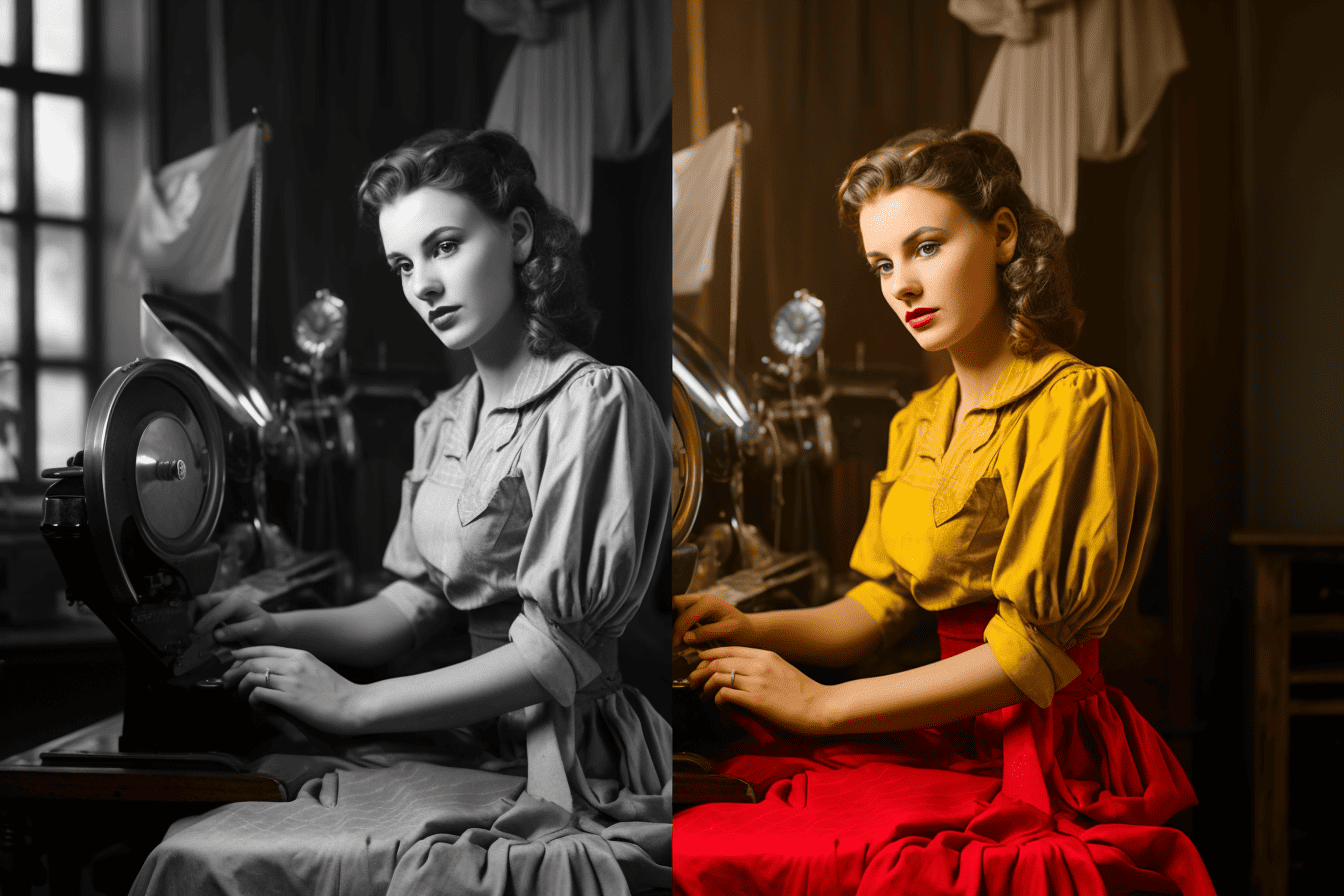
In addition to enhancing the quality of old photos that have been damaged over time, AI-powered photo restoration techniques also enable me to add color and vibrancy to black and white images. With specialized colorization tools, I can transform age-old black and white photos into lifelike, colorful images, creating a more immersive experience for viewers.
Colorizing black and white photos requires a deep understanding of the subjects, the natural color palettes, and the AI tools at hand. Using this knowledge, I can both restore and enhance memories captured in old photos, making them as vivid and memorable as possible for families to cherish and pass down through generations.
The Role of Generative Facial Prior
As a knowledgeable enthusiast in AI photo restoration, I’ve come across an impressive AI model known as GFP-GAN, which stands for Generative Facial Prior – Generative Adversarial Network. This innovative model has piqued my interest due to its remarkable ability to restore and improve old photographs by leveraging the generative facial prior concept.
Generative facial prior plays a crucial role in the AI photo restoration process. Most facial restoration models rely on facial geometric priors or reference priors to restore realistic and faithful details. However, the GFP-GAN model incorporates a powerful generative facial prior, enabling it to perform restoration and color enhancement simultaneously. This unique approach achieves a fine balance between making the restored images appear genuine while preserving the original fidelity, which is essential when working on vintage photographs.
Developed by Louis Bouchard and his team, GFP-GAN is a cutting-edge model that has shown great success in restoring even severely degraded facial details. The model achieves this by combining the strengths of multiple facial priors, which provide rich and diverse facial details. In essence, it generates visually realistic faces with a wide range of nuanced details, making it an ideal choice for many photo restoration tasks.
In conclusion, generative facial prior is a critical element in AI-powered photo restoration—particularly in models like GFP-GAN—that enables enhanced image restoration while preserving the photograph’s original essence. As someone who values confident, neutral, and clear communication of ideas, I hope this brief explanation of generative facial prior and its role in AI photo restoration has provided valuable insight into this fascinating technology.
The Future of AI in Photo Restoration
In the coming years, I believe that advanced AI technologies will play a significant role in revolutionizing the field of photo restoration. As the capabilities of AI improve, we can expect more natural restorations that may eventually surpass the abilities of human photo editors.
Currently, I have seen AI models such as GFP-GAN and VanceAI Photo Restorer make significant strides in restoring old and damaged photos. These technologies can already perform tasks such as colorization, noise reduction, and scratch removal with impressive results.
As AI continues to evolve, I anticipate further advances that will lead to more accurate and efficient photo restoration processes. For example, AI algorithms might become better at interpolating missing details and textures, allowing for even more seamless restorations of severely damaged photos.
Moreover, future AI photo restoration tools may be able to better understand the context and semantics of a scene, resulting in more natural colorization and editing. This contextual understanding could also enable more advanced image manipulation, such as changing the background of a photo or adding in missing elements that are not visible in the original image.
Lastly, I expect that AI will play a larger role in automating the photo restoration process. With sophisticated AI algorithms, users might be able to simply upload a photo and have it automatically restored with minimal manual adjustments required. These advances would not only save time and effort but also make professional-quality photo restoration accessible to a wider audience.
In summary, the future of AI in photo restoration shows great promise, with the potential for more advanced AI technologies to deliver increasingly natural and accurate results. As AI capabilities continue to improve, we can look forward to a new era of streamlined and accessible photo restoration services.
Practical Applications of AI Photo Restoration
Restoring Aged Family Photos
Preserving memories is important, and one way to achieve this is through the restoration of aged family photos. AI-powered tools like GFP-GAN have become increasingly popular for their ability to fix damages in old photos automatically. I’ve found that these tools are great for removing scratches, stains, spots, tears, and creases, which helps to bring clarity and vibrance back to aged pictures. This makes it convenient for those who want to restore old photos online without the need for expert knowledge or professional services.
Enhancing Low-Resolution Images
Low-resolution images can be a challenge when trying to preserve memories or use them in presentations. AI photo restoration apps, such as those listed in this article, are highly beneficial in enhancing the quality of low-resolution images. By intelligently upscaling pictures and adding better details, these algorithms have proven to be effective in improving the overall look of such images. In my experience, these apps have been useful in enhancing the resolution and clarity of photos with just a few clicks, making it much easier to work with low-resolution images.
Identity Change in Portraits
AI photo restoration tools can also be used to modify the identity of portraits, allowing for creative reinterpretations and personalization of photos. These tools can be used to adjust facial features, change hairstyles, or even add accessories, providing an entirely new look to the subject in the portrait. As a demo, I’ve experimented with various AI-powered online platforms to change some of my own portraits, and the results have been quite impressive. This innovative application of AI technology has the potential to revolutionize the way people interact with their pictures, making it more fun and engaging.
Online Tools for Photo Restoration
As a photography enthusiast, I’ve come across various online tools that can help restore damaged, faded, or scratched photos. Some of these tools are even AI-powered, providing quick and efficient results. I’ll discuss a few of these tools that I found helpful in my photo restoration journey.
One tool that I discovered is Fotor, an online photo editing platform with a free AI photo restoration feature. With just a few clicks, I can easily repair my old photos, whether they are black and white or in color. The automatic image restoration process is quite impressive and saves me a lot of time.
Another option that I tried is Picsart, an online photo editor with AI-enhanced photo restoration capabilities. It allows me to upload my old photos and instantly enhances the details, restoring the image to its former glory. What I like about Picsart is that it also offers additional photo editing tools, so I can make further adjustments if needed.
I also came across Hotpot.ai, a specialized AI service that provides photo restoration by removing scratches, sharpening colors, and even enhancing faces in old photographs. This tool does an exceptional job with both color and black and white photos, making it a valuable resource in my photo editing toolkit.
For those familiar with Photoshop, it has a variety of features that can assist in photo restoration, such as the Spot Healing Brush and the Content-Aware Fill. These tools help me in refining the restored photos and providing a more finished appearance.
Some of these online tools even offer APIs, which can be helpful for developers looking to integrate photo restoration features into their applications.
In summary, exploring these various online tools has improved my ability to restore and enhance my old and damaged photos. With AI-powered photo restoration, what used to be a time-consuming task is now achievable in just seconds. I’m confident that these technological advancements will continue to make the photo restoration process even more convenient and efficient in the future.
Privacy and Ethical Considerations
As I delve into the world of AI photo restoration, it’s clear that privacy and ethical considerations play a crucial role in its development and deployment. One of the primary concerns in AI-driven technologies, including photo restoration, is the potential misuse of personal information. As mentioned in a Brookings article, the challenge for regulators is to protect individuals against any adverse effects resulting from personal data usage in AI applications.
Privacy concerns extend to the code behind AI technology. It is important to maintain transparency while developing AI-driven photo restoration tools and maintain an open dialogue with users about what data is being collected and how it is being used. Implementing privacy-by-design practices, as discussed in a PWC article, is one approach to tackling the language gap and addressing the broader questions surrounding data usage and AI ethics.
When it comes to ads, ensuring that AI technology is utilized responsibly is essential. With AI photo restoration, advertisers should avoid using the technology to misrepresent products or manipulate user data. They should also make sure they are not infringing on user’s privacy rights.
When handling a user’s personal photos and data in AI photo restoration, my responsibility includes upholding ethical standards. Ensuring the technology is impartial and not biased towards certain demographics or groups is vital. Building an ethical AI framework, as suggested in the Harvard Business Review, is an effective way of operationalizing data ethics and mitigating potential risks.
In conclusion, my goal is to address privacy and ethical considerations in AI photo restoration confidently, knowledgeably, neutrally, and clearly. It is important to understand and respect user trust, follow guidelines for responsible AI development, and maintain transparency in both code and data usage. By doing so, I can contribute to a more ethical and privacy-conscious AI-driven future in the realm of photo restoration.