AI in Military: Enhancing Defense Capabilities and Strategies
Artificial intelligence has been making significant strides in numerous fields, and the military is no exception. As a technology that has the potential to revolutionize the way we approach defense and warfare, AI has attracted considerable attention from defense organizations around the world. By harnessing the power of machine learning, pattern recognition, and autonomous systems, military forces are exploring novel ways to enhance their capabilities and maintain a strategic edge on the battlefield.
The application of AI in the military domain spans across a wide range of functions, from autonomous weapons and targeting to surveillance and logistics. The ongoing development of AI technologies in defense has led to groundbreaking projects and contracts focused on leveraging the potential of this computational force. However, the implementation of AI also presents several challenges, including legal and ethical considerations, setting new precedents for the future of warfare.
Key Takeaways
- AI is being actively integrated into various military applications, such as autonomous weapons, surveillance, and logistics.
- Groundbreaking projects and contracts showcase the growing importance of AI in defense and strategic planning, with more such projects expected to come in the future.
- Implementing AI in military faces challenges in legal and ethical aspects, pointing towards the need for developing international norms for responsible military AI use.
The Evolution of AI in Military
As I have observed, the military landscape has undergone significant changes with the adoption of emerging technologies, particularly in the field of artificial intelligence (AI). AI has transformed the way militaries operate, enabling the development of more advanced weaponry, improved decision-making, and enhanced battlefield strategies. In the paragraphs that follow, I will briefly examine the ways AI has influenced military technology and processes.
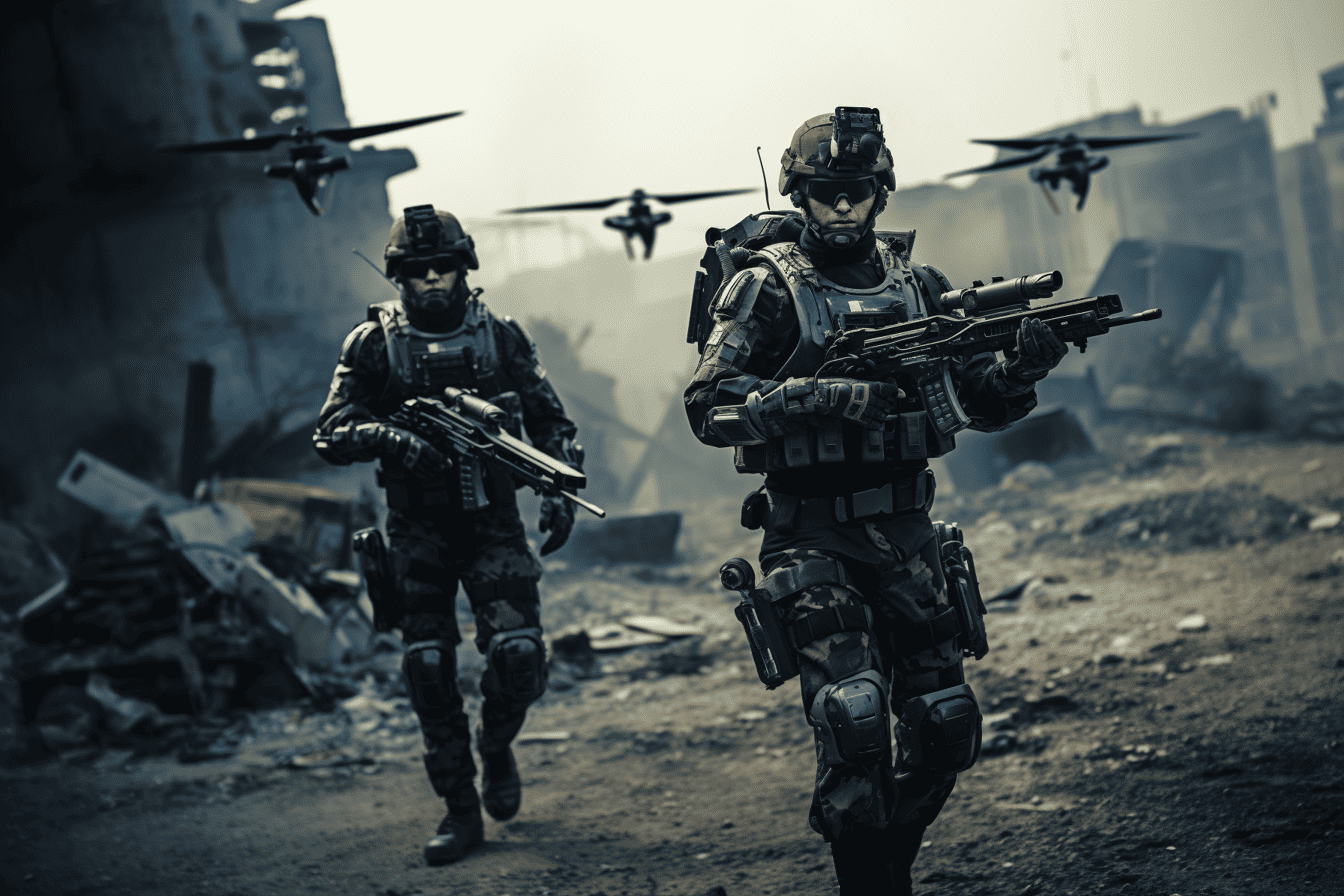
One of the most notable advancements in military technology driven by AI is in the realm of autonomous weapons systems. AI-powered drones and robots are now being deployed in various combat scenarios, offering increased precision and efficiency, while minimizing human risks. Additionally, AI algorithms are being integrated into missile guidance systems, allowing them to adapt to dynamic targets and environments.
Apart from weaponry, AI has also facilitated better decision-making within the military sphere. Advanced data analysis systems driven by AI are harnessed to process vast amounts of information collected from various sources, such as satellite imagery and battlefield communications. These data analysis systems play a significant role in providing valuable insights to military decision-makers, enabling them to make more informed and effective choices.
In recent years, there has been active research on the potential uses of AI in cybersecurity for military purposes. Leveraging AI’s ability to analyze patterns and detect anomalies, defense departments aim to bolster their cybersecurity infrastructure, protecting sensitive data and maintaining the integrity of communication networks.
AI is also increasingly being used in military training. Virtual reality and simulations powered by AI provide realistic training environments that help soldiers better prepare for actual combat situations. These training programs can adapt to individual skill levels and generate personalized feedback, improving overall military readiness.
In conclusion, the evolution of AI in military has opened up new possibilities and pathways, enhancing various aspects of warfare and day-to-day operations. While challenges and ethical concerns surrounding the development and deployment of AI in the military sphere still persist, it is clear that AI is rapidly becoming an integral component of modern military strategies.
State of AI in Different Militaries
AI in United States Military
In the United States Military, Artificial Intelligence (AI) is being integrated into various operations and systems to enhance capabilities and improve decision-making processes. The U.S. Department of Defense has been actively investing in AI technologies and incorporating them into the Army, Air Force, and Navy.
For instance, AI is being utilized to improve logistics and supply chain management, assisting in strategic decision-making, and enabling more accurate and efficient target identification. The U.S. Air Force has been using AI to optimize maintenance schedules and predict equipment failures, while the Navy is leveraging AI-powered robots and drones for underwater and surface warfare.
AI in China’s Military
China is also heavily investing in AI to modernize and enhance its military capabilities. The Chinese People’s Liberation Army (PLA) sees AI as a critical component to gain an advantage on the battlefield. China’s focus on AI applications in the military includes areas like autonomous vehicles, robotics, and advanced data analytics for intelligence gathering and decision-making.
Moreover, China has been developing AI-enabled systems for information and electronic warfare, as well as incorporating AI into its military training and simulations to better prepare soldiers for real-world combat scenarios. The PLA has a keen interest in AI-powered systems that can assist in intelligence collection, analysis, and dissemination to enable rapid decision-making in response to emerging global challenges.
AI in NATO and Other World’s Militaries
NATO and other militaries around the world are actively exploring the benefits and potential applications of AI technologies. Countries like the United Kingdom, France, and Germany have their own national AI strategies that encompass military applications, recognizing the potential of AI to enhance defense capabilities and improve overall military effectiveness.
Some of the key areas where AI is being employed across NATO and other world’s militaries include intelligence gathering and analysis, cybersecurity, logistics, and the development of autonomous weapons systems. By leveraging AI, these militaries aim to anticipate and respond to evolving threats more efficiently, while also enhancing the safety and capabilities of their personnel.
In summary, AI is playing an increasingly significant role in the modernization and enhancement of military capabilities worldwide. As AI technologies continue to advance, militaries around the globe, including the United States, China, and NATO, will further integrate AI capabilities into their operations and systems to maintain a competitive edge on the battlefield.
AI Technologies in Defence Sector
Autonomous Weapons
One area I find particularly important in the application of AI in the defense sector is the development of autonomous weapons. These AI-powered systems can navigate, identify targets, and make certain decisions without direct human involvement. They have the potential to significantly improve the efficiency and precision of military operations while minimizing the risk to human soldiers. Autonomous weapons include robotic ground vehicles, sea-based platforms, and aerial vehicles.
Military Drones
Another interesting aspect of AI in the military involves the use of military drones. Drones equipped with AI can analyze images, detect movement, and even carry out targeted strikes on enemy positions with minimal human intervention. Their capabilities enhance reconnaissance, surveillance, and decision-making on the battlefield. Additionally, AI-enabled drones can operate in swarms, collaborating and communicating with each other to autonomously execute missions.
Surveillance and Reconnaissance
The application of AI in surveillance and reconnaissance has made a considerable impact on gathering and processing intelligence. AI-driven tools can rapidly analyze camera feeds, satellite imagery, and signals to detect patterns and anomalies. This allows for a faster and more accurate situational awareness of the battlefield by enhancing the information available to military commanders for decision-making.
Cybersecurity
Finally, AI has become a critical component of cybersecurity in the military. AI-powered systems can detect, identify, and respond to cyber threats in real-time, protecting military networks, communications, and sensitive information. By quickly identifying vulnerabilities and adapting to new threats, AI systems enhance the resilience and security of defensive cyber infrastructure.
Projects and Contracts in Military AI
Project Maven
Project Maven is a significant initiative in the field of military AI, focusing on automating the analysis of vast amounts of video footage captured by drones. The goal is to improve target recognition and battlefield analysis using AI technologies. I found that the Joint AI Center is working on a smart sensor for this purpose, which aims to identify threats and relay footage quickly.
The Department of Defense also recently awarded contracts to 79 vendors under their AI organization. These contracts aim to streamline the procurement and delivery of testing and evaluation tools essential for advancements in military AI systems.
Palantir’s Involvement
Palantir Technologies is a prominent name in the development of AI-based solutions for military applications. With their expertise in data analytics and integration, they have contributed to various aspects of Project Maven. They are part of the growing number of companies working on military AI projects, including early-stage startups and venture capital funds focused on priority technologies.
In fact, NATO recently announced the creation of a $1 billion innovation fund aimed at investing in these startups and technologies that have the potential to revolutionize military operations and bolster national security.
In the realm of AI and machine learning, the U.S. Army has also unveiled new AI/ML and wearables contracts for innovative small businesses. Their Applied SBIR Program released a Phase I contract opportunity for AI/ML open-topic solicitations, awarding up to $150,000 to fund research and development in the sector.
My research shows that military AI projects and contracts are on the rise, with countries and organizations investing heavily in technologies that will shape the future of warfare. Utilizing AI for tasks like target recognition and battlefield analysis will not only improve efficiency but also save lives by enabling quicker and more accurate decision-making.
Challenges in Implementing AI in Military
AI is a top modernization priority for the U.S. military, but implementing it presents challenges. One significant challenge is managing the trade-offs between developing advanced AI systems and maintaining ethical safeguards. As AI plays an increasingly larger role in military applications, there are many ethical concerns that must be addressed to ensure responsible usage of the technology 1.
Maintaining human involvement in decision-making is crucial, especially in situations where life and death are at stake. While AI systems can process vast amounts of data and make recommendations, human oversight remains essential to avoid potential misuse or misinterpretation of information 2. It is important to strike the right balance between relying on AI capabilities and keeping human judgment as a cornerstone of the decision-making process.
Experimentation and testing are other critical aspects of implementing AI in military practices. The technology matures rapidly, and many applications are still at the experimental stage. It is essential to conduct thorough testing to evaluate the usefulness and effectiveness of AI-driven systems in a real-world military context 3. Additionally, military organizations must remain adaptable to leverage the latest AI advancements and stay knowledgeable about the technology’s current capabilities.
Addressing these challenges requires collaborative efforts between AI researchers, technology developers, and the military. Developing strong AI systems while ensuring ethical usage and sufficient human involvement will be crucial to maintaining a competitive advantage in a world where AI is becoming an increasingly significant factor in military operations.
Potential Role of AI in Future Warfare
AI is poised to play a significant role in the future of warfare. It has the potential to transform key aspects of military operations and provide substantial advantages to countries that fully integrate AI into their military strategies.
One area where AI is expected to make a significant impact is in the development and deployment of autonomous drones. These drones could perform various tasks, such as reconnaissance, surveillance, and targeted strikes, without direct human intervention. By leveraging AI, these drones can make decisions more quickly and accurately, potentially reducing casualties and enhancing overall military effectiveness.
Another promising application of AI in warfare is combat robots. These robots can be used to augment human soldiers on the battlefield or even replace them in high-risk situations. Combat robots, powered by AI, can be more resilient against enemy fire and are capable of carrying out complex operations with precision. This technology could lead to a new era of warfare where the risks to human soldiers are minimized.
The rise of so-called “killer robots” – AI-driven weapon systems that can identify, track, and target enemies without human intervention – has sparked much debate. While these systems have the potential to increase military efficiency substantially, they also raise ethical and legal concerns regarding their deployment and accountability.
AI can also play a role in modernizing current weapon systems. With machine learning algorithms, AI can analyze vast amounts of data, optimize targeting systems, and make them more responsive and accurate. This improved efficiency could prove crucial in the success of military operations.
Finally, AI’s potential role in nuclear weapons employment cannot be ignored. AI can increase the speed and accuracy of decision-making in nuclear command and control systems, reducing the likelihood of unintended consequences. However, integrating AI into such systems also raises concerns about loss of human control and the risk of escalation due to misinterpretation or false signals.
In summary, AI’s advancements will undoubtedly influence the future of warfare across various domains, from autonomous drones and combat robots to weapon systems and nuclear weapons deployment. While the potential benefits are substantial, it is crucial to assess and address the ethical, legal, and strategic implications these technologies bring with them.
Legal and Ethical Considerations
International Law and AI in Military
As AI technology is integrated into military operations, it’s important to ensure that its use aligns with international law. I strongly believe that AI development and deployment in warfare should be governed by the existing laws of armed conflict, including the principles of distinction, proportionality, and necessity. In doing so, we ensure that AI applications are consistent with the legal, ethical, and moral norms expected by democratic countries. The United States Department of Defense has incorporated AI ethical principles into its strategic framework, emphasizing the need for responsible and equitable AI strategies in military contexts.
Role of United Nations
The United Nations (UN) can play a crucial role in overseeing the ethical use of AI in military applications. I think it’s essential that the UN facilitates international consensus and cooperation in developing norms and guidelines for AI deployment in warfare. This collaborative approach will help ensure that AI technologies are used responsibly, with respect for human rights and international humanitarian law. By encouraging dialogue and shared knowledge among member countries, the UN can foster a global understanding of the potential risks and benefits associated with AI in military contexts.
Political Declaration and Best Practices
A political declaration that outlines best practices for AI use in military operations could serve as a foundation for ethical AI in defense. This document should provide clear guidance on maintaining human control over AI systems, to ensure accountability and minimize unintended consequences. Establishing international consensus on such a declaration would be a significant step in promoting responsible AI deployment and adherence to legal and ethical norms.
By embracing a confident, knowledgeable, neutral, and clear approach, I have discussed the legal and ethical considerations surrounding AI in military applications. This includes the importance of international law, the role of the United Nations, and the potential for a political declaration outlining best practices.
Conclusion
The rise of artificial intelligence in the military will undoubtedly lead to significant changes in how strategy is formulated and executed. As I have examined, the potential benefits of AI in the military are vast, ranging from improved decision-making and operational efficiency to more effective simulations and training programs. However, we must also remain cognizant of the ethical and practical challenges that may arise from reliance on AI.
One key principle that should guide the development and deployment of AI in the military is the need to keep a human in the loop. This approach ensures that ethical considerations and human judgment remain central to military decision-making, even as AI systems empower personnel with new tools and insights. As discussed in a West Point article, maintaining human oversight can also help mitigate the strategic and operational vulnerabilities associated with AI.
In addition, the importance of aligning military AI strategies with broader ethical and legal frameworks cannot be overstated. As the US State Department’s declaration on responsible use of AI in the military highlights, commitment to ethical principles is vital for maintaining trust among allies, ensuring compliance with international law, and avoiding unintended harmful consequences.
I also want to address the need for cultural adaptation within the military, as new AI technologies are integrated into existing workflows. Assessing the attitudes of personnel, such as those in the Australian Army, can help identify areas where AI adoption may face resistance and where further education or change management efforts may be required.
In conclusion, AI’s role in the military landscape continues to evolve, with the potential to transform strategy, decision-making, and day-to-day operations. However, realizing these benefits will require a combination of technological innovation, ethical leadership, and organizational adaptation at every level. By approaching AI’s integration into military processes with a focus on these key principles, we can better ensure that AI serves as an empowering force for good in the defense of our nations.