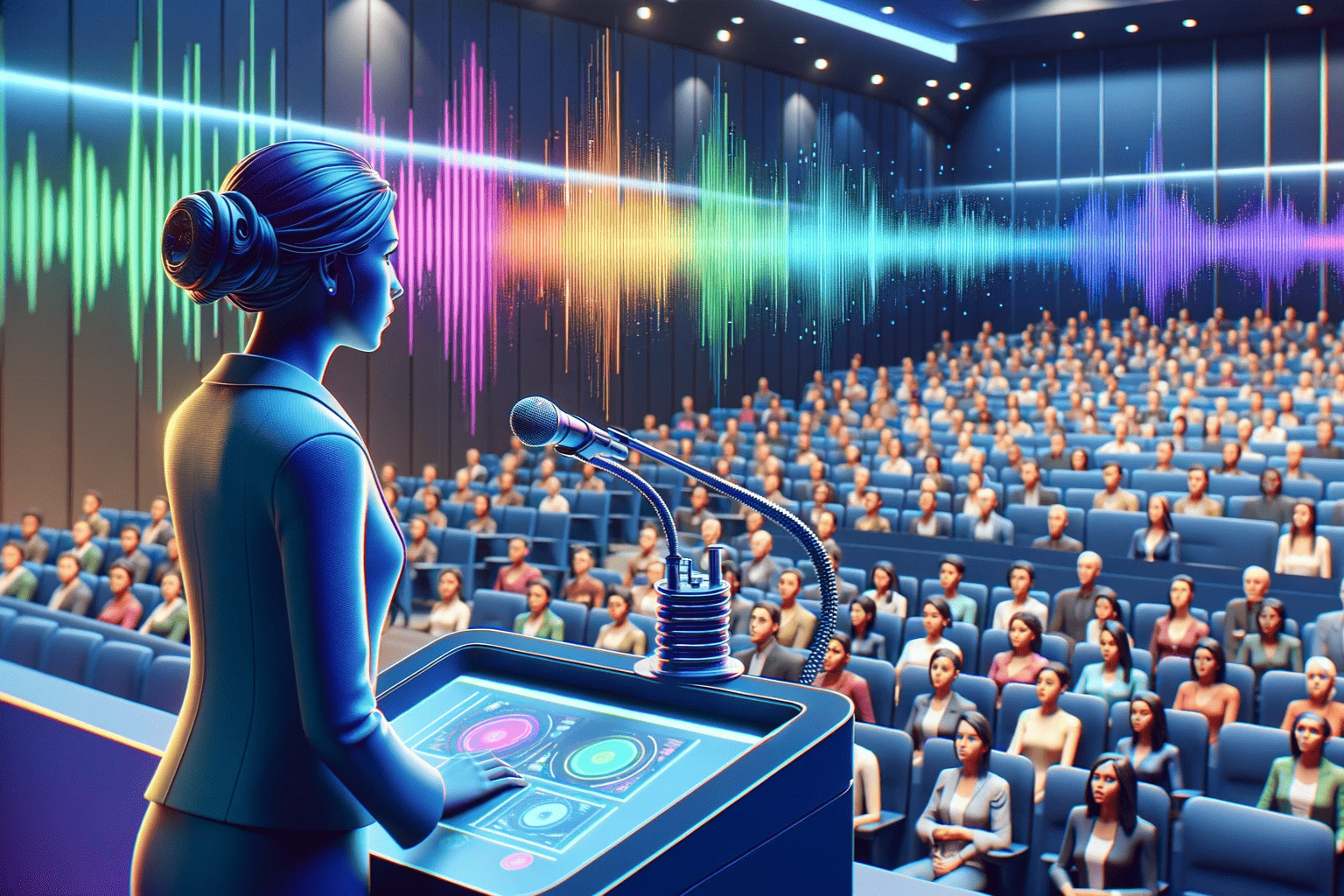
AI Speech Recognition: Advancements and Applications in Modern Technology
AI speech recognition, also known as Automatic Speech Recognition (ASR), is an increasingly important aspect of modern technology. ASR systems are designed to recognize and translate spoken language into text, making it easier for computers to process and understand human speech. Leveraging advancements in artificial intelligence (AI), these systems have become more accurate and efficient over the years.
One of the most significant developments in the field of AI speech recognition has been the use of sophisticated models and large datasets for training purposes. Systems like Whisper have been developed by using multilingual and multitask supervised data, improving the system’s robustness to accents, background noise, and technical language. ASR has extensive applications in various industries, including smart homes, voice assistant services, and AI systems.
Key Takeaways
- AI speech recognition systems can accurately convert spoken language into text.
- Advanced models and large datasets contribute to the improved capabilities of ASR technologies.
- ASR has various applications, including smart homes and AI systems.
Background of AI Speech Recognition
As we delve into the world of AI speech recognition, it’s essential to understand its primary components and evolution. AI speech recognition leverages a combination of technologies, including artificial intelligence, natural language processing (NLP), automatic speech recognition (ASR), machine learning, neural networks, and deep learning.
In the early stages of speech recognition, the focus was on understanding and converting human speech into a written format. ASR played a crucial role in transcribing spoken words into text, while NLP enabled the processing and interpretation of colloquialisms, abbreviations, and acronyms present in day-to-day conversations.
Machine learning and neural networks have significantly contributed to the advancements in speech recognition technology. These algorithms learn from immense datasets, allowing them to make predictions and improve their performance over time. Deep learning, a subset of machine learning, has made it possible for computers to recognize and interpret complex speech patterns.
I have witnessed the growth of AI-powered speech recognition and its expansive applications across various industries, from transcription services to smart assistants. These advancements have transformed the way we interact with technology, making it more accessible and efficient.
To sum it up, AI speech recognition involves the integration of several technological elements that, when combined, create a powerful framework for understanding human speech and generating valuable insights. It has come a long way since its inception and continues to evolve, showcasing the boundless potential of artificial intelligence and its impact on our lives.
Fundamentals of Speech Recognition
Speech recognition, also known as automatic speech recognition (ASR), computer speech recognition, or speech-to-text, is a technology that enables a computer to recognize and convert spoken language into text. In recent years, it has become increasingly popular due to advancements in artificial intelligence (AI) and machine learning, allowing for more accurate identification and transcription of different accents and languages.
As a key component of voice recognition, the first step in the speech recognition process is the conversion of raw audio input into a computer-readable format. This involves capturing a digital representation of the user’s voice, which can then be processed to identify specific speech patterns and inflections. Once the raw audio data has been analyzed, the system applies machine learning algorithms to predict the intended words or phrases the speaker intended to convey.
The sophisticated technology behind speech recognition takes into account the nuances of human speech, including variations in volume, pitch, and pronunciation. It also recognizes common patterns in the way that people tend to use voice commands, allowing the system to more accurately interpret user intentions and provide helpful responses or actions.
There’s a range of applications for speech recognition, from voice assistants like Siri or Alexa, to transcription services and even accessibility features for those with impaired mobility or dexterity. By using my voice as an input method, I can more seamlessly interact with modern technology, making everyday tasks more accessible and efficient.
In conclusion, the fundamentals of speech recognition involve intricate AI and machine learning processes that analyze raw audio, identify speech patterns, and interpret spoken language to convert it into text. As this technology continues to advance, I can expect to see even more improvements in accuracy and versatility of voice-operated systems.
Speech to Text Conversion
As a developer working with AI speech recognition, I have come across numerous applications and technologies that focus on transcribing spoken language into written text. Speech to text conversion tools have a wide range of applications, from transcription services to voice assistants and real-time language translation.
One of the core aspects of speech to text conversion is transcription. I often use services like Google Cloud Speech-to-Text and Microsoft Azure’s Speech to Text for accurate and efficient transcription. These tools are designed to handle a variety of languages, accents, and dialects to ensure a seamless experience for users around the world.
To accommodate diverse language needs, I work with tools that support multiple languages and dialects. For instance, IBM Watson’s Speech to Text offers support for numerous languages, making it an excellent choice for international projects. This flexibility is crucial when dealing with audio content in different languages, especially when translations are needed.
In some cases, I need to work with speech-to-text tools that offer translation capabilities. In such situations, I turn to platforms like OpenAI’s Speech to Text API, which allows both transcription and translation of audio content into English. This API is powered by OpenAI’s state-of-the-art Whisper model, ensuring accurate translations and transcriptions.
Text-to-speech conversion, on the other hand, involves converting written text into spoken language. While my focus is primarily on speech-to-text technologies, text-to-speech tools are important for creating more accessible and interactive user experiences.
When working with transcribed speech, I regularly analyze different aspects of the generated text, such as word representations and patterns. This analysis helps me understand the strengths and weaknesses of various speech recognition systems, as well as identify areas where improvements can be made.
During my work, I consistently strive to strike a balance between accuracy and efficiency to provide the best possible speech to text conversion experience. By using the right tools and applying thorough analysis, I can create applications that cater to diverse linguistic needs while maintaining a high level of quality and performance.
Models and Datasets in ASR
In my experience with automatic speech recognition (ASR), the development of accurate and efficient models is highly dependent on the availability of diverse and representative datasets. ASR models typically rely on large volumes of transcribed audio or speech data to train and improve their performance.
I’ve found that one popular dataset for ASR training is LibriSpeech. It is an extensive dataset containing over 1,000 hours of English speech derived from audiobooks. LibriSpeech has played a major role in advancing ASR research, serving as a benchmark for various ASR models. That said, as a researcher or developer, you may also want to explore other datasets that better suit the specific language or domain of your ASR application.
There are a few ASR models that have caught my attention due to their exceptional performance and widespread usage. One of these models is Google’s RNN-Transducer, an end-to-end ASR model that can be fine-tuned for specific speakers or disordered speech. This capability allows the model to adapt to a user’s unique speech patterns and provide a more personalized experience.
Another impressive ASR system is Whisper by OpenAI. Trained on a vast dataset containing 680,000 hours of multilingual and multitask supervised data, Whisper has demonstrated remarkable robustness to accents, background noise, and technical language. Its large-scale training has opened up new possibilities for ASR deployment in a broader range of applications, environments, and languages.
In the course of my work, I’ve also come across Hugging Face’s ASR models that leverage state-of-the-art transformer architectures. These models benefit from a modular design and an extensive library, allowing users like myself to adapt them for different ASR tasks while maintaining a high level of performance.
In terms of available code, libraries such as NVIDIA’s NeMo offer a range of well-documented ASR model architectures and preprocessing scripts for common ASR datasets. With NeMo, users like me can access pretrained models, fine-tune them, and even create custom datasets to address unique ASR application requirements.
To sum it up, selecting the right model and dataset is crucial for successful ASR projects. With various options available, I always strive to carefully evaluate and choose the best combination for my specific application and desired outcomes.
Effect of Background Noise in ASR
I’d like to discuss the impact of background noise on automatic speech recognition (ASR) systems. One of the key challenges for ASR is the presence of background noise, which can make it harder for the system to accurately recognize speech. As a result, the performance and overall accuracy of ASR systems are frequently affected by the noises and distortions present in the environment.
The presence of background noise during speech recognition can lead to higher error rates, commonly known as word error rates (WER). WER is a measure of the number of errors made by the ASR system when transcribing speech samples. Background noise introduces variations in the speech signals, making it difficult for ASR systems to distinguish between relevant speech and interfering noise. Consequently, this leads to increased errors and decreased performance of the ASR system.
To combat the effect of background noise on ASR performance, noise-robust speech representation learning with speech reconstruction has been proposed. By combining a reconstruction module with contrastive learning, this approach focuses on pre-training on noisy data and aims to improve ASR’s noise robustness1. In this way, ASR performance can be maintained in the presence of background noise and the consistency of the system’s output can be ensured.
Another approach to address noisy conditions in ASR systems is the use of deep learning-based speech enhancement techniques. These techniques have shown promising results in improving the ASR performance, with some reporting more than 30% relative word error reduction on real evaluation data2. By employing such techniques, ASR systems can effectively suppress the background noise and improve their recognition accuracy.
In conclusion, background noise presents a significant challenge to ASR systems’ performance, leading to increased errors and reduced accuracy. However, recent advancements in noise-robust representation learning and speech enhancement techniques have shown promise in addressing these issues and enhancing the performance of ASR systems in noisy conditions.
Footnotes
ASR Solutions and Companies
As an AI enthusiast, I have come across various Automatic Speech Recognition (ASR) solutions and companies that are making strides in this domain. ASR technology has been essential in transforming user interactions with devices and applications, making them more intuitive and efficient.
One of the leading ASR solutions in the market is Google’s Speech-to-Text, which is powered by their advanced AI research and technology. Google offers 60 minutes of free transcription and analysis per month for all customers, making it accessible for a wide range of users. Their solution is quite versatile, supporting different languages and serving various industries including call centers, healthcare, and entertainment.
IBM Watson also offers an ASR solution, known for its robustness and scalability. IBM Watson enables developers to integrate speech recognition capabilities into their applications, allowing for real-time transcriptions and automatic punctuation. Moreover, IBM Watson offers language models that cater to different industries, such as finance, healthcare, and telecommunications.
Another notable ASR solution is RIVA, by NVIDIA. RIVA is a highly optimized Automated Speech Recognition engine that works well in various environments, leveraging NVIDIA GPUs for top-notch performance. RIVA supports multiple languages and can be customized for specific business needs, making it a strong contender in the ASR domain.
Moving on, AT&T has developed their own ASR technology called Watson Speech (not to be confused with IBM Watson). This technology can be used in applications revolving around voice control and transcription services. AT&T’s Watson Speech has played a significant role in assisting people with disabilities by providing them with voice-activated systems for communication.
Lastly, Apple’s Siri has been a pioneer in integrating ASR technology into consumer devices. Siri, known for its voice-activated personal assistant, has enabled seamless user interactions with Apple devices by understanding different languages, dialects, and accents.
In conclusion, the ASR landscape is packed with competitive solutions and innovative companies. While I’ve mentioned some of the major players such as Google, IBM, RIVA, AT&T, and Siri, it’s important to note that companies like LumenVox and AppTek are also making waves in the speech recognition market.
Feature Extraction Techniques in ASR
As an expert in artificial intelligence speech recognition, I am often asked about the essential phases in an Automatic Speech Recognition (ASR) system. One crucial step in ASR is feature extraction, where specific characteristics of the speech signal are identified and isolated. This process aims to transform the raw speech signal into a more compact and discriminant representation that can be easily used by an acoustic model.
In my experience, several effective feature extraction techniques have been developed for ASR. One of the most common methods is the use of Mel-Frequency Cepstral Coefficients (MFCC). These coefficients provide a representation of the speech signal’s spectral envelope, which makes them well-suited for speech recognition tasks. It has been proven that MFCC demonstrates good performance even in noisy conditions and various languages.
Another popular technique is Linear Predictive Coding Cepstral Coefficients (LPCC), which is based on linear prediction. In contrast to MFCC, LPCC focuses on the speech signal’s excitation source and vocal tract characteristics. However, both MFCC and LPCC are susceptible to distortion in noisy environments.
To address this limitation, further techniques such as Perceptual Linear Prediction (PLP) and RASTA-PLP have emerged. These methods incorporate perceptual principles and aim to mimic the human auditory system’s behavior, making them more robust against noise.
Regarding the ASR system components, the acoustic model plays a vital role in improving speech recognition accuracy. It serves as a probabilistic model that connects the extracted features to phonetic units, usually Hidden Markov Models (HMMs) or Deep Neural Networks (DNNs). When constructing an ASR system, incorporating an appropriate language model becomes equally essential. The language model estimates the probability of various word sequences, assisting the system in choosing the most likely phrase given the recognized phonemes.
One interesting challenge in ASR is the recognition of non-English languages or multilingual speech recognition. In these contexts, adapting the feature extraction techniques, acoustic models, and language models to the specific phoneme inventory, grammar rules, and linguistic characteristics of each language becomes vital.
In summary, feature extraction is a critical step in the ASR process, and various techniques have been developed to perform this task effectively. By combining these methods with appropriate acoustic and language models, ASR systems can achieve high performance in speech recognition tasks, even in challenging environments and across different languages.
The Role of NLP in Voice Recognition
As a researcher in the AI speech recognition field, I regularly encounter the critical role of Natural Language Processing (NLP) in voice recognition. NLP focuses on the interaction between humans and computers through language, enabling devices to understand and process speech and text effectively. With the advancements in technology, NLP integrates with speech recognition to facilitate seamless human-machine communication.
I have observed various applications of NLP in voice recognition. One such area is in Automatic Speech Recognition (ASR), which helps computers transcribe spoken language into written text. ASR systems aid virtual assistants, such as Siri, Alexa, and Google Assistant, in understanding and interpreting human speech, furnishing accurate responses. NLP’s significance in ASR makes it an essential pillar in the AI speech recognition domain.
In the realm of speaker recognition, NLP offers valuable tools for discerning individual voices based on their unique vocal characteristics. This technology facilitates secure authentication, providing added security for devices and applications that rely on voice commands. Furthermore, NLP plays a role in speaker labeling, a technique employed to identify and attribute different voices within a conversation. As a result, the generated transcriptions enable users to follow complex discussions more effectively.
Moreover, NLP contributes to speaker diarization (SD), wherein audio recordings are segmented into intervals to determine when a particular speaker contributes. This application is essential in processing podcasts or meetings with multiple participants, as it clarifies distinct contributions and assigns relevant speaker labels.
Finally, an aspect of voice recognition I find intriguing is profanity filtering. With the application of NLP, voice recognition systems can identify and filter out offensive or inappropriate language. This process ensures that transcriptions maintain a high level of quality and professionalism, creating a more refined and respectful conversational environment.
In conclusion, NLP has significantly influenced the progress and success of AI speech recognition technologies. As an advocate of NLP, I am excited to continue exploring its potential in enhancing human-machine interactions through voice recognition.
Significance of Multilingual Support
In recent years, Artificial Intelligence (AI) has made astonishing progress in speech recognition technology. As a result, we are now witnessing the development of highly accurate and sophisticated systems that can understand and process spoken language. One of the critical aspects of AI-powered speech recognition systems is their ability to support multiple languages or, in other words, being multilingual. I will now discuss the significance of multilingual support in AI speech recognition systems.
First and foremost, we live in a world that is incredibly diverse in terms of languages and cultures. With more than 7,000 languages spoken globally, it is essential for AI speech recognition systems to cater to this linguistic diversity. By being multilingual, these systems can provide a more inclusive experience by enabling people from different language backgrounds to communicate with each other seamlessly and harness the power of AI technology.
The development of multilingual speech recognition systems also enables access to information for users in their native languages. As a result, people can easily access and understand the vast amount of information available online, thereby fostering greater knowledge sharing and collaboration across geographical and language barriers.
Furthermore, businesses and organizations can significantly benefit from multilingual AI speech recognition systems. By integrating such systems into their operations, businesses can better cater to their diverse customer base, improve customer service, and expand their global reach. This ultimately leads to increased market opportunities and revenue generation.
One prominent example in the AI industry is Whisper by OpenAI, an open-source, multilingual speech recognition system that demonstrates the potential of AI in breaking down language barriers between people. Another example is Google’s large-scale multilingual speech recognition system that enables real-time translation, making it easier for users to understand content in various languages.
In conclusion, the significance of multilingual support in AI speech recognition systems cannot be overstated. By accounting for the linguistic diversity of our world and making advanced AI technology accessible to people across different language backgrounds, multilingual speech recognition systems have the potential to revolutionize communication, knowledge sharing, and commerce on a global scale.
Concerns and Limitations of ASR
In the field of artificial intelligence, speech recognition technology has made significant progress, but there are still some concerns and limitations when it comes to Automatic Speech Recognition (ASR). While ASR has the potential to provide high accuracy, a variety of factors can still impact its performance.
One of the main concerns is the accuracy of ASR systems. Although significant improvements have been achieved in recent years, ASR technology often has difficulty dealing with variations in voice pitch, accents, and dialects. This leads to inaccuracies in transcriptions and, consequently, hinders the system’s effectiveness. To address this issue, some ASR models incorporate Hidden Markov Models (HMMs) to better understand variations in speech patterns and improve accuracy.
Another concern is the system’s architecture and the algorithms used in ASR. The choice of algorithm can greatly affect the performance and efficiency of the ASR system. The complexity of the algorithms, combined with the need for extensive training data, can make it challenging to build an efficient and highly accurate ASR system. Recent advances have led to the development of newer algorithms, such as deep neural networks (DNNs), which show promise in improving speech recognition performance.
Real-world noisy environments can also greatly hinder the effectiveness of ASR systems. Background noise, multiple speakers talking simultaneously, and poor audio quality can all lead to reduced accuracy in ASR systems. Solutions to this problem often involve supplementary technologies, like noise reduction techniques or directional microphones, that can help filter out unwanted noise and improve the system’s overall performance.
In conclusion, while I have confidence in the advancements being made in ASR technology, it is crucial to acknowledge its limitations and seek continued innovation to address these challenges. By recognizing and addressing its concerns and limitations, we can help push the boundaries of ASR systems and improve their efficiency and usefulness in various applications.
ASR Applications in Smart Homes
As an AI speech recognition expert, I want to share my knowledge about the various applications of Automatic Speech Recognition (ASR) in smart homes. By integrating ASR algorithms, smart homes can easily understand and respond to voice commands and voice searches, enabling users to have a convenient and hands-free experience.
In my experience, one of the major applications of ASR in smart homes is the use of virtual assistants, such as Amazon’s Alexa, Google Assistant, and Apple’s Siri. These virtual assistants can perform a variety of tasks, including answering questions, setting reminders, and controlling various smart home devices, all through voice commands. Through the use of ASR technology, virtual assistants can accurately understand and respond to user’s spoken commands, enhancing the overall user experience.
Another significant application of ASR in smart homes is voice-controlled smart home devices. With the help of ASR algorithms, devices such as smart thermostats, lighting systems, and security systems can be controlled using simple voice commands. This makes it effortless for users to interact with their devices and maintain a comfortable living environment without the need for physical interaction.
ASR technology can also be beneficial in providing voice-activated entertainment systems within smart homes. Users can easily search for their favorite movies, songs, or other content by simply speaking their preferences out loud. This allows for a more seamless and enjoyable entertainment experience, with less time spent on manual searching and navigation.
One more application I’ve observed is the use of ASR in elderly assistance and healthcare within smart homes. Voice-activated systems can provide support and improve the quality of life for seniors, enabling them to control various aspects of their home environment as well as call for help if needed.
Overall, ASR technology plays a crucial role in enhancing the functionality and user experience of smart homes. Whether it’s through virtual assistants, voice-controlled devices, or voice searches, ASR is rapidly becoming a cornerstone of comfortable and convenient living environments.
ASR in AI Systems
In recent years, the field of AI speech recognition has made significant advancements. One key technology within this domain is Automatic Speech Recognition (ASR). ASR uses machine learning and artificial intelligence to convert human speech into readable text. As a tool in AI systems, ASR has become essential for creating seamless interaction between humans and machines.
The primary goal of ASR is to transform a sequence of sound waves into words or letters. This process results in transcriptions, which allow us to interpret and analyze spoken language more effectively. ASR serves as the foundation for many applications, such as virtual assistants and voice-to-text dictation software.
AI-powered ASR systems have revolutionized the way we interact with technology. From smartphones to smart speakers, AI speech recognition has significantly improved user experiences. ASR-supported ‘virtual assistants‘, like Siri and Alexa, have changed the way we search for information, control our devices, and access services.
One of the most critical aspects to consider when developing efficient ASR systems is language processing. The AI models must comprehend different accents, dialects, and languages to ensure accurate transcription. To achieve this level of accuracy, machine learning algorithms learn from vast datasets containing diverse speech samples.
In call centers, ASR technology has also become an indispensable tool for enhancing customer service. By transcribing calls in real-time, companies can efficiently monitor and analyze customer interactions, identifying areas for improvement and informing better business decisions.
Although AI speech recognition has come a long way, there’s still room for improvement. ASR systems face challenges in dealing with background noise, overlapping speech, and ambiguities in spoken language. But as research progresses and technology continues to improve, the full potential of ASR in AI systems will be realized soon.
In summary, ASR is an essential component of many AI systems and has proven invaluable in various applications, such as virtual assistants and call center operations. Its capabilities to transform spoken language into text have allowed AI systems to interact more fluidly with humans. And as this technology evolves, the possibilities for enhanced human-machine communication are limitless.
Future of ASR
In recent years, there have been significant advancements in the field of Automatic Speech Recognition (ASR) technology. These developments have improved ASR systems drastically, bringing them closer to human-level accuracy. In the future, we can expect even more improvements to emerge, powered by advances in machine learning, deep learning, and artificial intelligence.
As a developer, I find it fascinating to observe new innovations, such as OpenAI’s Whisper. This ASR system is trained on an impressive 680,000 hours of multilingual and multitask supervised data, which enables it to handle more complex speech recognition tasks with higher accuracy. The introduction of neural network-based ASR models in market-leading applications like Alexa and AssemblyAI further emphasizes the immense growth potential in this domain.
Looking forward, many industries and applications will benefit from the rapid advancements in ASR. Voice-activated systems will continue to make interactions more intuitive, frictionless, and accessible to wider audiences. In addition, researchers will likely focus on addressing ongoing challenges in ASR, such as enhancing recognition in real-world environments and refining multilingual capabilities. The results from these efforts will have far-reaching implications in fields like customer service, accessibility, and smart home technologies.
I can confidently say that the future of ASR technology is looking very promising. With continuous research and improvements, ASR will play a critical role in transforming our interactions with technology and creating more seamless, human-like experiences. As a developer, I am excited by the opportunities and challenges this technology presents, and I look forward to contributing to its growth and adoption in the coming years.