
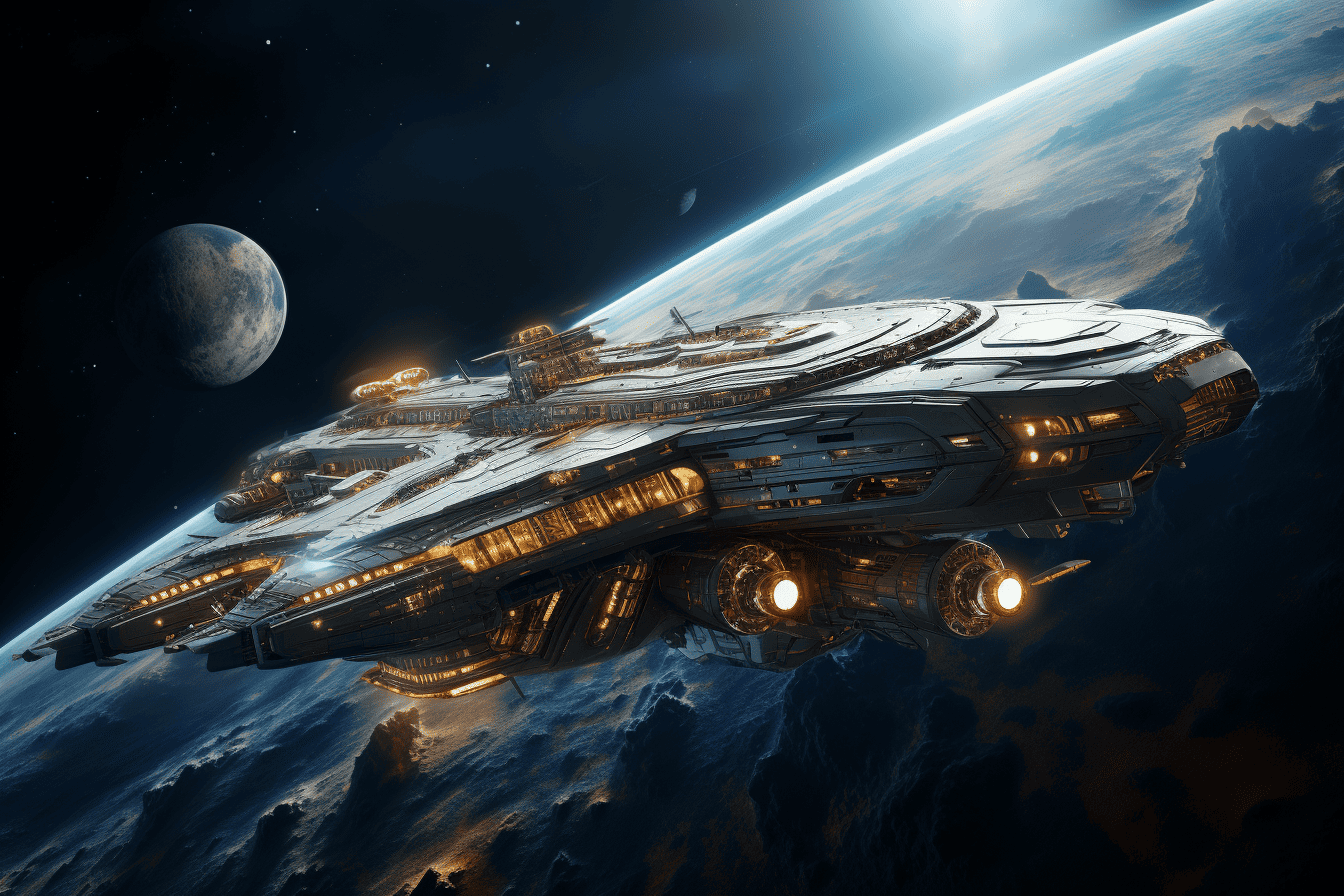
AI in Space Exploration: Pioneering the Final Frontier with Cutting-Edge Technology
As we dive into the vast realm of artificial intelligence (AI), it’s fascinating to see how this transformative technology has already made a significant impact in various fields, including space exploration. AI has proven to be a vital component in opening up new horizons of possibilities in this domain, enhancing the efficiency and effectiveness of space missions as well as paving the way for groundbreaking discoveries. From analyzing data to extending astronaut assistance, it’s no surprise that experts in the industry are turning to AI to push the boundaries of modern space travel.
Thanks to the relentless development and evolution of AI technology, space exploration has come a long way from mere human-guided operations. Instead, AI now plays a fundamental role in the planning and execution of several crucial aspects of space missions, ensuring optimal outcomes. Furthermore, the application of AI extends to satellite monitoring, maintenance, and conducting valuable research that helps scientists unveil the mysteries of the cosmos. As we venture deeper into space, the reliance on AI continues to grow, transforming the way we approach space exploration altogether.
Key Takeaways
- AI has become a crucial component in space exploration, improving mission planning and operations.
- Astronauts benefit from AI assistance, while satellite monitoring and maintenance are optimized thanks to this technology.
- Space research is bolstered by the integration of AI, leading to new and exciting discoveries in the field.
Evolution of AI in Space Exploration
Early Attempts
In the earlier days of space exploration, AI wasn’t a significant part of missions. However, as we embarked on more ambitious missions, I observed the need for more autonomous systems and AI-driven solutions. One example is the Mars Pathfinder mission, which involved the deployment of Pathfinder spacecraft and Sojourner rover. The robot required basic AI functions for navigation and communication with Earth.
Current Trends
As space exploration has advanced, organizations like NASA and the European Space Agency have started utilizing AI in various aspects like research, satellite data processing, and mission design. For instance, the use of machine learning algorithms in autonomous navigation and spacecraft health monitoring has become essential in modern space missions.
On the International Space Station (ISS), AI assistants like Cimon are being tested to help reduce astronauts’ workload. Meanwhile, AI-driven robots and software are used for analyzing satellite data and detecting space debris to ensure the safety of satellites and spacecraft.
Companies like Google have also begun contributing to space exploration by developing AI technology for data analysis, whereas other startups focus on AI-driven mission design and operations.
Future Prospects
Looking ahead, I foresee AI playing a critical role in future space expeditions, particularly in destinations like Mars. AI-driven robots and assistants will be invaluable for conducting research, managing habitats, and optimizing resources on long-duration missions.
Moreover, as missions venture beyond low Earth orbit, AI will likely contribute to the discovery of exoplanets, and aid in navigating the vastness of space. As such, investing in AI research and development now will undeniably help our pursuit of deeper space exploration in the years to come.
AI in Mission Planning and Operations
Mission Design and Planning
In recent years, AI has become increasingly important in mission planning and design for space exploration. By leveraging advanced algorithms and real-time data collection, I’ve seen how AI can help optimize mission plans and streamline decision-making processes. For instance, virtual assistants like Daphne are being developed to support astronauts in their daily tasks and overall mission planning.
One area where AI has made significant progress is in the automation of scheduling for complex mission activities. By processing vast amounts of data and constraints, AI systems can create efficient and flexible schedules, ultimately maximizing the productivity of both human crew members and robotic systems like the Robonaut.
Operational Automation
AI is essential for automating various aspects of space operations, such as navigation and spacecraft health monitoring. Utilizing complex algorithms, AI can help spacecraft autonomously navigate through space and make adjustments as needed. This enables efficient path planning and accurate collision avoidance maneuvers, ensuring the safe and smooth operation of spacecraft during missions.
Additionally, AI-based health monitoring systems are vital for maintaining spacecraft functionality throughout their lifetimes. These systems can analyze data collected by onboard sensors to detect potential issues and recommend corrective actions, allowing for proactive preventive maintenance and reducing the risk of catastrophic failures.
Risk Analysis and Mitigation
Another critical aspect of AI in mission planning and operations is its role in risk analysis and mitigation. AI can analyze vast amounts of data to identify potential risks and develop strategies for avoiding or mitigating these risks. For example, AI systems can help identify potential hazards in mission planning, such as orbital debris, and develop collision avoidance maneuvers to prevent incidents.
Moreover, AI can also assist in continuous risk monitoring during missions, enabling quicker responses and more informed decision-making in the face of uncertainty. By combining data from various sources and using advanced algorithms, AI systems can help predict potential problems and swiftly recommend the best courses of action to address them.
In conclusion, my experience and understanding of AI’s potential in space exploration have shown me that it is increasingly becoming a vital component of mission planning and operations. From enhanced mission design and planning to automated spacecraft navigation and risk mitigation systems, AI undoubtedly holds the key to unlocking new possibilities in the future of space exploration.
AI in Astronaut Assistance
Virtual Assistants in Space
One example of AI in astronaut assistance is the virtual assistant named Cimon. I learned that Cimon was flown to the International Space Station (ISS) in December 2019, where it is being tested for three years. Over time, Cimon is expected to reduce the workload of astronauts, assisting them in various tasks like equipment maintenance and experiments. This virtual assistant showcases the potential of AI in space exploration.
Another instance where AI enhances space navigation systems is with the development of Daphne. I learned that NASA granted $330,000 to a research team to create an AI guide capable of helping spacecraft navigate through space. This cutting-edge technology aims to minimize human intervention and provide more accurate navigation assistance.
Robonauts and AI-based Robotics
Robonaut is another example of AI assisting astronauts in space exploration. This AI-based robot is being developed by NASA to work alongside astronauts in the challenging conditions of space. Robonaut’s purpose is to undertake responsibilities that might be too dangerous for humans. This AI-driven robotics system demonstrates the potential to enhance astronaut safety and increase mission efficiency.
Furthermore, AI’s role in autonomous spacecraft control was showcased in the Deep Space 1 probe. Launched in October 1998, this spacecraft utilized the Remote Agent, an artificial intelligence system that allowed the probe to operate with minimal human help. This advancement contributed to lowering the cost and risk of future science-driven missions.
In summary, AI plays a significant role in astronaut assistance through virtual assistants like Cimon, AI guides for spacecraft navigation, AI-driven robotics such as Robonaut, and autonomous spacecraft control systems like the Remote Agent. These innovations highlight the immense potential AI holds for enhancing space exploration.
AI in Satellite Monitoring and Maintenance
Satellite Health Monitoring
In my experience, AI has significantly improved satellite health monitoring systems. Machine learning algorithms, such as neural networks, are now used to analyze satellite data processing and detect any anomalies. These AI-driven systems can predict and diagnose sensor malfunctions or other potential issues in satellites.
By constantly monitoring the health of satellites, AI can help operators take timely action to prevent possible failures. This proactive approach not only enhances the reliability of satellites but also extends their lifespan.
Low Earth Orbit Operations
AI plays a critical role in the management of low Earth orbit (LEO) operations. As an increasing number of satellites are launched into LEO, it becomes essential to streamline their coordination. AI algorithms can optimize satellite operations by processing data collected from Earth observation satellite systems, GPS, meteorological satellites, and other relevant sources.
One application of AI in LEO is the optimization of satellite constellations for providing global connectivity. Through AI-enhanced scheduling and routing, satellites can offer seamless and efficient communication services for users around the world.
Collision Avoidance
The growing number of satellites in LEO has raised concerns about potential collisions and space debris. AI can play a vital role in monitoring and predicting the trajectories of satellites and space debris, preventing disastrous collisions.
By using advanced algorithms, AI can analyze the movement patterns of satellites to anticipate potential threats and recommend necessary evasive maneuvers. These proactive safety measures ensure the safety of satellite assets and uninterrupted services.
Meteorological Data Collection
Meteorological satellites collect a vast amount of data to monitor and predict weather events. With the help of AI, I can process and analyze this data more efficiently, turning raw information into valuable weather insights.
Modern meteorological satellites are equipped with sensor systems that gather data on temperature, humidity, wind direction, and other variables. AI algorithms can then analyze this data in real-time, helping meteorologists make more accurate weather forecasts and tracking severe weather events to better prepare for their impact.
To summarize, AI has revolutionized the field of space exploration by enhancing satellite monitoring and maintenance. AI-driven solutions can proactively detect and diagnose satellite health issues, improve the management of LEO operations, prevent collisions, and analyze meteorological data to provide accurate weather forecasts. By leveraging the power of AI, we can ensure the efficiency, safety, and reliability of our space assets.
AI in Space Research
As a growing field, AI plays a crucial role in space exploration and research, with applications ranging from autonomous operations to data analysis and solar research.
Machine Learning in Celestial Data Analysis
Utilizing machine learning algorithms, I have witnessed how these powerful tools help process and analyze vast amounts of celestial data. For instance, creating a virtual moon map becomes more accurate and efficient with the help of deep learning. This enables scientists to better understand the lunar surface and identify potential landing sites for future missions.
Moreover, Mars rovers have also benefited from AI as these intelligent machines can autonomously navigate the Martian terrain, avoiding obstacles and efficiently conducting scientific experiments. This has revolutionized our understanding of Mars and opened up new possibilities for space exploration.
AI in Solar Research
In solar research, AI-powered tools have proven invaluable in estimating solar radiation. As a researcher, I have observed how these sophisticated algorithms can provide more accurate predictions, allowing for better planning and utilization of solar energy resources. This has significant implications not only for space exploration but also for addressing the energy challenges here on Earth.
In addition to solar radiation estimation, advanced AI technologies are also being applied to further our understanding of the sun’s behavior and its effects on our solar system. Insights from these advanced AI tools can help us better prepare for solar events, protect our satellites, and learn more about the intricate relationships between the sun and other celestial bodies.
Overall, AI’s applications in space research continue to grow, unlocking new possibilities and revolutionizing our understanding of the universe.
Case Studies
CIMON – The Spacecraft Assistant
CIMON (Crew Interactive Mobile Companion) is an AI-powered assistant designed to support astronauts on the International Space Station (ISS). Developed by Airbus and IBM, it helps perform routine tasks and provides real-time information. I find that CIMON enables human-machine collaboration in outer space and can potentially improve the efficiency of work performed by crew members.
Robonaut
Robonaut is a series of humanoid robots developed by NASA and General Motors. The goal is to create AI-assisted devices capable of performing tasks that are hazardous or difficult for astronauts. Robonaut has undergone several iterations and can work effectively in environments with different gravitational forces.
Here are some features of Robonaut:
- Dexterity: Robonaut has flexible hands capable of using various tools designed for astronauts.
- Strength: These robots are designed to perform heavy-lifting tasks, reducing the workload of human crew members.
- Autonomous: Robonauts are built to carry out complex tasks independently or under limited supervision from astronauts.
Perseverance Rover
The Mars Perseverance Rover is one of NASA’s recent achievements in integrating AI with space exploration. Launched in July 2020, the rover landed on Mars in February 2021. It carries sophisticated AI systems to help with various tasks, such as navigating the Martian surface, analyzing samples, and searching for signs of past microbial life.
The Perseverance mission demonstrates how AI technologies can contribute to:
- Terrain navigation: The rover autonomously scans its surroundings and selects the most appropriate route to avoid obstacles.
- Sample analysis: AI algorithms identify specific types of rocks and soils, allowing the rover to prioritize samples and send relevant data back to Earth.
- Communication: The AI system optimizes data transmission, allowing scientists to analyze the collected information efficiently.
By examining these case studies, I have showcased the potential of AI in aiding space exploration and improving mission outcomes in various aspects.
Conclusion
In my exploration of the AI in the space industry, I’ve found that its impact goes far beyond simply automating tasks. AI brings a new level of autonomy to space missions, allowing spacecraft to make decisions and respond to unexpected events without constant human intervention. This is particularly important for long-duration missions, such as those to Mars, where the time delay in communication between Earth and the spacecraft can make real-time control difficult.
AI has proven to be invaluable in mission planning as well, helping to optimize trajectories, plan experiments, and schedule resources, which ultimately reduces costs and improves the chances of success. By analyzing vast amounts of data from previous missions, AI can provide insights that lead to more effective designs and strategies.
One noteworthy example is the use of AI on the Mars Perseverance rover, which allows it to navigate the Martian landscape and identify interesting sites for scientific investigation. This level of autonomy is essential for the efficient exploration of other planets and has the potential to transform our understanding of the solar system.
As the space industry continues to advance and our ambitions reach further into the cosmos, AI will undoubtedly play a crucial role in making these journeys possible. By integrating AI into the design and operation of spacecraft, we are paving the way for a new era of space exploration where humans and machines collaborate to explore the vast unknown that lies beyond our planet. The future of space exploration is exciting, and I firmly believe that AI will be at the forefront of these endeavors.