Future of AI and XR: Navigating the Convergence in Interactive Technologies
Last updated on April 9th, 2024 at 12:27 pm
The intersection of Artificial Intelligence (AI) and Extended Reality (XR) heralds a transformative era of digital experiences.
Although AI, encompassing technologies like machine learning and natural language processing, and XR, including virtual, augmented, and mixed realities, have distinct origins, their fusion is leading to groundbreaking applications.
Industries are harnessing the combination of AI and XR to address complex challenges, offering more immersive, interactive, and intelligent user experiences.
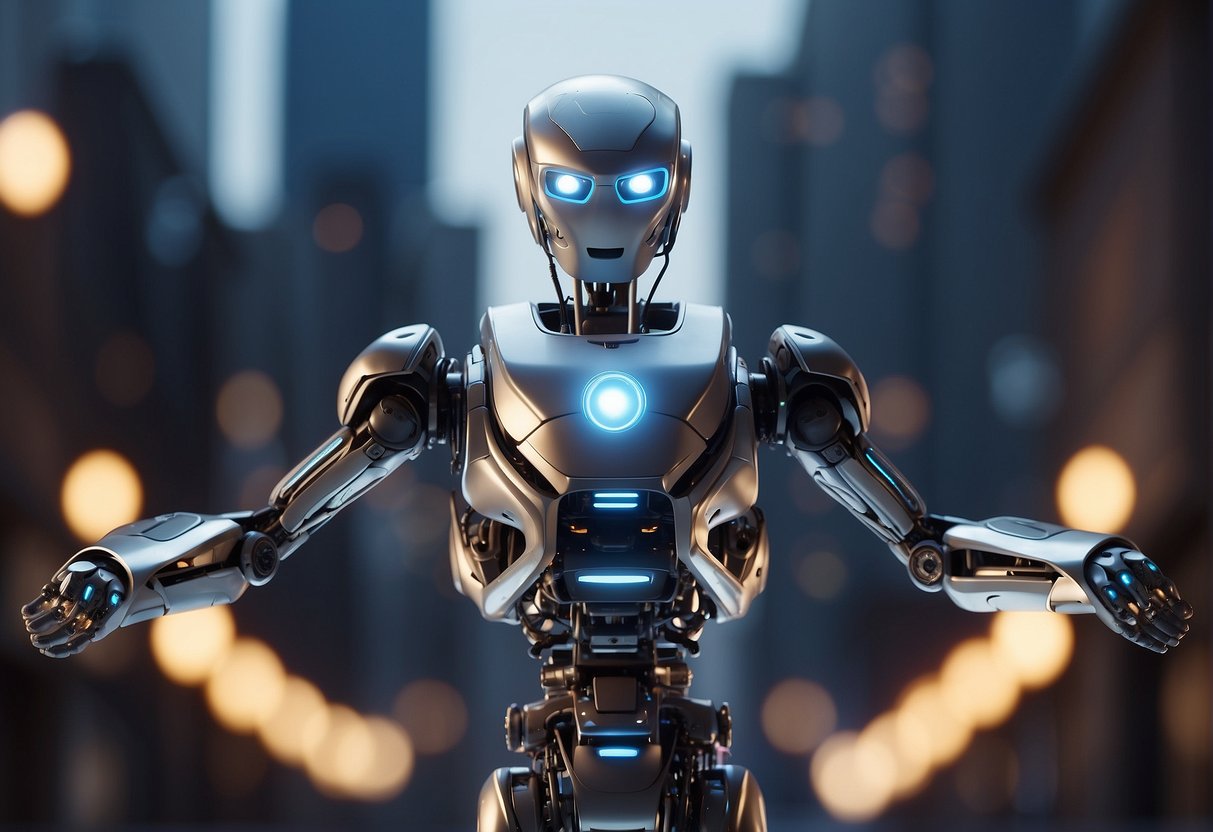
As we transition into this new era, the entertainment industry is just one of the many sectors taking strides by integrating AI with XR.
This integration results in personalized and adaptive content that has redefined consumer engagement.
Beyond entertainment, collaboration across industries through AI-enhanced XR platforms shows immense potential for revolutionizing workflows and professional interactions, illustrating a growing trend in technical innovation.
Key Takeaways
- AI and XR integration is creating advanced, immersive experiences across various industries.
- Personalized and intelligent content is becoming a staple in the entertainment sector.
- Cross-industry collaboration is benefiting from the enhanced capabilities of AI-driven XR technology.
Understanding AI and XR
The future is being shaped by the convergence of artificial intelligence (AI) and extended reality (XR), where AI’s data-driven insights enhance XR’s immersive environments.
Definition of AI and XR
Artificial Intelligence (AI) refers to the simulation of human intelligence in machines that are designed to think and learn.
In contrast, Extended Reality (XR) is an umbrella term encompassing Virtual Reality (VR), which immerses users in a completely artificial environment; Augmented Reality (AR), which overlays virtual objects on the real-world environment; and Mixed Reality (MR), which blends real and virtual worlds, allowing physical and digital objects to coexist and interact in real time.
The Interplay of AI, VR, AR, and MR
AI enhances the capabilities of VR, AR, and MR by facilitating more responsive and adaptive virtual environments.
For example, AI can analyze user behavior to personalize experiences in VR or improve object recognition for AR applications.
Similarly, MR benefits from AI’s ability to process complex data from the real and virtual worlds to create seamless interactions.
Evolution of Extended Reality
The evolution of XR is characterized by technological advancements that have expanded the fields of application.
From training simulations in VR to augmented manuals in AR, and interactive holograms in MR, each aspect of XR is evolving.
The fusion of XR with AI is leading to the creation of intuitive and intelligent systems that are more integrated into everyday life, establishing new frontiers in the digital landscape.
Technological Foundations
The technological bedrock of the future of artificial intelligence (AI) and extended reality (XR) lies in the advancement of sophisticated algorithms, cutting-edge immersive experiences, and high-fidelity graphics and simulations. These core areas underpin the innovations that drive this emerging domain.
AI Algorithms and Machine Learning
AI algorithms and machine learning provide the intelligence layer that enables XR systems to interpret and respond to human input and environmental data.
Specifically, machine learning models train on large datasets to recognize patterns and make decisions, thereby continuously improving the XR experiences.
For instance, generative AI is becoming integral to the technology ecosystem, powering more interactive and responsive virtual worlds.
Immersive Technologies
Immersive technologies, such as virtual reality (VR), augmented reality (AR), and mixed reality (MR), lay the groundwork for creating life-like digital environments.
These technologies are rapidly evolving to provide more natural and intuitive ways for users to interact with digital content.
For example, brain-computer interfaces are emerging to shape the future of the metaverse, potentially revolutionizing how humans connect with technology.
Graphics and Simulation
The realism and responsiveness of XR are significantly enhanced by advanced graphics and simulations.
Progress in computational power and graphics processing has made it possible for simulations to be incredibly realistic, offering users deeply engaging XR experiences.
Technologies like real-time ray tracing and AI-driven rendering techniques contribute to elevating XR experiences and are fundamental for creating immersive content that is visually indistinguishable from the real world.
Industry Applications
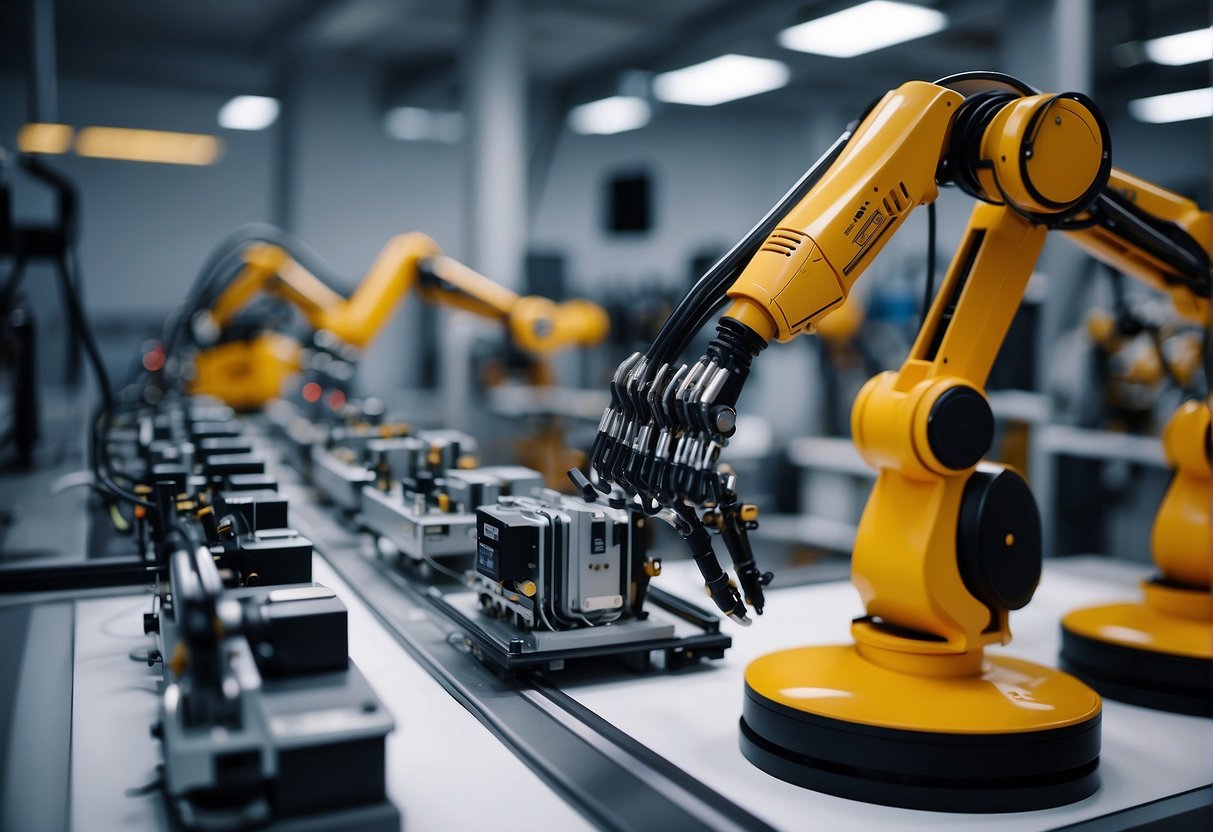
The integration of Artificial Intelligence (AI) and Extended Reality (XR) is transforming various industries by enabling more immersive, efficient, and personalized experiences. Here’s how they are being applied across different sectors.
Healthcare and Medical Training
The healthcare industry is leveraging AI with XR for enhanced medical training, giving professionals the ability to practice procedures in a risk-free, virtual environment.
By combining AI-driven simulations with haptic feedback, trainees can experience realistic patient scenarios.
For instance, surgeries can be practiced with virtual simulations using XR.
Education and Virtual Classrooms
In education, AI and XR are reinventing the way knowledge is delivered.
Virtual classrooms enable immersive learning where students can interact with 3D models and participate in simulations that would be impossible in a traditional setting, like historical recreations or exploring molecular structures.
Manufacturing and Product Design
Manufacturing stands to gain significantly from AI and XR integration.
These technologies facilitate sophisticated product design processes, enabling rapid prototyping and testing through digital twins while minimizing material waste.
XR allows designers to visualize and interact with product prototypes at scale before physical models are created.
Retail Experiences
Finally, the retail sector is using AI and XR to create personalized shopping experiences.
Customers can try on clothes virtually or see how furniture might look in their home before making a purchase, thus enhancing customer satisfaction and engagement.
AI and XR in Entertainment

In the realm of entertainment, the amalgamation of Artificial Intelligence (AI) and Extended Reality (XR) is transforming gaming, virtual worlds, and live events. These technologies offer more immersive experiences and redefine audience engagement.
Gaming and Virtual Worlds
AI has become a cornerstone in elevating gaming to new heights, providing more dynamic and personalized experiences within virtual environments.
For example, within virtual worlds like those fostered by Meta, AI-driven characters and environments respond in real-time to player actions, rendering a more lifelike and responsive gaming experience.
Also, AI is instrumental in crafting personalized content that adapts to individual player behaviors and preferences.
XR technology is equally transformative, bringing a visual and sensory richness to virtual worlds.
This combination allows for the creation of expansive gaming universes where players can interact with their environment in revolutionary ways.
Meta’s advancements indicate that future virtual worlds will likely become even more intricate and interactive.
Events and Performances
In events and performances, AI and XR are revolutionizing the way audiences experience live shows.
From concerts to NFL games, these technologies enable viewers to enjoy immersive experiences that were previously impossible.
AI could be used to analyze audience reactions and adjust the event’s audio or visual aspects in real-time, enhancing the overall experience.
XR has the potential to change live performances by adding augmented overlays or virtual elements that interact with performers, thus adding a layer of spectacle to any live event.
Additionally, fans might view sporting events like NFL games from entirely new perspectives, experiencing the action from the viewpoint of their favorite players or from angles that offer more engagement and excitement.
AI-Enhanced XR Collaboration

AI-enhanced XR collaboration is a game-changing approach that harnesses the power of Artificial Intelligence to drive immersive, real-time collaborative environments and business productivity tools, revolutionizing the way people work and interact.
Real-Time Collaborative Environments
In real-time collaborative environments, AI is the catalyst enabling participants to work together in virtual spaces, irrespective of their physical location.
The integration of AI within these virtual environments enhances the level of interactivity, allowing for sophisticated gesture and voice recognition.
These tools facilitate a seamless exchange of ideas, driving efficiency and engagement in collaborative projects.
Enhancements include:
- Voice translation: Bridging language barriers in international teams.
- Gesture recognition: Allowing natural interaction with digital objects and tools.
Business and Productivity Tools
The realm of business and productivity has substantially benefited from AI-driven XR solutions.
AI not only personalizes the user experience, but also greatly enhances the capability of productivity tools.
For instance, Microsoft incorporates AI into its suite of productivity tools to foster an environment where decision-making and cooperation become more intuitive and data-driven.
Key features include:
- AI assistants: These programmable entities can help organize meetings, generate content, and manage task flows within XR spaces.
- Data visualization: AI can transform complex datasets into comprehensible 3D visualizations, optimizing the decision-making process.
Technical Trends in AI and XR
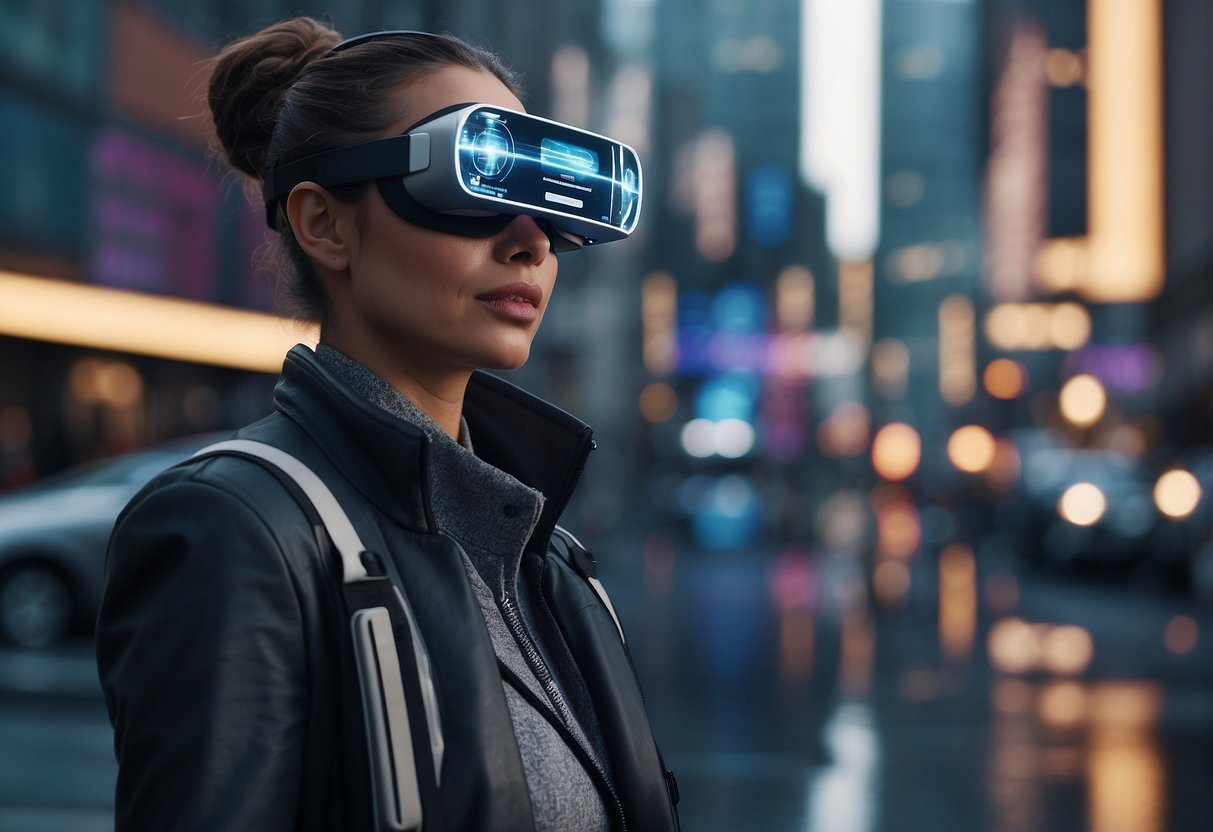
The technical trends in artificial intelligence (AI) and extended reality (XR) are shaped by hardware innovations, connectivity improvements like 5G, and advancements in generative AI. These advancements have a profound impact on content creation.
Advancements in Hardware
The landscape of AI and XR technologies is linked to the continual progression in hardware. Developers are working on lightweight, more powerful wearable devices to enhance user experience. These devices often incorporate advanced processors and graphics units specifically designed to handle complex computations and deliver immersive user experiences. They are also becoming more energy-efficient, which allows for longer usage without the need for frequent recharging.
5G and Enhanced Connectivity
Enhanced connectivity, primarily through 5G networks, is accelerating the XR experience. 5G’s high speed and low latency enable real-time data transfer, which is critical for XR applications where immediate response to user actions is essential. 5G is also a catalyst for cloud-based services which can process and stream XR content efficiently to devices, reducing the on-device computation load and potentially lowering hardware costs.
Generative AI and Content Creation
Generative AI is revolutionizing content creation within the realm of XR. It allows for the generation of realistic environments, characters, and objects, tailored to the user’s preferences and interactions. This technology not only helps in creating detailed and dynamic virtual worlds but also has the potential to personalize experiences, making each interaction unique. As generative AI models continue to improve, one can expect a surge in creative applications and diverse content in XR platforms.
The Metaverse and Digital Reality

The Metaverse symbolizes the next significant leap in the evolution of the internet, where immersive environments become an integral part of daily life. These digital worlds are crafted to offer a seamless blend of virtual and physical realities.
Concepts of the Metaverse
The Metaverse can be described as a collective virtual shared space, created by the convergence of virtually enhanced physical and digital reality. It is a space where users interact with a computer-generated environment and other users. This digital world is not just a playground for social and gaming activities but also a potential space for work, commerce, and education. Key components driving the Metaverse experience include Extended Reality (XR) technologies such as Virtual Reality (VR), Augmented Reality (AR), and Artificial Intelligence (AI).
Building Immersive Spaces
Creating immersive spaces in the Metaverse relies on sophisticated AI to craft interactive, responsive environments. This AI interprets user actions to deliver real-time reactions within virtual scenarios, enhancing the experience by making it feel more real. These realms can range from purely fantastical landscapes to realistic simulations of actual places. Crucially, they allow for the creation of complex ecosystems where digital assets have value, and virtual identities carry significance, fostering a new aspect of social interaction and digital existence.
Ethical Considerations and Trust
As the realms of Artificial Intelligence (AI) and Extended Reality (XR) rapidly evolve, ethical considerations and the cultivation of trust are paramount. Unpacking the intricacies of how data is handled and the ethical applications of AI is critical for fostering a trustworthy relationship between technology and its users.
Data Privacy in XR
In XR environments, the collection of personal data extends beyond typical metrics, encompassing physical movements and biometric data. The Ethical Considerations of Extended Reality (XR) highlight the imperative need for stringent data protection measures to instill trust and safeguard privacy. Users’ trust hinges on the transparency and security with which their data is treated.
- Transparency in Data Collection: Users should be clearly informed about what data is collected and for what purpose.
- Security Measures: Employing robust encryption and access control mechanisms to ensure data remains private.
Ethical Use of AI
The ethics surrounding AI use involve complex decisions about fairness, bias, and transparency. Papers like The future of ethics in AI: challenges and opportunities discuss these ethical challenges in depth. Trust in AI systems is built upon understanding their decision-making processes and ensuring they are free from discriminatory biases.
- Bias Mitigation: Strategies must be in place to identify and eliminate biases within AI algorithms.
- Decision Transparency: AI systems should offer explanations that are comprehensible to their users, detailing how and why decisions were made.
Future Outlook

The future of AI and XR is shaped by the certainty of continuous innovation and integration into mainstream applications. With a specific focus on market movements and industry repercussions, the outlook for these technologies is both transformative and far-reaching.
Predicting Market Trends
Market trends for Extended Reality (XR) suggest a robust expansion. One can reliably foresee the integration of Generative AI as a driving force for personalized XR experiences. Analysts at axisxr.gg highlight this trend, envisioning a notable push for these technologies to become more mainstream. Furthermore, the adoption of multi-sensory interfaces and 5G technologies will likely propel XR applications to new heights, marking a leap forward for user immersion.
Long-Term Industry Impact
The industry impact of AI and XR technologies can be distilled down to key areas of growth and change. Reports from KPMG underscore several long-term implications for businesses as these technologies mature, such as transformational shifts in how consumers and industries alike engage with digital content. The fusion of AR, VR, and AI will likely redefine sectors from entertainment to healthcare, indicating extensive economic implications and potential for market disruption.
Frequently Asked Questions
The intersection of Artificial Intelligence (AI) and Extended Reality (XR) is transforming digital interactions and experiences. These FAQs provide insights into the current state and future potential of their integration.
How is artificial intelligence integrating with extended reality technologies?
Artificial intelligence is increasingly being used to create more immersive and interactive XR experiences by enabling personalized content and enhancing user engagement. For instance, AI-driven analytics are used to understand user behavior within virtual environments, leading to more accurate and engaging simulations.
What advancements can we expect in machine learning capabilities within XR systems?
Machine learning algorithms within XR are expected to improve at recognizing complex patterns and behaviors, leading to advancements in real-time content generation and adaptation. Future trends indicate that as machine learning becomes more sophisticated, XR experiences will become more responsive to individual users.
What are some examples of virtual reality enhancing artificial intelligence experiences?
Virtual reality provides a controlled environment for AI systems to train and learn, improving their decision-making capabilities. For example, virtual simulations allow AI to explore various scenarios without real-world risks, honing its learning processes.
In what ways can AI contribute to the development of augmented reality?
AI can contribute to the development of AR by improving object recognition, spatial awareness, and interactive elements, creating more intuitive and useful augmented experiences. For instance, computer vision — a field of AI — enhances AR applications by allowing better interpretation and interaction with the real world.
How will human-AI interaction evolve with the advancement of XR?
Human-AI interaction within XR is expected to become more natural and seamless. Advances in natural language processing and predictive behavior modeling will facilitate deeper and more intuitive connections between users and AI agents in various XR platforms.
What are the anticipated impacts of AI on the future landscape of mixed reality?
AI will likely drive the evolution of mixed reality by enabling seamless integration of digital and physical worlds. It will also enhance personalized user experiences and enable smarter, context-aware mixed reality apps.
It is anticipated that AI’s expanding role will lead to more expressive and versatile mixed realities.