AI in Education: Enhancing Learning Experiences and Outcomes
As someone who’s interested in the intersection of technology and education, I’ve been fascinated by the growing potential of artificial intelligence (AI) in the educational domain. In recent years, AI has shown great promise in addressing some of the most pressing challenges faced by educators and students alike. It has become evident that the proper integration of AI in the classroom holds immense potential to innovate teaching practices, making learning experiences more personalized, engaging, and efficient.
Embracing AI in the educational landscape not only helps to reduce the burden on teachers by automating routine tasks, but also enhances the learning process by offering students a tailored learning experience according to their individual needs. Moreover, AI-powered adaptive learning systems can identify gaps in students’ understanding, enabling educators to provide targeted interventions for more effective learning. It’s clear that AI is poised to become a significant force in fostering a more inclusive, equitable, and efficient educational ecosystem.
Key Takeaways
- AI holds the potential to revolutionize education by personalizing and enhancing the learning experience.
- The integration of AI in classrooms can ease the burden on teachers and help to address individual student needs effectively.
- Responsibly implemented AI in education can contribute to a more inclusive, equitable, and efficient learning environment.
AI in the Classroom
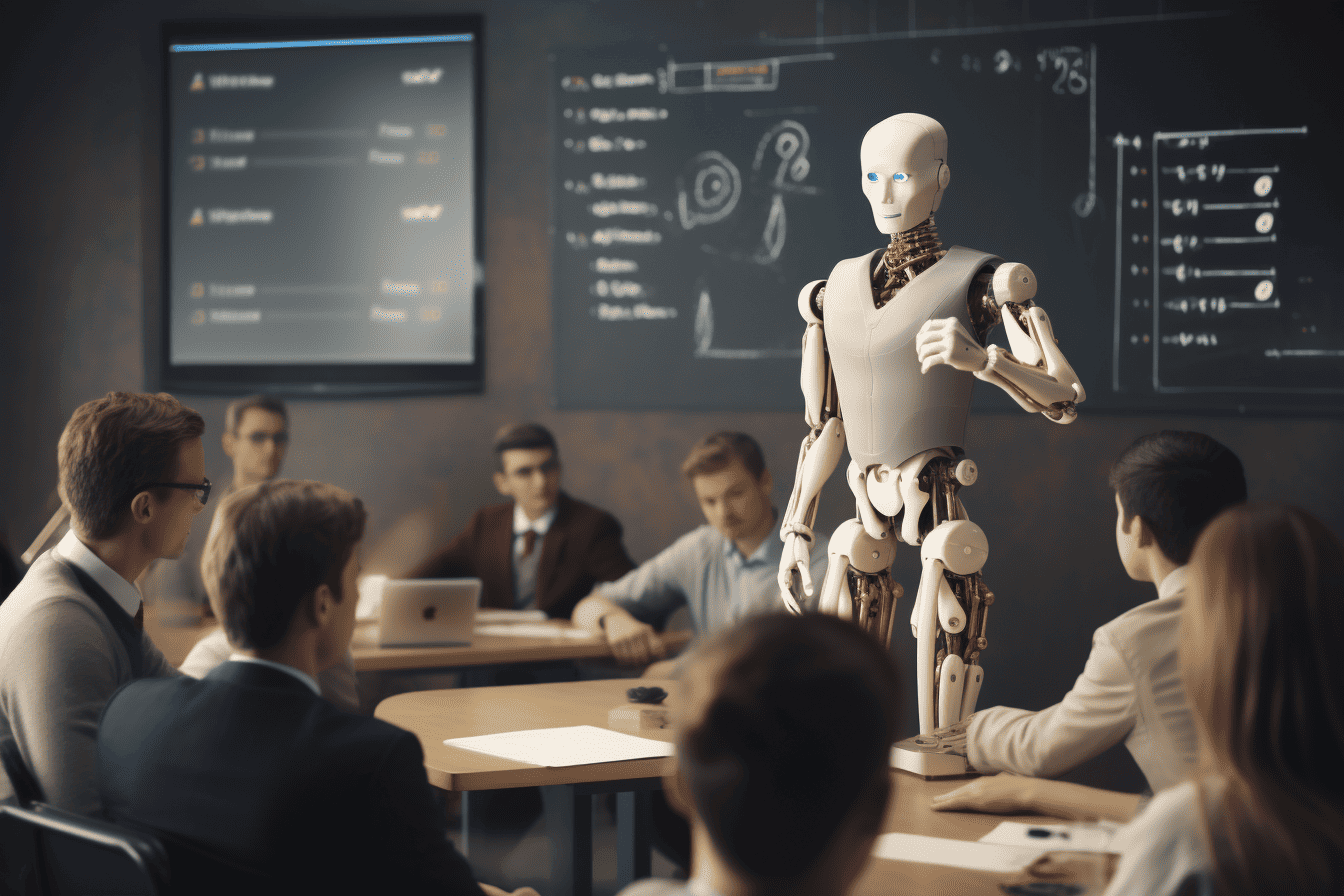
As an educator, I’ve observed that incorporating AI in the classroom has the potential to transform education, making it more equitable and personalized for students. The emergence of AI-powered tools allows teachers to effectively support diverse learning needs and engage students in innovative ways. In this section, I will explore the usage of AI tutors and the role of virtual learning in today’s classrooms.
Usage of AI Tutors
In my experience, AI tutors have proven to be quite helpful in addressing individual learning needs. These digital assistants can provide students with personalized feedback and suggest resources tailored to their interests and abilities1. AI tutors can also help teachers manage their time more effectively by handling routine tasks, such as grading assignments and monitoring student progress.
As a teacher myself, I have found that utilizing AI tutors allows me to focus more on designing impactful learning experiences and fostering meaningful connections with my students. In this way, AI tutors can play a crucial role in modernizing education and supporting the well-rounded development of all learners, regardless of their backgrounds or learning preferences.
Role of Virtual Learning
Another area where I see AI transforming education is in virtual learning environments. These platforms utilize AI to create immersive and engaging experiences for students, making it easier for them to visualize complex concepts and develop problem-solving skills2. Virtual learning environments can also help teachers identify gaps in student understanding more quickly and provide timely feedback, empowering students to take ownership of their learning journey.
In my own practice, leveraging virtual learning technologies has enabled me to create a more inclusive and adaptable educational setting, connecting students from different backgrounds and fostering collaboration among them. As a result, AI-powered virtual learning platforms have the potential to radically change the way we teach and learn, paving the way for a more inclusive and innovative education system.
Footnotes
Benefits of AI in Education
Improvement in Grading
One of the significant challenges I face as an educator is grading students’ work promptly and accurately. With AI, I can automate the assessment process, ensuring students get quick and precise feedback on their assignments. AI can efficiently handle multiple-choice and fill-in-the-blank questions, and even comprehend and evaluate more complex answers using natural language processing. These grading improvements can lead to better learning outcomes for students and save my valuable time that I can devote to enhancing my teaching skills.
Personalization in Learning
As a teacher, I often struggle with addressing the diverse needs of students in my classroom. With AI, I can provide personalized learning paths tailored to each student’s unique needs and strengths, improving their literacy and other essential skills. AI-based recommendation systems can analyze students’ performance and suggest targeted learning resources, ensuring that they receive the right support at the right time. This customized learning experience encourages students to take ownership of their education, resulting in improved learning outcomes and better preparedness for real-world challenges.
Role of AI in Literacy Skills
Promoting Reading Progress
I’ve observed the growing importance of AI in transforming the way students develop their literacy skills. In particular, AI has been playing a crucial role in promoting reading progress. AI-powered tools are now being employed to analyze students’ reading patterns and levels, helping educators to create customized learning plans. I believe this tailored approach not only encourages students to read more, but it also fosters a better understanding of the material.
For example, AI-powered platforms can recommend books based on students’ interests and reading levels, providing a personalized and engaging reading experience. Moreover, AI can also assist in identifying struggling readers and provide additional support through interactive exercises and games. This smart technology can help to close the gap between struggling and proficient readers, by giving them the necessary tools to become more confident readers at their own pace.
Enhancing Writing Skills
In addition to promoting reading progress, AI is also contributing significantly to enhancing writing skills among students. AI-powered writing tools can provide real-time feedback on grammar, syntax, and style, ensuring students become better writers over time. By providing instant feedback, students can revise and improve their work continuously, which can ultimately lead to the development of strong writing skills.
Furthermore, AI can analyze students’ writing patterns and suggest areas that need improvement, providing educators with valuable insights into their students’ abilities. I think this information can be instrumental in designing targeted writing exercises and interventions, tailored to each student’s needs.
Integrating AI in the development of literacy skills can lead to increased proficiency in reading and writing, better preparing students for success in their academic and professional lives. As AI becomes more prevalent in education, it’s essential for students to develop a strong AI literacy as well. By becoming well-versed in AI technologies, students will be able to actively engage in their education and navigate the increasingly AI-driven world they inhabit.
Promotion of AI in Education by Global Organizations
UNESCO’s Role
As a prominent global organization, UNESCO is actively advocating for the integration of AI in education. They emphasize the importance of deploying AI technologies to enhance human capacities, protect human rights, and foster effective human-machine collaboration in life, learning, and work for sustainable development 1. I’ve read a report which states that, in 2021, only five countries reported using AI tools in their education response to the COVID-19 crisis. This highlights the need for more widespread adaptation and investment in AI within the educational sector.
Stefania Giannini, UNESCO’s Assistant Director-General for Education, plays a crucial role in directing the organization’s efforts in promoting AI adoption in educational settings 2. Several publications and resources, like the AI and education: Guidance for policy-makers, are available to help stakeholders navigate the complexities of implementing AI-driven initiatives. The organization also facilitates international forums and other events to bring together experts and policymakers for discussions on AI-related educational topics 3.
World Economic Forum’s Perspective
The World Economic Forum (WEF) recognizes the potential of AI to transform and improve the education landscape globally. As part of its Global Agenda, the WEF considers AI to be a crucial driver for change in multiple industries, including education 4. The organization’s perspective aligns well with that of UNESCO, focusing on the ethical adoption and use of AI to enhance and personalize learning experiences for students.
Some of the WEF’s initiatives involve identifying and sharing best practices across the globe, involving key stakeholders, and exploring new technologies that can support significant change in education systems 5. This collective effort by global organizations like the WEF and UNESCO makes it clear that AI integration is seen as a vital component for future educational advancements.
Footnotes
-
https://www.unesco.org/en/digital-education/artificial-intelligence ↩
-
https://www.unesco.org/en/digital-education/ai-future-learning ↩
-
https://www.unesco.org/en/digital-education/artificial-intelligence ↩
-
https://educationblog.microsoft.com/en-us/2022/04/how-data-and-ai-are-changing-the-world-of-education ↩
-
https://educationblog.microsoft.com/en-us/2023/03/exploring-new-opportunities-with-ai-in-education ↩
Responsible AI in Education
As an AI expert, I believe that responsible AI in education is crucial for ensuring the technology’s benefits while minimizing risks and challenges. In this section, I will discuss two primary aspects of responsible AI in education: maintaining privacy and ensuring security.
Maintaining Privacy
One of my major concerns is the need to protect students’ and educators’ privacy as AI becomes more ubiquitous in the learning environment. The potential for AI to address education challenges is significant, but proper measures should be taken to ensure sensitive data is handled responsibly. I recommend adopting clear data privacy policies and standards that regulate how data is collected, processed, and stored.
- Complying with data protection regulations such as the GDPR
- Anonymizing data when possible to prevent identification of individuals
- Limiting data access to authorized personnel only
By following these measures, we can maintain privacy without compromising AI’s potential in the educational domain.
Ensuring Security
Another aspect I am deeply concerned about is the security of AI systems in educational settings. As AI becomes more integral in learning environments, responsible AI-empowered pedagogies demand that we ensure the safety and well-being of all users. To achieve this, I propose focusing on these key points:
- Secure development: Adopting best practices in secure software development, such as code reviews and vulnerability scanning, to minimize the chances of deliberate or unintentional harm to users.
- Monitoring and updating: Regularly monitoring AI systems for potential vulnerabilities and deploying timely patches to address them.
- Risk assessments: Carrying out periodic risk assessments to identify and mitigate potential safety concerns in AI-empowered educational tools.
As an AI enthusiast, I am excited about the future of education with artificial intelligence. By responsibly implementing and maintaining privacy and security of AI in education, we can create a safe and supportive learning environment that fosters growth and discovery for students and educators alike.
Challenges and Solutions of AI in Education
Overcoming Technical Challenges
Implementing AI in education presents technical challenges that I must address to ensure its effectiveness and integration in the learning environment. One such challenge is the need to train teachers in the proper use of AI systems. As mentioned in the UNESCO article, teachers must learn new digital skills to use AI in a pedagogical and meaningful way.
To overcome this challenge, I recommend investing in training programs and the development of easy-to-use tools that educators can access. Collaboration between AI developers and teachers is essential to creating solutions adaptable to real-life environments.
Another challenge is navigating the ethical considerations that come with AI in education. These concerns can be addressed by using ethical frameworks to guide the development and implementation of AI technologies. For example, as highlighted in the UNESCO website, AI deployments should focus on enhancing human capacities and protecting human rights for effective human-machine collaboration.
Cultivating Innovation
Emerging technologies such as AI offer tremendous potential to improve the effectiveness of teaching and learning. By fostering a culture of innovation within educational institutions, I can ensure that AI systems become a catalyst for positive change.
One approach to cultivating innovation is to collaborate with edtech providers and organizations that understand the potential of AI in education. These partnerships can help in developing new learning tools, building AI literacy, and improving student services.
Another aspect of cultivating innovation in AI-powered education is to stay informed about the latest trends and advancements in machine learning and data analysis, while keeping an open mind to new possibilities at the cutting edge. This way, I can recognize potential opportunities and find creative ways to leverage these emerging technologies for the benefit of learners in my work.
The Future of AI in Education
AI and the Evolution of Teaching
In recent years, I’ve witnessed how the integration of artificial intelligence (AI) in education has transformed the way teachers approach their profession. The adoption of AI-powered tools and applications can help reduce the workload on educators by automating administrative tasks, such as grading and attendance monitoring. This allows them to focus more on developing personalized learning approaches for their students.
Moreover, I believe that AI has the potential to provide a more engaging learning experience for students by offering tailored educational content and interactive lessons. This fosters a better understanding of complex subjects, as well as a deeper connection with the learning material. Additionally, AI can facilitate remote and distance learning, which has become increasingly essential in today’s fast-paced and connected world.
The Impact of Machine Learning
Machine learning, a subset of AI, plays a crucial role in shaping the future of education. Through the analysis of student data, machine learning algorithms can identify patterns and trends in individual learning styles, enabling the development of personalized learning plans that cater to the unique needs of each student.
As I observe the integration of machine learning in education, I can also see its potential in predicting and identifying students at risk of underperformance or dropout. This enables educators and institutions to take proactive measures to support these learners and help them achieve their full potential.
In the long run, I believe that the combination of AI and machine learning technologies will lead to a more inclusive and adaptive education system, where students can thrive and shape a better future for themselves and society as a whole. The transition towards this future requires ongoing collaboration amongst educators, policymakers, technologists, and other stakeholders to harness the potential of these powerful tools, while also addressing the ethical and privacy concerns that accompany their use.
As a staunch advocate for both technological advancements and education, it is my hope that the promises of AI and machine learning in the future of education will be realized for the benefit of all learners.