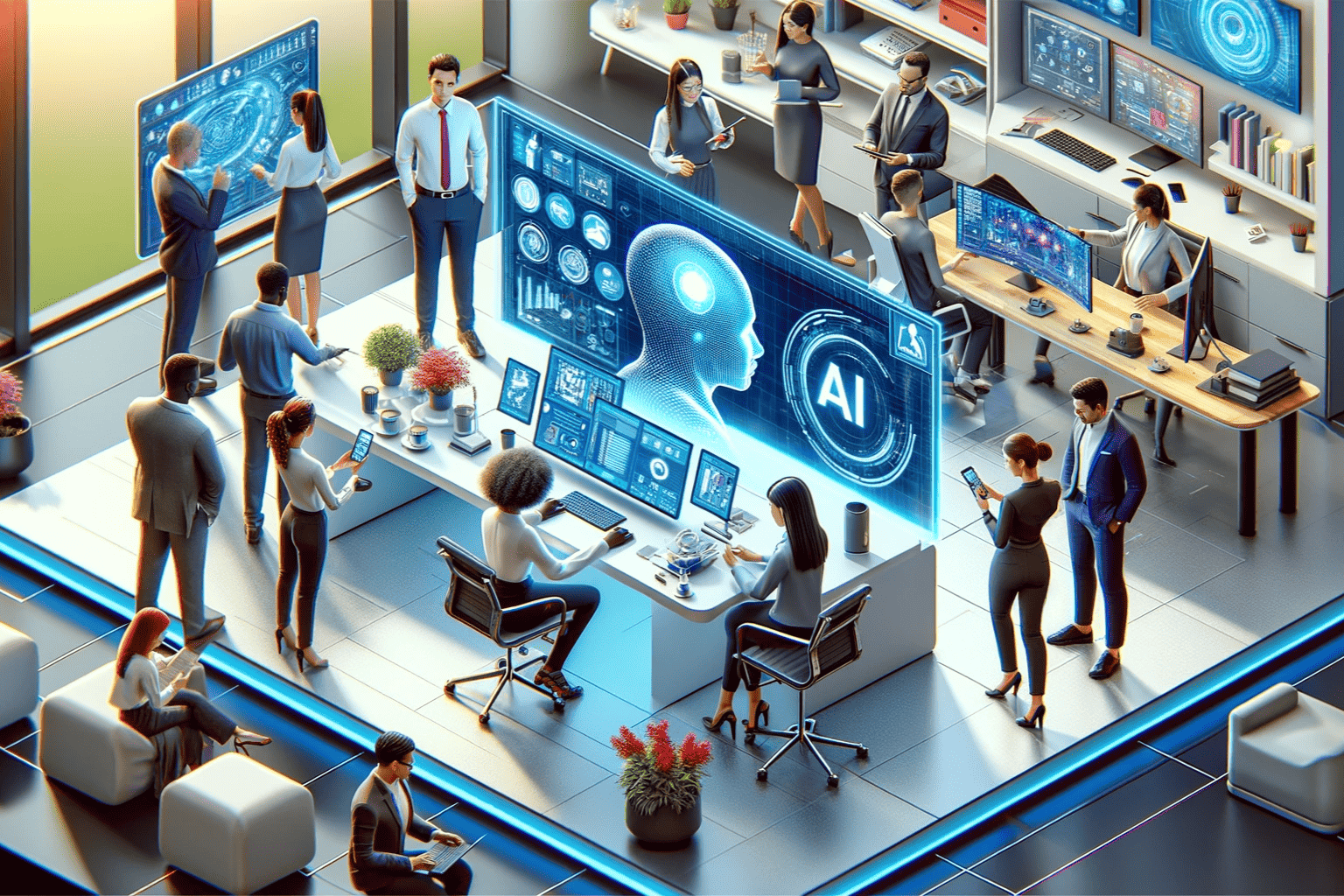
AI in Business: Unlocking New Opportunities for Growth
As we dive into the world of artificial intelligence (AI), it’s clear that its applications have become increasingly pervasive across various industries. AI has transformed the way businesses operate, from streamlining processes to enhancing decision-making abilities. This has led to companies leveraging AI to gain a competitive edge, navigate complex data landscapes, and ultimately, better serve their customers’ needs.
One of the most significant benefits of AI in business is the automation of manual tasks, which frees up time for employees to focus on critical responsibilities. At the same time, AI can improve customer experience through personalization, better product recommendations, and efficient support. As a result, AI-powered tools are now being used in various departments such as human resources, sales, and marketing, as well as in specialized sectors like healthcare, finance, and energy.
Key Takeaways
- AI has become an integral part of modern businesses, automating processes and enhancing decision-making
- Various industries are leveraging AI for tasks like customer support, data analysis, and fraud detection
- Companies use AI-driven innovations to maintain a competitive edge, support ethical practices, and adapt to future trends
Understanding AI in Business
I’ve observed that artificial intelligence (AI) has become an increasingly important factor in the business world. AI refers to the ability of machines to learn and make decisions based on data and analytics. This technology is transforming businesses by improving efficiency, saving time, and decreasing costs. AI can also automate cognitive processes, which enables businesses to achieve better results with fewer manual processes.
One of the ways AI has significantly impacted businesses is through the use of machine learning. It is one of the most common types of AI for business purposes. Machine learning enables businesses to analyze large datasets, identify patterns, and make informed decisions based on those insights. An example of this can be found in customer segmentation, where AI can detect patterns in customer behaviors, allowing businesses to develop highly targeted marketing strategies for different customer groups.
Another way AI is transforming businesses is through generative AI, like ChatGPT, which has gained considerable attention in recent years. AI adoption is progressing rapidly, with more and more businesses incorporating AI technologies into their operations. Generative AI can be used to create realistic virtual assistants, automate tasks like content generation, and assist in research and development efforts.
As a business owner or manager, it’s essential to understand the potential of AI and incorporate it into the business strategies. AI technologies are scaling up in various industries and becoming a necessity for staying competitive in today’s dynamic world. By investing in AI, businesses can unlock new opportunities and drive growth through improved decision-making, increased automation, and enhanced customer experiences.
AI and IT
In the realm of information technology (IT), AI has become an essential component for the advancement and growth of businesses across various industries. As I explore the integration of AI in the IT sector, I shall discuss the involvement of notable companies, analytics, cybersecurity, and machine learning (ML).
Major tech companies like Microsoft, Google, and IBM have been making significant strides in AI development. Microsoft’s Azure Machine Learning provides a comprehensive suite of tools for building and deploying ML models, making it easier for businesses to integrate AI capabilities into their operations. Google does something similar with Google Cloud AI services, offering pretrained models as well as custom solutions for various business needs. IBM’s Watson takes a different approach, focusing on applied AI and data analytics for specific industries like healthcare and finance.
Analytics plays a significant role in the successful application of AI in IT. The use of advanced analytics allows IT departments to process large quantities of data rapidly. This leads to improved decision making, the identification of trends, and the prediction of future events, providing valuable insights to decision-makers.
The rapid development of AI technologies has led to significant advancements in cybersecurity as well. I recognize that using AI for cybersecurity purposes, such as detecting potential threats and vulnerabilities, helps businesses protect their digital assets from various types of cyber attacks. This adds a crucial layer of defense and resilience to businesses in a rapidly evolving digital landscape.
Lastly, machine learning, a subset of AI, has become an integral part of the IT landscape. ML allows computers to automatically learn from data and make informed decisions without explicit programming based on data and analytics. This technology has the potential to make a tremendous difference in the way businesses operate and maintain their competitive edge.
In conclusion, AI’s integration with IT offers an array of benefits to businesses worldwide. With the involvement of major tech companies, the application of analytics, advancements in cybersecurity, and the implementation of machine learning, AI continues to transform IT and lead to more efficient, secure, and data-driven decision making.
The Role of AI in HR
The implementation of Artificial Intelligence (AI) has brought a significant transformation in various aspects of the Human Resources domain. AI is increasingly being deployed in HR, with 52% of HR leaders participating in a June 2023 survey showing a rapid pace of implementation.
One major area where AI has made a considerable impact is recruiting. It enables HR professionals like me to streamline the recruitment process, conduct more precise candidate screening, and identify better matches between candidates and job roles. This not only saves time but also improves the overall quality of hired employees.
In performance reviews, AI-powered tools offer unbiased evaluations in real-time, while ensuring the continuous monitoring of employees’ performances without any significant human intervention. This has helped me in focusing more on strategic initiatives and employee development rather than continually tracking their performance.
Another critical aspect where AI is assisting HR is employee onboarding and offboarding. It efficiently handles repetitive tasks in these processes and provides necessary information to the right stakeholders. This allows me to focus on maintaining a great employee experience during these critical stages.
AI also plays a role in employee engagement and talent development. AI-driven learning management systems and virtual assistants contribute significantly to employee training and development. These tools help me monitor individual progress, recommend customized learning paths, and maintain overall workforce preparedness.
Additionally, workforce planning has become easier and more data-driven, thanks to AI. Predictive analytics and detailed insights into employee profiles enable me to forecast talent needs and create strategic plans for succession and workforce development.
Lastly, AI-powered HR chatbots and virtual assistants are enhancing the employee experience by responding to queries and automating various tasks at any time of the day. This level of efficiency has helped me address employee needs quickly and improve overall satisfaction.
AI has truly shown its potential in transforming the way various HR processes are handled and improving the overall efficiency of the domain. The integration of AI has allowed me to focus on strategic initiatives, develop employees, and create a more efficient and effective organization.
AI in Sales and Marketing
AI is transforming the landscape of sales and marketing, and I have observed some key areas where these innovations can drive success. From personalization to customer service, businesses can harness the power of AI to gain a competitive advantage in the marketplace.
One of the most prominent aspects of AI in sales and marketing is the ability to personalize content for individual users. By leveraging data from customer interactions and understanding their preferences, AI-powered systems can deliver tailored messaging and product recommendations. This creates a more engaging experience for customers, ultimately leading to increased sales and loyalty.
Moreover, AI enhances the customer service sphere by automating repetitive tasks and providing faster, more efficient responses to customer inquiries. The implementation of chatbots and virtual assistants has significantly improved the customer experience. These tools are capable of addressing a wide range of issues and can quickly direct customers to the appropriate resources, resulting in increased customer satisfaction and retention.
In addition to personalization and customer service, AI can also provide valuable insights and predictive analysis to help sales and marketing professionals make more informed decisions. By processing and analyzing large volumes of data, AI can identify trends, patterns, and potential opportunities that may have gone unnoticed by human perception alone. This enables businesses to more effectively target their marketing efforts and generate better sales outcomes.
Furthermore, AI’s capabilities can extend to optimizing marketing campaigns through tactics such as A/B testing and dynamic content generation. By constantly refining and improving campaign elements based on engagement and conversion data, AI can help businesses maximize their marketing efforts’ effectiveness and achieve better return on investment.
Finally, the use of AI in sales and marketing not only enhances efficiency but also gives businesses a competitive edge over those who do not leverage this technology. Companies that harness the power of AI will be better equipped to engage and retain customers, deliver personalized experiences, and streamline their sales and marketing processes, ultimately driving business growth.
In conclusion, AI is revolutionizing the sales and marketing landscape by offering personalized experiences, improving customer service, and making data-driven decisions. By embracing these innovations, businesses can gain a competitive advantage and position themselves for success in today’s digital landscape.
AI in Manufacturing and Supply Chain
In my experience, artificial intelligence (AI) has transformed the world of manufacturing and supply chain management. This technology brings unprecedented efficiencies to these sectors by optimizing operations, streamlining supply chains, and improving the way employees work. For instance, AI has been used in Microsoft AI solutions to create a more resilient and sustainable manufacturing industry.
Manufacturing has greatly benefitted from AI through automation and robotics. These technological advancements have enabled machines to work autonomously and perform complex tasks with high precision. Robotic process automation, in particular, has reduced the need for manual labor, cutting down on production time and costs while simultaneously increasing productivity.
In the realm of supply chain management, AI has dramatically improved planning and response capabilities. The Supply Chain Intelligence Suite employs business rules, advanced analytics, AI, and automation to help companies tackle complex challenges and make data-driven decisions. This approach allows them to optimize sourcing, warehousing, transportation, and distribution.
AI also plays an essential role in addressing the post-pandemic supply chain risks. By incorporating AI into supply chain management, businesses can develop more resilient, ethical, and sustainable practices as mentioned by Bioprocess International. This helps them adapt to changing market demands, mitigate potential disruptions, and maintain a competitive edge.
Moreover, intelligent transportation logistics, powered by generative AI algorithms, help optimize transportation and delivery options. Real-time traffic patterns, weather conditions, and other variables can be taken into account, as highlighted by Thomson Reuters. Managers can make more informed decisions, leading to optimized shipping routes, reduced operational costs, and better customer satisfaction.
To sum up my thoughts, AI has made significant contributions to manufacturing and supply chain management by enabling automation, robotics, and intelligent decision-making. By embracing these innovations, businesses can enhance productivity, efficiency, and sustainability for a more successful future.
AI in Data Analysis and Decision Making
As an expert in data analytics, I found that incorporating Artificial Intelligence (AI) in the field of data science has significantly transformed the way businesses analyze data and make decisions. AI includes a range of advanced algorithms that can analyze massive volumes of data and deliver accurate results in real-time. By leveraging AI, businesses can streamline their decision-making processes and gain a competitive edge in the market.
One of the most promising applications of AI in data analysis is predictive analytics. I have observed that predictive analytics allows businesses to forecast future trends, risks, and customer behaviors using historical data. This ability to anticipate future events can help companies devise effective strategies, allocate resources efficiently, and mitigate risks.
Another aspect that AI brings to data analysis is the capability to handle unstructured data. Unstructured data refers to information that isn’t organized in a predefined format, such as social media feeds, emails, or customer reviews. In my experience, handling unstructured data was often a challenge due to its complexity and volume, but AI has proven to be a game-changer in this context. By applying advanced algorithms like natural language processing, AI can easily analyze unstructured data and uncover valuable insights in real time.
AI also supports decision making in businesses. For example, AI-driven decision making enables companies to harness the power of data to make informed, strategic decisions quickly. AI systems can analyze numerous factors and provide recommendations, allowing businesses to make confident decisions based on data-driven insights.
In conclusion, integrating AI in data analysis and decision-making processes has proven to be a powerful tool for businesses. It allows organizations to process vast amounts of data, uncover deep insights, and make informed decisions that align with their strategic goals. As the technology behind AI continues to develop, I’m confident that data science and decision making will advance even further.
AI in Healthcare
In recent years, AI has made significant advancements in several industries, and one that stands out is healthcare. I’ve seen how AI in healthcare has transitioned from being a promising concept to having real-world applications, enhancing patient care and making operations more efficient across the board.
One of the key benefits of AI in healthcare has been the ability to analyze vast amounts of data and find patterns that humans might have overlooked. By doing so, AI can help healthcare professionals make more informed decisions, leading to better outcomes for patients. For example, AI in healthcare was valued at $10.54 billion in 2021 and is projected to grow to $64.10 billion by 2029, thanks to its potential to reshape the industry.
AI-enabled systems are already assisting doctors in diagnosing diseases more efficiently. For instance, AI-based tools have shown great potential in radiology, allowing healthcare professionals to get faster, more accurate diagnoses. This not only helps prevent unnecessary tests and delays but also saves lives with early detection.
Personalized medicine takes a significant leap forward with the help of AI. By analyzing a patient’s genetic information, AI can help predict which treatments and medications will most likely lead to a successful outcome. This level of personalization can help avoid complications and improve overall patient care.
Another noteworthy application of AI in healthcare is reducing hospital readmissions by accurately predicting a patient’s risk of complications after being discharged. Utilizing such algorithms allows doctors to customize in-home care plans to minimize the chances of costly readmissions through early interventions.
In the pharmaceutical industry, AI streamlines the drug discovery process, saving companies time and resources by quickly identifying potential drug candidates. It can also help predict which drugs are more likely to be effective against certain diseases or conditions, cutting down on the expensive trial and error that typically accompanies drug development.
One notable challenge facing the incorporation of AI into healthcare remains data privacy and security. Implementing strong privacy measures is crucial when handling sensitive patient data. In addition, the ethical implications of AI use in healthcare should be carefully considered, ensuring that the technology serves the best interests of the patients and does not create any unintended consequences.
In summary, AI has already made a noticeable impact on healthcare and is well-positioned to significantly improve patient outcomes, operational efficiency, and the overall healthcare experience. The continual advancement of AI technology and its growing role in healthcare will undoubtedly and positively transform the industry for years to come.
The Impact of AI on Automation
As an emerging technology, artificial intelligence (AI) has transformed various aspects of our daily lives and the business world. One significant area where AI has made an impact is the field of automation. When it comes to automation, robots, and process automation, AI is playing a crucial role in changing the landscape of how businesses operate.
I have observed that the integration of AI in automation has resulted in more efficient and streamlined processes. For example, AI has enabled the development of intelligent systems capable of learning from experience and making decisions based on data analysis. These AI-powered systems can perform tasks with minimal human intervention, making processes more efficient and freeing up valuable time for employees to focus on higher-value tasks.
The utilization of AI technologies such as machine learning, natural language processing, and computer vision has enabled robotic systems to be more versatile and adaptable. This means that robots can now work alongside humans, performing tasks that were once reserved for manual labor. This collaboration, known as collaborative robotics or “cobots,” allows robots to perform complex tasks that require a higher level of intelligence and dexterity, improving overall productivity.
Process automation is another area where AI has had a profound impact. By leveraging AI-powered tools to automate routine operations, businesses can optimize their workflows, reduce errors, and minimize labor costs. AI allows businesses to analyze vast amounts of data quickly, thus enabling more informed decision-making and enhancing the overall operational efficiency.
AI has undoubtedly made automation more powerful, quicker, and more intelligent. It is likely that these advancements will continue to reshape the business landscape, as we continue to harness AI to automate processes at both the small and large scale. Ultimately, my goal is to provide accurate and relevant information about the ongoing relationship between AI and automation in the business sector, as I remain confident, knowledgeable, and objective in my analysis.
AI, Innovation and Future Trends
In the realm of business, AI is transforming the way we approach innovation and problem-solving. From deep learning systems to natural language processing, technologies are evolving rapidly to meet the demands of an ever-changing market. When I analyze the current state of AI in business, it’s clear that the integration of these technologies is no longer a novelty, but a powerful force driving progress.
Deep learning, in particular, has seen significant advancements in recent years. As a subset of machine learning, deep learning utilizes neural networks to enable computers to learn from large, complex data sets. This powerful technology is becoming increasingly relevant in business, as it allows organizations to quickly process and analyze vast quantities of data, empowering them to make more informed decisions.
Neural networks form the backbone of many modern AI applications, creating versatile systems that can efficiently handle an array of tasks. By emulating the human brain’s structure through interconnected layers of artificial neurons, neural networks can learn patterns and associations from data input. The potential applications of this technology are limitless, and I foresee its influence growing as businesses continue to harness its power.
Natural language processing (NLP) is another rapidly developing area of AI that’s heavily impacting the business world. NLP allows computers to understand, interpret, and generate human language, opening the door for increased automation and efficiency in customer service, marketing, and more. As the capabilities of NLP systems improve, I believe businesses will be able to capitalize on these advancements, further streamlining their operations and improving customer experiences.
In summary, AI technologies like deep learning, neural networks, and natural language processing are driving innovation and shaping the future trends in businesses globally. By integrating these advanced tools, companies can unlock new insights, become more agile, and stay ahead in today’s competitive landscape. As I look at the rapid progress in these areas, I’m confident that AI will continue to evolve and play a central role in defining the future of business.
AI in Customer Support and E-commerce
In recent years, the use of AI in customer support and e-commerce has become increasingly prevalent. Businesses are leveraging cutting-edge technologies like virtual assistants, chatbots, and voice-based assistants such as Siri, Alexa, and Cortana to streamline their services.
One key application of AI in customer support is implementing chatbots and virtual assistants for efficient customer interactions. I’ve found that these tools can alleviate the burden on human agents, handling repetitive tasks, and providing real-time answers for customers’ inquiries. This allows customer support agents to focus on more complex tasks and improve overall efficiency within the organization. For example, digital assistants such as Siri and Alexa are playing an increasingly important role in people’s lives, and likewise, e-commerce chatbots offer similar convenience to customers.
Aside from customer support, AI is revolutionizing various aspects of e-commerce. A notable application is AI copywriting, which involves using AI writing tools to generate marketing copy. By automating this process, businesses can create more personalized and targeted content for their customers, as mentioned in this Forbes article.
Another aspect where AI excels is in creating tailored recommendations for customers. By analyzing shopper behavior, preferences, and purchase history, AI algorithms can suggest relevant items, increasing the likelihood of sales. This targeted approach not only benefits businesses but also enhances the overall customer experience.
Despite numerous benefits, implementing AI in customer support and e-commerce can pose some challenges. For instance, businesses need to ensure that they properly manage customer expectations while using AI-enabled services. As mentioned in this McKinsey article, complexity is one of the main challenges, and organizations must continuously adapt their customer support strategies to keep up with digital channel preferences.
To summarize, AI has undoubtedly made significant contributions to the customer support and e-commerce sectors by enabling better customer interactions, automating repetitive tasks, and helping businesses customize marketing material and product recommendations. By continuing to harness the power of AI, companies can stay ahead in this rapidly evolving landscape.
AI and Ethical Considerations
AI systems have the potential to impact many aspects of our lives, and as such, it is essential that we ensure these systems are developed and deployed responsibly.
One critical aspect of AI ethics is to make certain that AI solutions are designed to work in the best interests of people and society. This is closely related to the concept of responsible AI, which emphasizes the need for organizations to be transparent about how AI systems make decisions, and to ensure their solutions are fair, inclusive, and unbiased.
Responsible AI also entails continuously evaluating and adjusting AI models to minimize harm. As AI technologies become more prevalent in business operations, organizations must establish frameworks for governance that balance innovation with ethical considerations. A thoughtful governance structure is essential in order to hold AI developers and organizations accountable for the outcomes of their AI systems.
Adhering to ethical principles is not only beneficial from a moral perspective but also contributes to the long-term success of an organization. Many AI ethics guidelines stress the importance of addressing privacy concerns, implementing principles of transparency and openness, and involving diverse stakeholders in the decision-making process.
In conclusion, embracing ethical considerations in the field of AI has become more crucial than ever. As I delve deeper into this subject, I am constantly reminded of the significance of responsible AI, AI ethics, and governance in building a better future.
AI in Finance and Fraud Detection
In recent years, artificial intelligence (AI) has played a significant role in the finance industry, improving various functions and making processes more efficient. One of the most crucial areas where AI is making an impact is fraud detection. As financial transactions shift towards a more digital landscape, the risk of fraud and cybercrimes has increased. This is where AI comes in, providing a robust solution to detect and prevent fraudulent activities.
AI-powered fraud detection systems utilize advanced machine learning models such as neural networks and deep learning. By analyzing patterns and relationships in vast datasets, these models can identify and flag abnormal transactions, thereby enhancing the overall security of financial institutions. For instance, AI algorithms can analyze entity relationships, suspicious patterns, and intricate connections through entity link analysis, streamlining the entire process of fraud investigation.
Additionally, the application of AI in finance extends to other areas in the industry. For example, AI-powered systems are widely used in portfolio management, where they assist in decision-making and risk assessment. By analyzing historical data and market trends, AI can accurately predict future financial outcomes, helping portfolio managers make more informed decisions with a higher potential for profit.
Moreover, AI solutions are continuously being developed for other financial functions, such as customer service and payment processing. One significant example is conversational AI. Financial institutions are increasingly leveraging conversational AI to enhance customer interactions, such as chatbots that can handle common queries or assist new users in navigating online banking platforms.
To sum up, AI has become a valuable addition to the financial industry’s toolbox by improving various functions, including fraud detection and portfolio management. Its potential will continue to grow, presenting even more opportunities for the finance sector to innovate and thrive.
Role of AI in Energy Sector
As a part of the modern business landscape, AI is playing a crucial role in the energy sector. This technology can act as an intelligent layer across various applications and has the ability to identify patterns and insights in data. AI continues to refine system performance over time by learning from lessons and predicting possible outcomes in complex, multivariate situations, as mentioned in the World Economic Forum.
One of the significant challenges in the global energy sector is reducing carbon emissions. AI could be a potential solution while addressing this challenge. By improving energy efficiency, optimizing power generation, and supporting the transition to renewable energy sources, AI can help mitigate the negative impact of carbon emissions in the energy sector. A good example of this comes from the use of AI in smart grids, where it supports real-time management and efficient energy distribution preventing energy loss and reducing greenhouse gas emissions.
Additionally, AI is transforming the way energy organizations manage cybersecurity and digitalization. Employing AI in the energy sector creates new opportunities for enhancing production and uncovering innovative solutions in both renewable and non-renewable energy production. AI-powered systems can also predict equipment failures and optimize maintenance schedules, leading to increased operational efficiency as observed by MIT Technology Review.
AI’s role in the energy sector has expanded to encompass smart homes and smart energy management systems. By analyzing a household’s energy consumption patterns, AI enables tailor-made energy-saving strategies for each user. Monitoring the energy consumption in real-time, AI helps households make informed decisions on conserving energy and reducing costs.
AI’s potential to benefit the energy sector is vast. From optimizing renewable energy production to enhancing energy efficiency and security, AI is destined to bring positive change and drive innovation. As we continue to explore the boundaries of AI’s capabilities in shaping the future, it becomes clear that AI is playing an increasingly critical role in the energy sector and overall sustainability.
AI in Events and Planning
The integration of artificial intelligence (AI) in events and planning offers a wealth of benefits, improving not only the efficiency of event management but also enriching attendees’ experiences. AI is making a significant impact on enhancing customer experiences across touchpoints, with 73% of businesses using or planning to use AI-powered chatbots for instant interactions, according to a Forbes Advisor survey.
AI has proven valuable in various aspects of event planning. For example, I have seen AI-powered recommendation engines help in personalizing agendas for attendees, ensuring they get the most out of the event based on their interests and preferences. Furthermore, I’ve noticed that AI can be instrumental in streamlining event registration, check-in processes, and reducing human errors.
One remarkable application of AI in event planning I’ve encountered is virtual and augmented reality. These technologies can provide immersive experiences, enabling remote attendees to feel more connected to the event. Additionally, I have found that AI-driven networking tools help attendees connect with their peers, fostering valuable professional relationships.
As for planning and coordination, AI’s role cannot be understated. I have seen the use of AI in data analysis, which allows event organizers to make informed decisions about marketing strategies, budgeting, and even venue selection. Moreover, AI-powered project management tools help me streamline tasks and ensure everything is on track, saving time and resources.
AI is already playing a significant role in events and planning in the year 2023. As we continue to see advancements in the technology and its applications, I believe we will experience even more improvements in the efficiency and effectiveness of event management. This is an exciting time for the industry, as AI offers both organizers and attendees innovative solutions to elevate events to new heights.
Leveraging AI for Competitive Advantage
As a business owner, I always look for ways to create a competitive advantage using innovative technologies. One of the most promising approaches I’ve observed is leveraging artificial intelligence (AI) to drive business growth. AI can provide a competitive edge in various ways, such as automating tasks, enhancing customer experiences, and optimizing supply chains.
One significant area where AI gives me an advantage is by automating mundane and repetitive tasks. Utilizing AI-driven tools, I’ve managed to save time and resources, allowing me to focus on more strategic aspects of my business. Additionally, automation has significantly reduced the risk of human errors, leading to a more efficient and precise execution of tasks.
In today’s digital age, I understand that customer experiences play a vital role in creating a competitive advantage. AI allows me to better understand my clients’ needs and preferences by analyzing large volumes of data. By leveraging AI-powered chatbots and personalized marketing campaigns, I’ve managed to enhance customer engagement and satisfaction, ultimately resulting in increased loyalty and customer lifetime value.
Supply chain optimization is another crucial aspect of business. Incorporating AI technologies such as predictive analytics, I’ve been able to better manage inventory, optimize transportation routes, and forecast demand. This has not only help reducing costs but also made supply chain more resilient and agile in the face of an ever-changing business landscape.
Moreover, AI enables to identify new business opportunities and stay ahead of my competitors. By analyzing both internal and external data, I can uncover trends and insights that inform my decision-making process. This data-driven approach has allowed me to make more informed choices and quickly adapt to market changes, solidifying my position within the industry.
From automating tasks to enhancing customer experiences and optimizing supply chains, AI has become an invaluable tool as a competitive advantage.
AI and Internet of Things
When working with the Internet of Things (IoT), I often find that the combination of IoT and Artificial Intelligence (AI) brings about next-level solutions and experiences to various industries. IoT refers to the network of interconnected devices that exchange and collect data from their surroundings. These devices can range from simple sensors to complex machinery.
As I delve deeper into the AI and IoT ecosystem, I notice that AI has become the driving force behind IoT’s potential applications. AI’s data processing and analytic capabilities are capable of transforming raw IoT data into actionable insights. These insights are beneficial in optimizing operations, improving efficiency, and identifying new business opportunities for companies.
In my experience working with AI and IoT, one critical aspect of their synergy is the improvement of decision-making processes. With the aid of AI algorithms, it becomes possible to analyze vast amounts of data generated by IoT devices and identify patterns that human analysts may not be able to detect independently. As a result, businesses gain access to valuable insights that, in turn, aid them in making informed decisions.
Another area where the combination of AI and IoT stands out is in predictive maintenance. By analyzing the data collected from IoT sensors in real-time, I can leverage AI to identify anomalies and predict machinery malfunctions before they occur. This helps businesses minimize downtime, reduce maintenance costs, and enhance overall operational efficiency.
In conclusion, I am excited about the potential of AI and IoT to revolutionize the way businesses operate and create value. By combining the strengths of these two technologies, companies can gain access to insights that provide them with a competitive edge in various sectors. The synergy between AI and IoT helps in transforming businesses, and I am eager to witness the ongoing advancements in this fast-paced domain.
Conclusion
As we’ve discussed, artificial intelligence (AI) is playing an increasingly significant role in the business landscape. I’ve seen businesses employing AI to improve efficiencies, save time, and decrease costs across various industries. By analyzing data and making informed decisions, AI is truly revolutionizing the way businesses operate.
One of the most significant outcomes of AI implementation is the enhancement of customer experiences. From personalized marketing strategies to chatbots assisting in customer service inquiries, AI is enabling companies to better understand and cater to their clients. This results in improved customer satisfaction and increased brand loyalty.
Moreover, AI is being used to streamline both internal processes and external interactions with suppliers, partners, and customers. Through process automation, businesses can significantly reduce the time required for tedious tasks, allowing employees to focus on more meaningful and creative activities. This not only increases productivity but also fosters innovation within organizations.
As industries continue to evolve and adopt AI, I believe that it is imperative for businesses to explore the numerous benefits this technology has to offer. By staying ahead of the curve and integrating AI into operations, companies can maintain a competitive edge and remain relevant in today’s fast-paced and dynamic market.