Types of AI Companions: Exploring the Different Roles and Capabilities
As the intersection of technology and human experience continues to grow, AI companions have emerged as a noteworthy development.
These digital entities employ artificial intelligence to interact with users in a manner that mimics human engagement, serving various roles from personal assistants to virtual friends.
From simple text-based chatbots to sophisticated systems capable of recognizing images and engaging in voice calls, AI companions come in numerous forms, each designed to meet specific user needs and preferences.
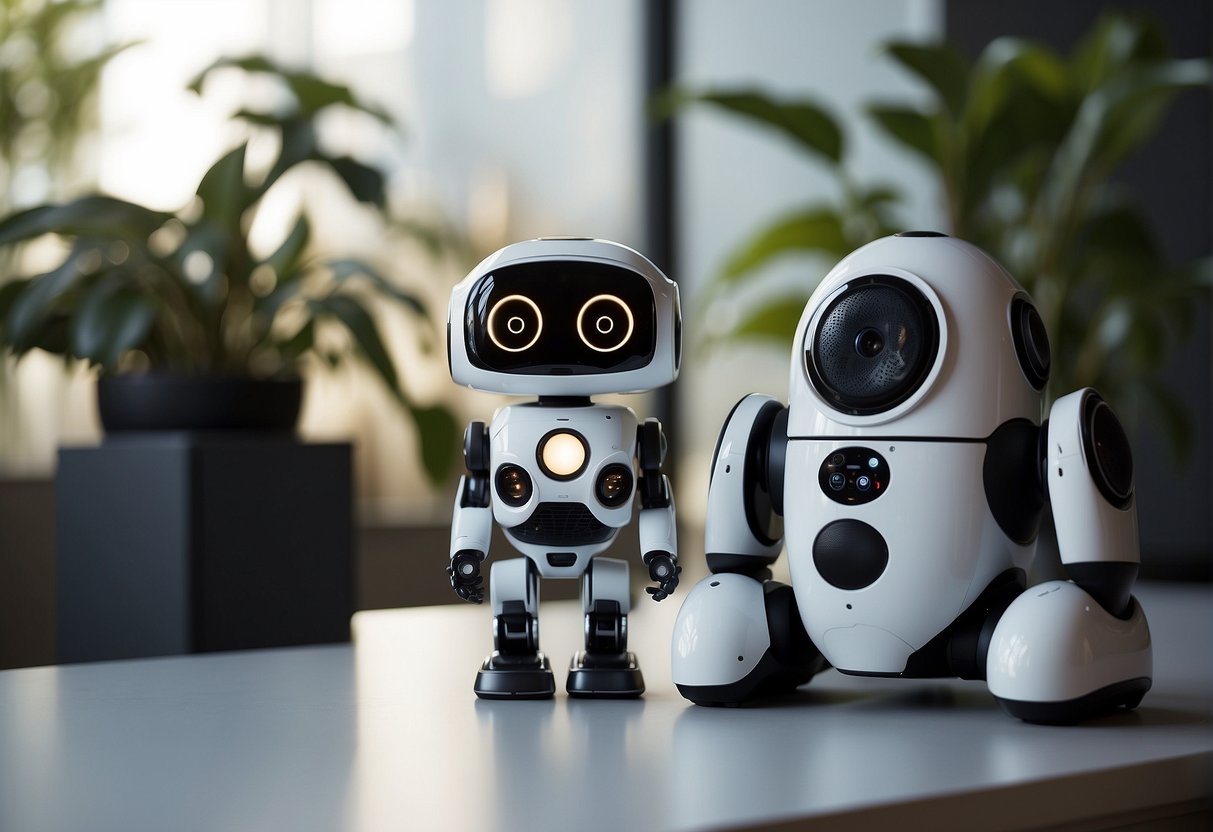
The evolution of AI companions reflects advancements in machine learning, natural language processing, and user experience design.
In order to be effective, these companions are tailored to offer not just conversation, but emotional support, entertainment, and assistance with tasks.
Their development considers critical elements such as trustworthiness, user-centric design, and the capacity to adapt to individual user preferences.
As they become more integrated into everyday life, they present both opportunities and challenges, raising questions about the ethical implications of their use and the future of human-AI relationships.
Key Takeaways
- AI companions leverage artificial intelligence to provide interaction and support to users.
- These companions vary in complexity, from chatbots to advanced systems capable of voice interaction.
- Their design prioritizes personalization, ethical considerations, and enhancing human connections.
Types of AI Companions
Spanning various applications, AI companions have evolved to cater to multiple needs from simple voice commands to emotional support.
They range from ubiquitous virtual assistants to specialized therapeutic tools designed for mental well-being.
Virtual Assistants
Virtual assistants act as personal aides, handling tasks like setting reminders, playing music, or providing information.
Notable examples include Amazon’s Alexa, Google Assistant, and Apple’s Siri.
They’ve become integral parts of smart homes, helping users navigate daily routines with ease.
AI Chatbots
AI chatbots specialize in conversing with users, often with the aim of entertainment or companionship.
For instance, Replika and Chai offer personalized conversations, learning from interactions to improve their responses.
Meanwhile, Evie provides AI-powered entertainment through more casual engagement.
Therapeutic AI Tools
Therapeutic AI tools are designed to provide emotional support and mental health assistance.
They deliver cognitive behavioral therapy techniques and stress relief exercises.
Applications like Wysa, Woebot, and H.E.R. represent this category, offering listeners a non-judgmental platform for emotional expression.
AI in Entertainment
AI in entertainment brings characters to life, creating interactive experiences for users.
Though not traditionally seen as companions, these AI entities can form connections through storytelling and character-driven interactions. Her is an example in cinema that explores the depth of human-AI relationships.
Key Features of AI Companions
AI companions have revolutionized interaction by blending advanced technology with a human-like touch.
Key features of these digital partners emphasize fluid communication, emotional understanding, and adaptive behavior, which are essential in providing valuable assistance and companionship to users.
Conversational Abilities
AI companions are equipped with exceptional communication skills that enable them to participate in meaningful conversations.
They can understand and process natural language, making them capable of engaging in dialogue across a variety of topics and contexts.
The ability to remember previous interactions adds to their conversational depth, allowing for a more cohesive and personalized experience.
Emotional Intelligence
The incorporation of empathy into AI companions allows them to recognize and respond to human emotions appropriately.
This emotional intelligence means they can provide comfort, support, and even encouragement, fulfilling a unique role in the emotional well-being of users.
The subtle understanding of context ensures that the responses are not only timely but also emotionally resonant.
Personalization and Adaptability
Personalization is a cornerstone of AI companions, tailoring interactions to the individual’s preferences and needs.
Through learning and adaptation, they grow more attuned to the user, offering a highly personalized experience.
This adaptability means they can evolve over time, enhancing their support and becoming more intuitive in their interactions with humans.
Benefits of AI Companions

AI companions bring a multitude of advantages to individuals, ranging from the ease of loneliness to enhancing productivity.
They are designed to improve the quality of life by providing support and assistance in various aspects of daily living.
Companionship and Emotional Support
AI companions are available around the clock, providing consistent companionship and emotional support to those who may be experiencing loneliness.
They are programmed to engage in meaningful conversations and, according to The New Yorker, offer unwavering support regardless of time or situation.
This immediate availability can be particularly beneficial for individuals who live alone or are in need of company.
Productivity and Task Assistance
In the realm of work and daily chores, AI companions can assist with tasks, enhancing productivity.
They help manage schedules, set reminders, and can even automate some routines, which translates to increased efficiency in users’ professional and personal lives.
As suggested by articles like Partnerkin, the automation and personalization capabilities of AI companions can significantly streamline complex tasks.
Mental Health and Well-being
Focusing on mental health and well-being, AI companions act as a supportive tool, offering users a safe space to express their thoughts and emotions.
They are designed to listen, provide feedback, and if programmed, teach coping mechanisms for stress and anxiety.
While not a replacement for human interaction or professional care as noted by Speechify, they offer supplemental assistance that can be critical in maintaining mental wellness.
Risks and Ethical Considerations

When considering the integration of AI companions into society, it’s imperative to acknowledge critical issues such as privacy concerns, potential dependency, and the overarching ethical challenges in their application.
Privacy and Data Security
AI companions routinely handle sensitive personal information, making data security paramount.
An AI’s ability to process and store vast amounts of data can lead to concerns over surveillance and misuse. For instance, technicians may intervene in interactions with users, possibly compromising privacy as highlighted in a study on ethical issues raised by artificial companions.
- Risks: Unauthorized data access, profiling, and data breaches.
- Security Measures: Encryption, robust access controls, and transparent data policies.
Dependency and Social Impact
Human interaction with AI companions can lead to dependency, affecting social skills and relationships.
The concern is that overreliance might erode interpersonal connections and isolate individuals from human contact.
For example, increased intimacy with AI may alter how one engages in human relationships, as suggested by research into AI’s impact on personal relationships.
- Social Risks: Replacement of human companionship, emotional attachment to AI.
- Dependency: Prolonged usage could result in addictive patterns and reduced human interaction.
Ethical Use of AI
The ethical deployment of AI companions touches on aspects such as consent, user manipulation, and potential exploitation.
There’s a call for establishing clear ethical guidelines governing the behavior of these technologies. Articles such as this one by Taylor & Francis Online analyze the legal and ethical boundaries expected to be respected by AI companions.
- Consent and Autonomy: Users should have control over their interactions with AI.
- Exploitation Concerns: Ensuring AI does not manipulate or harm users emotionally or financially.
The Future of AI Companions

The evolution of artificial intelligence is poised to redefine human-computer interactions with AI companions that exhibit human-like qualities and offer a wide range of services across different sectors.
Technological Advancements
Technological advancements in AI are rapidly elevating the capabilities of AI companions to provide sophisticated services.
They now encompass emotional connection and decision-making processes which once seemed exclusive to humans.
Machine learning algorithms enable these companions to learn from interactions and improve over time, offering a tailored experience.
Further progress is anticipated in natural language processing, allowing for more human-like interaction.
Integration and Interoperability
In the future, AI companions are expected to achieve seamless integration into our digital ecosystem.
They will operate across multiple platforms, ensuring interoperability which will allow for a consistent and uninterrupted user experience.
For example, one could interact with an AI companion on their smartphone and continue the conversation on a desktop or wearable device without any disconnect.
Shaping Human-AI Relationships
The dynamics of Human-AI relationships will be significantly influenced by the emotional connection fostered by AI companions.
Their design will increasingly focus on empathy and context-awareness, aiming at deeper bonds and support in everyday activities and decisions.
Intuitive user interfaces and decision-making processes that reflect understanding and compassion could position AI companions as integral, trusted aides in both personal and professional realms.
Designing AI Companions

Designing effective AI companions involves focusing on creating seamless user experiences, fostering human-like interactions, and ensuring that AI companions can be personalized and exhibit growth.
User Experience and Accessibility
In the realm of AI companions, the user experience (UX) is paramount.
The UX design dictates how users interact with the companion, encompassing ease of use, accessibility, and the overall satisfaction derived from the interaction.
Accessibility features, such as voice commands and text-to-speech capabilities, remove barriers for individuals with disabilities and enhance the tool’s inclusivity.
Creating Human-like Interactions
AI companions that engage in natural conversation offer a more profound sense of connection and utility.
This requires advanced language models that understand context, nuance, and the intricacies of human speech.
The incorporation of human-like voices that convey emotions and inflections further bridges the gap between digital and human interaction.
Customization and Growth
Personalized experiences cater to the uniqueness of each user, and AI companions must adapt and learn to provide personalized support.
Through interaction and feedback, an AI can grow more attuned to the user’s preferences and behaviors.
Growth in companionship comes from the AI’s ability to learn from experiences, much like a human would, providing relevance and value over time.
AI Companions in Society
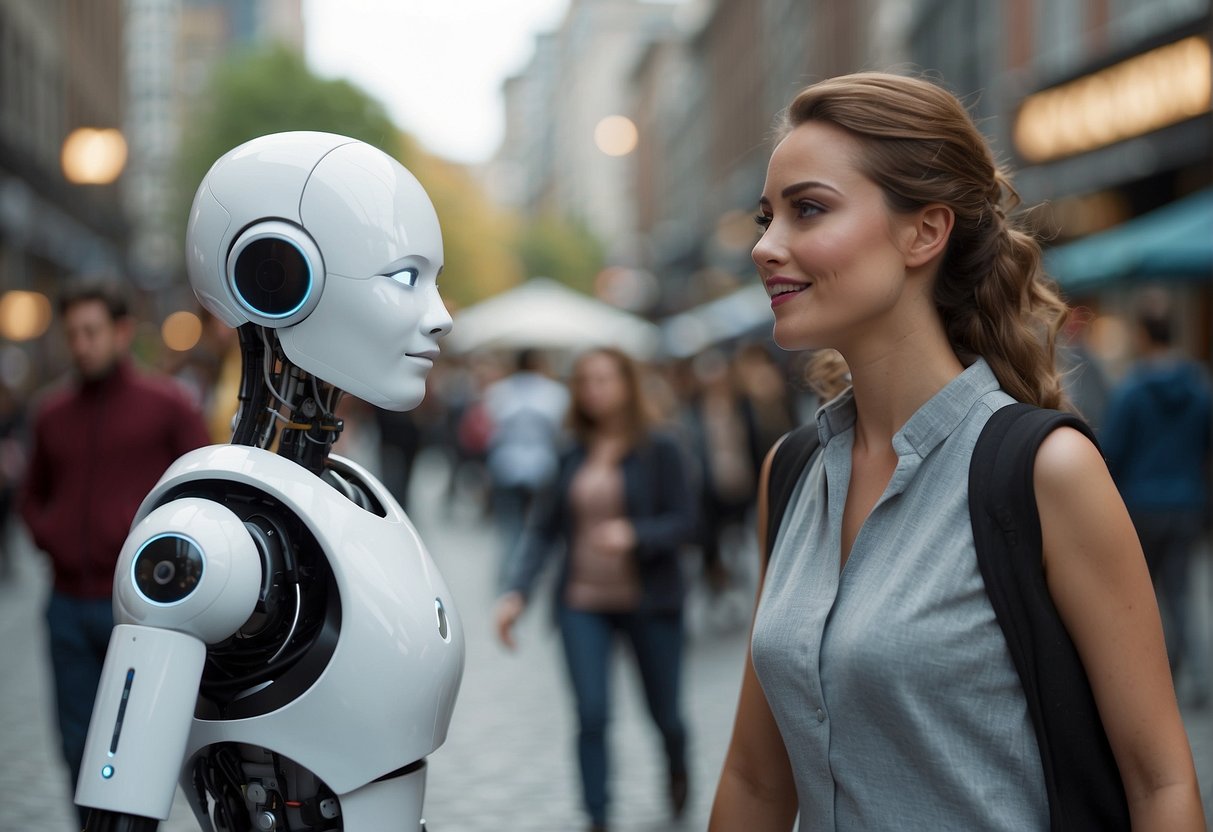
AI companions have evolved to address societal concerns such as loneliness and isolation while transforming interactions in educational and work environments. These entities navigate the complex web of cultural norms and perceptions, striving to foster human connection without judgment.
Addressing Isolation and Loneliness
AI companions emerge as a remedy to the growing trends of loneliness and isolation in modern society. They provide a judgment-free environment, encouraging open social interactions for individuals who may lack traditional sources of companionship.
Research suggests that the social presence of an AI can foster positive perceptions and useful day-to-day interactions, as it offers a constant availability that is hard to match in human counterparts.
The use of this technology particularly benefits those with limited access to regular social interactions, thus potentially improving their overall quality of life.
AI Companions in Education and Work
In educational and work environments, AI companions serve as supportive entities that aid in personal and professional development.
They take on roles like tutoring students through complex problems or assisting professionals in organizing and prioritizing work tasks.
These AI systems are designed to understand and adapt to individual needs, providing personalized feedback and learning experiences which contribute to the user’s growth and productivity.
The effectiveness of AI companions in these settings often hinges on their ability to simulate human-like interactions, making the educational or work process more engaging.
Cultural Perception of AI Companions
The integration of AI companions into the fabric of society inevitably influences cultural perception.
Although they are widely accepted in some cultures as innovative tools for better living, other societies express concerns about the impact of artificial entities on human relationships.
The balance between embracing AI companionship and preserving traditional interpersonal values is a subject of ongoing discourse.
It is clear that the future of these AI integrations will largely depend on their social acceptability and the establishment of ethical frameworks that guide their influence on society.
Emerging Platforms and Applications

In the realm of artificial intelligence, the frontier of AI companions is expanding rapidly, with new platforms and applications that bridge the digital with the daily. This section explores how these AI entities are integrating themselves across various devices and reshaping interactions within virtual realities.
AI on Multiple Devices
Modern AI companions are no longer confined to a single environment. They seamlessly operate across multiple platforms, such as Android and iPhone, ensuring that users can interact with their AI companions regardless of the device they have at hand.
Notably, smart home devices have become a new domain for these AI entities, facilitating an interconnected ecosystem that responds to voice commands, personalizes ambiance, and assists in household tasks.
Virtual Reality and AI Interaction
Virtual Reality (VR) introduces a compelling layer to AI companionship.
Inside virtual environments, AI-powered entities are not just voices or text on a screen; they take form as three-dimensional characters capable of guiding, teaching, or entertaining.
The intersection of VR and AI paves the way for immersive experiences where human-AI interaction is refined beyond previous limitations, offering personalized and engaging scenarios tailored to individual preferences and behaviors.
Developing Trustworthy AI Companions

To foster confidence in AI companions, it is crucial to prioritize building trust. This involves ensuring transparency in their function and conforming to strict legal and regulatory frameworks.
Building Trust through Transparency
Transparency stands as a cornerstone in the development of trusted AI companions.
Users need to understand how the AI operates and makes decisions. This is crucial for sensitive sectors, like healthcare, where the implications of an AI decision can be significant.
Clearly communicated parameters, the logic behind responses, and clarifying the AI’s capacities and limitations can help demystify its processes for users.
Legal and Regulatory Frameworks
Regulatory frameworks set the mark for accountability and safety standards in AI companionship.
Creating comprehensive laws that govern their creation and interaction with humans can protect against misuse and privacy breaches.
Deploying AI into services like education or entertainment requires adherence to these frameworks to assure users of their legal rights and the protections in place.
User-Centric AI Design
In the evolving landscape of artificial intelligence, designing with a focus on the user’s experience is crucial. AI companions must be crafted to meet specific user needs, which in turn fosters an environment for adaptive systems that learn and personalize over time.
Understanding User Needs
Identifying and mapping out user needs is the foundation of user-centric AI design.
Professionals in this field utilize various methods, such as interviews, surveys, and user testing, to gain insights into the target audience.
These insights inform the creation of AI systems that are not only functional but also resonate on a personal level with users.
A key aspect is the design’s ability to evolve based on interaction patterns, which may involve an AI agent’s responsiveness to a plethora of user inputs and contexts, as highlighted by insights on AI Agents and UX design.
Personalization and Learning Over Time
To deliver a truly user-centric experience, AI companions must adapt to individual preferences and behaviors.
This necessitates personalization and ongoing learning.
Adaptive systems are integral, facilitating the AI’s ability to adjust to changes in user behavior or preferences over time.
With a greater understanding of the user, the AI can offer personalized recommendations and automate tasks effectively.
For instance, ChatGPT and other AI tools tie into design thinking to enhance user experience through continuous learning cycles that encompass data analysis, idea generation, and prototype validation.
AI Companions and Entertainment
AI companions are revolutionizing the way people experience entertainment, offering immersive interactivity and personalized content. They serve as virtual playmates in games and act as responsive entities that adapt to user preferences in interactive media environments.
AI in Gaming
In the gaming industry, AI companions such as Kajiwoto and Anima create engaging experiences by learning and evolving based on the player’s decisions.
These virtual beings can shape in-game narratives and enhance gameplay mechanics.
For example:
- Kajiwoto: Customizable AI that can act as a personal gaming companion.
- Anima: Delivers an emotional connection by responding to player interactions in a meaningful way.
Players may witness their virtual companions growing smarter and more nuanced as they spend time together, offering a tailored gaming journey unique to each user.
Interactive Media
Interactive media takes audience engagement to another level with AI companions like Cleverbot and its renowned descendant Mitsuku, which is also known as Kuki.
These AI-driven entities enable conversation and companionship, providing a compelling presence across different platforms. Consider the following attributes:
- Cleverbot: Engages users in witty and unpredictable dialogue.
- Kuki: Recognized multiple times as the most humanlike AI, offering companionship and deep interactivity.
Interactive media continues to innovate, with characters and scenarios that react intelligently to audience input, thanks to the development of AI companions.
The integration of programs like Simsimi further demonstrates the potential of AI in entertainment, offering personalized conversations and activities that resonate with users.
These AI companions are not merely scripted characters but are built with complex algorithms capable of learning and adapting, making each interaction distinctively captivating.
AI and Human Connection
Artificial Intelligence (AI) is reshaping the landscape of human interactions by offering companionship that can range from enhancing everyday social interaction to fulfilling the roles akin to a romantic partner.
Enhancing Social Interaction
AI companions are increasingly being integrated into social frameworks to provide emotional support and companionship.
They are designed to understand and respond to human emotions, which allows them to engage in meaningful conversations and offer support when needed.
In particular, AI can play a pivotal role in sectors such as healthcare, where patients may require consistent interaction, and education, assisting students through personalized learning experiences.
Studies suggest that the presence of AI as social companions can decrease feelings of loneliness and facilitate human connection in various service sectors.
AI as a Romantic Partner
AI technologies have advanced to the point where they can simulate the complexities of a romantic relationship. These AI companions are capable of learning and remembering user preferences, participating in interactive dialogue, and even expressing empathy.
This development offers compelling insights into the evolving nature of human-technology relationships, with artificial companions becoming more personalized and complex.
While some may find comfort in an AI that behaves and sounds like a human, there are ethical considerations to grapple with, including dependency and the psychological effects of human-AI romantic attachments.
The Role of AI in Mental Health
The integration of Artificial Intelligence (AI) into mental health platforms provides innovative avenues for therapy and counseling, as well as bolstering mental wellness.
AI for Therapy and Counseling
AI-powered applications are revolutionizing therapeutic services by supplementing traditional mental health treatment.
They offer immediate, accessible counseling and are instrumental in delivering cognitive behavioral therapy (CBT) techniques.
For instance, Woebot, an AI chatbot, engages users with therapeutic conversations, providing support and helping users to track their mood and identify cognitive distortions.
These AI companions are not meant to replace human therapists but to provide additional support.
They are available at any time, eliminating long wait times for appointments. Moreover, their algorithms are designed to personalize the conversation based on users’ responses to maintain a human-like interaction.
Supporting Mental Wellness
Beyond therapeutic interactions, AI companions play a supportive role in daily mental wellness.
By prompting users to reflect on their day, practice mindfulness, and engage in positive reinforcement activities, these platforms can actively contribute to a user’s mental well-being.
Applications like Wysa are particularly adept at creating a safe and nonjudgmental space for users to express themselves.
They employ conversation and self-help tools that are grounded in psychological techniques to maintain a user’s mental health in between therapy sessions or even for those who may not have access to formal counseling services.
The ability of AI companions to perform supportive counseling ensures continuous care by helping to manage stress and anxiety. This function is critical in early intervention and in preventing minor issues from developing into more severe mental health problems.
Adapting AI to User Preferences
Artificial Intelligence companions are increasingly designed to align with the specific preferences of users. They offer remarkable personalization in terms of interaction styles and communication methods.
Roleplay and Interaction Styles
AI companions can engage in diverse roleplay scenarios and interaction styles, catering to the varied needs of users.
They simulate conversations and behaviors that resonate with individual tastes.
For example, some AI incorporate settings for different personality types, such as friendly, professional, or humorous, allowing them to adapt to the user’s emotional state and social context.
- Profession Oriented: An AI might behave as a personal assistant, prioritizing efficiency and timely reminders.
- Leisure Focused: Acting as a virtual friend, the AI might engage in casual, supportive dialogues.
- Learning Mode: Tailored for students, the AI can take on the role of a study partner, adapting their interactions for educational purposes.
Language and Voice Customization
The language model utilized by an AI companion is crucial for ensuring effective communication.
Users can often customize the language and voice features of their AI companions, which includes:
- Language Selection: Choosing from a list of supported languages based on the user’s preference.
- Accent and Diction: Adjusting technical settings for accent, pronunciation, and speaking speed to mirror natural human speech as closely as possible.
| Feature | Customization Options |
|---|---|
| Tone | Soft, Assertive, Cheerful, Serious |
| Pitch | High, Medium, Low |
| Speaking Style | Conversational, Formal, Informal |
These personalization capabilities of AI companions denote a significant shift towards more immersive and user-centric interactions, enhancing the overall experience by considering individual interaction preferences.
AI Companions for Disability Support
AI companions are increasingly becoming valuable tools for individuals with disabilities, providing a range of accessibility features and empowering users towards greater independence.
Accessibility Features
AI companions designed for disability support often come with speech recognition and text-to-speech capabilities, allowing users with visual impairments or mobility challenges to interact with technology using voice commands.
For instance, these AI systems can read out text from a screen or interpret spoken words to execute tasks, thereby enhancing accessibility.
They may also integrate with smart home devices, thereby facilitating control over the home environment.
For example, turning on lights, adjusting thermostats, and locking doors can be performed seamlessly through voice commands or simple interfaces tailored for ease of use.
Empowering Independence
AI companions contribute to the independence of individuals with disabilities by assisting with daily tasks that may otherwise require human help.
These companions can provide reminders for medication, schedule alerts for appointments, or provide navigation assistance for individuals with cognitive impairments.
They act as assistive technologies by enabling users to perform tasks autonomously, which could include practical functions like budget management or educational support.
AI companions for disability support do more than facilitate tasks; they can enhance confidence and self-reliance, fostering a sense of control and autonomy in the user’s life.
Frequently Asked Questions
The rise of AI companions has generated a plethora of inquiries centered on their capabilities, impact on quality of life, and the latest advancements. This section addresses these questions with concise, informed responses.
What are the key features of a successful AI companion?
A successful AI companion typically exhibits advanced conversational abilities, context awareness, personalization options, and emotional intelligence.
These features allow it to engage users in meaningful interactions and adapt to their preferences over time.
How do AI companion robots enhance the quality of life for adults?
AI companion robots can offer companionship, assist with daily routines, provide reminders for important tasks and medications, and even support adults with cognitive impairments through interactive activities.
Their presence aims to improve overall well-being and reduce feelings of loneliness.
What are the differences between various AI companion apps available today?
AI companion apps vary in their focus, some provide emotional support, others prioritize productivity, and a few cater to entertainment through gamification.
Each has distinct user interface designs, interaction styles, and levels of conversational depth, meeting different user needs.
What advancements have been made in AI companions within the last year?
Recent advancements in AI companions include enhanced natural language processing for more fluent conversations, the integration of affective computing to recognize and express emotions, and improved adaptability to individual user behaviors.
How do AI companions impact social interactions and companionship for users?
AI companions serve as additional social agents, offering constant availability for interaction which can alleviate loneliness and provide a sense of connection.
They can also act as conversational partners that stimulate cognitive function and encourage socialization with other humans.
In what ways are AI companions being integrated into educational and professional settings?
In educational settings, AI companions assist with personalized learning and motivation. Meanwhile, in professional environments, they offer administrative aid, streamline workflow, and facilitate training through interactive simulations.
Their versatility allows for a diverse range of applications tailored to specific institutional needs.