Future of AI Videos: Trends and Implications in Media Production
The landscape of video production is witnessing a paradigm shift with the rise of artificial intelligence.
AI technologies are redefining the way videos are created, edited, and consumed, paving the way for transformations that were hard to imagine a decade ago.
As AI continues to evolve, it becomes integral in various stages of video production, from initial content ideation to post-production processes.
The capacity for AI to analyze, learn, and create has opened up unprecedented possibilities for personalized and efficient video creation.
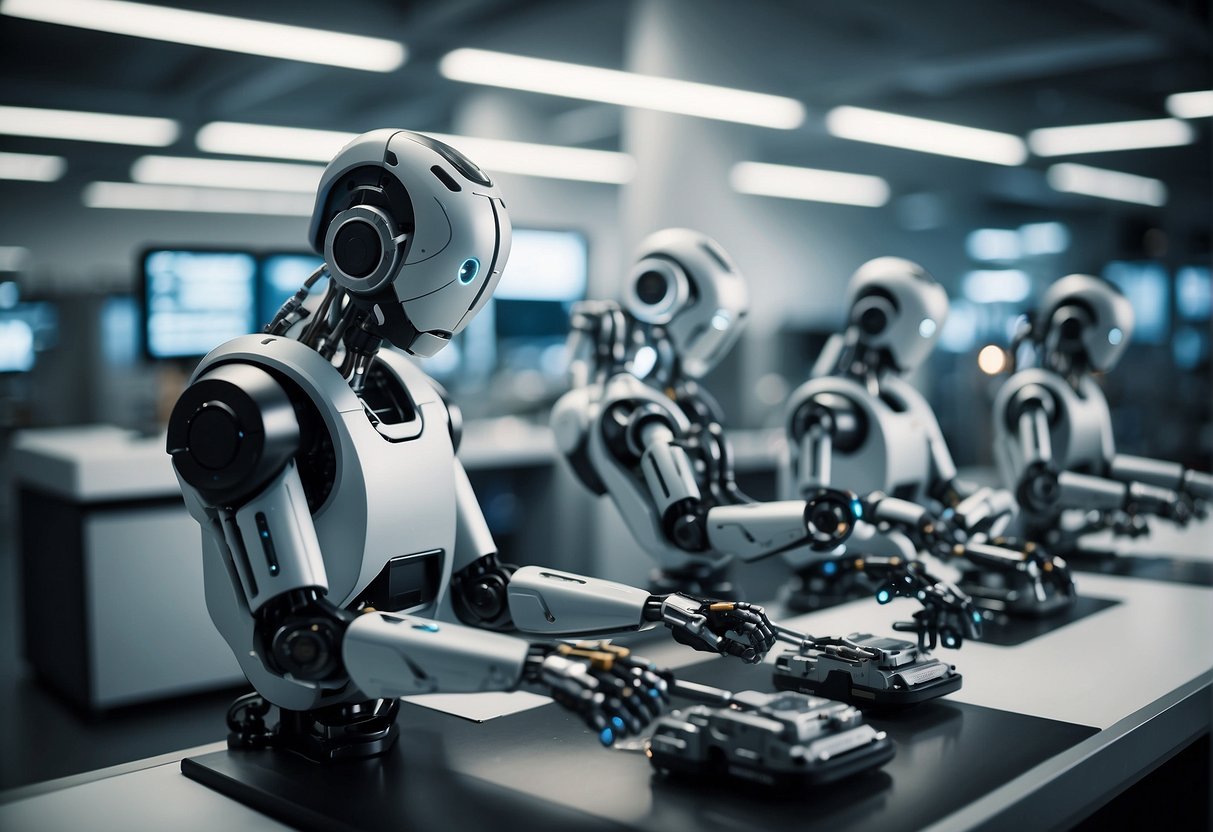
In the realm of video creation, artificial intelligence is streamlining workflows, reducing manual effort, and enabling creators to focus on the creative aspects of production.
AI algorithms now assist in editing, adding special effects, and even generating entire videos based on textual inputs.
This not only increases productivity but also democratizes video creation, making advanced techniques accessible to a wider array of content creators.
Moreover, the rise of these technologies is also raising important questions about their ethical implications and the need for regulation to govern their use.
Key Takeaways
- AI is revolutionizing video creation, enhancing the efficiency and scope of content production.
- Automation in post-production and AI-driven content creation allow creators to focus more on storytelling.
- Ethical considerations are becoming increasingly important as AI becomes more prevalent in video production.
Evolution of AI in Video Production
The landscape of video production has been revolutionized by the advent of AI technologies. From ideation to post-production, AI algorithms and tools have streamlined processes, bolstering both efficiency and creativity.
Historical Milestones
AI has made indelible marks on the video production timeline. Key milestones include the introduction of deep learning techniques which have improved video stability and quality.
In addition, platforms like Runway and Sora offer an array of editing features powered by AI. These tools have allowed video producers to automate mundane tasks such as object tracking and scene detection, paving the way for more innovative storytelling approaches.
AI Video Tools Overview
AI video tools have transformed the production landscape:
- AI Tools: They enrich ideation processes and enable better content planning.
- Video Production: AI streamlines workflows, from simplifying editing protocols to enhancing sound design.
- AI Algorithm: It enables real-time video analytics, paving the way for more tailored and impactful video content.
- Deep Learning: This critical aspect of AI aids in recognizing patterns and automating editing tasks.
- Stability AI: Such technologies have been crucial in reducing shakiness and improving the cinematic quality of handheld footage.
These tools have not only expedited the process but also significantly decreased the barriers to professional-quality video production, making it more accessible and efficient.
AI-Driven Content Creation
In recent times, AI-driven content creation has begun to significantly influence the digital media landscape, fostering a new era of creativity and efficiency.
This technology is crafting a path from conceptual ideas to visually engaging stories, where the creation process is streamlined and enhanced through advanced AI algorithms.
Concept to Reality
AI-driven tools have transformed the initial stages of content creation. With Gen-2 AI, creators can input basic text prompts and receive detailed content outlines and scriptwriting assistance.
The integration of artificial intelligence in this phase has led to a remarkable surge in the speed and volume of content being produced.
For instance, AI can analyze vast datasets to suggest storytelling motifs or plot elements relevant to current trends, bringing creative concepts to reality more swiftly than ever before.
Creative Processing
When it comes to creative processing, AI has not just automated menial tasks but also introduced innovative forms of AI-generated content.
This includes the creation of deepfakes—hyper-realistic video content generated by AI, and the use of ‘digital actors’ or robots that perform roles without human intervention.
AI’s advanced capabilities allow for real-time edits and adjustments to the narrative flow, adding a layer of sophistication to the final product.
Content creation benefits from AI’s capacity to adjust tone, style, or visual elements based on the target audience, thereby personalizing the viewing experience.
The intersection of AI with human creativity is, therefore, redefining the bounds of what was previously thought possible in the realm of digital media.
Technical Aspects of AI Video
In exploring the technical aspects of AI video, one must understand the roles of AI models in motion capture and how generative AI enhances quality control. These technical advancements provide the foundation for innovative approaches in creating realistic and engaging video content.
AI Models and Motion Capture
AI models are at the forefront of revolutionizing motion capture techniques. By leveraging deep learning, these models can analyze and understand human movement with increasing precision.
This is not only reducing the need for cumbersome physical tracking equipment but is also allowing for the capture of motion data in real-time.
For example, AI algorithms can generate animation sequences from video feeds by identifying key points on the human body and translating them into digital character movements.
Generative AI and Quality Control
Generative AI plays a pivotal role in the realm of video production, particularly in text-to-video applications and visual effects.
This form of AI can create high-resolution video content from text descriptions, transforming narratives directly into vivid visual stories.
For quality control, AI systems analyze various aspects of the video, such as consistency in lighting, colour grading, and element synchronization.
They can automatically detect errors that may not be easily noticeable by human eyes, ensuring a high-quality final product.
- Visual Effects: Deep learning models are trained to apply and modify effects in a way that matches the aesthetic and contextual needs of the video content.
- Quality Assurance: Generative AI systems scrutinize the minutiae of video details, ensuring that the resolution, frame rate, and fidelity of the videos meet professional standards.
The Role of AI in Post-Production

In post-production, AI significantly enhances the editing process and sound design, elevating productivity and efficiency for filmmakers.
Editing Enhancements
AI-driven editing tools have transformed video post-production. They enable swift content analysis, flagging best takes, continuity errors, and even suggesting edit decisions.
This has expedited the traditional video editing workflow.
Editors can rely on AI for tasks like color correction, where AI algorithms quickly harmonize footage from different sources, ensuring color consistency across scenes.
- Automated Scene Detection: Identifies scene changes and edits clips accordingly.
- AI Color Grading: Applies consistent color profiles to varied footage.
Additionally, automated video editing by artificial intelligence can condense hours of raw footage into a coherent narrative.
AI analyzes each frame for quality and relevance, offering suggestions which editors can approve, saving precious time and improving productivity.
Sound Design and Voiceover
AI’s impact on sound design incorporates generating realistic sound effects and enhancing audio quality.
Nowadays, AI systems can analyze a video and suggest audio tracks that suit the mood and theme of the content.
Moreover, AI can perform noise reduction and automatic leveling, resulting in cleaner and more professional audio tracks.
- Sound Matching: AI suggests appropriate sound effects based on visual cues.
- Audio Cleanup: Utilizes algorithms to reduce background noise and enhance dialogue clarity.
For voiceovers, AI offers an unprecedented level of efficiency by creating synthesized voices that are increasingly indistinguishable from human narration.
This technology not only speeds up the process but also lowers costs and provides flexibility for changes in voiceover work without the need for re-recording sessions.
Ethical Considerations and AI Video

When discussing the future of AI-generated videos, two critical ethical aspects must be considered: the proliferation of disinformation and the imperative of enforcing robust privacy and data security standards.
Countering Disinformation
Disinformation and misinformation spread through AI videos present a tangible threat to the fabric of reality. Deepfakes are a prominent example where AI technologies manipulate video content so convincingly that it becomes difficult to distinguish real from the manipulated.
One must advocate for stringent regulations to mitigate the risks, including:
- Verification Tools: Implementation of technologies that can detect AI-generated content.
- Education Campaigns: Public initiatives to increase awareness of AI-driven disinformation.
These measures aim to preserve the integrity of information while respecting the ethics of content creation.
Privacy and Data Security
AI video technology often relies on vast amounts of personal data, which raises significant privacy concerns. Ethical development and deployment of AI videos necessitate the following:
- Transparency: Clear policies on data usage.
- Security Measures: Advanced protocols to protect data from unauthorized access.
The conversation around ethics and AI not only focuses on developing regulations that safeguard personal data but also ensures that AI respects the boundaries of privacy and security measures necessary in today’s digital age.
AI in Videography and Marketing
Artificial Intelligence (AI) is revolutionizing the landscape of videography and marketing, enabling brands to deliver targeted content with increased efficiency and effectiveness.
By leveraging AI, companies can enhance their return on investment (ROI) through smarter video marketing campaigns that resonate with their target audience.
Targeted Advertising
AI technology allows for the analysis of consumer data to identify specific demographics and tailor advertising accordingly.
Through the use of targeted advertising campaigns, brands can deliver content that is more likely to engage and convert their intended audience.
For instance, video content can now be dynamically optimized to show products or messages that align with viewers’ preferences, which boosts campaign effectiveness.
- Data Points Considered: viewing habits, purchase history, online behavior.
- Benefits:
- Personalized consumer experience
- Higher engagement rates
- Streamlined ad spend with better conversion rates
Brand Narrative and AI
In the context of brand narrative, AI enables marketers to craft compelling stories that are not only creative but also data-driven.
The integration of AI into brand storytelling allows for a more cohesive narrative across multiple media platforms.
With AI’s video generation capabilities, brands can produce high-quality video content at scale, maintaining a consistent brand voice and message that resonates with their audience.
- AI Functions:
- Sentiment analysis for gauging audience response
- Predictive analytics for crafting future narratives
Embracing AI in video marketing not only facilitates highly personalized content, but it also provides actionable insights for brands to fine-tune their marketing strategies and optimize ROI.
AI Tools and Platforms

The landscape of AI tools and platforms is diverse, catering to both individual creators and businesses. These tools leverage cutting-edge technology to simplify video production, from automated editing to voice synthesis.
Consumer-Facing Applications
In the consumer space, applications like Synthesia have gained traction by enabling users to produce custom AI-generated videos.
These types of platforms frequently offer pre-built templates and intuitive drag-and-drop interfaces, making it possible for individuals to create high-quality content without extensive video production experience.
Chatbots have also become integrated into video platforms, guiding users through the creation process or assisting in customer support.
Descript stands out for podcasters and video creators, offering not just video editing capabilities but a suite of audio processing features—such as transcription services and voice cloning.
Enterprise Solutions
On the enterprise front, companies are adopting AI video tools to streamline their marketing and training materials production.
These tools can automatically generate subtitles, create voiceovers, and even animate characters, saving valuable time and resources.
Applications like D-ID specialize in creating deep-learning video portraits, which can be utilized for personalized customer engagement or e-learning scenarios.
AI tools within enterprise platforms are increasingly sophisticated, often embedding analytics to help businesses understand video performance and viewer engagement.
AI’s Infusion in Education and Training
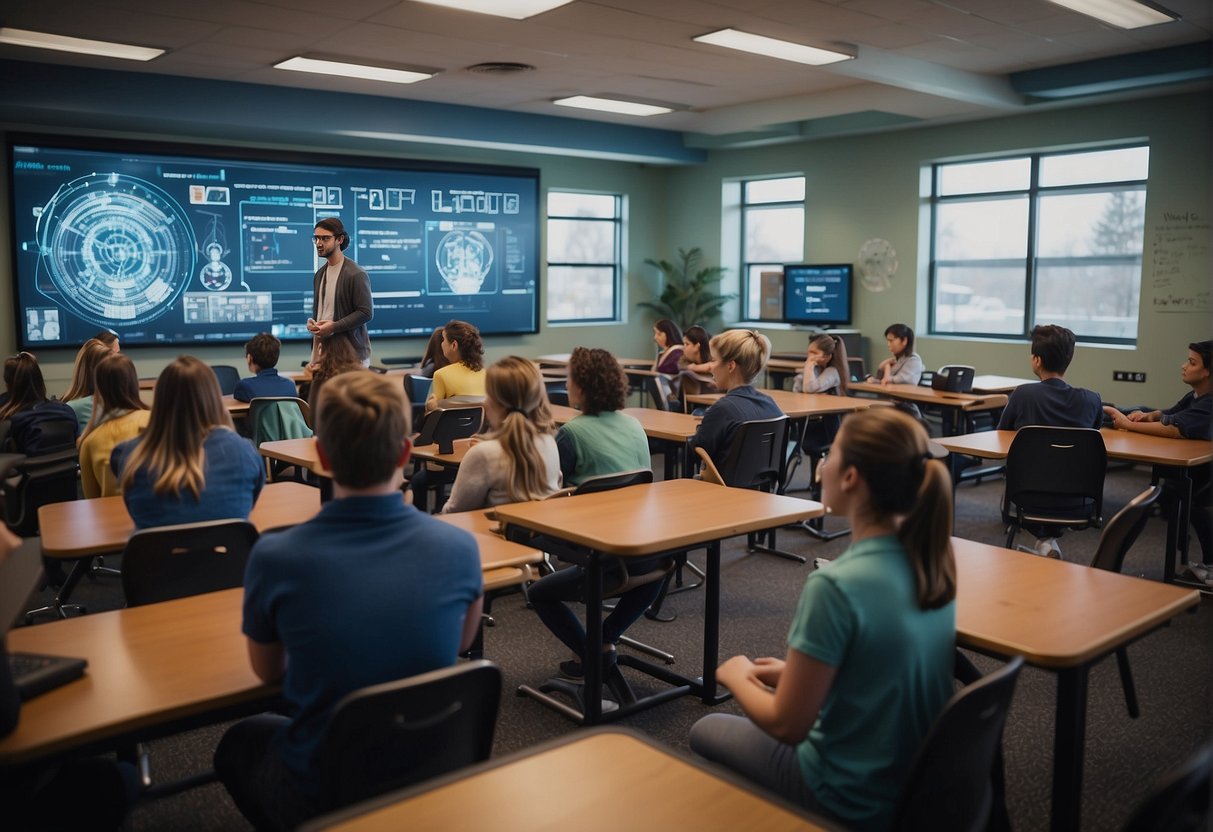
Artificial Intelligence (AI) is increasingly becoming integral to education and training, creating highly immersive and customized learning experiences. This technology is transforming how educational content is delivered and how training is conducted, catering to diverse learning needs and advancing instructional methods.
Interactive Learning Environments
In education, AI-powered interactive learning environments are revolutionizing traditional teaching methods.
These environments use AI to create dynamic, personalized materials that adapt to students’ unique learning styles.
AI-driven platforms can analyze student responses and tailor subsequent content accordingly, ensuring a more effective and engaging learning journey.
For example, AI-generated video content enhances training by making it more accessible and adaptable, reducing the resources needed for content production.
Training Simulations
Similarly, in the realm of training, AI-driven simulations offer a safe and controlled environment for practical experience without real-world consequences.
These simulations can replicate complex scenarios employees might face, from emergency response drills to customer service interactions.
By using realistic simulations, trainees can practice their skills, gain invaluable experience, and receive immediate feedback from the AI system. This hands-on approach results in higher retention rates and better preparedness for real-life applications.
Advancements in AI Technology

The landscape of AI video technology is witnessing rapid growth, spurred by significant progress in machine learning and cutting-edge AI tools. This surge is transforming everything from tech workflows to the creative processes in Hollywood film production.
Machine Learning Developments
Recent advancements in machine learning algorithms have greatly enhanced the capabilities of AI in understanding and generating video content.
Notably, AI companies are integrating these algorithms to create more realistic and engaging videos.
For example, generative models such as GPT-3 have been pivotal in producing scripts with context-aware storytelling, indicative of the nuanced understanding that AI now holds.
Futuristic AI Tech
In the realm of futuristic AI tech, innovations are not only simplifying existing processes but are also forging new partnerships between tech pioneers and traditional industries like Hollywood film.
These collaborations aim to leverage AI for tasks such as editing, special effects, and even casting decisions, enhancing the creative pipeline with algorithms that streamline production schedules and reduce overhead costs.
Frequently Asked Questions
The rise of artificial intelligence (AI) is rapidly transforming how video content is created, edited, and consumed. These FAQs provide insights into the future of AI in the video industry, addressing key technological advances and their implications.
How will artificial intelligence impact video content creation?
Artificial intelligence is poised to revolutionize video content creation by introducing efficiencies in the editing process and enabling the generation of new types of content that were previously impractical or impossible to create manually.
AI’s capacity to analyze and synthesize data at scale allows for highly targeted content, suited to audience preferences.
What advancements can we expect in AI-driven video editing tools?
In the realm of AI-driven video editing tools, we can anticipate further developments in automation that streamline mundane tasks, such as color correction and audio syncing.
Advanced machine learning algorithms are expected to offer more intuitive editing workflows, enabling professionals and amateurs alike to enhance their storytelling techniques with greater ease.
In what ways might AI contribute to personalized video experiences?
Artificial intelligence may significantly enhance personalization in video experiences.
By analyzing viewer data and behavior, AI can tailor video content to individual preferences, creating a more personalized and engaging user experience, much like how AI influences Facebook’s video feed to align with user interests.
How might AI technologies influence the future storytelling in videos?
AI technologies are anticipated to inject novel storytelling dimensions into videos by analyzing vast datasets to identify the most impactful narratives and thus aid in the creation of compelling, emotionally resonant content.
This influence will not only refine pacing and plot development but also help creators experiment with dynamic, non-linear storytelling formats.
What ethical considerations will arise with the use of AI in video-making?
With AI integration in video-making, new ethical considerations come to the fore, such as concerns about deepfakes and the potential loss of human jobs.
Ensuring transparency in AI-generated content and discerning how to ethically leverage AI without compromising artistic integrity or credibility will be crucial.
What role will AI play in the automation of video production?
AI’s role in automating video production is set to expand. It reduces time and costs associated with traditional production processes. AI facilitates rapid video assembly, scaling content creation, and streamlining tasks from scriptwriting to post-production. This allows creators to focus on the creative aspects of video production.