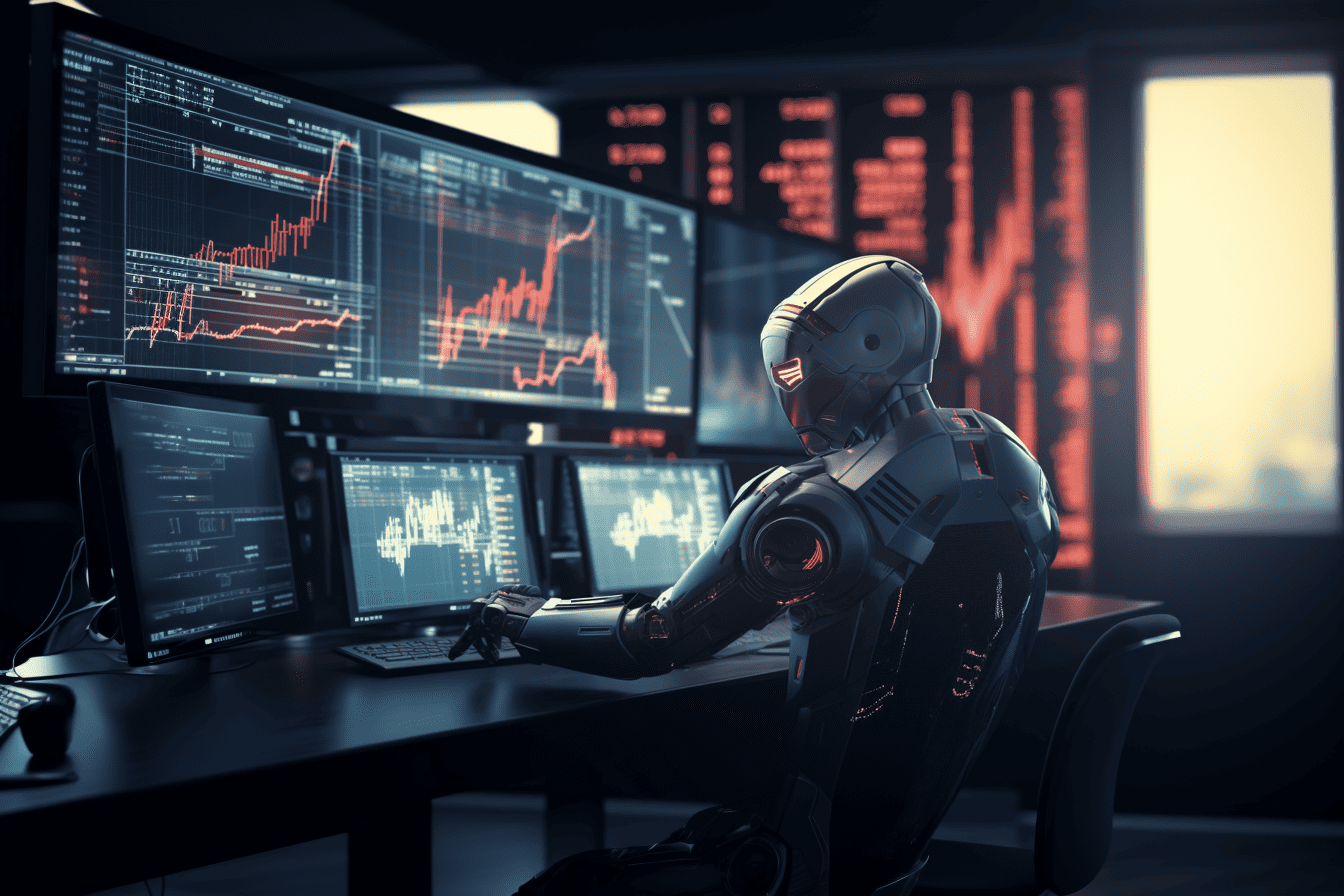
AI Trading: Revolutionizing the Finance Industry with Advanced Technology
Artificial intelligence (AI) has come a long way over the past decade, becoming an increasingly powerful tool in various industries. One application that has captured the attention of businesses, researchers, and individual investors alike is AI trading. By harnessing the power of predictive analytics and machine learning algorithms, AI trading platforms can analyze vast amounts of historical market and stock data to generate investment ideas, build portfolios, and even automate the buying and selling of stocks.
Understanding AI trading might seem complex at first, but it essentially revolves around the use of advanced technology to make more efficient and well-informed decisions in financial markets. AI trading software can help investors better manage risk by analyzing patterns and trends and executing trades based on these insights. There is a myriad of AI trading tools on the market today offering different capabilities, ranging from hands-off robo-advisors to news aggregation and alert execution services.
Key Takeaways
- AI trading uses predictive analytics and machine learning to generate investment ideas and automate trading decisions.
- Various types of AI trading tools cater to different needs, from robo-advisors to alert execution services.
- Effective AI trading strategies can help investors better manage risk and capitalize on market trends.
Understanding AI and Trading
AI, or artificial intelligence, has significantly influenced the world of trading, making it more accessible, efficient, and precise. Through the use of advanced algorithms, AI can analyze massive amounts of data, identify patterns, and make sound trading decisions. This technology has transformed the way I approach financial markets, and it has the potential to benefit various types of traders, from beginners to seasoned professionals.
One of the key advantages of AI trading is its ability to process and interpret vast amounts of data at breakneck speeds. This means that I can make more informed decisions based on historical price movements, market trends, and economic indicators. Through the use of machine learning and sentiment analysis, AI can calculate potential price changes, understand the causes of price fluctuations, and execute trades effectively.
Another major benefit that AI has brought to my trading experience is the elimination of the human factor. Emotions and biases can cloud my judgment, potentially leading to suboptimal trading decisions. AI, on the other hand, relies solely on existing data and trends, allowing me to make more objective decisions based on facts. This data-driven approach has helped me manage risks more effectively and improve my overall trading performance.
Lastly, AI trading offers a degree of scalability and flexibility that traditional methods often cannot provide. With the ability to automate my trading workflows, I can save time and effort while simultaneously increasing my potential for profits. Furthermore, AI technologies allow me to customize and adapt my strategies based on current market conditions, giving me an edge in the ever-changing world of finance.
In conclusion, the integration of AI into the trading landscape has revolutionized the way I navigate financial markets. Its ability to analyze data, eliminate emotion, and provide scalability makes it an indispensable tool for modern traders. Employing AI in my trading strategy has allowed me to make more informed decisions, manage risks effectively, and ultimately achieve greater success.
Benefits of AI Trading
As an individual who has explored the world of stock trading, I have found AI trading to have numerous advantages that can greatly enhance the investment process. One of the main benefits of AI trading is its autonomous capabilities. By employing advanced algorithms, AI systems can analyze and process vast amounts of data, ultimately making well-informed decisions without constant human supervision.
Another significant benefit is the improved accuracy that AI trading offers. Unlike human traders, AI systems don’t fall victim to emotions or impulsive decisions. As a result, they can analyze data objectively and provide more accurate predictions based on historical trends, market behaviors, and financial indicators. This can lead to a higher success rate for investors who use AI technology in their trading strategies.
Risk management is an essential aspect of trading, and AI brings a considerable advantage in this area. AI systems can monitor multiple markets and trading instruments simultaneously, quickly reacting to sudden changes that might affect the portfolio. This real-time monitoring enables AI traders to minimize risk by adjusting strategies and making well-timed decisions.
Lastly, AI trading’s efficiency easily outpaces that of human traders, who may become fatigued and take breaks during critical market moments. AI systems operate 24/7, ensuring that the investment process does not miss any potentially profitable opportunities.
In conclusion, by leveraging AI trading, investors can benefit from increased autonomy, enhanced accuracy, effective risk management, and exceptional efficiency. This makes AI trading a powerful tool for those looking to optimize their stock investments in a rapidly evolving financial landscape.
Types of AI Trading
Automated Trading
In the world of AI trading, I can confidently say that automated trading plays a significant role. It involves using software or AI trading bots to automatically place buy and sell orders based on predefined trading strategies. These AI-driven bots help investors to execute trades without the need for constant monitoring and management, making the process more efficient and less time-consuming.
Automated trading systems can be highly advantageous, as they remove human emotions from the decision-making process and provide a consistent approach to trading. Additionally, they can trade across multiple markets and assets simultaneously, increasing the potential for profit.
High-Frequency Trading
High-frequency trading (HFT) is another form of AI trading that focuses on executing a large number of trades in a fraction of a second. This type of AI trading mainly relies on advanced algorithms and powerful computers to analyze market data and identify patterns or discrepancies. The aim of HFT is to capitalize on minuscule price differences and rapidly lock in profits from these opportunities.
One of the most prominent advantages of high-frequency trading is its ability to exploit short-lived opportunities that a human trader might miss. However, it’s worth noting that HFT can be controversial due to its potential to create market volatility and raise concerns about market fairness.
Algorithmic Trading
Algorithmic trading is a type of AI trading where computers execute trades based on predefined algorithms and rules. These algorithms factor in variables such as price, volume, and timing to make informed decisions about when to buy or sell securities. This approach allows me and my fellow traders to streamline our processes and minimize losses from emotional decision-making.
One of the key benefits of algorithmic trading is its ability to process and analyze large volumes of data quickly, something that would be nearly impossible for a human trader. This capability makes it easier to monitor multiple assets and markets, and capitalize on trading opportunities as they arise.
As a knowledgeable trader, I believe that AI trading, which encompasses automated trading, high-frequency trading, and algorithmic trading, has the potential to revolutionize the financial industry by delivering speed, efficiency, and accuracy. These advanced approaches, backed by powerful AI bots and algorithms, make it possible for me to navigate complex markets in a more confident and intelligent manner.
Popular AI Trading Software
Tickeron
As an AI trading software, Tickeron offers an impressive platform with a user-friendly interface. I appreciate the simplicity and ease of use when navigating through its multiple features. The AI-powered system provides accurate swing trading signals, ensuring confidence in making trade decisions. Plus, there’s a convenient demo account that allows me to test the waters before committing to a subscription.
TrendSpider
In my experience, TrendSpider stands out for its charting capabilities. The software boasts AI-enhanced chart pattern recognition and automated alerts, both essential for making better-informed decisions in today’s fast-paced markets. Its compatibility with iOS and Android devices ensures I can access the platform and make trades on the go.
VectorVest
VectorVest is another remarkable AI trading software that I find useful in my trading routine. With its combination of AI tools and in-depth market analysis, VectorVest proves to be a valuable resource for making well-informed decisions. Their subscription includes access to thorough customer support, which I find particularly helpful when encountering any issues or needing guidance.
MetaStock
As an industry professional, I recognize the value of MetaStock for its comprehensive, all-in-one toolset. The platform offers a vast range of instruments and indicators, giving me everything I need to succeed in my trading endeavors. MetaStock is not only easy to navigate but also comes with a responsibility-free demo account for trial purposes.
3Commas
Entering the world of cryptocurrency is a breeze with 3Commas. This AI trading software simplifies managing my crypto portfolio with advanced trading bots and various tools at my disposal. I especially appreciate the easy-to-understand interface and how it keeps me informed on the latest cryptocurrency market trends.
Equbot
Lastly, Equbot rounds out my arsenal of AI trading software. As an IBM Watson-powered platform, Equbot has the ability to analyze vast amounts of market data, providing me with valuable insights into potential investments. Its AI-driven capabilities deliver exceptional market analysis and help me make informed decisions when managing my portfolio.
AI Trading in Different Markets
As someone who closely follows AI trading, I’ve seen impressive advances in its applications across various financial markets. In this section, I’ll discuss the role of AI trading in stocks and shares, forex, commodities, and cryptocurrencies.
Stocks and Shares
In the world of stocks and shares, AI trading systems have become essential tools for analyzing large datasets and identifying potential trading opportunities. These systems use quantitative modeling to assess the price and volume of stocks, resulting in more efficient trading strategies. From individual securities to broader US stocks, AI can analyze patterns and trends to help make informed decisions.
Forex
Forex, or foreign exchange, is another market where AI trading has made significant strides. In this fast-paced market, the ability to analyze huge amounts of data in real-time is crucial. AI systems can process news, price movements, and economic indicators, allowing traders to make decisions based on the most recent and relevant data. By adopting AI-driven techniques, I can stay ahead of the curve in a competitive and volatile environment.
Commodities
Commodity trading often involves complex factors such as supply and demand, geopolitical concerns, and environmental elements. AI trading platforms can process these factors and identify trends that would be challenging for human traders to spot. This helps me make more informed decisions about when and how much to invest in commodities like oil, gold, and agricultural products.
Cryptocurrencies
Cryptocurrencies are a relatively new addition to the financial markets, but their volatile nature makes them an ideal candidate for AI trading strategies. By analyzing price fluctuations, trading volume, and historical trends, AI can help me navigate this rapidly changing landscape. I can leverage these insights to evaluate the potential risks and rewards of investing in popular cryptocurrencies like Bitcoin and Ethereum.
In conclusion, AI trading offers significant benefits in various financial markets, allowing traders like me to make well-informed decisions and manage risk more effectively. Whether it’s stocks and shares, forex, commodities, or cryptocurrencies, AI technology continues to revolutionize the way I approach trading and investment strategies.
Analysis Techniques in AI Trading
Sentiment Analysis
In AI trading, I utilize sentiment analysis to understand a sizeable dataset, such as social media comments, news articles, and financial reports. By processing and interpreting this data, I can gauge market sentiment and make informed trading decisions. Sentiment analysis helps me identify prevailing market emotions, such as fear or optimism, which can impact asset prices and market movements. This technique is especially useful in forecasting short-term trends or sudden market changes due to unforeseen events.
Technical Analysis
Another technique I employ in AI trading is technical analysis. By examining historical price movements, trading volumes, and other market-related data, I can identify trends and potential future price movements. I use various types of charts, including raindrop charts, which reveal more in-depth information about trading activity. The use of technical indicators, such as moving averages, RSI, and MACD, also assists me in my analysis. Additionally, backtesting allows me to evaluate the effectiveness of different trading strategies using historical data. This ensures that I develop and implement strategies with a higher probability of success.
Pattern Recognition
Finally, pattern recognition plays a crucial role in AI trading. I use machine learning algorithms to detect recurring patterns and correlations in vast amounts of market data. This automated process helps me uncover hidden relationships between various factors affecting the market, such as economic indicators and news events. Pattern recognition allows me to identify market inefficiencies and exploit potential trading opportunities, leading to more effective decision-making in the financial markets. By employing these techniques, I strive to improve my trading performance and manage risk better.
AI Trading Bots on Social Media
In my experience with AI trading bots, I’ve seen a significant shift in how traders interact with them on social media platforms. Social media has become a hub for exchanging trading strategies, insights, and recommendations, and AI trading bots play a big role in this landscape.
I often notice that many AI trading bots, such as Tradytics, offer a range of services focused on social media interactions. These services include trading signals, price alerts, and analytical insights catered to both traditional and crypto trading markets. By integrating AI technology to analyze market data and trends, these social-media-focused trading bots offer valuable information with the goal of improving my trading decisions.
When using AI trading bots on social media, I find that they can efficiently deliver trading signals and alerts through various channels such as Twitter, Telegram, and Discord. These channels ensure I receive timely and accurate information to make informed trading choices. Price alerts are especially helpful, as they keep me updated on the latest market movements that may impact my strategies.
Moreover, the community aspect of social media promotes the sharing of experiences and tips among users of AI trading bots. Personally, I find this helpful in increasing my understanding and knowledge of current market trends, as well as gaining insights from other traders who have used the same AI trading bot services. This collaboration can lead to better informed and potentially more successful trading decisions.
In summary, AI trading bots on social media have become an essential tool for traders in both traditional and crypto markets. With trading signals, price alerts, and market analysis available within my favorite social media platforms, I can make more informed decisions and enhance my overall trading performance.
Risk Management Strategies in AI Trading
Stop-Loss
In AI trading, managing risk is essential for preserving my capital and ensuring consistent returns. One of the key strategies I can implement for risk management is setting stop-loss orders. Stop-loss orders automatically close positions when the market reaches a predetermined unfavorable price, limiting my potential losses. This strategy allows me to minimize losses from unpredictable market fluctuations and volatility, without the need for constant manual monitoring. Utilizing AI’s ability to analyze large volumes of unstructured data at faster speeds, the decision-making process for stop-loss orders can be further optimized to achieve the maximum risk-reward ratio.
Take-Profit
Another risk management strategy in AI trading is setting take-profit orders. Take-profit orders automatically close my positions when the market reaches a predefined favorable price. This ensures that I lock in my gains and don’t miss out on profits due to market reversals or sudden changes. AI algorithms can analyze historical price data and forecast markets with a high degree of accuracy and efficiency. By incorporating these predictions into my take-profit strategy, I can effectively optimize risk management and maximize returns.
Dollar Cost Averaging
Dollar cost averaging is a risk management strategy in which I invest a fixed amount of money at regular intervals, regardless of the market price. This approach can help me to mitigate the risks associated with market timing and avoid making emotional investment decisions. As the AI-powered trading systems continue to evolve, they can provide the necessary guidance for following a disciplined dollar cost averaging strategy. By gradually accumulating assets through consistent purchases, I can diversify my portfolio across different market conditions and further reduce exposure to risks and volatility.
Investing with AI Trading
In recent years, AI trading has emerged as a game changer in the world of finance. I’ve observed that AI trading involves the use of artificial intelligence, predictive analytics, and machine learning to analyze historical market and stock data. This technology allows investors to get investment ideas, build portfolios, and automate trading with increased precision and efficiency.
As an investor, I understand that one of the key applications of AI in finance is algorithmic trading. With AI algorithms, traders can analyze large datasets and execute trades at high speeds, providing useful insights for making investment decisions. AI trading also allows for automated trading, which can be beneficial for both seasoned investors and those who are new to the market.
When it comes to robo advisors, these platforms typically use AI to offer personalized investment advice based on individual risk tolerance and financial goals. I’ve found that robo advisors can be a more cost-effective alternative to traditional financial advisors since they often charge lower fees and use technology to provide tailored recommendations.
I also appreciate how AI trading contributes to improving the overall efficiency of the finance sector. For example, Trade Ideas offers a powerful AI stock trading bot software that helps investors find and execute high-probability trades. Similarly, TrendSpider uses AI to recognize chart patterns and provide valuable technical analysis.
Overall in my experience, AI trading is revolutionizing the investment landscape by automating trading processes and providing more precise and efficient methods for generating portfolio returns. The combination of AI technology with traditional investment strategies is helping me and many others in the investment community make well-informed decisions and capitalize on market opportunities.
Regulations and Ethical Considerations
AI trading has become increasingly popular, revolutionizing financial markets. With this rise in popularity, it is essential to understand the regulations and ethical considerations that govern this technology.
AI trading systems utilize algorithms and machine learning to make informed decisions, offering advantages such as accuracy and speed. However, these benefits come with potential risks and challenges, which necessitate the implementation of regulations and adherence to ethical guidelines.
One of the core issues of AI trading is the potential for biased algorithms and data. To ensure fair practices, firms must consider the integrity of data, the accuracy and validity of models, and strive to avoid bias in their algorithms. The CFA Institute emphasizes the importance of transparency and interpretability of algorithms, as well as accountability structures to maintain ethical AI practices in investment management.
Regulatory bodies, such as FINRA, also play a crucial role in overseeing AI trading. They outline the potential benefits and challenges associated with AI implementation, emphasizing the need for responsible AI-based applications to safeguard investors and maintain market integrity.
Due to the complex nature of AI trading, it is essential that these systems remain transparent, allowing for easier scrutiny by regulators and market participants. The ethical use of AI should focus on principles such as fairness, accountability, sustainability, and transparency, as discussed in various AI ethics guidelines.
In conclusion, as AI trading continues to disrupt and reshape financial markets, it is vital to balance the innovations and efficiencies it provides with a strong emphasis on maintaining regulatory standards and upholding ethical considerations. By adhering to these principles, the financial industry can optimize AI trading systems while safeguarding market stability and promoting trust among investors.